







Business Development Service on Wall Street

Neuroscience-based business development for professionals navigating Wall Street's capital markets — where the brain behind the business determines the outcome.

The Financial District is the most capital-dense professional ecosystem on the planet — home to the New York Stock Exchange, dozens of bulge-bracket banks, the largest concentration of hedge fund capital globally, and a fintech sector that captured 30% of all U.S. fintech investment in 2024. Business development in this market is not constrained by access to capital or opportunity. It is constrained by the cognitive architecture of the individuals making growth decisions, raising capital, and managing investor relationships under extreme pressure. Dr. Sydney Ceruto's methodology addresses the neural dimension that no traditional business development consultant or IR communications firm reaches — the brain's decision-making, stress response, and communication systems operating in real time during the moments that determine business outcomes.
Schedule a Strategy Call

Founder Coaching

The founder journey in the Financial District follows a predictable neurological arc that conventional support cannot interrupt. Egana-delSol, Sun, and Sajda (2023) in Scientific Reports demonstrated through a randomized controlled trial that interventions targeting socio-emotional skills produced significant neurophysiological changes — decreased resting-state arousal, reduced valence response, and decreased responsiveness to negative stimuli — that predicted improvements in key business outcomes. Caliendo et al. (2023) in Small Business Economics established through a study of 1,405 founders that high self-efficacy produces statistically significant positive effects on startup survival, innovation, and income. Self-efficacy is not a personality trait. It is a trainable neural construct encoded in prefrontal circuits that targeted intervention directly strengthens. Kiefl, Fischer, and Schmitt (2024) in Frontiers in Psychology confirmed the mechanism from the other direction: among 117 self-employed individuals, quantitative work demands showed a significant correlation with mental exhaustion, while autonomy was a strong protective factor — meaning founders operating without adequate cognitive support are neurologically vulnerable to exhaustion spirals that compromise both performance and decision quality. In my practice, I work with fintech founders post-raise, IB veterans launching their own funds, and PE-backed operating partners navigating the psychological complexity of building something new after decades inside institutional structures. The pattern is consistent: the same cognitive architecture that made them exceptional executors inside a bank creates specific liabilities as founders — risk aversion calibrated to institutional norms, identity structures anchored to prestige rather than creation, and stress responses conditioned by hierarchical environments that do not exist in a startup. Among entrepreneurs broadly, 87.7% struggle with at least one mental health issue, and 65% of startup failures are attributable to human-centric reasons. My methodology restructures the specific neural patterns that transform institutional excellence into entrepreneurial liability.


Learn more about Founder Coaching in Wall Street →

Business Growth Consulting

Business growth in the Financial District is ultimately a neurological problem. Wu et al. (2020) in Frontiers in Human Neuroscience confirmed through a meta-analysis of 43 neuroimaging studies that extensive professional training causes measurable structural and functional brain changes — what the researchers termed “occupational neuroplasticity.” The implication is direct: strategic thinking, cognitive flexibility, and decision-making quality are neural capacities that can be deliberately developed or inadvertently degraded, and the growth trajectory of any business reflects the cognitive architecture of its leadership. Ruiz-Rodríguez, Ortiz-de-Urbina-Criado, and Ravina-Ripoll (2023) in Humanities and Social Sciences Communications identified neuroleadership — the application of neuroscience to leadership and management — as an emerging discipline that enhances outcomes through improved decision-making, optimized cognitive processes, and higher productivity. Morera et al. (2020) in Frontiers in Neuroscience identified four neurobiological phases of burnout progression using salivary cortisol measurements — engaged, strained, cynical, and burned-out — each with a distinct cortisol profile that maps directly to declining business performance. Cortisol rises in the strained and cynical phases before collapsing at full burnout — a progression that reconciles why a founder can feel “fine” while their strategic capacity is measurably degrading. Across clients, founders and executives generating $10 million or more in revenue who have hit growth ceilings that no operational consultant can explain. The explanation is neurological: they are operating in the strained or cynical phases, still functional enough for daily operations but with measurably depleted prefrontal capacity for the novel strategic thinking that scaling from $10 million to $50 million requires. Operational consultants cannot diagnose this because they examine the business. I examine the brain running the business. My methodology identifies where in the burnout curve a client sits and reverses the cortisol cascade to restore the cognitive architecture that scaling demands.

Learn more about Business Growth Consulting in Wall Street →

Investor Relations Coaching

Every pitch meeting, earnings call, and investor Q&A session on Wall Street is governed by the same neural systems — and those systems are systematically compromised by the stress of the capital-raising process itself. Ortiz-Teran, Díez, and López-Pascual (2021) in Brain Sciences identified the ventral striatum, anterior insula, amygdala, and anterior cingulate cortex as the core neural structures governing investment decisions — confirming that investors receiving a pitch are running an emotional simulation, not a mathematical calculation. The ventral striatum drives reward and risk-seeking responses; the anterior insula encodes risk-aversion and loss sensitivity. An investor’s neural response to your pitch is determined by which of these systems dominates — and that balance is influenced by the emotional state of the presenter. Tafet et al. (2024) in Brain, Behavior, & Immunity — Health established that stress disrupts the prefrontal cortex’s ability to regulate limbic emotional responses, shifting communication from deliberate prefrontal articulation to automatic, emotionally-biased reactions. Akil and Nestler (2023) in PNAS confirmed that stress resilience is an active, inducible counter-regulatory process — not the absence of vulnerability — meaning founders who have experienced multiple rejection rounds can be neurologically re-engineered to convert prior failure into adaptive resilience rather than conditioned avoidance. Every founder who has stumbled in a pitch meeting, blanked on a key metric during a VC Q&A, or over-explained under investor scrutiny is experiencing stress-induced prefrontal impairment in real time. Traditional IR preparation firms train the delivery of existing messages. I restructure the nervous system’s stress response so that the prefrontal cortex, not the amygdala, runs the investor conversation. The distinction is between polishing a performance and engineering the neural conditions under which authentic, compelling communication occurs naturally under the pressure that defines Wall Street’s capital markets.

Learn more about Investor Relations Coaching in Wall Street →

Wall Street’s business development ecosystem operates at a scale and intensity unmatched by any other market. New York-based hedge funds hold approximately $1.2 trillion in assets under management, representing the single largest global concentration of hedge fund capital. The PEI 300 rankings show New York-headquartered firms dominating global private equity: KKR raised $117.9 billion, Blackstone $95.7 billion, and Clayton, Dubilier & Rice $49.8 billion. The NYC metropolitan area recorded $28.5 billion in VC investment in 2024, representing 13.3% of national VC activity — the second-largest VC market in the United States.

The founder population in this ecosystem is structural, not episodic. IB spin-offs — senior bankers leaving Goldman, JPMorgan, or Citigroup to found fintech companies — are a recurring pattern. Major recent funding rounds include Ramp at $200 million, Hebbia AI at $130 million, and Rogo at $50 million. Global fintech investment rebounded to $116 billion in 2025, with the Americas accounting for $66.5 billion. The FinTech Innovation Lab, run by Accenture and the Partnership Fund for New York City, annually pairs selected fintech startups with senior executives at major financial institutions — institutionalizing the founder-to-Wall-Street pipeline.

The pressure on founders in this environment is extreme and documented. Among entrepreneurs broadly, 87.7% struggle with at least one mental health issue, 50.2% experience anxiety, and 34.4% experience burnout. A 2024 analysis by psychiatrist Michael Freeman placed the mental health condition rate among fintech founders at a minimum of 40%, with Harvard Business School’s Noam Wasserman attributing 65% of startup failures to human-centric reasons. Junior Wall Street professionals — the population from which many FiDi founders emerge — regularly log 100-hour weeks, average 6.2 hours of sleep per night, and report a 22% decline in mental health since starting their positions. These individuals carry the neurological consequences of years of extreme stress into their founder journey, compounding the already-severe cognitive demands of building a company. The Financial District’s median household income of $206,490 — with 37.2% of households earning over $250,000 — confirms the financial capacity and expectations of this market for premium advisory relationships.

The competitive landscape reveals a clear structural gap. The Wall Street Coach focuses narrowly on trading performance and P&L psychology. IR firms like Sharon Merrill and CommCore provide communication delivery training — polishing presentations without addressing the neural state of the presenter. Operational consultants like BDH Collective address systems, infrastructure, and digital strategy for growth-stage businesses without touching the cognitive and emotional dimensions of founder performance. Executive coaches like Peter Feer use conventional psychometric assessments without neuroscience methodology. No competitor in the Financial District links neuroscience to founder psychology, addresses the neurological basis of high-stakes investor communication, or targets the cognitive architecture that determines whether a $10 million business can scale to $100 million. The price ceiling for most competitors in this space is $500 to $1,000 per session — positioning them in a fundamentally different tier than MindLAB’s premium programs, which signal the elite positioning that PE and hedge fund professionals expect from a serious advisory relationship. Investment details are discussed during the Strategy Call.

Dr. Sydney Ceruto, PhD — Founder, MindLAB Neuroscience

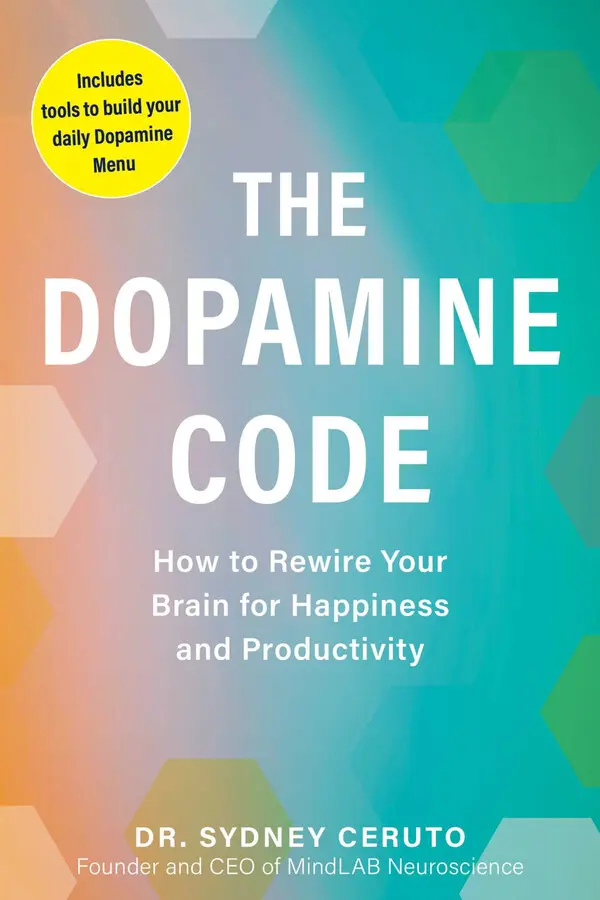
Dr. Sydney Ceruto holds a PhD in Behavioral & Cognitive Neuroscience from NYU and Master’s degrees in Clinical Psychology and Business Psychology from Yale University. She is a Lecturer in the Wharton Executive Development Program at the University of Pennsylvania, an Executive Contributor to Forbes Coaching Council, and an inductee in Marquis Who’s Who in America. Dr. Ceruto founded MindLAB Neuroscience in 2000 and has spent more than 26 years developing and refining her proprietary methodology, Real-Time Neuroplasticity™. She is the author of The Dopamine Code (Simon & Schuster, June 2026).

Frequently Asked Questions

I am a fintech founder who just closed a Series A. Why would I need a neuroscience-based approach rather than a traditional business advisor?
A traditional advisor works with your business model, market strategy, and operational plan. I work with the brain executing that plan. Egana-delSol et al. (2023) in Scientific Reports demonstrated through a randomized controlled trial that interventions targeting emotional regulation — the ability to manage emotional responses — circuitry produce measurable neurophysiological changes that predict improvements in business outcomes. Post-raise is precisely when the neural demands shift — from the dopamine-driven intensity of fundraising to the sustained prefrontal demands of execution, team-building, and strategic decision-making under a new set of pressures. The cognitive architecture that got you through the raise is not the same architecture that will get you through the next 18 months.
How does neuroscience-based guidance actually help me raise my next round? Can it change how I come across in investor meetings?
Ortiz-Teran et al. (2021) confirmed that investors process pitches through limbic structures — ventral striatum, anterior insula, amygdala — that respond to reward, risk, and emotional conflict. Your pitch is being neurologically evaluated, not analytically evaluated. Tafet et al. (2024) established that stress impairs the prefrontal cortex — the brain's executive control center —'s ability to regulate these responses. My methodology restructures your nervous system's stress response so that the prefrontal cortex maintains authority during investor conversations. The result is not better scripting — it is a fundamentally different neural state during the interaction, which produces communication that investors experience as authentic conviction rather than rehearsed performance.
My business is generating significant revenue but I feel cognitively stuck and cannot scale. Is that a mindset issue or a real neurological problem?
It is a neurological problem with a precise mechanism. Morera et al. (2020) identified four neurobiological phases of burnout — each with a distinct cortisol profile — and the "strained" and "cynical" phases produce exactly the cognitive pattern you describe: functional performance with diminished capacity for novel strategic thinking. Wu et al. (2020) established that the prefrontal circuits responsible for strategic cognition are trainable through targeted intervention. You are not cognitively "stuck." Your prefrontal architecture has been depleted by sustained operational demands, and the growth-level thinking requires neural resources that are currently unavailable. My methodology restores them.
How is Real-Time Neuroplasticity different from the performance support our hedge fund already provides internally?
Real-Time Neuroplasticity — the brain's ability to rewire itself —™ operates at the neural level where behavioral patterns originate. Akil and Nestler (2023) in PNAS established that stress resilience is an active, inducible counter-regulatory process that can be trained through targeted intervention. My methodology restructures the neural architecture generating stress responses and performance constraints — rewiring the circuits that produce them rather than managing the symptoms they create. The intervention targets prefrontal restoration, HPA axis — the body's central stress-response system — recalibration, and the specific neural pathways that govern cognitive performance under the chronic pressure conditions endemic to the Financial District.
I have been on Wall Street for 20 years. I know markets and investors. Why would I need help with investor communications?
Knowing markets intellectually and performing optimally during high-stakes investor interactions are governed by different neural systems. Tafet et al. (2024) demonstrated that stress shifts communication from deliberate prefrontal articulation to automatic, emotionally-biased reactions — regardless of expertise level. The 20-year veteran who stumbles during a critical board presentation or fails to project conviction during a fundraising Q&A is not lacking knowledge. They are experiencing prefrontal impairment under acute stress. My intervention targets the specific neural mechanism that degrades communication under pressure, restoring prefrontal authority in the exact situations where it matters most.
Is there clinical research showing that neuroscience-based approaches actually improve business outcomes, or is this rebranded executive guidance?
The evidence spans multiple peer-reviewed journals. Egana-delSol et al. (2023) in Scientific Reports demonstrated neurophysiological changes predicting business outcome improvements through a randomized controlled trial. Caliendo et al. (2023) in Small Business Economics established statistically significant effects of self-efficacy — belief in one's ability to succeed at specific tasks — on startup survival and income across 1,405 founders. Wu et al. (2020) confirmed through neuroimaging meta-analysis that professional training produces measurable brain changes. These are not coaching testimonials — they are peer-reviewed findings from Nature Publishing Group, Springer, and Frontiers journals. My methodology is built on this evidence base.

Ready to Perform at Your Highest Level?

Wall Street does not lack capital, opportunity, or talent. What remains systematically underaddressed is the cognitive architecture of the individuals making growth decisions, raising capital, and building the businesses that define this market. The brain behind the business is the variable that determines every outcome — and it is the one variable that no one else in the Financial District is equipped to optimize.

Schedule a Strategy Call
MindLAB Neuroscience consultation room
Locations

The Intelligence Brief

Neuroscience-backed analysis on how your brain drives what you feel, what you choose, and what you can’t seem to change — direct from Dr. Ceruto.