Business Development Service in Beverly Hills

For Beverly Hills founders and executives — neuroscience-based business development addresses the cognitive architecture that drives growth, not just the strategy.

Beverly Hills and the Silicon Beach corridor sit at the center of one of the most active business development ecosystems in the country — entertainment VC, tech startup fundraising, family office capital, and luxury brand scaling converge within a twenty-mile radius. Yet no competitor in this market applies peer-reviewed neuroscience as a primary methodology for founder performance, growth strategy, or investor communication. The result is a gap between the sophistication of Beverly Hills' capital markets and the outdated cognitive frameworks most advisors bring to the individuals deploying that capital. Dr. Sydney Ceruto fills this gap by working at the level of the brain — where growth decisions, founder behavior, and investor persuasion actually originate.
Schedule a Strategy Call

Founder Coaching

The behavioral patterns that made a founder successful at zero-to-one frequently become the neural obstacles at one-to-ten. Sajda, Egana-delSol, and Sun (2023), published in Scientific Reports, used EEG in a randomized controlled trial and found that programs fostering socio-emotional skills produced measurable, significant changes in neurophysiological markers — specifically decreasing arousal and improving emotional valence — demonstrating that brain-level interventions, not just behavioral advice, drive founder decision-making outcomes. Han and colleagues (2022) in Current Psychology established that entrepreneurs’ cognitive flexibility — a prefrontal cortex-mediated capacity — indirectly and significantly affects new venture performance by enabling dual innovation strategies. Lombardi and colleagues (2021) in International Entrepreneurship and Management Journal showed that rational cognitive style significantly mediates the relationship between entrepreneurial alertness and decision-making effectiveness, while intuition alone does not. The recurring pattern: the founders who plateau are not lacking drive or intelligence. Their cognitive architecture is optimized for the stage of business they built, not the stage they need to lead. I restructure the neural patterns that govern founder decision-making to match the complexity of the current growth challenge.

Learn more about Founder Coaching in Beverly Hills →

Business Growth Consulting

Business growth stagnation is not always a strategy problem. It is frequently a neural one. Crivelli and colleagues (2020) in Frontiers in Psychology demonstrated that executive functions — cognitive control, working memory, and task-switching — support the social skills, emotion regulation, and adaptive stress management critical to business outcomes, and that these neural circuits are trainable through targeted neuro-empowerment programs. Chang and colleagues (2020) conducted a meta-analysis in Frontiers in Human Neuroscience confirming occupational neuroplasticity: professional training and role demands produce measurable structural and functional brain changes. Brain connectivity literally reshapes to satisfy occupational requirements. Klintsova, Smith, and Milbocker (2023) in Brain Plasticity reviewed empirical evidence from 2017 to 2023 establishing that goal-directed learning interventions produce measurable neuroplastic changes — validating that intensive, structured engagement produces durable behavior change rather than temporary modification. For Beverly Hills executives whose growth has plateaued, I address the neural architecture underlying growth behavior — restructuring the cognitive patterns that have hardened around a previous business stage rather than applying more strategy to an unchanged brain.

Learn more about Business Growth Consulting in Beverly Hills →

Investor Relations Coaching

Investor persuasion is a neuroscience problem. Davydova and colleagues (2024), published in PNAS, used fMRI to show that brain activity synchronizes across all listeners during persuasive messages, and that participants who changed their position in response to persuasion showed distinct neural activity patterns — providing neural biomarkers for persuasion susceptibility. Zheng and colleagues (2021) in Frontiers in Human Neuroscience demonstrated using event-related potentials that investor conformity tendency increases when confidence is low — meaning a founder’s confidence signal directly modulates investor neural decision processes. Kleinbaum, Sievers, Welker, Wheatley, and Hasson (2024), published in Nature Communications, found that consensus-building conversation produces greater neural alignment among participants, and that individuals who encouraged others to speak facilitated greater group neural alignment than those who dominated the conversation. For Beverly Hills founders pitching entertainment-focused VCs, family offices along Wilshire Boulevard, or institutional tech investors, I develop the neural architecture of persuasive communication — not pitch deck polish, but the cognitive and emotional signaling that modulates investor decision-making at the neurological level.

Learn more about Investor Relations Coaching in Beverly Hills →

Beverly Hills occupies a unique position in the American business development landscape. Within a twenty-mile radius, three distinct capital ecosystems operate simultaneously — entertainment venture capital, Silicon Beach technology funding, and ultra-high-net-worth family office investment — each with different decision-making cultures, risk profiles, and persuasion dynamics. No other U.S. market concentrates this diversity of capital deployment in such close geographic proximity.

The entertainment-technology crossover defines this market’s character. Los Angeles’ entertainment tech sector raised $2.4 billion across 190-plus deals in 2025, with creator economy platforms capturing 40% and production technology 30% of funding. Average seed rounds for LA entertainment startups reached $4.5 million — higher than most technology sectors due to content and licensing costs. Founders navigating this capital environment face a cognitive challenge that standard business development advisory does not address: they must communicate across radically different investor cultures, switching between entertainment industry relationship dynamics and Silicon Valley evidence-based evaluation frameworks, often within the same funding round.

Venture capital investment in Los Angeles reached $3.1 billion across 144 deals in Q1 2025 alone, up 15% year-over-year. LA ranked fourth globally in the 2024 Global Startup Ecosystem Report. The Silicon Beach corridor — home to Snap, TikTok’s U.S. operations, Google’s LA offices, and 500-plus technology companies — produces founders and executives who are data-literate, evidence-demanding, and deeply skeptical of advisory approaches that lack scientific rigor. These individuals respond to neuroscience because they evaluate everything through a quantitative lens.

The Beverly Hills family office ecosystem adds another layer. The Family Office Club’s Beverly Hills Super Summit serves ultra-high-net-worth investors deploying capital from $25 million-plus pools. WME Ventures, UTA Ventures, and CAA Ventures represent the unique talent-agency-to-venture pipeline that exists nowhere else in the country. Founders pitching family offices in Beverly Hills face a fundamentally different persuasion challenge than those pitching Sand Hill Road VCs — the decision-making neuroscience of relationship-based capital is distinct from institutional evaluation, and I develop each communication mode at the neural level.

Beverly Hills proper has a mean household income of $247,408 and a median age of 47.9 — an established, financially resourced population accustomed to premium professional services. The surrounding residential enclaves of Bel Air and the Beverly Hills flats contain among the highest concentrations of ultra-high-net-worth individuals in the country. For founders and executives operating in this environment, business development is not just a growth function. It is a social identity marker. Deals, exits, and investor access carry reputational weight that amplifies the neurological pressure of every pitch, negotiation, and strategic decision.


Dr. Sydney Ceruto, PhD — Founder, MindLAB Neuroscience

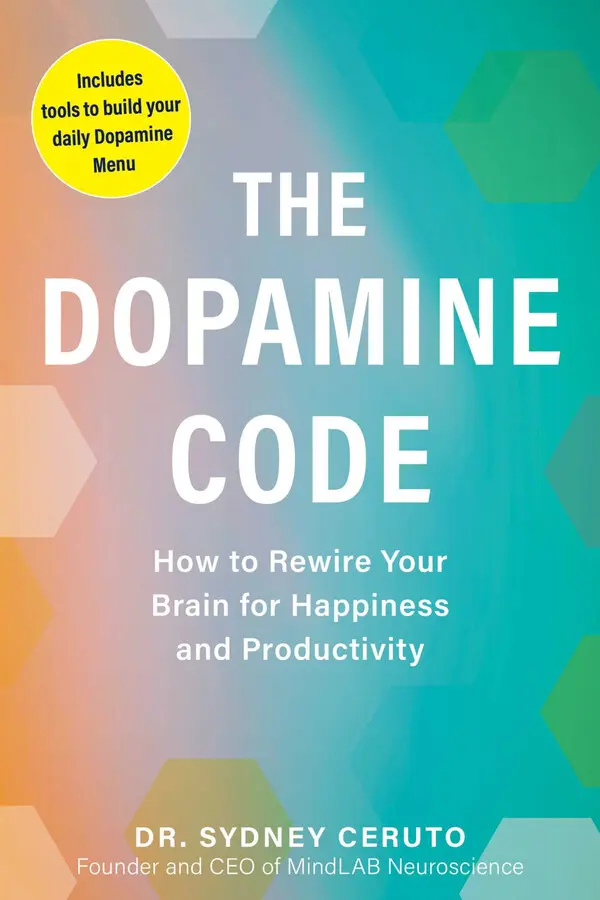
Dr. Sydney Ceruto holds a PhD in Behavioral & Cognitive Neuroscience from NYU and Master’s degrees in Clinical Psychology and Business Psychology from Yale University. She is a Lecturer in the Wharton Executive Development Program at the University of Pennsylvania, an Executive Contributor to Forbes Coaching Council, and an inductee in Marquis Who’s Who in America. Dr. Ceruto founded MindLAB Neuroscience in 2000 and has spent more than 26 years developing and refining her proprietary methodology, Real-Time Neuroplasticity™. She is the author of The Dopamine Code (Simon & Schuster, June 2026).

Frequently Asked Questions

I've already worked with a business coach and a therapist. What does a neuroscience-based approach offer that I haven't already tried?
I work at the level of the neural architecture where business decisions, growth behavior, and interpersonal persuasion are actually computed — the prefrontal cortex and reward circuitry — restructuring the cognitive patterns that produce business outcomes — using peer-reviewed methodology that neither conventional advisory nor talk-based approaches can replicate.
As a Silicon Beach founder preparing for a Series A, how does this go beyond pitch prep to actually change how I think under investor pressure?
Pitch preparation addresses content. I address the neural systems that govern how you perform under pressure. fMRI research published in PNAS shows that brain activity synchronizes across listeners during persuasive communication, and that your confidence signal directly modulates investor neural decision-making. I develop the cognitive and emotional architecture that produces effective investor communication — not scripts, but the brain state from which compelling communication naturally emerges.
What separates a neuroscience-based business growth consultant from a standard management consultant or strategy firm in Century City?
Century City strategy firms serve organizations with engagement fees in the hundreds of thousands to millions. They provide quantitative analysis and strategic frameworks but do not work with individuals and do not address cognitive architecture. I serve individual leaders and founders directly, applying peer-reviewed neuroscience to restructure the neural patterns that drive growth behavior, decision-making, and leadership effectiveness. Different client, different methodology, different level of change.
How does investor relations work differently for a founder pitching family offices in Beverly Hills versus pitching institutional VCs?
The neuroscience of persuasion differs by context. Family office investors rely more heavily on relationship-based trust signals and social proof — neural processes governed by the temporoparietal junction and medial prefrontal cortex — the brain's executive control center —. Institutional VCs evaluate through more deliberate, prefrontal-cortex-mediated analytical frameworks. I develop both communication modes at the neural level, calibrating your cognitive approach to the specific investor decision-making architecture you face.
I've built a $20M business but feel stuck at a plateau. Is that a strategy problem or something neurological?
In my practice, I consistently observe that growth plateaus in businesses led by capable individuals trace to neural patterns optimized for a previous business stage. The cognitive architecture that produced success at one scale frequently becomes the constraint at the next. Meta-analytic evidence confirms that professional role demands literally reshape brain connectivity. I identify where your neural patterns are anchored to a previous stage and restructure them for the complexity of current growth demands.
What results should I realistically expect from a neuroscience-based engagement?
The investment reflects the depth and intensity of an embedded neuroscience partnership — not a series of advisory sessions. My NeuroSync™ 90-day program produces measurable changes in the neural patterns governing your decision-making, leadership, and communication. Results are structural — neuroplastic changes (related to the brain's ability to rewire itself) that persist because the brain's architecture has been rebuilt — not behavioral tips that require ongoing external reinforcement. Specific outcomes depend on the complexity of the presenting pattern and the individual's neural profile. Program structure and investment details are discussed during your Strategy Call with Dr. Ceruto.

Ready to Perform at Your Highest Level?

In Beverly Hills' capital ecosystem — where entertainment VCs, tech investors, and family offices converge — the founders who win are the ones whose neural architecture has been built for the pressure of high-stakes persuasion and decision-making.

Schedule a Strategy Call
MindLAB Neuroscience consultation room
Locations

The Intelligence Brief

Neuroscience-backed analysis on how your brain drives what you feel, what you choose, and what you can’t seem to change — direct from Dr. Ceruto.