





The Decision Fatigue No One Sees Coming
“The decisions you struggle with most are not the ones where you lack information. They are the ones where the brain's threat system, loss aversion, and identity circuits have hijacked the evaluation process — producing paralysis that strategic frameworks cannot resolve.”
The trajectory is familiar. Morning clarity. Sharp pattern recognition. Confident execution. Then, somewhere between the third meeting and the end of the trading day, the quality shifts. The decisions start drifting. Not catastrophically, but subtly. A slightly more impulsive allocation. A risk assessment that would have been caught at 9 AM but passes without scrutiny at 4 PM. A strategic call that, in retrospect, carried the signature of a brain optimizing for speed over accuracy.
You may recognize the pattern without being able to name it. The colleagues who see the output do not see the internal shift. Your technical accuracy remains high, your language stays precise, your demeanor stays professional. The degradation is happening underneath the visible performance layer, in circuits that do not announce their fatigue the way muscles do.
This is what makes decision fatigue so insidious in high-stakes environments. It does not look like tiredness. It does not feel like impairment. It manifests as a subtle recalibration of risk tolerance and a shortening of the deliberation window. It also shifts negotiation postures from cooperative to aggressive, all below the threshold of conscious awareness. The professional making the decision believes they are operating normally. The neural architecture generating that decision has already changed.
For those who have tried to address this through conventional means, the limitation is always the same. These approaches address the behavioral and environmental surface. They cannot reach the specific prefrontal circuits whose depletion is producing the shift. The professional who sleeps well, exercises, and uses every productivity framework available will still experience neural fatigue in the prefrontal cortex after sustained cognitive demand. The architecture was not designed for this load.
The professionals who recognize this pattern most clearly are often the ones who have tried every available strategy and reached the same ceiling. They can manage the environment, optimize the inputs, and structure the calendar. Yet decisions still deteriorate by day’s end. They still find themselves making decisions at 5 PM that they would not have made at 9 AM. The gap is not behavioral. It is architectural.
The Neuroscience of Decision Architecture
Decision-making is not a single cognitive act. It is a process distributed across multiple prefrontal systems. Each has its own fatigue signature and degradation pattern. Each carries its own implications for the quality of the decisions it produces.
The prefrontal cortex mediates cognitive control through a common executive process shared across all demanding tasks, plus specific sub-processes. Working memory — the brain’s short-term mental workspace — updating operates in one prefrontal region. Mental set-shifting — the ability to switch between frameworks — operates in another. Response inhibition — stopping yourself from acting on impulse — operates in yet another region. When any of these sub-processes degrades through fatigue or sustained depletion, the brain defaults to automatic responses. It chooses habitual reactions rather than deliberate, goal-directed choices.
This means a professional who can still sustain focus on a single analytical task but cannot switch between frameworks or update assumptions when new information arrives is not experiencing general cognitive decline. They are exhibiting a specific sub-process impairment. The distinction determines the intervention.
The most direct evidence for decision fatigue at the neural level demonstrates that after six or more hours of demanding executive tasks, participants showed measurable increases in decision impulsivity. They began choosing immediate rewards over larger future rewards. This occurred even while maintaining high accuracy on the tasks themselves. Participants performed their primary tasks accurately while their decision quality simultaneously degraded. Neural fatigue precedes any visible performance signal. The brain is making worse decisions before the decision-maker can detect it.
What I see in this work with remarkable consistency is precisely this pattern. Professionals whose technical execution remains sharp while their allocative, strategic, and interpersonal decisions quietly deteriorate.

A 2024 study advanced this understanding significantly. Researchers demonstrated that after roughly 45 minutes of sustained self-control tasks, the prefrontal cortex began producing sleep-like electrical patterns in the region responsible for deliberate judgment. Meanwhile, the rest of the brain remained awake and functional. This was not metaphorical fatigue. The brain was literally entering micro-sleep in its decision-making circuitry. The behavioral consequence was dramatic: participants shifted from predominantly cooperative choices to predominantly aggressive ones in economic games.
Research on cognitive flexibility adds a critical dimension. This capacity depends on dynamic reconfiguration of the prefrontal network, modulated by dopamine and serotonin. Cognitive flexibility follows an inverted U-shaped trajectory across the lifespan, peaking in the twenties and thirties and declining from midlife. The population most concentrated in high-stakes financial decision-making roles is the most vulnerable to flexibility degradation.
A final critical mechanism is the distinction between recoverable and unrecoverable fatigue. Recoverable fatigue accumulates with effort and restores with rest. Unrecoverable fatigue builds gradually with sustained work and does not restore with rest. As unrecoverable fatigue accumulates, the brain’s calculation of whether effort is worth the reward shifts measurably. This occurs regardless of opportunity value.
How Dr. Ceruto Approaches Decision Architecture
Dr. Ceruto’s methodology addresses the specific prefrontal systems governing decision quality, not the decisions themselves but the neural architecture producing them.
Real-Time Neuroplasticity™ begins with assessment precision. The professional whose prefrontal cortex fatigues rapidly under cognitive load requires a different protocol than one whose cognitive flexibility has declined with age-related changes. Both require different approaches than someone whose unrecoverable fatigue has accumulated over years of sustained high-demand work. The intervention is matched to the circuit.
Through NeuroSync™, Dr. Ceruto works with professionals on targeted decision-architecture challenges. This targets the specific neural mechanism behind each performance gap. NeuroConcierge™ serves those managing decision quality across the sustained complexity of multi-year deal cycles or institutional leadership. It provides an embedded partnership that monitors and maintains neural decision architecture as demands evolve.
The methodology does not teach decision frameworks. It does not prescribe heuristics. It recalibrates the prefrontal systems whose function determines whether any framework or heuristic can be executed effectively under real-world conditions. Clients describe this as the difference between knowing what the right decision looks like and having the neural capacity to make it when it matters.
The results are structural. Because the changes occur at the level of neural pathway consolidation, decision quality holds under sustained cognitive load. The architecture performs because it has been rebuilt, not because a rule has been overlaid on a depleted system.
What to Expect
The engagement opens with a Strategy Call. This is a focused strategy conversation where Dr. Ceruto assesses the decision-making patterns you are experiencing and the professional contexts generating them. She identifies the neural systems most likely at play. This is a preliminary architectural assessment, not a generic consultation.
A structured assessment follows, designed for the individual. No standardized instruments. The goal is to identify which prefrontal systems are contributing to the current decision pattern, such as rapid fatigue, cognitive flexibility decline, or accumulated unrecoverable fatigue.
The protocol is built from the assessment findings and designed to produce measurable change in the specific neural systems identified. Sessions are structured around demanding professional schedules. They adapt as the professional’s context evolves.
Progress is measured against real-world decision quality in the contexts that matter. This means the professional’s own experience of clarity, accuracy, and sustained quality across the demands of their actual environment.
The Neural Architecture of Decision Quality
Decision quality is a neural function, not a rational one. The executive who believes they make decisions through systematic analysis of available evidence is partially right: the prefrontal cortex does perform this function. But the prefrontal cortex does not make decisions in isolation. It makes decisions in constant interaction with the limbic system, the dopaminergic reward-prediction architecture, the somatic signal system that encodes accumulated bodily experience as intuition, and the habit circuits that generate automatic responses to familiar decision patterns before the analytical mind has finished reading the situation. The quality of any given decision depends on the relative contributions of these systems, the regulatory balance between them, and the specific neural state the decision-maker is in when the decision is made.
Predictive coding theory has produced a fundamental reconceptualization of how the brain makes decisions. The brain does not wait for information to arrive and then analyze it. It generates predictions about what information will arrive, what outcomes are probable, and what responses are appropriate — and then processes incoming information primarily as a signal about whether these predictions need updating. A decision-maker whose prior predictions are strongly encoded will effectively filter incoming evidence through those predictions, systematically underweighting information that challenges existing models and overweighting information that confirms them. This is not a cognitive bias. It is a neural architecture feature that served adaptive purposes in environments of limited information and now creates systematic decision distortions in environments of abundant, complex, and often contradictory data.
The somatic signal system — the body’s encoded record of the emotional consequences of previous decisions — is a parallel decision architecture that operates below the threshold of conscious awareness. Damasio’s somatic marker research demonstrated that individuals with damage to the neural circuits that process body-based emotional signals make consistently poor decisions despite intact analytical capability. The body’s decision history is neurologically essential to decision quality, and executives whose body-budget is chronically depleted by sustained high-load operations are making decisions with degraded access to this signal system.
Why Traditional Approaches Fall Short
Decision-support frameworks — decision trees, scenario analysis, structured deliberation processes, devil’s advocacy protocols, pre-mortem analysis — are valuable tools that address the cognitive architecture of decisions. They create conditions for more systematic information processing, more explicit consideration of alternatives, and more disciplined evaluation of outcomes. What they cannot address is the neural state of the decision-maker, the specific regulatory balance between prefrontal and limbic systems at the moment the decision is made, or the specific prediction architecture that is filtering which information is processed and how.
Executive coaching for decision quality operates at a similar cognitive level: examining the beliefs, heuristics, and behavioral patterns that shape decisions, and building awareness of their influence. This is genuinely useful and substantially better than nothing. But awareness of a cognitive pattern and neural recalibration of the pattern are different things. An executive who becomes aware that their decisions systematically underweight long-term risk is not thereby equipped to make decisions with better long-term risk calibration. The pattern is encoded in the prediction architecture. Awareness of it is encoded in the prefrontal cortex. These are different neural systems, and awareness does not automatically recalibrate the pattern.

The most significant gap in conventional decision-support is the failure to address the neural state as a decision variable. Decision quality under conditions of prefrontal depletion, limbic activation, or disrupted somatic signal processing is reliably degraded regardless of the quality of the decision framework being applied. The executive using a sophisticated decision analysis process while in a state of chronic sleep deprivation, elevated threat activation, and body-budget deficit is applying a precision instrument with a degraded instrument-operator.
How Neural Decision Support Works
My approach to decision-making support begins with the neural state and works outward to the decision architecture. Before examining any specific decision, I assess the regulatory balance, somatic signal access, and prediction architecture biases that will determine how decisions are made. This assessment reveals the specific neural conditions under which this individual’s decision quality is highest, and the specific conditions under which it is most vulnerable to systematic distortion.
From this assessment, I design a decision support protocol that addresses both the neural state and the decision process. For the neural state, the work targets the regulatory architecture: building the prefrontal-limbic balance that allows analytical processing to proceed without being overwhelmed by threat activation, and the somatic awareness that restores access to the body’s encoded decision history. For the decision process, I design protocols calibrated to the specific prediction architecture biases most powerfully shaping this individual’s decision patterns — creating deliberate friction around the exact points where the predictive coding system is most likely to filter out disconfirming evidence.
High-stakes decisions — capital allocation, strategic pivots, leadership selection, market entry — receive focused neural preparation before the decision process begins. This preparation addresses the neural state variables most likely to degrade decision quality for this specific decision context: the threat signals most likely to activate limbic override of analytical processing, the prediction biases most likely to filter the specific categories of information this decision requires, and the somatic signal quality available to inform the intuitive dimension of the judgment.
What This Looks Like in Practice
Decision-making support engagements begin with a Strategy Call in which I map the presenting decision challenge — its scope, timeline, stakes, and the specific neural factors most likely to determine decision quality — against the individual’s neural decision architecture. From that conversation, I determine whether the presenting need is for a focused, decision-specific intervention or for a sustained engagement that builds decision quality as a durable neural capacity rather than a situational support.
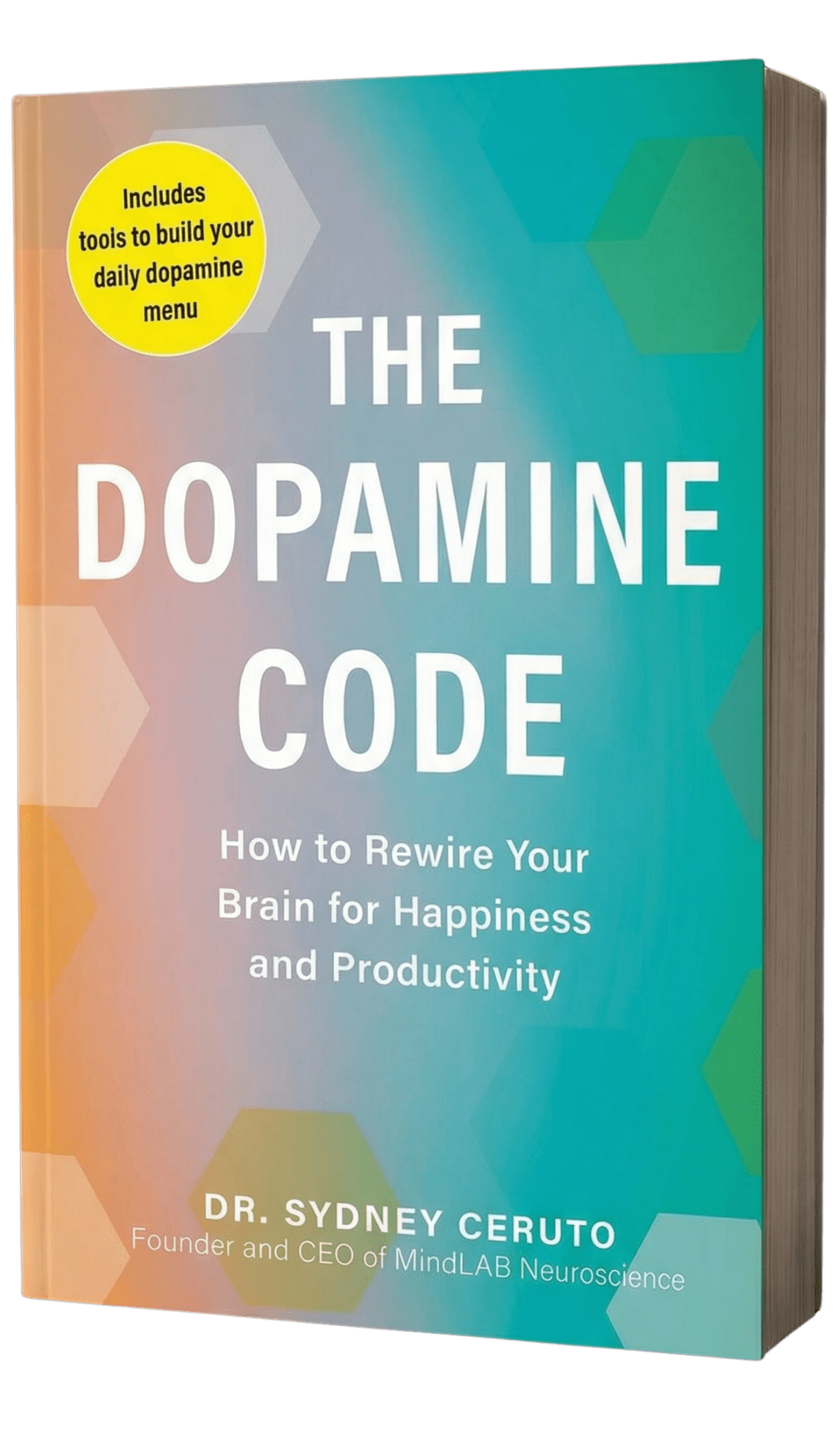
For executives navigating a specific high-stakes decision, the NeuroSync model provides targeted neural preparation and decision-process design calibrated to that decision context. For executives or leadership teams seeking to build durable decision quality across the full range of organizational challenges they face, the NeuroConcierge model provides the sustained partnership that systematic neural recalibration requires. The Dopamine Code explores the reward prediction architecture that underlies the most common decision quality failures I observe in this work, for those who want to understand the science behind what we are actually modifying.
For deeper context, explore enhancing decision-making skills for your career.