The Promotion Gap
“Leadership presence is not something you project through posture tips and vocal exercises. It is something your brain transmits through biological systems operating below conscious awareness: your direct reports register the mismatch neurologically before they process it consciously.”
You were promoted because you were exceptional at analysis, deal execution, or portfolio management. Then the role changed. The skills that built your career (pattern recognition, quantitative precision, the ability to work longer and harder than anyone around you) became secondary to an entirely different set of demands. Reading a room. Building trust with limited partners. Managing a team of people who process information differently than you do. Navigating political dynamics where being right is not the same as being effective.
The friction is immediate and persistent. Team members leave. Relationships with key stakeholders feel unnecessarily difficult. Meetings produce compliance rather than genuine engagement. The feedback, when it arrives, is vague: “needs to develop people skills” or “could improve communication style.” None of it is actionable because none of it addresses the actual mechanism.
What makes this pattern so frustrating is the self-awareness gap. You know something is off. You may have even invested in structured development programs or worked with professionals who specialize in executive effectiveness. The frameworks made sense intellectually. The behavioral prescriptions were logical. And the gains evaporated under the first wave of real pressure: a difficult quarterly review, a contentious LP meeting, a team crisis that demanded precisely the capacity you were trying to build.
This is not a willpower failure. The pattern persists because leadership effectiveness depends on neural circuits that are distinct from the analytical circuits that built your career, and those leadership circuits require targeted architectural intervention, not behavioral advice.
The Neuroscience of Leadership Influence
The brain’s capacity for leadership operates through specific, identifiable neural systems. When these systems are underdeveloped or suppressed, no amount of behavioral training can compensate. Understanding the biology explains why the promotion gap exists and why conventional approaches consistently fail to close it.
D that the experience of power directly suppresses mirror neuron resonance: the brain’s automatic simulation of others’ actions and emotional states. In their experimental paradigm, participants who were primed with the subjective experience of power showed measurably reduced motor resonance in response to observed actions, indicating decreased mirror system engagement. The implication for Wall Street leadership is direct: the seniority and authority that come with promotion neurologically diminish the capacity to read and respond to others. The more power you accumulate, the less your brain automatically processes what the people around you are experiencing.
This finding explains a pattern visible across the Financial District. Managing directors and senior partners who were perceptive and socially attuned earlier in their careers become progressively less responsive to team dynamics, client signals, and stakeholder concerns. The behavioral label is “lost touch.” The neurological reality is mirror neuron suppression under conditions of sustained power: a measurable, addressable circuit deficit.
A separate body of research on the anterior insula (by Gu, Gao, Wang, and colleagues) established that this region is essential for empathic accuracy. The anterior insula translates raw physiological signals into the subjective awareness of others’ emotional states. When this circuit is underactivated, a leader literally cannot feel what their team is feeling. They process words and facial expressions cognitively but miss the interoceptive resonance, a felt read of another person’s state, that drives genuine interpersonal connection and trust.
In over two decades of neuroscience practice, the most reliable predictor of leadership difficulty is this specific gap: strong analytical prefrontal function paired with undercalibrated anterior insula and temporoparietal junction activity. The leader can solve any problem put in front of them but cannot read the room they are solving it in.
Emotional Contagion and Team Performance
Leadership influence operates through biological channels that most professionals are unaware of. Research on neurophysiological synchronization confirms that a leader’s autonomic nervous system, the body’s automatic regulation system, state is transmitted to their team through micro-expressions, vocal prosody, and physiological coupling. Asymmetric emotional contagion, the process by which one individual’s emotional state propagates to others through neurophysiological channels that operate below conscious awareness.
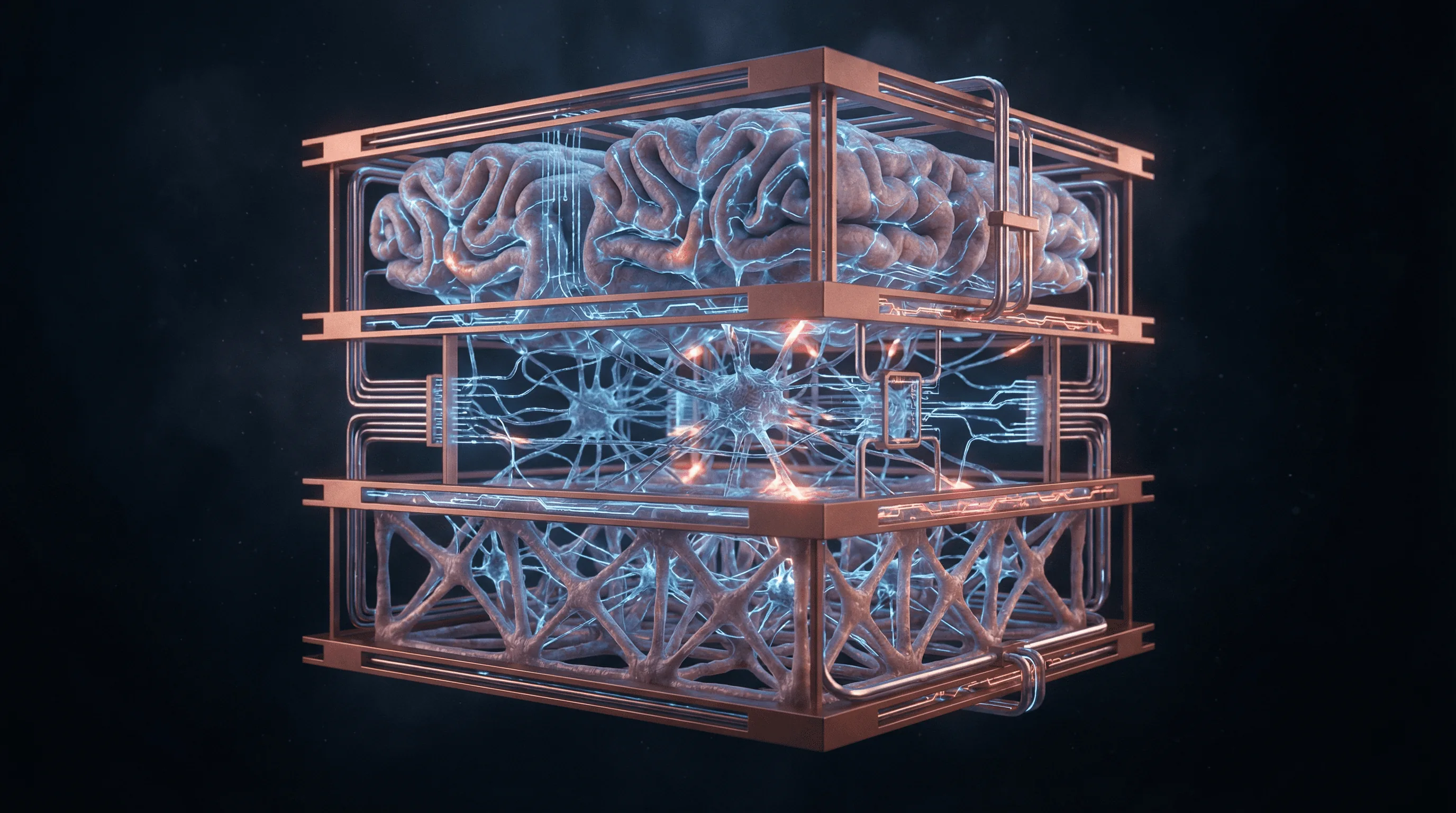
For a managing director leading a trading desk or an investment committee, this means their internal state is not private. The stress they suppress in meetings does not disappear: it propagates through the team’s autonomic nervous systems. The team’s performance architecture is, in a measurable biological sense, a reflection of the leader’s neural regulation architecture.
How Dr. Sydney Ceruto Approaches Leadership Development
Dr. Ceruto’s methodology begins where behavioral frameworks end. Rather than prescribing leadership behaviors and hoping they generalize under pressure, Real-Time Neuroplasticity™, the brain’s ability to rewire itself, identifies and restructures the specific neural circuits that produce leadership effectiveness.
The assessment phase maps which social cognition networks are underactivated: whether the presenting challenge involves mirror neuron suppression from accumulated authority, anterior insula undercalibration affecting empathic accuracy, or temporoparietal junction deficits limiting perspective-taking capacity. Each of these represents a distinct neural architecture requiring a distinct intervention approach.
From that assessment foundation, Dr. Ceruto engineers targeted engagement protocols that activate and strengthen the specific circuits governing leadership influence. This is not self-reflection in a generic sense. It is systematic recalibration of the social brain, the neural architecture that determines whether a leader can read their team, build trust with stakeholders, and communicate with the authority that comes from genuine connection rather than positional power alone.
Through the NeuroSync™ program for focused leadership circuit development or the NeuroConcierge™ program for comprehensive embedded partnership across all dimensions of professional leadership, Dr. Ceruto produces the kind of change that behavioral approaches attempt but cannot deliver. The result is not a leader who has memorized active listening techniques. It is a leader whose brain has been architecturally reconfigured to process social information with the precision and speed that the Financial District demands.
My clients describe this as the difference between knowing what effective leadership looks like and actually experiencing it as their default operating state: a shift that persists because the change is structural, not performative.
What to Expect
The engagement opens with a Strategy Call: a focused conversation where Dr. Ceruto assesses the specific leadership challenges you face and determines whether a structured engagement is the right fit. This is not a sales conversation. It is a focused evaluation that maps the gap between your current leadership impact and the neural architecture required to close that gap.
A structured protocol follows, calibrated to your specific neural profile and professional context. The methodology operates in real time, embedded in your actual leadership environment rather than abstracted into weekend workshops or simulated scenarios. Each session builds measurable neural change that compounds over the engagement.
There are no generic templates. The engagement is designed around the precise circuits that need recalibration and the specific professional demands you face. Progress is verified through observable changes in leadership effectiveness: how your team responds, how stakeholder relationships shift, how your capacity to navigate complexity under pressure evolves. The changes are durable because they are architectural, not behavioral.
References
Gu, X., Gao, Z., Wang, X., Liu, X., Knight, R. T., Hof, P. R., & Fan, J. (2012). Anterior insular cortex is necessary for empathetic pain perception. Brain, 135(9), 2726-2735. https://doi.org/10.1093/brain/aws199
Wirthgen, E., Hoeflich, A., & Tuchscherer, M. (2018). Metacognition and its neural correlates in learning and training contexts. Frontiers in Integrative Neuroscience, 12, 33. https://doi.org/10.3389/fnint.2018.00033
Hogeveen, J., Inzlicht, M., & Obhi, S. (2014). Power changes how the brain responds to others. Journal of Experimental Psychology: General, 143(2), 755-762. https://doi.org/10.1037/a0033477
The Neural Architecture of Leadership Capacity
Leadership is a neural function. The capacities that define effective leadership (the ability to sustain strategic clarity under pressure, to regulate one’s own threat responses without suppressing their information value, to inspire sustained motivation in others, to make high-quality decisions under uncertainty, and to sustain authentic relational connection across authority differentials) are all expressions of specific neural architectures. They are not personality traits. They are circuit configurations. And they are trainable, restructurable, and measurably developable through targeted neural intervention.
The prefrontal cortex is the biological substrate of the leadership capacities that organizations most consistently struggle to develop. The lateral prefrontal cortex drives planning, working memory, and cognitive flexibility. The medial prefrontal cortex governs self-awareness, mentalizing, and the reading of social contexts. The ventromedial prefrontal cortex integrates somatic signals into value-based judgment. The anterior cingulate cortex monitors for conflict and error, and regulates the transition between stable and flexible behavior. These structures do not develop uniformly through career progression. They develop through specific types of experience, sustained regulatory challenge, and targeted practice, none of which are reliably produced by organizational promotion pathways.
The dopaminergic motivation architecture determines whether leadership capacity persists under the conditions that most degrade it. The leader whose reward system is poorly calibrated to the delayed, diffuse, and often socially invisible rewards of effective organizational leadership (the long-horizon impact, the team capability built over years, the cultural shift that takes place gradually and is difficult to attribute) will find their motivation for leadership investment progressively depleted by the misalignment between what their neural architecture finds reinforcing and what leadership actually delivers. This is the neural basis of leadership burnout, and it requires explicit reward recalibration rather than better time management or additional vacation.
Why Traditional Approaches Fall Short
Leadership training has evolved through multiple generations of methodological sophistication. Situational leadership, transformational leadership, servant leadership, adaptive leadership: each framework captures genuine insight about leadership effectiveness. Each has been packaged into training programs that produce measurable attitude change and minimal durable behavioral change. The frameworks are not the problem. The training format and the level of intervention are.

Workshop-based leadership training addresses the cognitive architecture of leadership: the frameworks, models, and self-awareness that inform conscious leadership choices. This is a necessary foundation and an insufficient intervention. The leadership behaviors that most reliably differentiate effective from ineffective leaders under real organizational pressure (the regulatory responses to conflict and threat, the quality of judgment under ambiguity, the authentic connection to team members across authority differentials) are not primarily cognitive. They are neural. They are generated by the regulatory architecture, the social neural system, and the reward calibration of the leader’s brain, not by the leadership framework they have memorized.
Mentoring and experiential leadership development address this more effectively, because the learning environment is closer to the real pressure conditions in which leadership behavior is generated. But mentoring depends on the quality and neural sophistication of the mentor, and experiential development in unstructured environments produces learning that is highly variable in what it actually develops. Neither approach provides the precision of targeted neural intervention: the ability to identify the specific circuit configurations limiting a particular leader’s effectiveness and design the specific experiences required to reconfigure them.
How Neural Leadership Training Works
My approach to leadership training begins with a neural architecture assessment of the leadership population. What are the specific circuit configurations producing the leadership patterns that the organization most needs to develop? Which regulatory capacities are most depleted across the leadership layer? What is the reward architecture mismatch generating the motivation patterns, or motivation deficits, most limiting leadership effectiveness? These questions produce a development target that is far more specific than any generic leadership competency model.
From this assessment, I design leadership development protocols that directly target the identified neural configurations. The protocols are structured around the neuroscience of motor and cognitive skill acquisition: deliberate practice sequences that target the specific circuits requiring development, spaced learning intervals that allow consolidation between practice episodes, increasing load conditions that progressively build the regulatory capacity required for performance under real leadership pressure, and feedback architectures that are calibrated to the neural systems they are targeting rather than to the behavioral metrics most easily measured.
The social neural dimension of leadership development receives particular attention. Leaders who model the regulatory and relational behaviors their teams need to develop are leveraging the most powerful learning mechanism available in organizations: social neural contagion, the brain’s tendency to encode and replicate the behavioral patterns of high-status, trusted others. Leadership training that builds the regulatory capacity of senior leaders and then puts that capacity on display in real organizational contexts produces development effects that cascade through the organizational hierarchy in ways that no training program delivered to a general leadership population can replicate.
What This Looks Like in Practice
Leadership training engagements begin with a Strategy Call in which I assess the specific leadership development challenge against the neural architecture most likely responsible for it. From that conversation, I design a protocol that addresses the identified neural configurations in the format that the organizational context requires.
For senior leadership teams working on a specific high-priority leadership capability (executive communication, decision quality, conflict navigation, strategic team dynamics) the NeuroSync™ model provides focused, intensive development designed around the neural requirements of that specific capability. For organizations investing in broad leadership development across multiple levels and capability domains, the NeuroConcierge™ model provides the sustained partnership required to build leadership capability as a durable organizational neural asset rather than a training event outcome. The Dopamine Code provides the scientific framework for leaders who want to understand the reward architecture principles underlying sustained leadership motivation and team engagement.
For deeper context, explore emotional intelligence in leadership training.