The Performance Degradation Pattern
“You still perform at a level that looks competent from the outside, but internally the machinery feels different — slower, less certain, more effortful where it used to be fluid. That shift is not motivational. It is biological.”
You have experienced this. The analysis was rigorous. The thesis was sound. The conviction was there — until it was not. Somewhere between identifying the opportunity and executing on it, something shifted. Hesitation entered the decision process. A winning position was closed too early. A clear signal was ignored because the internal noise was louder than the data.
The frustration compounds because you can see the pattern but cannot break it. Performance review cycles create anticipatory anxiety that degrades the very performance being evaluated. Drawdowns trigger risk aversion that prevents recovery. Confidence erodes not because the analytical framework has changed but because something inside the decision architecture has shifted under pressure.
Professionals across the Financial District recognize this trajectory. The slump that follows a bad quarter. The hesitation that creeps in after a significant loss. The gradual narrowing of risk appetite that has nothing to do with market conditions and everything to do with internal state. Standard performance advisory approaches these symptoms at the behavioral level — build better habits, develop mental toughness, create process discipline. These prescriptions treat the output while ignoring the system producing it.
The system is neurological. The performance degradation you experience has a precise biological mechanism, and that mechanism can be identified, mapped, and permanently restructured.
The Neuroscience of Professional Performance
Performance under pressure is governed by identifiable neural circuits. When these circuits are well-calibrated, professionals execute with conviction, recover quickly from adverse outcomes, and maintain decision quality across extended high-load periods. When they are miscalibrated the system degrades in predictable, measurable ways.
Research by Cueva, Roberts, Spencer, and colleagues conducted experimental asset markets with 142 participants and measured the direct effects of stress hormones on investment behavior. The findings were definitive: cortisol, elevated by chronic stress and market uncertainty, shifted investment toward higher-variance assets and predicted aggregate market price instability. Administered cortisol at 100 milligrams of hydrocortisone increased high-variance investments by seventy percent versus placebo. This is not a metaphor for stress affecting judgment. It is a quantified demonstration that the hormonal state of the decision-maker directly alters the quality and character of financial decisions.
The brain’s prediction system operates through the dopaminergic circuit connecting the ventral tegmental area, where dopamine production begins, to the nucleus accumbens. Dopamine neurons signal prediction errors — the gap between expected and actual outcomes. When this system is well-calibrated, it produces accurate anticipatory signals that guide decision-making in uncertain environments. When chronic stress disrupts the dopamine system, prediction errors become noisy, confidence signals become unreliable, and the professional experiences what feels like lost conviction but is actually a miscalibrated neurochemical signal.
Loss aversion has a specific neural substrate. Losses activate the brain’s threat circuits approximately twice as intensely as equivalent gains activate reward circuits. For a portfolio manager, this means that a drawdown does not merely reduce capital. It neurologically amplifies the threat signal on every subsequent decision, producing risk aversion that compounds independent of market fundamentals.
What I see repeatedly in this work is professionals who attribute their performance variability to discipline, focus, or market conditions. The actual driver is a neural architecture operating under biological constraints they have never been taught to identify.
Decision Fatigue as a Neurochemical Event
Magnetic resonance spectroscopy to directly measure glutamate accumulation in the lateral prefrontal cortex — the brain’s executive control center — after sustained cognitive work. The finding was precise: prolonged cognitive effort causes toxic levels of glutamate to accumulate in the prefrontal region governing executive control. This accumulation shifts decision-making toward lower-effort, lower-reward options — systematically — through its effects on dlPFC-insula connectivity.
For professionals in the Financial District managing consecutive hours of high-stakes analysis, this means decision quality is on a biological clock. The degradation experienced across a trading session or a deal-intensive week is not a motivational problem. It is a measurable neurochemical state with a specific neural signature. The professional who makes sharp, confident decisions at nine in the morning and uncertain, defensive decisions at three in the afternoon is not losing focus. Their lateral prefrontal cortex is accumulating glutamate faster than it can be cleared.
How Dr. Ceruto Approaches Performance Optimization
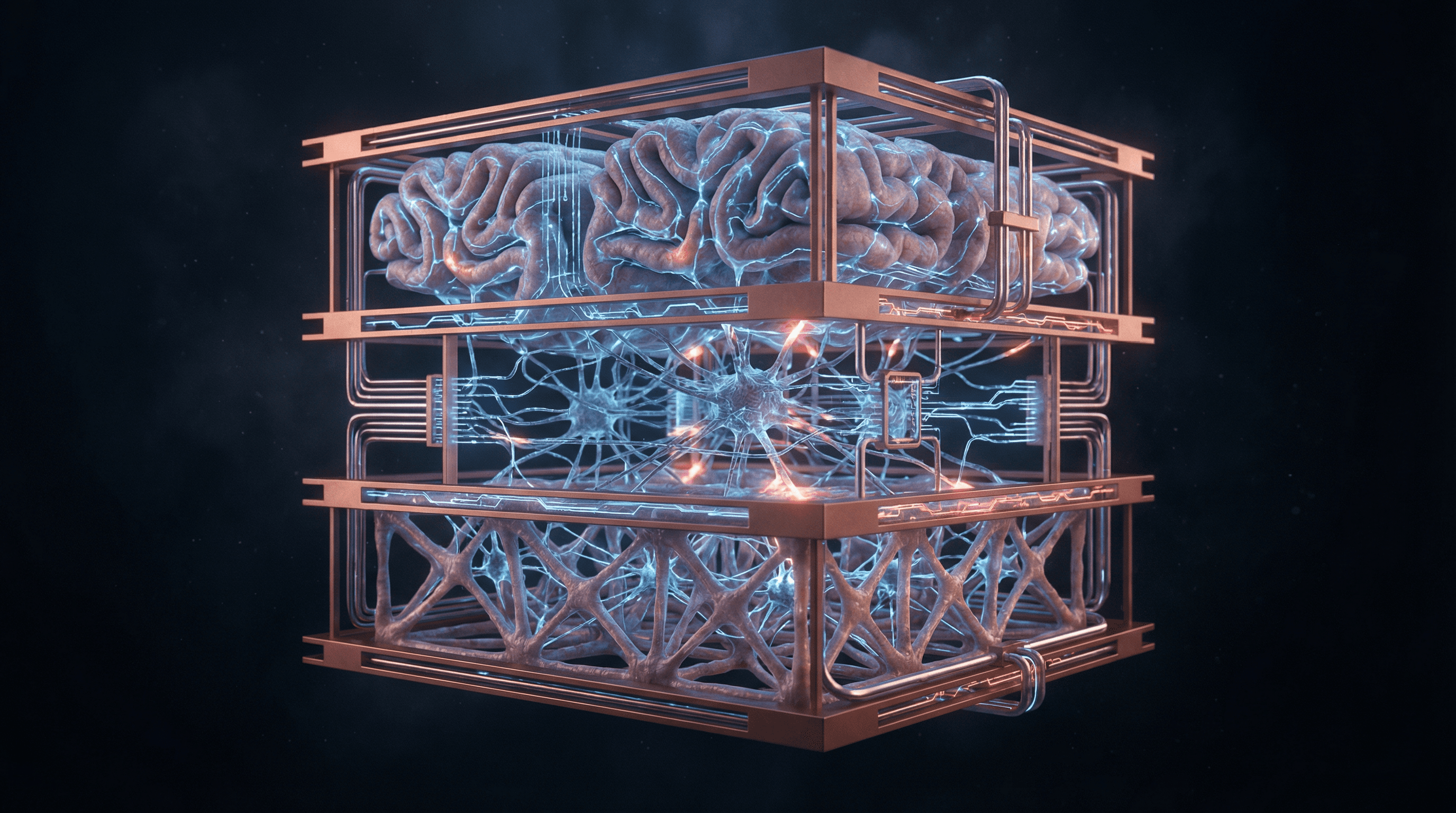
Dr. Ceruto’s methodology treats performance as a neural architecture problem. Rather than prescribing behavioral strategies that operate on the output of the system, Real-Time Neuroplasticity recalibrates the circuits producing that output.
The assessment phase identifies which specific mechanisms are driving the performance pattern. This is not a generalized assessment. It distinguishes between a dopaminergic prediction error miscalibration, a cortisol-driven risk aversion amplification, a glutamate-driven decision fatigue pattern, and a self-efficacy architecture deficit — each requiring fundamentally different intervention approaches. A professional whose performance degrades under drawdown conditions has a different neural profile than one whose performance degrades across extended cognitive load periods, even though the behavioral symptoms may appear similar.
From that assessment precision, Dr. Ceruto designs engagement protocols that target the specific circuits requiring recalibration. This is activity-dependent neuroplasticity applied to professional performance. The brain’s documented capacity to physically rewire in response to targeted, repetitive engagement. The result is not incremental behavioral improvement. It is architectural change in the circuits governing prediction accuracy, risk processing, cognitive endurance, and execution confidence.
Through the NeuroSync(TM) program for focused performance circuit work or the NeuroConcierge(TM) program for comprehensive embedded partnership across all dimensions of professional performance, Dr. Ceruto produces the kind of sustained change that behavioral approaches cannot deliver. The recalibration persists because the change is structural. Permanently rewired neural pathways, not temporary motivational states.
What to Expect
The engagement begins with a Strategy Call, a strategy conversation where Dr. Ceruto assesses the specific performance patterns you are experiencing and maps them to their likely neural substrates. This initial interaction determines whether a structured engagement is the right fit and identifies the specific circuits driving the presenting performance challenges.
A structured protocol follows, designed around your neural profile and professional performance environment. The methodology operates within your actual decision context — embedded in live performance conditions rather than abstracted into simulated scenarios. Each session builds measurable change that compounds across the engagement.
Progress is measured through performance metrics that matter in your professional context — decision quality, execution consistency, recovery speed after adverse outcomes, and sustained cognitive performance across extended high-load periods. No satisfaction surveys. No vague developmental narratives. Concrete, observable changes in the neural architecture governing your most consequential professional moments.
References
Wiehler, A., Branzoli, F., Adanyeguh, I., Mochel, F., & Pessiglione, M. (2022). A neuro-metabolic account of why daylong cognitive work alters the control of economic decisions. Current Biology, 32(16), 3564-3575. https://doi.org/10.1016/j.cub.2022.07.010
Cueva, C., Roberts, R. E., Spencer, T., Ber, N., Prabhakaran, M., Brass, M., & Rustichini, A. (2015). Cortisol and testosterone increase financial risk taking and may destabilize markets. Scientific Reports, 5, 11206. https://doi.org/10.1038/srep11206
Hollerman and Schultz. Nature Neuroscience.
The Neural Architecture of Performance
Performance is not a behavior. It is a state — a specific configuration of neural systems that determines what you are capable of producing at any given moment. Most performance improvement efforts treat the output without touching the state that generates it, which is why the improvements they produce are temporary and context-dependent.
At the neurological level, sustained high performance depends on the coordinated function of three systems: the prefrontal executive network, which governs goal maintenance and impulse regulation; the dopaminergic motivation circuit, which drives the effort required to close the gap between current state and desired outcome; and the default mode network, which is responsible for the mental simulation and self-referential processing that allow you to learn from experience and project into future scenarios. When these three systems are aligned and adequately resourced, performance appears almost automatic. When any one of them is depleted, dysregulated, or operating at cross-purposes with the others, the output degrades in ways that are immediately visible but whose causes are rarely obvious from the outside.
The prefrontal network is particularly sensitive to chronic cognitive load. High-performing individuals carry enormous amounts of unresolved decision weight — open loops, deferred choices, unprocessed outcomes — that occupy working memory bandwidth without producing any useful output. This load does not feel like a problem in the moment. It feels like being busy. But the cumulative effect is a measurable narrowing of attentional flexibility, reduced capacity for creative problem-solving, and a gradual shift toward reactive rather than proactive behavior. The person is still performing. They are simply performing below their actual ceiling, and they have been doing it long enough that they have forgotten the ceiling exists.
The dopaminergic circuit introduces a different set of constraints. Motivation at the neural level is prediction-based: the system fires in response to expected reward signals, not actual ones. When the gap between effort and visible progress becomes too large — when results feel uncoupled from action — the motivation circuit begins to disengage. This is not weakness. It is the brain operating exactly as designed, conserving resources in response to a perceived low-return environment. Correcting it requires changing the prediction model, not exhorting yourself to try harder.
Why Traditional Performance Improvement Falls Short
Conventional performance improvement consulting tends to operate in one of two registers: behavioral and systemic. Behavioral approaches focus on habits, routines, and disciplines — the visible actions that high performers take. Systemic approaches focus on structures, incentive alignment, and process design. Both have genuine value. Neither addresses the neural substrate that determines whether the behaviors will actually be executed, whether the structures will be used as designed, or whether the person at the center of the system will have the cognitive and motivational resources required to perform at the level the system assumes.
The result is a familiar pattern: the consulting engagement produces a well-designed plan, the client implements it with genuine commitment, and within three to six months the improvements have eroded. Not because the plan was wrong. Not because the client lacked discipline. But because the brain that was supposed to execute the plan was operating under the same constraints that produced the performance gap in the first place, and no one addressed those constraints directly.
Performance improvement that does not reach the neural level is renovation without structural repair. You can resurface the floor, repaint the walls, and replace the fixtures — but if the foundation has shifted, the renovation does not hold.

How Neural-Level Performance Restructuring Works
My approach begins with a precise diagnostic of the specific neural systems that are limiting performance for this individual, in this context, at this moment. Performance gaps are not generic. A CEO whose output is constrained by prefrontal overload presents differently from one whose dopaminergic motivation circuit has been blunted by a sequence of misaligned incentives, and both present differently from the individual whose performance is limited by a default mode network that generates catastrophic simulations in the absence of sufficient positive feedback. The intervention must be calibrated to the actual constraint.
For prefrontal load, the work involves systematic reduction of open cognitive loops — not through time management techniques, but through protocols that allow the brain’s executive system to release working memory resources by achieving genuine closure on pending decisions, rather than merely deferring them. For motivational circuit recalibration, the work involves restructuring the relationship between effort and feedback so that the prediction model the brain uses to allocate energy is receiving accurate, high-resolution information about the progress that is actually occurring. For default mode dysregulation, the work involves directed neuroplasticity practices that reshape the content and valence of the self-referential simulations the brain runs automatically in the background of every waking hour.
Each protocol is applied within the specific professional context of the individual — the actual decisions they face, the actual pressures they navigate, the actual performance domains where the gap is visible. This is not generic coaching. It is precision restructuring calibrated to a specific human nervous system in a specific operational environment.
What This Looks Like in Practice
Clients typically notice two categories of change. The first is a reduction in friction — the sense that things that used to require significant effort now come more readily. Decisions that previously consumed extended deliberation resolve more cleanly. Creative output that required sustained forcing now arrives with less resistance. The experience is not of working harder, but of the work matching the effort invested in a way it had not been doing before.
The second category is a shift in ceiling. When the neural systems that govern performance are operating at higher baseline function, the absolute upper limit of what the person can produce in their best moments increases. This is what separates performance improvement at the neural level from performance improvement at the behavioral level: behavioral improvements raise the floor; neural restructuring raises the ceiling.
We begin with a strategy call — one hour of precise strategy conversation that maps the specific constraints on your current performance and identifies the restructuring pathway that will produce the most significant and durable change. No generic frameworks. No borrowed best practices. A precise protocol built around the actual architecture of your performance system.
For deeper context, explore dopamine and workplace performance improvement.