The Decision Pattern That Willpower Cannot Fix
“The decisions you struggle with most are not the ones where you lack information. They are the ones where the brain's threat system, loss aversion, and identity circuits have hijacked the evaluation process, producing paralysis that strategic frameworks cannot resolve.”
You know the pattern. Early in the day, the decisions are sharp. The strategic calls feel clear. The judgment is calibrated. By late afternoon something shifts. The decisions get impulsive. The analysis shortcuts. You approve things you would have questioned four hours earlier. Or you defer entirely, pushing a critical choice into next week, not because it requires more data but because the mental cost of engaging it feels disproportionately high. This is not laziness. It is not a character flaw. It is a measurable neurological event. What makes this pattern insidious is that it operates beneath awareness. You do not feel your decision quality degrading. Objective task performance stays intact: you can still process information, run numbers, follow conversations at full speed. The degradation happens in a specific neural system that surface performance metrics do not capture. The lateral prefrontal cortex, the brain region responsible for weighing consequences and resisting impulsive choices, bears this hidden cost. Most professionals who experience chronic decision difficulty have already tried the obvious solutions. Better frameworks. Decision matrices. Structured processes for major choices. Time-blocking to protect cognitive bandwidth. These are reasonable strategies, and they produce reasonable improvements: up to a point. They cannot address the biological mechanism that causes decision quality to erode. They operate at the behavioral layer, not the neural one. The senior professional who has been avoiding a major organizational decision for weeks is not procrastinating in any conventional sense. The advertising director who defers a campaign strategy despite having all the data is not indecisive by nature. The media professional who keeps returning to the same flawed strategy despite evidence it is failing is not stubborn. Each is experiencing a distinct, identifiable dysfunction in the prefrontal circuits that govern adaptive, consequential choice, and no framework or decision tree reaches those circuits. There is another dimension that rarely gets named. The professional who makes bold, clear decisions in some contexts but becomes paralyzed in others is not inconsistent. The variation itself is diagnostic. It indicates specific threshold effects in the prefrontal architecture: conditions under which the system performs and conditions under which it degrades. Understanding those thresholds is the first step toward changing them.
The Neuroscience of Decision Quality Under Sustained Demand
The brain’s decision-making architecture is not a single system. It is a distributed network of prefrontal circuits, each serving a different function, each vulnerable to degradation under specific conditions. The prefrontal cortex has a well-mapped architecture for cognitive control and decision-making. The dorsolateral prefrontal cortex, executive control center, supports working memory, interference resistance, and goal-directed decisions. A separate ventromedial region handles value-based choices and sensitivity to future consequences. A key finding: damage to the orbitofrontal region, value-assessment center, specifically impairs the ability to update decisions when conditions change. This is the neural substrate of cognitive inflexibility in real-world decision-making. The professional who intellectually knows a strategy is failing but cannot revise it is experiencing a measurable deficit in this specific circuit. The fatigue dimension is equally critical. Research provided definitive neurological evidence for decision fatigue. Participants who performed demanding executive tasks for six or more hours showed increased impulsive decision-making, choosing immediate rewards over larger delayed ones. The neural mechanism was specific: the lateral prefrontal cortex activated during both executive tasks and economic decisions, and its activity decreased measurably across the day in the high-demand group. This lateral prefrontal depletion directly drove the increase in impulsive choices. Decision fatigue is not a metaphor. It is a quantifiable depletion of a specific neural structure. What I observe consistently in this work is that the most dangerous aspect of this depletion is its invisibility. Objective task accuracy in the research remained at approximately 95 percent: the brain compensated for effort, maintaining surface performance while decision quality silently degraded. The professional who feels sharp at four in the afternoon is operating with a measurably depleted lateral prefrontal cortex. The brain is managing the effort. The decisions are paying the cost. Research has identified two distinct fatigue states that impair decision-making. Recoverable fatigue is short-term and effort-induced. Unrecoverable fatigue accumulates over longer periods through sustained cognitive demand. The brain’s reward system compounds this effect by corrupting the value signal for demanding choices. Standard advice to rest more addresses only the recoverable component while the deeper accumulation continues. Cognitive flexibility is itself a measurable neural function. Research using advanced brain pattern analysis can predict with 77 percent accuracy whether a participant will revise their decision, based solely on neural activity patterns. Participants are significantly more likely to change their response after negative feedback. This models the real-world challenge of updating a decision under uncertainty. Cognitive flexibility is not a soft skill or a personality characteristic. It is a biologically measurable capacity, and it can be specifically targeted. The pattern that presents most often in decision support work bridges these findings. The anterior cingulate cortex, the brain’s error-detection center, mediates conflict resolution and cognitive control during decision-making. Its pathway connecting to memory-formation regions enables learning to make better decisions. It links executive control with memory systems that allow generalization of decision-learning to new contexts. Decision accuracy improves with structured intervention. Decision-making ability is trainable at the neural level. It is not a fixed capacity.
How Dr. Sydney Ceruto Approaches Decision Architecture
Real-Time Neuroplasticity™ applied to decision-making does not teach better decision frameworks. It recalibrates the neural architecture that produces decisions, targeting the specific circuits identified in the assessment. Dr. Ceruto’s methodology begins with mapping the individual’s decision architecture. This means identifying which prefrontal systems are degrading under sustained demand. It means determining where cognitive flexibility is constrained. It assesses whether unrecoverable fatigue has accumulated to the point of systematic decision avoidance. It examines how the brain’s value system is weighting effortful choices against easy defaults. The protocol then targets each identified dysfunction through structured interventions designed to produce genuine neuroplastic change. For the professional whose primary pattern is decision fatigue (late-day impulsivity, declining judgment quality across sustained workloads), the intervention targets the lateral prefrontal depletion cycle and the executive attention network’s capacity to sustain cognitive control. For the professional whose pattern is cognitive inflexibility, inability to revise strategies despite evidence, the work targets the orbitofrontal circuit responsible for adaptive updating. For the professional whose decision avoidance has become chronic, the protocol addresses unrecoverable fatigue accumulation. It also addresses the value corruption that makes demanding decisions feel disproportionately costly. This approach serves professionals navigating any situation where decision quality carries significant consequence, through NeuroSync™ for focused work on a specific decision-architecture deficit. NeuroConcierge™ serves individuals whose roles demand sustained decision precision across multiple high-stakes domains simultaneously. The methodology adapts to the scope and intensity of the demand. The result is not a better decision process. It is a brain that makes better decisions, because the circuits producing those decisions have been structurally recalibrated.
What to Expect
The engagement begins with a Strategy Call: a focused conversation where Dr. Ceruto assesses your decision-making patterns. She identifies the specific conditions under which quality degrades, and conducts a preliminary read on the neural systems likely involved. A structured assessment follows. This maps the individual’s prefrontal decision architecture: lateral prefrontal endurance under sustained load, orbitofrontal flexibility in response to changing conditions. It assesses executive attention network function, and the fatigue profile that explains why certain types of decisions degrade while others remain sharp. The protocol is built entirely around those findings. Sessions target the identified circuits with structured interventions that produce measurable neurological change, not behavioral workarounds, but architectural recalibration in how the brain produces decisions under real-world cognitive load. The engagement continues until the targeted systems demonstrate durable improvement under the conditions that previously triggered degradation.
References
Naomi P. Friedman, Trevor W. Robbins (2022). Prefrontal Cortex Architecture and Decision Quality. Neuropsychopharmacology. https://doi.org/10.1038/s41386-021-01132-0
Michael I. Posner, Aldis P. Weible, Pascale Voelker, Mary K. Rothbart, Cristopher M. Niell (2022). Decision Making as a Learned Skill in Mice and Humans. Frontiers in Neuroscience. https://doi.org/10.3389/fnins.2022.834701

Katharina Zühlsdorff, Jeffrey W. Dalley, Trevor W. Robbins, Sharon Morein-Zamir (2022). Cognitive flexibility: neurobehavioral correlates of changing one’s mind. Cerebral Cortex. https://doi.org/10.1093/cercor/bhac431
G.R. Wylie, B. Yao, H.M. Genova, M.H. Chen, J. DeLuca (2020). Functional Connectivity Changes in the Cognitive Fatigue Network (Prefrontal Connectivity under Mental Load). Scientific Reports. https://doi.org/10.1038/s41598-020-78768-3
The Neural Architecture of Decision Quality
Decision quality is a neural function, not a rational one. The executive who believes they make decisions through systematic analysis of available evidence is partially right: the prefrontal cortex does perform this function. But the prefrontal cortex does not make decisions in isolation. It makes decisions in constant interaction with the limbic system, the dopaminergic reward-prediction architecture, the somatic signal system that encodes accumulated bodily experience as intuition, and the habit circuits that generate automatic responses to familiar decision patterns before the analytical mind has finished reading the situation. The quality of any given decision depends on the relative contributions of these systems, the regulatory balance between them, and the specific neural state the decision-maker is in when the decision is made.
Predictive coding theory has produced a fundamental reconceptualization of how the brain makes decisions. The brain does not wait for information to arrive and then analyze it. It generates predictions about what information will arrive, what outcomes are probable, and what responses are appropriate, and then processes incoming information primarily as a signal about whether these predictions need updating. A decision-maker whose prior predictions are strongly encoded will effectively filter incoming evidence through those predictions, systematically underweighting information that challenges existing models and overweighting information that confirms them. This is not a cognitive bias. It is a neural architecture feature that served adaptive purposes in environments of limited information and now creates systematic decision distortions in environments of abundant, complex, and often contradictory data.
The somatic signal system, the body’s encoded record of the emotional consequences of previous decisions, is a parallel decision architecture that operates below the threshold of conscious awareness. Damasio’s somatic marker research demonstrated that individuals with damage to the neural circuits that process body-based emotional signals make consistently poor decisions despite intact analytical capability. The body’s decision history is neurologically essential to decision quality, and executives whose body-budget is chronically depleted by sustained high-load operations are making decisions with degraded access to this signal system.
Why Traditional Approaches Fall Short
Decision-support frameworks (decision trees, scenario analysis, structured deliberation processes, devil’s advocacy protocols, pre-mortem analysis) are valuable tools that address the cognitive architecture of decisions. They create conditions for more systematic information processing, more explicit consideration of alternatives, and more disciplined evaluation of outcomes. What they cannot address is the neural state of the decision-maker, the specific regulatory balance between prefrontal and limbic systems at the moment the decision is made, or the specific prediction architecture that is filtering which information is processed and how.
Executive coaching for decision quality operates at a similar cognitive level: examining the beliefs, heuristics, and behavioral patterns that shape decisions, and building awareness of their influence. This is genuinely useful and substantially better than nothing. But awareness of a cognitive pattern and neural recalibration of the pattern are different things. An executive who becomes aware that their decisions systematically underweight long-term risk is not thereby equipped to make decisions with better long-term risk calibration. The pattern is encoded in the prediction architecture. Awareness of it is encoded in the prefrontal cortex. These are different neural systems, and awareness does not automatically recalibrate the pattern.
The most significant gap in conventional decision-support is the failure to address the neural state as a decision variable. Decision quality under conditions of prefrontal depletion, limbic activation, or disrupted somatic signal processing is reliably degraded regardless of the quality of the decision framework being applied. The executive using a sophisticated decision analysis process while in a state of chronic sleep deprivation, elevated threat activation, and body-budget deficit is applying a precision instrument with a degraded instrument-operator.
How Neural Decision Support Works
My approach to decision-making support begins with the neural state and works outward to the decision architecture. Before examining any specific decision, I assess the regulatory balance, somatic signal access, and prediction architecture biases that will determine how decisions are made. This assessment reveals the specific neural conditions under which this individual’s decision quality is highest, and the specific conditions under which it is most vulnerable to systematic distortion.
From this assessment, I design a decision support protocol that addresses both the neural state and the decision process. For the neural state, the work targets the regulatory architecture: building the prefrontal-limbic balance that allows analytical processing to proceed without being overwhelmed by threat activation, and the somatic awareness that restores access to the body’s encoded decision history. For the decision process, I design protocols calibrated to the specific prediction architecture biases most powerfully shaping this individual’s decision patterns, creating deliberate friction around the exact points where the predictive coding system is most likely to filter out disconfirming evidence.

High-stakes decisions (capital allocation, strategic pivots, leadership selection, market entry) receive focused neural preparation before the decision process begins. This preparation addresses the neural state variables most likely to degrade decision quality for this specific decision context: the threat signals most likely to activate limbic override of analytical processing, the prediction biases most likely to filter the specific categories of information this decision requires, and the somatic signal quality available to inform the intuitive dimension of the judgment.
What This Looks Like in Practice
Decision-making support engagements begin with a Strategy Call in which I map the presenting decision challenge (its scope, timeline, stakes, and the specific neural factors most likely to determine decision quality) against the individual’s neural decision architecture. From that conversation, I determine whether the presenting need is for a focused, decision-specific intervention or for a sustained engagement that builds decision quality as a durable neural capacity rather than a situational support.
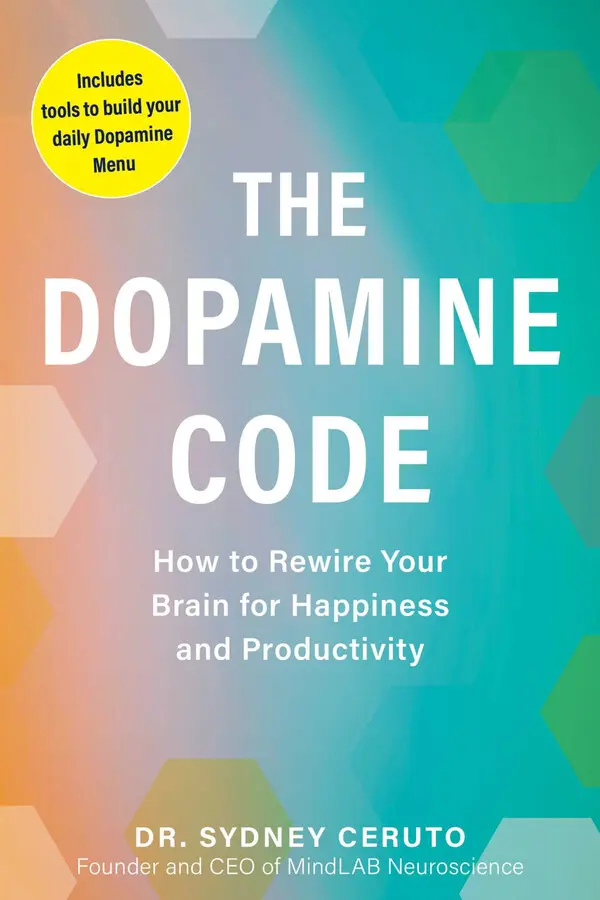
For executives navigating a specific high-stakes decision, the NeuroSync™ model provides targeted neural preparation and decision-process design calibrated to that decision context. For executives or leadership teams seeking to build durable decision quality across the full range of organizational challenges they face, the NeuroConcierge™ model provides the sustained partnership that systematic neural recalibration requires. The Dopamine Code explores the reward prediction architecture that underlies the most common decision quality failures I observe in this work, for those who want to understand the science behind what we are actually modifying.
For deeper context, explore enhancing decision-making skills for your career.