





The Decision Paralysis Pattern
“The decisions you struggle with most are not the ones where you lack information. They are the ones where the brain's threat system, loss aversion, and identity circuits have hijacked the evaluation process — producing paralysis that strategic frameworks cannot resolve.”
You know the feeling. The decision has been sitting on your desk — metaphorically or literally — for weeks. Maybe months. You have gathered the information. You have weighed the options. You might have built spreadsheets, consulted advisors, or talked through the problem with people you trust. And yet you cannot pull the trigger. Not because you lack intelligence or courage, but because something in the machinery of deciding has seized up.
Or perhaps the pattern looks different. You do make decisions — quickly, instinctively — but the quality has deteriorated. You notice you are defaulting to the safe option more than you used to. The bold moves that characterized an earlier version of you have given way to a conservative pattern that feels less like wisdom and more like avoidance. The person who used to trust their judgment now triple-checks everything and still walks away unsure.
Both patterns share a common root. They are not failures of character or evidence of some fundamental inadequacy. They are what happens when the brain’s decision architecture is operating under conditions it was not designed for. This system of interconnected prefrontal regions and insula — brain awareness center — degrades under sustained cognitive demand, compounding life transitions, chronic uncertainty, and the relentless accumulation of choices that modern professional life requires.
What makes this especially insidious is that the degradation happens gradually. You do not wake up one morning unable to decide. The capacity erodes across weeks and months of sustained load until the default mode has shifted from deliberate evaluation to pattern-matching and avoidance. By the time most people recognize the problem, the architecture has been running in a depleted state for longer than they realize.
For anyone navigating a major life transition — career pivots, relocations, relationship changes — the stakes compound. These are not decisions that can be safely deferred or defaulted. They require precisely the prefrontal resources that sustained cognitive demand has been draining. And the irony is sharp: the bigger the decision, the more cognitive resources it demands, and the less likely those resources are available when you need them most.
The Neuroscience of Decision Making
The brain does not make decisions with a single system. It relies on a network of interconnected regions whose coordination determines decision quality. That coordination is highly sensitive to fatigue, stress, and cognitive load.
Research examining the neural basis of changing one’s mind found that specific patterns of brain activity predicted with high accuracy whether a person would update or hold their decision. This prediction was based solely on neural signals, not on their conscious reasoning. The prefrontal cortex and anterior insula showed heightened activity specifically during controlled course-correction. When these circuits are underperforming, a person’s capacity to change their mind at the right moment is physiologically compromised, producing either excessive rigidity or chronic second-guessing.
The fatigue dimension is equally well-documented. Cognitive fatigue from sustained mental work significantly reduces willingness to pursue high-effort, high-reward choices. The fatigued brain systematically over-weights how hard a decision feels. Meanwhile, the prefrontal cortex loses its capacity to regulate the decision process. The practical translation: after a day of demanding cognitive work, you are not just tired. You are neurologically biased toward easy, immediate options and away from the effortful choices that actually serve your long-term interests.
As cognitive fatigue increases, the brain shifts processing away from deliberate prefrontal evaluation toward habit-driven, automatic responses. What I see repeatedly in this work is exactly this pattern: a client navigating a complex decision after an intense work period is not making that decision with their full prefrontal capacity. The brain has routed processing to autopilot, and the client experiences this as feeling that they “just cannot think clearly” about the choice in front of them.
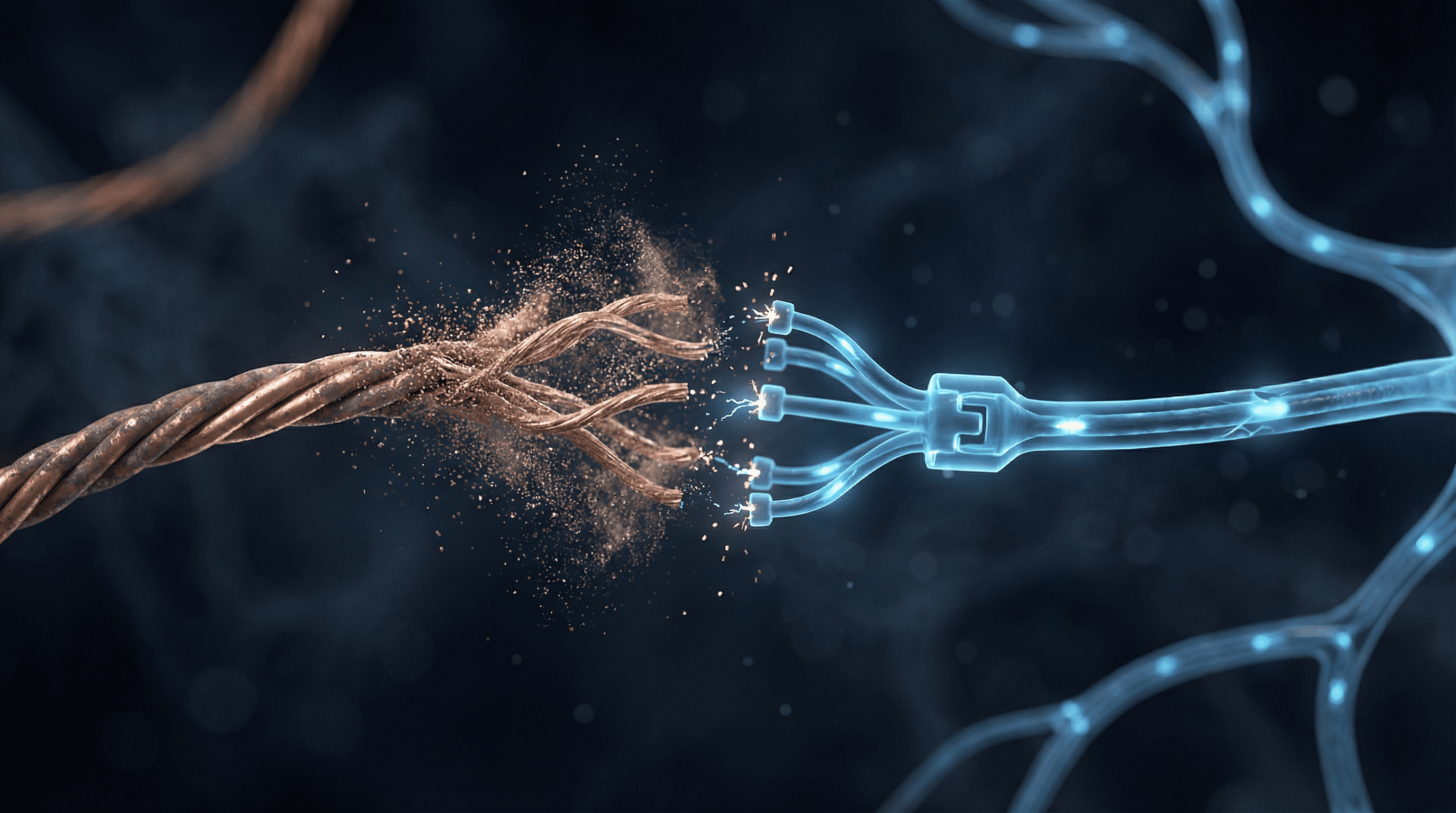
Research into the brain’s decision architecture has identified two distinct modes. Switching between familiar patterns engages primarily the left prefrontal cortex. Adapting strategy when no prior framework applies recruits the right insula and broader frontal regions. This distinction is critical because many major life decisions are genuinely novel — no precedent or template exists. The brain needs its full flexible, exploratory engagement for these decisions. That capacity is precisely what chronic stress and cognitive fatigue deplete first.
How Dr. Ceruto Approaches Decision Architecture
Dr. Ceruto’s methodology treats decision-making not as a skill to be trained but as a neural architecture to be optimized. The distinction matters. Skill-based approaches teach decision frameworks such as weighted matrices, scenario planning, and pre-mortem analysis. These frameworks require the very prefrontal resources depleted in the people seeking help. Asking someone with a fatigued prefrontal cortex to run a complex analytical framework is like asking someone with a broken leg to walk it off.
Real-Time Neuroplasticity targets the architecture itself. The process begins with identifying the specific state of the decision network. Is the primary issue prefrontal depletion from sustained cognitive load? Is it an anterior cingulate cortex calibration problem producing excessive conflict monitoring that manifests as chronic indecision? Is it a deficit in the brain’s capacity for genuinely novel decision-making? In such cases, the circuits needed to evaluate new situations without prior templates are underperforming. The identification determines the intervention.
Through NeuroSync, clients facing a specific high-stakes decision or a defined decision-making challenge work through a focused protocol targeting the relevant neural systems. Through NeuroConcierge, individuals managing decision demands across multiple life domains engage in an embedded partnership. This addresses career direction, relocation, relationship architecture, and business strategy across contexts. The work meets people in the pressures and situations that have overwhelmed their decision capacity, not in abstract categories. Whether the paralysis shows up in a business pivot, a family decision, or the compounding weight of choices that accumulate during a major life transition, the neural architecture driving the pattern is identifiable and addressable.
The pattern that presents most often is people who have compounding decisions across domains, each one draining the same prefrontal resources the others need. The methodology does not replace analytical thinking. It restores the neural infrastructure that makes analytical thinking effective. Clients consistently describe the result not as having better frameworks but as experiencing a qualitative shift in how deciding feels. The fog lifts, the stuck sensation dissolves, and the capacity for clear, committed choice-making returns.
What to Expect
The engagement opens with a Strategy Call — a precision conversation where Dr. Ceruto assesses the specific decision patterns creating friction. He evaluates the cognitive and environmental context surrounding them, and the likely neural systems involved. This shapes the protocol from the first session.
A structured assessment follows, mapping the decision architecture in detail. The assessment examines how stress, fatigue, and life context interact with your decision-making baseline. It identifies which aspects of the prefrontal network are underperforming and which compensatory patterns have developed. This is not a personality profile or a preference inventory. It is a map of how your brain is currently processing choices under your specific conditions.
The protocol unfolds through structured sessions designed to produce measurable neuroplastic change in the decision circuitry. Each session builds cumulatively on the last. Clients typically report that the shifts show up first in the decisions they have been avoiding. These are the high-stakes, paralysis-inducing choices. Being able to think clearly about a choice that previously produced only fog or avoidance is one of the most consistent markers of progress.
The work does not produce dependence on the engagement. The neural changes are structural. Once the architecture is optimized, the improved decision capacity persists across contexts and conditions. Clients describe the lasting effect as a restored trust in their own judgment — recovered capacity, not learned tools.
The Neural Architecture of Decision Quality
Decision quality is a neural function, not a rational one. The executive who believes they make decisions through systematic analysis of available evidence is partially right: the prefrontal cortex does perform this function. But the prefrontal cortex does not make decisions in isolation. It makes decisions in constant interaction with the limbic system, the dopaminergic reward-prediction architecture, the somatic signal system that encodes accumulated bodily experience as intuition, and the habit circuits that generate automatic responses to familiar decision patterns before the analytical mind has finished reading the situation. The quality of any given decision depends on the relative contributions of these systems, the regulatory balance between them, and the specific neural state the decision-maker is in when the decision is made.
Predictive coding theory has produced a fundamental reconceptualization of how the brain makes decisions. The brain does not wait for information to arrive and then analyze it. It generates predictions about what information will arrive, what outcomes are probable, and what responses are appropriate — and then processes incoming information primarily as a signal about whether these predictions need updating. A decision-maker whose prior predictions are strongly encoded will effectively filter incoming evidence through those predictions, systematically underweighting information that challenges existing models and overweighting information that confirms them. This is not a cognitive bias. It is a neural architecture feature that served adaptive purposes in environments of limited information and now creates systematic decision distortions in environments of abundant, complex, and often contradictory data.
The somatic signal system — the body’s encoded record of the emotional consequences of previous decisions — is a parallel decision architecture that operates below the threshold of conscious awareness. Damasio’s somatic marker research demonstrated that individuals with damage to the neural circuits that process body-based emotional signals make consistently poor decisions despite intact analytical capability. The body’s decision history is neurologically essential to decision quality, and executives whose body-budget is chronically depleted by sustained high-load operations are making decisions with degraded access to this signal system.
Why Traditional Approaches Fall Short
Decision-support frameworks — decision trees, scenario analysis, structured deliberation processes, devil’s advocacy protocols, pre-mortem analysis — are valuable tools that address the cognitive architecture of decisions. They create conditions for more systematic information processing, more explicit consideration of alternatives, and more disciplined evaluation of outcomes. What they cannot address is the neural state of the decision-maker, the specific regulatory balance between prefrontal and limbic systems at the moment the decision is made, or the specific prediction architecture that is filtering which information is processed and how.
Executive coaching for decision quality operates at a similar cognitive level: examining the beliefs, heuristics, and behavioral patterns that shape decisions, and building awareness of their influence. This is genuinely useful and substantially better than nothing. But awareness of a cognitive pattern and neural recalibration of the pattern are different things. An executive who becomes aware that their decisions systematically underweight long-term risk is not thereby equipped to make decisions with better long-term risk calibration. The pattern is encoded in the prediction architecture. Awareness of it is encoded in the prefrontal cortex. These are different neural systems, and awareness does not automatically recalibrate the pattern.
The most significant gap in conventional decision-support is the failure to address the neural state as a decision variable. Decision quality under conditions of prefrontal depletion, limbic activation, or disrupted somatic signal processing is reliably degraded regardless of the quality of the decision framework being applied. The executive using a sophisticated decision analysis process while in a state of chronic sleep deprivation, elevated threat activation, and body-budget deficit is applying a precision instrument with a degraded instrument-operator.

How Neural Decision Support Works
My approach to decision-making support begins with the neural state and works outward to the decision architecture. Before examining any specific decision, I assess the regulatory balance, somatic signal access, and prediction architecture biases that will determine how decisions are made. This assessment reveals the specific neural conditions under which this individual’s decision quality is highest, and the specific conditions under which it is most vulnerable to systematic distortion.
From this assessment, I design a decision support protocol that addresses both the neural state and the decision process. For the neural state, the work targets the regulatory architecture: building the prefrontal-limbic balance that allows analytical processing to proceed without being overwhelmed by threat activation, and the somatic awareness that restores access to the body’s encoded decision history. For the decision process, I design protocols calibrated to the specific prediction architecture biases most powerfully shaping this individual’s decision patterns — creating deliberate friction around the exact points where the predictive coding system is most likely to filter out disconfirming evidence.
High-stakes decisions — capital allocation, strategic pivots, leadership selection, market entry — receive focused neural preparation before the decision process begins. This preparation addresses the neural state variables most likely to degrade decision quality for this specific decision context: the threat signals most likely to activate limbic override of analytical processing, the prediction biases most likely to filter the specific categories of information this decision requires, and the somatic signal quality available to inform the intuitive dimension of the judgment.
What This Looks Like in Practice
Decision-making support engagements begin with a Strategy Call in which I map the presenting decision challenge — its scope, timeline, stakes, and the specific neural factors most likely to determine decision quality — against the individual’s neural decision architecture. From that conversation, I determine whether the presenting need is for a focused, decision-specific intervention or for a sustained engagement that builds decision quality as a durable neural capacity rather than a situational support.
For executives navigating a specific high-stakes decision, the NeuroSync model provides targeted neural preparation and decision-process design calibrated to that decision context. For executives or leadership teams seeking to build durable decision quality across the full range of organizational challenges they face, the NeuroConcierge model provides the sustained partnership that systematic neural recalibration requires. The Dopamine Code explores the reward prediction architecture that underlies the most common decision quality failures I observe in this work, for those who want to understand the science behind what we are actually modifying.
For deeper context, explore enhancing decision-making skills for your career.