Insomnia Support in Midtown Manhattan

Chronic insomnia is not a sleep problem. It is a disorder of pathological wakefulness — and the brain can unlearn it.

(empty)

Book a Strategy Call

When the Brain Won’t Switch Off

Insomnia that persists for months or years is fundamentally misunderstood. It is not caused by insufficient sleep drive. The body is tired. The brain knows it needs sleep. The problem is that the arousal system refuses to stand down. The central signature of chronic insomnia is cortical hyperarousal — abnormally elevated fast-frequency brain activity during the pre-sleep period and throughout the night. This fast electrical activity is the opposite of the slow oscillations that characterize restorative deep sleep. It is the brain running in problem-solving mode when it should be offline.

This hyperarousal is not limited to bedtime. Research demonstrates that chronic insomnia involves elevated fast-frequency activity across the entire 24-hour cycle — during nighttime sleep and during daytime hours. Insomnia is a round-the-clock arousal disorder. It becomes most visible at night because nighttime is when the consequences are most acutely felt.

How Sleep Problems Create More Sleep Problems

The disorder self-reinforces through a specific feedback loop. Elevated stress hormones activate cortical arousal systems. These systems suppress the brain’s primary sleep-promoting region, leading to sleep onset failure. That failure generates anticipatory anxiety about the next night’s sleep. The anxiety pre-activates the HPA axis — the body’s central stress-response system — before the person even enters the bedroom. The cycle deepens with each repetition.

Producing the physiological arousal of insomnia in normal sleepers induces the full secondary symptom profile: fatigue, cognitive impairment, mood disturbance, daytime dysfunction. Producing sleep fragmentation without the arousal does not. This establishes hyperarousal as the primary cause, not a secondary effect of sleep loss.

Translucent copper and blue wave forms visualizing sleep cycle phases against deep navy background

The Hidden Cost of Chronic Sleep Loss

Mental Performance Under Pressure

The cognitive and emotional costs are measurable. The prefrontal cortex — the brain region most sensitive to sleep disruption — shows reduced activation during task performance in chronic insomnia. The insidious dimension is that behavioral performance may remain near-normal through compensatory neural recruitment. But the metabolic cost of that performance escalates. This is insomnia’s hidden tax: maintaining output quality while burning through significantly greater neural resources to do so. This creates cognitive reserve depletion that accumulates over months and years. Chronic insomnia accelerates cognitive decline at a rate approaching the annual decline associated with the primary genetic risk factor for Alzheimer’s disease, and raises the risk of new cognitive impairment significantly.

When Everything Feels Like a Threat

The amygdala — the brain’s threat-detection system — becomes progressively destabilized. Insomnia produces heightened threat reactivity to sleep-related cues, localized tissue changes in the amygdala, and disrupted communication with the regions responsible for integrating emotional information. The functional consequence is reduced frustration tolerance, heightened threat sensitivity, and impaired recovery from adverse events.

Working With Sleep at the Brain Level

Dr. Ceruto’s approach to insomnia operates at the level of these neural mechanisms. The methodology targets extinction of conditioned cortical arousal. A specific brain oscillation frequency associated with calm, non-anxious readiness has been shown to increase sleep spindle density — the brief bursts of activity that protect sleep continuity — decrease overnight awakenings, and increase deep sleep duration.

Why Sleep Can Be Restored

The most important principle from contemporary sleep neuroscience is that insomnia involves learned neural patterns that can be unlearned. The brain retains the capacity to reconstruct sleep architecture even after years of disruption. Prefrontal underactivation normalizes after structured intervention in a measurable, session-dependent manner. This is not a permanent condition. It is a maladaptive state — and maladaptive states can be reversed.

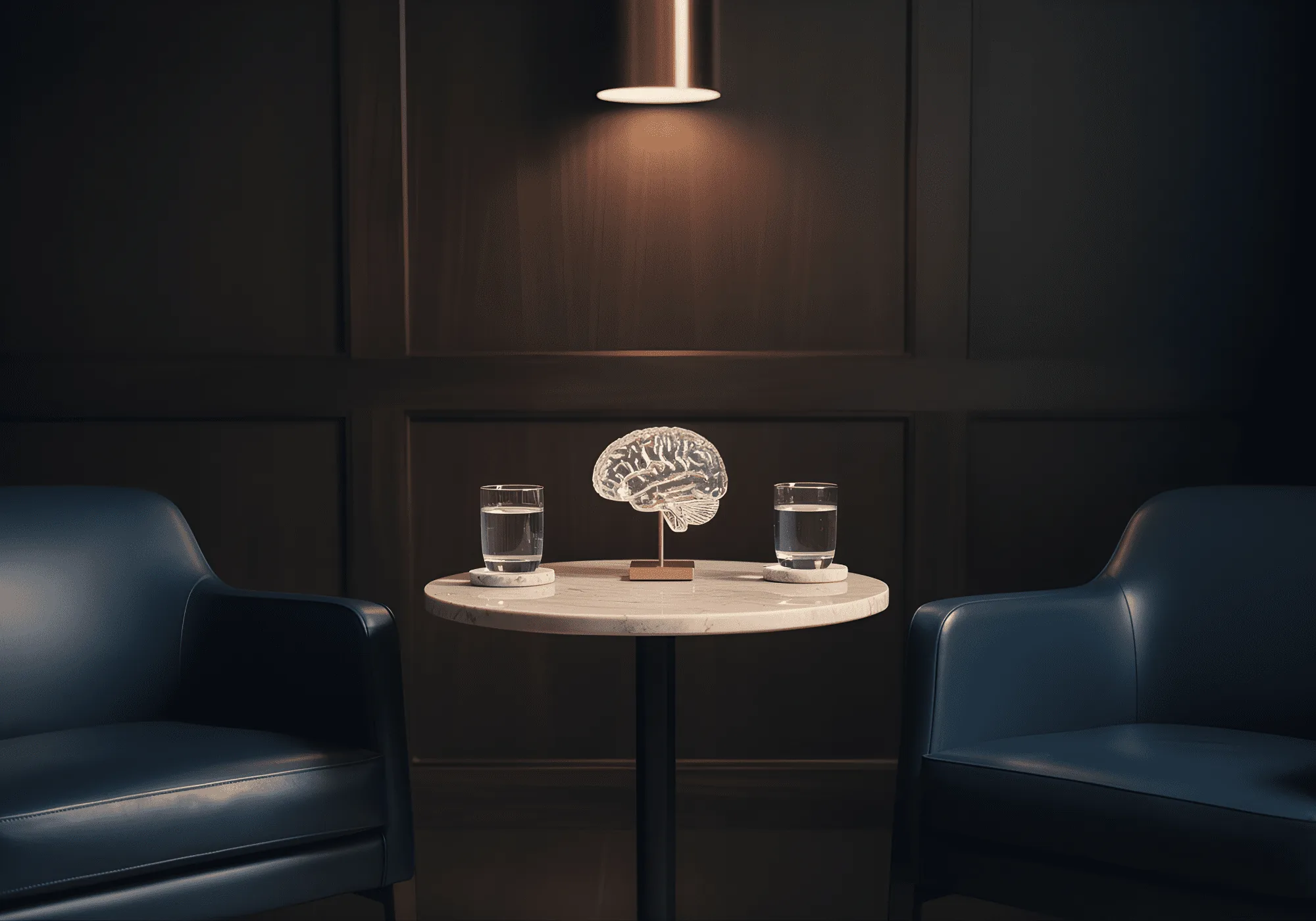
Walnut credenza with crystal brain sculpture and MindLAB journal in diffused dusk light suggesting high-floor Midtown Manhattan private office

Why Insomnia Support Matters in Midtown Manhattan

Midtown Manhattan’s professional ecosystem is architecturally designed to produce and perpetuate insomnia. The district’s economy runs on industries whose structures are fundamentally incompatible with consistent sleep. Law firms requiring 2,000 billable hours annually. Consulting firms sending professionals to client sites Monday through Thursday with circadian — relating to the body’s 24-hour biological clock — disrupting travel schedules. Financial institutions monitoring global markets around the clock from towers along Park Avenue and at Hudson Yards.

The hyperarousal mechanism that drives insomnia is not abstract in Midtown. The brain region responsible for conflict monitoring and performance evaluation remains activated throughout these extended working hours. This feeds the arousal network and sustains the activation state that prevents sleep onset.

The conditioned arousal that characterizes chronic insomnia deepens in environments without spatial separation between work and rest. When an attorney’s office is in the same building as the restaurant where she meets clients, two blocks from her apartment, the brain’s context-encoding system loses the ability to differentiate “work environment” from “sleep environment.” The bedroom loses its association with sleep and acquires an association with the unfinished cognitive demands of the day.

Midtown’s noise profile fragments sleep architecture even in individuals without insomnia. For those already caught in the hyperarousal loop, nocturnal noise provides the cortical activation that prevents return to sleep after normal overnight awakenings. Eighty-two percent of adult New Yorkers report sleep disturbance at least once per week. Seventy-five percent of those experiencing frequent noise disruption report difficulty concentrating the following day.

Dr. Sydney Ceruto, PhD — Founder, MindLAB Neuroscience

Dr. Sydney Ceruto, PhD — Founder & CEO, MindLAB Neuroscience

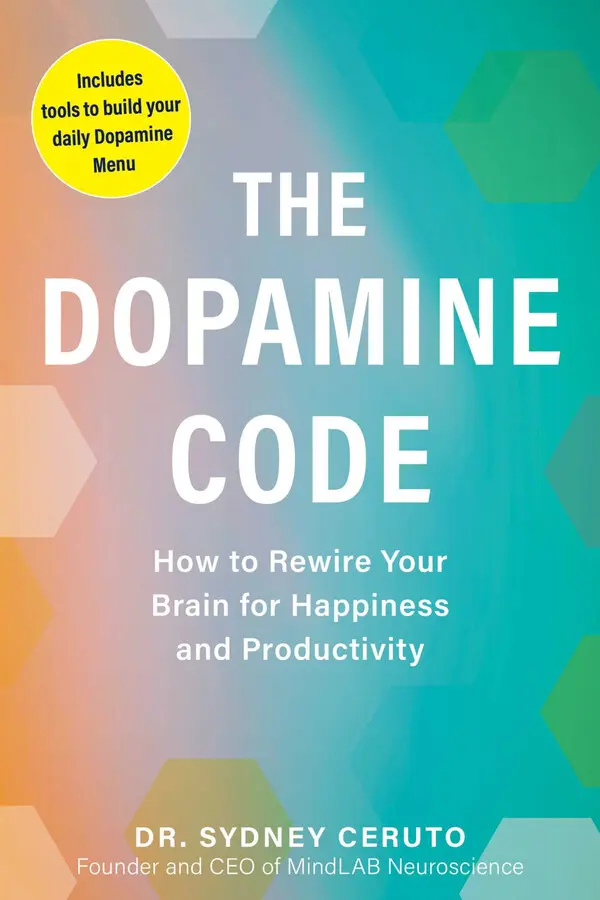
Dr. Ceruto holds a PhD in Behavioral & Cognitive Neuroscience from NYU and two Master’s degrees from Yale University. She lectures at the Wharton Executive Development Program at the University of Pennsylvania and has been an Executive Contributor to the Forbes Coaching Council since 2019. Dr. Ceruto is the author of The Dopamine Code (Simon & Schuster, June 2026). She founded MindLAB Neuroscience in 2000 and has spent over 26 years pioneering Real-Time Neuroplasticity™ — a methodology that permanently rewires the neural pathways driving behavior, decisions, and emotional responses.

References

Van Someren, E. J. W. (2021). Brain mechanisms of insomnia: New perspectives on causes and consequences. Physiological Reviews, 101(3), 995–1046. https://doi.org/10.1152/physrev.00046.2019

Bonnet, M. H., & Arand, D. L. (2010). Hyperarousal and insomnia: State of the science. Sleep Medicine Reviews, 14(1), 9–15. https://doi.org/10.1016/j.smrv.2009.05.002

Yoo, S.-S., Gujar, N., Hu, P., Jolesz, F. A., & Walker, M. P. (2007). The human emotional brain without sleep — a prefrontal amygdala disconnect. Current Biology, 17(20), R877–R878. https://doi.org/10.1016/j.cub.2007.08.007

Kessler, R. C., Berglund, P. A., Coulouvrat, C., Hajak, G., Roth, T., Shahly, V., Shillington, A. C., Stephenson, J. J., & Walsh, J. K. (2011). Insomnia and the performance of US workers: Results from the America Insomnia Survey. Sleep, 34(9), 1161–1171. https://doi.org/10.5665/SLEEP.1230

Success Stories

“My kids had been sleeping through the night for three years, but my brain hadn't caught up. I was still waking every ninety minutes like clockwork — no amount of sleep hygiene or supplements touched it. Dr. Ceruto identified the hypervigilance loop that had hardwired itself during those early years and dismantled it at the source. My brain finally learned the threat was over. I sleep through the night now without effort.”

Catherine L., General Counsel Private Equity Greenwich, CT

“Four hours a night for over two years — that was my ceiling. Supplements, sleep protocols, medication — nothing touched it because nothing addressed why my brain wouldn't shut down. Dr. Ceruto identified the cortisol loop that was keeping my nervous system locked in a hypervigilant state and dismantled it. I sleep now. Not because I learned tricks — because the pattern driving the insomnia no longer exists.”

Adrian M., Portfolio Manager Citadel New York, NY

“My body had simply stopped knowing when to sleep. Crossing time zones weekly for over two years had broken something fundamental, and every protocol, supplement, and device I tried couldn't hold longer than a few days. Dr. Ceruto identified the disruption at the level of my suprachiasmatic nucleus and recalibrated the signaling pattern driving the dysfunction. Within weeks, my circadian rhythm locked back in. I sleep now. Consistently. Regardless of where I land.”

Jonathan K., VP of Global Operations Maersk

“Endocrinologists, sleep clinics, functional medicine — every specialist cleared me, and no one could tell me why I was exhausted every single day. Dr. Ceruto identified that my HPA axis was locked in a low-grade stress activation I couldn't feel consciously. Once that pattern was disrupted at the neurological level, my energy came back in a way that felt completely foreign. I'd forgotten what it was like to not be tired.”

Danielle K., Chief Marketing Officer Luxury Retail Beverly Hills, CA

“Every few months I'd blow up my life in a different way — new venture, new relationship, new fixation — and call it ambition. Dr. Ceruto identified the reward prediction error that was running the cycle. My brain had learned to chase escalation because it was the only thing that overrode what I was actually avoiding. Once she restructured the dopamine loop at the root, the compulsion to escalate just stopped. I didn't lose my drive — I lost the desperation underneath it.”

Kofi A., Head of Growth E-Commerce Platform London, UK

“I could perform at the highest level professionally and still feel hijacked emotionally in my closest relationships — and no conventional approach had ever explained why those two realities coexisted. Dr. Ceruto identified the limbic imprint — an amygdala encoding from childhood that was running every intimate interaction I had. She didn't help me understand it better. She dismantled it. The reactivity isn't something I regulate anymore. The pattern that generated it is gone.”

Natasha K., Chief of Staff Venture Capital Beverly Hills, CA

Frequently Asked Questions About Insomnia Support in Midtown Manhattan

What is neuroscience-based insomnia support?

Insomnia support at MindLAB Neuroscience addresses the neurobiological mechanisms that perpetuate chronic insomnia. We focus on cortical hyperarousal — excessive brain activation preventing sleep onset — and conditioned arousal responses. Dr. Ceruto identifies which systems are driving the wakefulness and targets them directly. This approach addresses the underlying neural patterns rather than managing surface-level symptoms.

Why does insomnia persist even when someone is exhausted?

Chronic insomnia is a disorder of pathological wakefulness, not insufficient sleep drive. The arousal system — driven by elevated stress hormones, high-frequency cortical activity, and conditioned responses to the sleep environment — overrides the body’s natural sleep pressure. The harder someone tries to force sleep, the more the monitoring systems that prevent it are activated. This is a neural pattern, not a willpower issue.

Who is this approach designed for?

Anyone living with insomnia that has not resolved through conventional approaches — people who have tried sleep hygiene adjustments, supplements, or medication without lasting improvement. It is particularly relevant for individuals whose insomnia is driven by high-demand lifestyles, sustained cognitive pressure, or an inability to disengage mentally at bedtime despite physical fatigue.

What happens during the initial engagement?

The process begins with a Strategy Call — a phone-based conversation with Dr. Ceruto that maps the pattern of insomnia, identifies likely neural drivers, and determines the appropriate methodology. The $250 Strategy Call fee applies to this initial conversation. Program structure and investment details are discussed during the Strategy Call.

How long does it take to see measurable change?

The timeline varies with the duration and severity of the insomnia pattern. Neuroplastic change (related to the brain's ability to rewire itself) in the arousal circuits typically begins within weeks of consistent intervention. Prefrontal cortex — the brain's executive control center — function has been shown to normalize after structured sleep intervention in imaging studies, confirming that the brain actively reorganizes during the process. Sustainable improvement requires sustained engagement, and many individuals experience meaningful shifts in sleep onset and overnight stability within the first several weeks.

Take the First Step Toward Restful Sleep

The Strategy Call is a focused conversation with Dr. Ceruto that maps the specific neural mechanisms driving your concerns and determines the right path forward.

Book a Strategy Call
MindLAB Neuroscience consultation room
Locations

The Intelligence Brief

Neuroscience-backed analysis on how your brain drives what you feel, what you choose, and what you can’t seem to change — direct from Dr. Ceruto.