





Chronic Fatigue in Midtown Manhattan

Exhaustion that does not resolve with rest is not a character flaw. It is a neurological state with measurable biological drivers.

Book a Strategy Call

When Exhaustion Defies All Solutions

Chronic fatigue that persists despite adequate sleep, vacations, and lifestyle adjustments is one of the most misunderstood conditions in modern life. It is often dismissed as burnout, laziness, or depression. In reality, it is a measurable neurological state characterized by at least four intersecting biological mechanisms that produce a system simultaneously depleted and unable to recover.

Four Hidden Systems That Create Fatigue

When the Brain’s Immune System Stays Activated

The first mechanism is neuroinflammation. Microglia — the brain’s resident immune cells — normally perform surveillance functions: pruning synapses, clearing debris, monitoring for infection. Under sustained stress, these cells shift from surveillance to a persistent pro-inflammatory activation state, releasing cytokines including interleukin-6 and tumor necrosis factor-alpha. These inflammatory signals cross the blood-brain barrier and produce what researchers term cytokine-induced fatigue — a state of reduced motivation and cognitive engagement that is biologically distinct from simple tiredness. The inflammatory mediators also generate kynurenic acid, which blocks NMDA and nicotinic receptors critical for prefrontal cortex function, directly impairing the neural circuits responsible for focus, planning, and working memory.

How Stress Hormones Get Stuck

The second mechanism involves the HPA axis the normal sharp morning peak and gradual evening decline are replaced by a pattern that is neither fully activating nor fully permitting recovery. The brain loses the hormonal signal that differentiates day from night, effort from rest.

When Brain Cells Run Out of Energy

The third mechanism is mitochondrial dysfunction in neural tissue. Mitochondria are the energy-producing structures within every cell, and the brain is uniquely vulnerable to mitochondrial inefficiency. Research in chronic fatigue populations consistently demonstrates reduced mitochondrial respiration, impaired ATP synthesis, and elevated lactate in brain tissue — a marker of the shift toward anaerobic energy production when oxidative metabolism fails. The brain is literally running out of fuel at the cellular level.

Translucent copper and blue wave forms visualizing sleep cycle phases against deep navy background

The fourth mechanism targets motivation directly. The basal ganglia become dysregulated under conditions of chronic depletion. Dopamine does not simply signal pleasure. It determines whether the perceived benefits of a task outweigh its costs. When dopaminergic tone drops, the brain’s effort-cost calculation shifts: tasks that were manageable become subjectively overwhelming, not because capacity has changed but because the neurochemical system evaluating whether effort is worthwhile has reset its threshold. This is the hallmark of allostatic overload — feeling simultaneously wired and exhausted, in high-arousal survival mode with degraded executive control.

A Targeted Approach to Recovery

Dr. Ceruto’s methodology addresses chronic fatigue at the level of these converging mechanisms. The approach distinguishes between central fatigue — originating in neural tissue and neurochemical systems — and peripheral fatigue, which involves muscular and cardiovascular components. It maps the individual’s specific allostatic load profile: which systems are most compromised, whether the primary driver is neuroinflammatory, neuroendocrine, mitochondrial, or motivational, and how the mechanisms interact in the individual case. Intervention targets the restoration of autonomic flexibility through vagal tone training, the recalibration of HPA axis rhythmicity, the support of mitochondrial recovery through sleep architecture optimization and the rebuilding of dopaminergic motivation circuitry through strategic cognitive restructuring and ultradian rhythm alignment (relating to biological cycles shorter than 24 hours).

Why Rest Alone Is Not Enough

Recovery from chronic fatigue is not a matter of rest alone. Rest without addressing the underlying neural architecture leaves the depleted systems in the same dysfunctional state. The work is to rebuild the biological infrastructure that makes rest restorative again.

Why Chronic Fatigue Matters in Midtown Manhattan

Midtown Manhattan’s professional culture produces chronic fatigue through a mechanism that is nearly invisible until the accumulation becomes debilitating. The district’s dominant industries — law, consulting, finance, media — all operate on structures that systematically prevent the neurobiological recovery that the brain requires to avoid allostatic overload.

Walnut credenza with crystal brain sculpture and MindLAB journal in diffused dusk light suggesting high-floor Midtown Manhattan private office

The billable-hours structure of Midtown’s legal sector is a fatigue machine. Meeting a 2,000-hour annual target at the documented 37% utilization rate requires sixty or more hours weekly in the office. Attorneys at Midtown’s AmLaw firms regularly report 66-hour weeks, with many routinely reaching 80 hours. The 2025 ALM Mental Health Survey found that 65.5% of attorneys report billable-hour pressure negatively impacts their mental health. Among 1,300 financial sector workers in related research, insomnia was associated with a 14.7-fold increased odds of burnout — and critically, high job strain was a significant burnout predictor only in participants who also had insomnia, establishing sleep disruption as the mediating pathway between occupational stress and systemic collapse.

The mechanism operates through cumulative allostatic load. Chronic cortisol elevation initially enhances performance — the inverted-U curve of arousal — but sustained exposure leads to hippocampal dendritic retraction, reduced brain-derived neurotrophic factor and impaired prefrontal connectivity. Animal models demonstrate that even two to three weeks of chronic stress produce measurable prefrontal dendritic remodeling. For Midtown professionals operating under sustained pressure for months or years, the structural changes to the brain’s executive control systems are not hypothetical.

The cognitive fatigue compounds across the day without recovery. Microsoft’s brain-wave research confirms that stress accumulates continuously across back-to-back meetings without breaks, and Midtown’s standard operating rhythm offers no structured recovery. Sixty-nine percent of employees report being tired at work, with fatigue-related costs estimated at $410 billion annually in societal expenses. In Midtown specifically, the cognitive load of sustained interpersonal performance depletes prefrontal resources through mechanisms distinct from simple task completion.

For the consulting population traveling weekly from Midtown offices to client sites, the circadian disruption layer adds biological insult to psychological demand. The nervous system never fully anchors, the HPA axis — the body’s central stress-response system — never fully resets, and the sleep architecture that would enable glymphatic clearance and synaptic restoration is chronically fragmented. The fatigue that results is not from any single night or any single week. It is the accumulated cost of a biological system running in deficit for months, compounding silently until the capacity for recovery has itself been compromised.

Dr. Sydney Ceruto, PhD — Founder, MindLAB Neuroscience

Dr. Sydney Ceruto, PhD — Founder & CEO, MindLAB Neuroscience

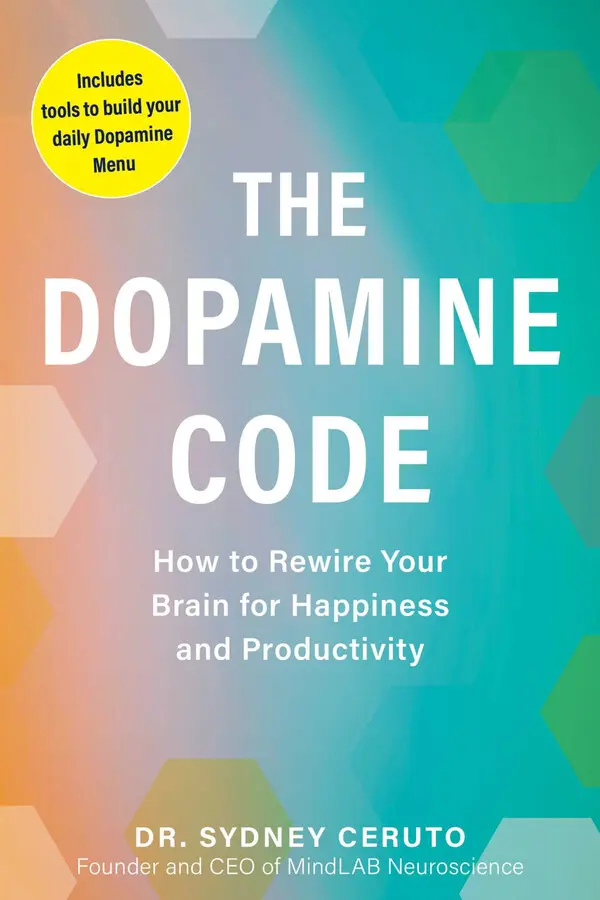
Dr. Ceruto holds a PhD in Behavioral & Cognitive Neuroscience from NYU and two Master’s degrees from Yale University. She lectures at the Wharton Executive Development Program at the University of Pennsylvania and has been an Executive Contributor to the Forbes Coaching Council since 2019. Dr. Ceruto is the author of The Dopamine Code (Simon & Schuster, June 2026). She founded MindLAB Neuroscience in 2000 and has spent over 26 years pioneering Real-Time Neuroplasticity™ — a methodology that permanently rewires the neural pathways driving behavior, decisions, and emotional responses.

References

McEwen, B. S., & Wingfield, J. C. (2003). The concept of allostasis in biology and biomedicine. Hormones and Behavior, 43(1), 2–15. https://doi.org/10.1016/S0018-506X(02)00024-7

Nakatomi, Y., Mizuno, K., Ishii, A., Wada, Y., Tanaka, M., Tazawa, S., Onoe, K., Fukuda, S., Kawabe, J., Takahashi, K., Kataoka, Y., & Watanabe, Y. (2014). Neuroinflammation in patients with chronic fatigue syndrome/myalgic encephalomyelitis: An 11C-(R)-PK11195 PET study. Journal of Nuclear Medicine, 55(6), 945–950. https://doi.org/10.2967/jnumed.113.131045

Westbrook, A., van den Bosch, R., Maraone, J. I., Manohar, S., & Husain, M. (2020). Dopamine promotes cognitive effort by biasing the benefits versus costs of cognitive work. Science, 367(6484), 1362–1366. https://doi.org/10.1126/science.aaz5891

Success Stories

“My kids had been sleeping through the night for three years, but my brain hadn't caught up. I was still waking every ninety minutes like clockwork — no amount of sleep hygiene or supplements touched it. Dr. Ceruto identified the hypervigilance loop that had hardwired itself during those early years and dismantled it at the source. My brain finally learned the threat was over. I sleep through the night now without effort.”

Catherine L., General Counsel Private Equity Greenwich, CT

“Four hours a night for over two years — that was my ceiling. Supplements, sleep protocols, medication — nothing touched it because nothing addressed why my brain wouldn't shut down. Dr. Ceruto identified the cortisol loop that was keeping my nervous system locked in a hypervigilant state and dismantled it. I sleep now. Not because I learned tricks — because the pattern driving the insomnia no longer exists.”

Adrian M., Portfolio Manager Citadel New York, NY

“My body had simply stopped knowing when to sleep. Crossing time zones weekly for over two years had broken something fundamental, and every protocol, supplement, and device I tried couldn't hold longer than a few days. Dr. Ceruto identified the disruption at the level of my suprachiasmatic nucleus and recalibrated the signaling pattern driving the dysfunction. Within weeks, my circadian rhythm locked back in. I sleep now. Consistently. Regardless of where I land.”

Jonathan K., VP of Global Operations Maersk

“Endocrinologists, sleep clinics, functional medicine — every specialist cleared me, and no one could tell me why I was exhausted every single day. Dr. Ceruto identified that my HPA axis was locked in a low-grade stress activation I couldn't feel consciously. Once that pattern was disrupted at the neurological level, my energy came back in a way that felt completely foreign. I'd forgotten what it was like to not be tired.”

Danielle K., Chief Marketing Officer Luxury Retail Beverly Hills, CA

“Every few months I'd blow up my life in a different way — new venture, new relationship, new fixation — and call it ambition. Dr. Ceruto identified the reward prediction error that was running the cycle. My brain had learned to chase escalation because it was the only thing that overrode what I was actually avoiding. Once she restructured the dopamine loop at the root, the compulsion to escalate just stopped. I didn't lose my drive — I lost the desperation underneath it.”

Kofi A., Head of Growth E-Commerce Platform London, UK

“Ninety-hour weeks felt like discipline — the inability to stop felt like a competitive advantage. Nothing I tried touched it because nothing identified what was actually driving it. Dr. Ceruto mapped the dopamine loop that had fused my sense of identity to output. Once that circuit was visible, she dismantled it. I still work at a high level. I just don't need it to know who I am anymore.”

Jason M., Managing Director Lazard New York, NY

Frequently Asked Questions About Chronic Fatigue in Midtown Manhattan

What is chronic fatigue from a neuroscience perspective?

Chronic fatigue that does not resolve with rest reflects measurable neurological dysfunction involving at least four converging mechanisms: neuroinflammation driven by sustained microglial activation, HPA axis dysregulation — the breakdown of normal control systems — from prolonged cortisol exposure, mitochondrial inefficiency in neural tissue, and disruption of the basal ganglia — deep brain structures governing habits and movement — motivation circuitry that governs effort-based decision-making. Dr. Ceruto’s approach identifies which mechanisms are dominant in the individual case and targets them directly.

How does this differ from depression or burnout?

While chronic fatigue often overlaps with depression and burnout, the neural architecture is distinct. Depression involves specific changes in serotonergic and dopaminergic signaling, with characteristic emotion-regulation patterns seen in the amygdala and prefrontal cortex functioning together. Burnout is a psychological framework describing occupational exhaustion. Chronic fatigue, from a neuroscience perspective, reflects a convergence of neuroinflammatory, neuroendocrine, and metabolic disruptions that may co-occur with either condition but requires its own targeted neurobiological intervention.

Who experiences chronic fatigue at a neurological level?

Anyone whose sustained cognitive and emotional demands have exceeded the brain’s capacity for recovery over an extended period. This includes people managing years of high-pressure schedules, individuals who have pushed through fatigue signals repeatedly, and those whose sleep architecture has been chronically compromised. It is not limited to any particular profession or lifestyle — it reflects the biological limits of the nervous system under sustained load.

What does the initial engagement involve?

The process begins with a Strategy Call — a phone-based conversation with Dr. Ceruto to assess the fatigue pattern, map likely neurobiological drivers, and determine the appropriate methodology. The $250 Strategy Call fee reflects the depth of this initial assessment. Program structure and investment details are discussed during the Strategy Call.

What is the typical recovery timeline?

Recovery from chronic fatigue depends on the duration and depth of the depletion. The neurobiological systems involved — HPA axis rhythmicity, neuroinflammatory regulation, mitochondrial function, dopaminergic tone — each operate on different recovery timescales. Some improvements, particularly in autonomic flexibility and sleep architecture, can emerge within weeks. Deeper neuroendocrine and motivational recovery typically unfolds over the course of the structured program. The work is to rebuild the biological infrastructure that makes rest restorative again, which is a fundamentally different process from simply resting more.

Take the First Step Beyond Chronic Fatigue

The Strategy Call is a focused conversation with Dr. Ceruto that maps the specific neural mechanisms driving your concerns and determines the right path forward.

Book a Strategy Call
MindLAB Neuroscience consultation room
Locations

The Intelligence Brief

Neuroscience-backed analysis on how your brain drives what you feel, what you choose, and what you can’t seem to change — direct from Dr. Ceruto.