Analysis Paralysis in Wall Street

Analysis paralysis is not indecisiveness. It is a measurable neural event — the brain's value-comparison system overwhelmed by competing signals until no option can win the internal competition.

Analysis paralysis is not indecisiveness. It is a measurable neural event — the brain's value-comparison system overwhelmed by competing signals until no option can win the internal competition.

Book a Strategy Call

The Problem: A Decision System That Cannot Resolve

Every decision begins with the brain computing a subjective value for each available option. These value signals are held in working memory and compared until one option produces a clearly stronger signal. When the system works efficiently, one option wins, and the person acts.

In analysis paralysis, the system stalls at multiple points at once. When two or more options carry similar subjective value, the brain cannot produce a meaningfully different signal for either one. Working memory receives noisy, nearly identical value signals and cannot identify a clear winner.

The brain’s conflict-monitoring system detects this deadlock and enters a state of heightened activation. It broadcasts a conflict signal demanding more cognitive resources. The brain recruits additional processing power to resolve the comparison. But with noisy inputs, the extra effort generates more cognitive load without producing clarity.

Research confirms this architecture directly. When subjects chose from sets of six, twelve, or twenty-four options, brain activity in the reward and conflict-monitoring regions followed an inverted-U pattern. Activity peaked at twelve options and collapsed at twenty-four. The brain’s reward circuitry simply stopped telling options apart.

Dense luminous neural threads condensing into single focused copper beam of clarity in deep navy void

This stall is compounded by loss aversion — the brain’s lopsided sensitivity to potential losses versus equivalent gains. The brain generates anticipatory warning signals scaled to the magnitude of what could go wrong. These signals intensify as decision stakes increase. At high stakes, the gap between gain sensitivity and loss sensitivity widens sharply. The avoidance impulse becomes disproportionately powerful relative to the approach impulse. The brain’s threat-appraisal system effectively vetoes action.

The Mechanism: Why Information-Seeking Sustains the Stall

A critical feature of analysis paralysis is that it disguises itself as productive behavior. The brain treats information-seeking as neurologically rewarding. The same dopamine neurons that encode the value of food and money also encode the value of information itself — regardless of whether that information improves the decision. Each research session and each new data point triggers a brief dopamine response that feels like progress.

But this is a neurochemical illusion. Working memory capacity is limited to roughly four meaningful chunks of information. Each additional piece of data must be held and compared with what is already stored. Beyond a threshold, additional information degrades rather than improves decision quality. The brain consistently underestimates the diminishing returns on further analysis. It overestimates the catastrophic risk of deciding with incomplete information. The dopamine reward of seeking more data amplifies both miscalibrations.

The result is a compounding cycle. Uncertainty triggers the brain’s threat circuit. Information-seeking provides temporary dopamine relief. The relief fades as new information generates new questions. The cycle restarts. Each avoided decision strengthens the avoidance habit through negative reinforcement — the anticipated bad outcome never materializes, and the brain registers avoidance as a successful strategy.

The Solution: Restoring the Brain’s Decision Architecture

Dr. Ceruto’s methodology addresses analysis paralysis at the level of the neural systems producing the stall, rather than attempting to override it with behavioral force.

The approach begins with identifying the specific mechanism driving the individual’s paralysis pattern. Value-signal noise, conflict escalation, loss aversion, and information-seeking reinforcement each require different intervention strategies. A protocol designed for someone whose primary driver is conflict-signal escalation will differ fundamentally from one targeting loss-aversion dominance or compulsive information gathering.

For value-signal dysfunction, the work involves recalibrating the brain’s capacity to produce differentiated value signals — restoring clear winner generation. For conflict escalation, the methodology targets the feedback loop between conflict detection and cognitive control — reducing comparison costs and enabling decision thresholds. For loss-aversion dominance, the approach works with the brain’s threat-appraisal circuit to reduce the lopsided threat weighting that vetoes action.

Mahogany desk with crystal brain sculpture and MindLAB journal in warm lamp light surrounded by leather-bound volumes in institutional Wall Street study

The goal is not to make decisions reckless but to restore the brain’s capacity to move through evaluation to commitment — converting analysis from an endpoint into a stage in a functional decision process.

Why Analysis Paralysis Matters in Wall Street

Wall Street’s professional environment produces a specific and unusually severe form of analysis paralysis — one rooted not in personality but in the neural consequences of operating in the world’s highest-stakes decision environment.

The Financial District concentrates an extraordinary volume of consequential decisions within a compressed geography. The New York Stock Exchange at 11 Wall Street processes an average of 1.54 billion shares valued at $80.6 billion per day. Tradeweb Markets processes $2.44 trillion in average daily volume across rates, credit, equities, and money markets. Every professional working within blocks of these institutions operates where a single decision error can be measured in millions of dollars. That reality activates the brain’s loss-aversion circuitry at intensities most professions never approach.

Finance is one of the few fields where the cognitive cost of a wrong choice is quantified in real time. This creates a permanent state of heightened threat monitoring — the awareness that cognitive lapses have immediate, measurable consequences for the firm, its clients, and the individual’s career. Cognitive overload leads to impaired working memory — difficulty retaining information about previous losses. This creates a paradox: the professionals most saturated by analysis are most vulnerable to erratic decisions.

The culture reinforces the neural trap. The Wall Street personality profile self-selects for extreme conscientiousness, analytical drive, and risk aversion. These professionals are legally and ethically accountable for managing assets belonging to pension funds, endowments, and retirement accounts. The cognitive experience of knowing that a wrong call affects people who trusted you with their financial security is qualitatively different from risking only personal capital. It amplifies the threat signal that sustains paralysis.

Research confirms the feedback loop: excessive information load exhausts investors’ processing capacity and deteriorates decision accuracy. The brain’s processing regions display an inverted-V activity curve — beyond a threshold, additional information actively degrades performance. In the information-saturated environment of Lower Manhattan, that threshold is crossed daily.

Dr. Sydney Ceruto, PhD — Founder, MindLAB Neuroscience

Dr. Sydney Ceruto, PhD — Founder & CEO, MindLAB Neuroscience

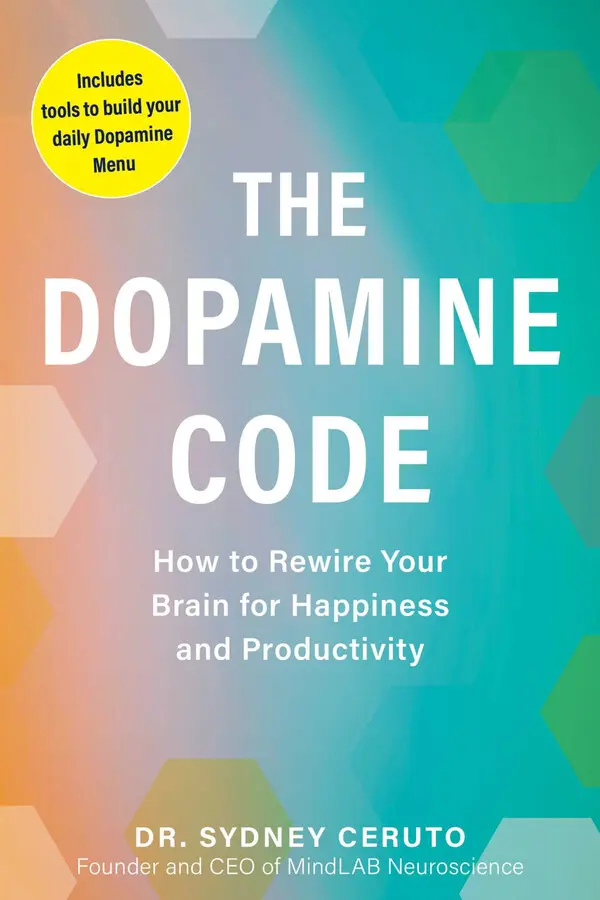
Dr. Ceruto holds a PhD in Behavioral & Cognitive Neuroscience from NYU and two Master’s degrees from Yale University. She lectures at the Wharton Executive Development Program at the University of Pennsylvania and has been an Executive Contributor to the Forbes Coaching Council since 2019. Dr. Ceruto is the author of The Dopamine Code (Simon & Schuster, June 2026). She founded MindLAB Neuroscience in 2000 and has spent over 26 years pioneering Real-Time Neuroplasticity™ — a methodology that permanently rewires the neural pathways driving behavior, decisions, and emotional responses.

References

Reutskaja, E., Lindner, A., Nagel, R., Rangel, A., & Camerer, C. F. (2018). Choice overload reduces neural signatures of choice set value in dorsal striatum and anterior cingulate cortex. Nature Human Behaviour, 2(12), 925-935. https://doi.org/10.1038/s41562-018-0440-2

Tom, S. M., Fox, C. R., Trepel, C., & Poldrack, R. A. (2007). The neural basis of loss aversion in decision-making under risk. Science, 315(5811), 515-518. https://doi.org/10.1126/science.1134239

Bromberg-Martin, E. S., & Hikosaka, O. (2009). Midbrain dopamine neurons signal preference for advance information about upcoming rewards. Neuron, 63(1), 119-126. https://doi.org/10.1016/j.neuron.2009.06.009

Success Stories

“My phone was the first thing I touched in the morning and the last thing I put down at night — and every app blocker, digital detox protocol, and willpower-based system I tried lasted less than a week. Dr. Ceruto identified the variable-ratio reinforcement loop that had hijacked my attention circuits and dismantled it at the neurological level. My phone is still in my pocket. The compulsion to reach for it isn't. That's a fundamentally different kind of fix.”

Tomás R., COO Logistics & Supply Chain Lisbon, PT

“I'd optimized everything — diet, fitness, sleep — but my cognitive sharpness was quietly declining and no one could explain why. Dr. Ceruto identified the synaptic density patterns that were thinning and built a protocol to reverse the trajectory. This wasn't prevention in theory. My neuroplasticity reserve is measurably stronger now than it was three years ago. Nothing I'd tried before even addressed the right problem.”

Henrique L., Head of Strategic Planning Galp Lisbon, PT

“After the concussion, my processing speed collapsed — I couldn't hold complex information the way I used to, and no one could explain why the fog wasn't lifting. Dr. Ceruto mapped the damaged pathways and built compensatory networks around them. My brain doesn't work the way it did before the injury. It works differently — and in some ways, more efficiently than it ever did.”

Owen P., Founder & CEO Sports Performance Scottsdale, AZ

“When the inheritance came, it didn't feel like a gift — it felt like a grenade in every family relationship I had. I couldn't make a single financial decision without a flood of guilt and second-guessing. Years of talking through it hadn't changed anything. Dr. Ceruto identified the neural loop connecting money to fear of family rejection and dismantled it. The paralysis didn't fade — it stopped.”

Vivienne R., CFO Family Office Palm Beach, FL

“The way I was processing decisions under pressure had a cost I couldn't see — until Dr. Ceruto mapped it. She identified the neural pattern driving my reactivity in high-stakes situations and restructured it at the root. I don't just perform better under pressure now. I think differently under pressure. That's not something any executive coach or performance program ever came close to delivering.”

Rob Winston, Chief Operating Officer Goldman Sachs Manhattan, NY

“Color-coded calendars, alarms, accountability partners — I'd built an entire scaffolding system just to stay functional, and none of it addressed why my brain couldn't sequence and prioritize on its own. Dr. Ceruto identified the specific prefrontal pattern that was misfiring and restructured it. I don't need the scaffolding anymore. My brain actually does what I need it to do.”

Jordan K., VP of Product Enterprise SaaS San Francisco, CA

Frequently Asked Questions About Analysis Paralysis in Wall Street

What is neuroscience-based analysis paralysis support?

Neuroscience-based analysis paralysis support identifies the specific brain mechanism producing the decision stall. This could be unclear value signals in the ventromedial prefrontal cortex. It might also involve conflict escalation in the anterior cingulate cortex or loss-aversion dominance in the amygdala or dopamine-driven information-seeking behaviors. The intervention targets that specific neural system rather than addressing surface behaviors alone.

Why does gathering more information make the problem worse?

The brain treats information-seeking as inherently rewarding — dopamine neurons fire for anticipation of information — independent of whether that information improves the decision. Meanwhile, working memory — the brain's short-term mental workspace — can hold only approximately four meaningful chunks simultaneously. Beyond that threshold, additional data introduces noise rather than clarity, degrading the value-comparison signals the brain needs to reach a decision. More analysis produces less resolution.

Who benefits from this approach?

This approach serves anyone whose decision-making has become stuck in a pattern of extended deliberation without commitment — particularly individuals operating in environments where decisions carry significant consequences and where the culture rewards exhaustive analysis. Professionals managing portfolios, navigating regulatory complexity, or making high-stakes personnel and strategic decisions are especially susceptible to the neural stall this methodology addresses.

What does the process look like?

The process begins with a Strategy Call with Dr. Ceruto, conducted by phone, at a fee of $250. This conversation maps the specific neural pattern driving the paralysis — identifying whether the primary mechanism is value-signal dysfunction, conflict escalation, loss aversion, or information-seeking loops — and determines the intervention pathway. Program structure and investment details are discussed during the Strategy Call.

How quickly can decision-making improve?

Improvements in decision latency and the ability to commit to a course of action often emerge within the first weeks of targeted work. Deeper changes — recalibration of value-signal clarity and normalization — develop progressively as the brain's decision architecture is restored through sustained engagement.

Take the First Step Beyond Analysis Paralysis

The Strategy Call is a focused conversation with Dr. Ceruto that maps the specific neural mechanisms driving your concerns and determines the right path forward.

Book a Strategy Call
MindLAB Neuroscience consultation room
Locations

The Intelligence Brief

Neuroscience-backed analysis on how your brain drives what you feel, what you choose, and what you can’t seem to change — direct from Dr. Ceruto.