





Overthinking & Rumination in Lisbon

Overthinking is not a personality trait. It is a measurable pattern of neural network dysregulation that targeted intervention can interrupt and resolve.

Book a Strategy Call

Chronic overthinking operates through a specific brain circuit that most people experience as an uncontrollable thought loop. Neuroscience has mapped this pattern with increasing precision. The central mechanism is overactivity in the default mode network — the brain’s self-referential thought system. This network normally governs self-focused thinking, memory recall, and future planning. Under healthy conditions, this network activates during rest and turns off when attention moves to tasks.

In chronic ruminators, this shutdown fails. The network runs continuously, recycling self-focused content without resolution. This generates the experience of a mind that will not stop analyzing, replaying, and projecting. Brain imaging consistently shows that people who ruminate have elevated communication between the default mode network and the subgenual prefrontal cortex — a critical hub for self-directed processing. This neural signature of overthinking is robust and measurable.

The second failure point is the salience network — the region responsible for detecting when attention should shift. In healthy cognition, this network functions as a circuit breaker. It recognizes when internal focus has become unproductive and triggers a transition to task-directed processing. In chronic ruminators, this switching function is compromised. Research shows overactivity in transitions between brain networks alongside a significantly reduced capacity to shift into attention-focused states.

The salience network continues to tag ruminative content as urgent rather than generating the interrupt signal that would redirect attention outward. The ruminative loop persists not only because the default mode network is overactive. The brain’s own redirect mechanism has stopped firing.

Dense luminous neural threads condensing into single focused copper beam of clarity in deep navy void

The third mechanism involves the dorsolateral prefrontal cortex — the brain’s executive control center. Research shows that more intense rumination is associated with greater activation in control regions during difficult tasks. This confirms that the prefrontal cortex burns resources without achieving disengagement. The brain is working harder but achieving less. This produces a resource-depletion trap where failing suppression attempts leave fewer executive resources available for actual cognitive work.

The cognitive costs are substantial and extend across every domain of professional and personal function. High work-related ruminators demonstrate significantly poorer performance across executive function measures compared to low ruminators. The signature impairment is cognitive shifting — rumination’s core cognitive cost is not distraction but rigidity. Rumination also degrades creative problem-solving by locking the brain into an abstract processing mode. This generates generalized negative representations rather than workable solutions.

The abstract processing mode characteristic of maladaptive rumination actively opposes the concrete processing mode associated with adaptive problem-solving. The ruminative mind generates increasingly elaborate versions of the problem while moving further from any actionable response. This is particularly relevant for high-performing populations who are drawn to analytical, knowledge-intensive careers.

Rumination is fundamentally a verbal phenomenon. The same cognitive orientation that supports self-insight and complex reasoning also creates vulnerability to looping self-analysis. This occurs when applied to problems that are ambiguous, social, or fundamentally unresolvable.

Sleep disruption compounds every mechanism through a bidirectional amplification loop. Most ruminators report that they are most likely to ruminate late at night or in bed. Over half report episodes lasting twenty minutes or longer. This conditions the bedroom as a trigger for ruminative loops. Rumination predicts poorer sleep quality even after controlling for negative mood. This indicates that it is the cognitive arousal itself that undermines sleep architecture.

Poor sleep quality in turn predicts increased rumination, which predicts more worry and stress. This creates a cycle where sleep disruption and overthinking each amplify the other, entrenching both patterns.

What makes Dr. Ceruto’s approach distinct is the recognition that rumination involves identifiable neural circuit patterns that can be retrained. The methodology addresses each failure point at its source. It restores the salience network’s switching capacity so the brain recognizes when internal focus has become unproductive. It rebuilds prefrontal executive control to provide genuine rather than effortful-but-failing cognitive regulation. The approach disrupts the subgenual prefrontal cortex’s emotional tagging of default mode network content so self-referential processing becomes adaptive rather than self-perpetuating. It also addresses the sleep disruption that prevents overnight recalibration of the very circuits maintaining the loop.

Why Overthinking & Rumination Matters in Lisbon

Lisbon creates a distinctive overthinking profile through conditions that conventional advice to “stop worrying” cannot address.

Antique rosewood desk with crystal brain sculpture and MindLAB journal in warm amber Lisbon afternoon light with historic European wood paneling

The structural environment for Lisbon’s international professional community is engineered to produce rumination — repetitive, stuck-loop negative thinking. Approximately 295,000 expatriates live in the capital, the majority working-age adults who relocated with significant personal and financial investment. The decision to move carries ongoing cognitive weight. Having resigned from established careers, enrolled children in international schools, and publicly committed to the relocation, these professionals carry what clinicians working with expat populations describe as identity-protective perfectionism.

This stress does not reflect the quality of the decision but is experienced as evidence of personal failure. The startup ecosystem intensifies this pattern. Portugal’s active startups are concentrated in Lisbon, with most classified as micro-enterprises of nine employees or fewer. Every decision a founder makes carries outsized consequence in an environment with no organizational buffer.

Founders working from Cais do Sodre’s Second Home coworking space or the Beato Innovation District are embedded in the most visible part of the ecosystem. In Lisbon’s tight-knit startup community, where Web Summit draws over 71,000 attendees annually to their own city, the pressure of visibility compounds every decision into a ruminative loop.

The time zone architecture fractures the cognitive day. Professionals serving European clients in the morning and American partners in the evening experience a workday that spans fourteen hours. Each context switch prevents the sustained attention required to process accumulated decisions. Research on distributed teams documents significantly decreased effective knowledge exchange in multi-timezone arrangements.

For Lisbon’s remote workers, the structural workday prevents the cognitive closure that would allow rumination to resolve naturally. Decisions accumulate, defer, and become the fuel for late-night overthinking.

Portuguese bureaucracy adds a uniquely persistent trigger. The AIMA immigration agency inherited a 400,000-file backlog, with residence permits taking twelve to eighteen months to process. This protracted uncertainty creates exactly the kind of unresolvable, high-stakes ambiguity that research identifies as a primary driver of ruminative cycles. The bureaucratic difficulty is experienced not as a structural problem but as personal failure, feeding the overthinking loop.

Dr. Sydney Ceruto, PhD — Founder, MindLAB Neuroscience

Dr. Sydney Ceruto, PhD — Founder & CEO, MindLAB Neuroscience

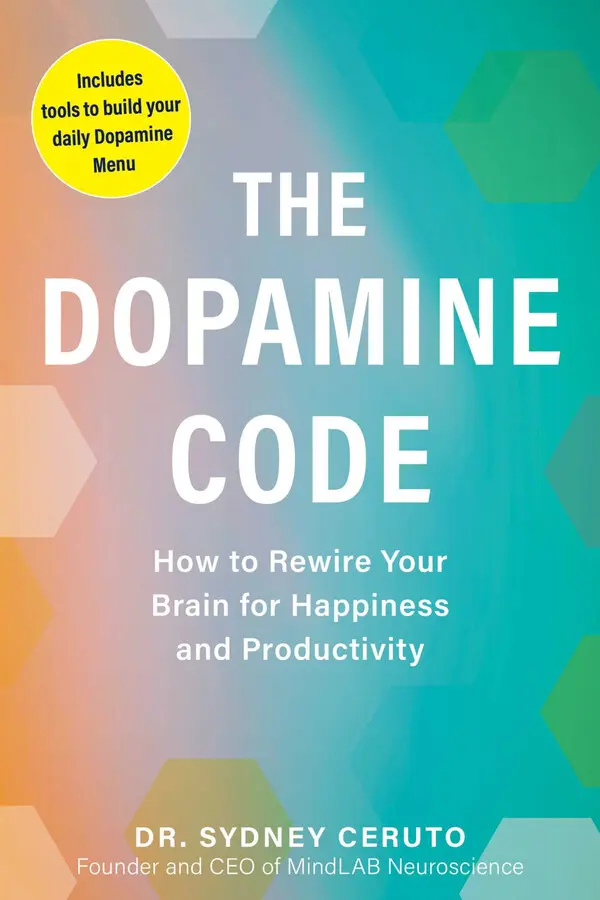
Dr. Ceruto holds a PhD in Behavioral & Cognitive Neuroscience from NYU and two Master’s degrees from Yale University. She lectures at the Wharton Executive Development Program at the University of Pennsylvania and has been an Executive Contributor to the Forbes Coaching Council since 2019. Dr. Ceruto is the author of The Dopamine Code (Simon & Schuster, June 2026). She founded MindLAB Neuroscience in 2000 and has spent over 26 years pioneering Real-Time Neuroplasticity™ — a methodology that permanently rewires the neural pathways driving behavior, decisions, and emotional responses.

References

Hamilton, J. P., Farmer, M., Fogelman, P., & Gotlib, I. H. (2015). Depressive rumination, the default-mode network, and the dark matter of clinical neuroscience. Biological Psychiatry, 78(4), 224-230. https://doi.org/10.1016/j.biopsych.2015.02.020

Kim, J., Criaud, M., Cho, S. S., Bhatt, S., Bhatt, M., & Andrews-Hanna, J. R. (2023). Dorsomedial prefrontal cortex-based dynamic functional connectivity predicts trait rumination. Nature Communications, 14, 6386.

Penney, A. M., Miedema, V. C., & Mazmanian, D. (2015). Intelligence and emotional disorders: Is the worrying and ruminating mind a more intelligent mind? Personality and Individual Differences, 74, 90-93. https://doi.org/10.1016/j.paid.2014.09.023

Cropley, M., Zijlstra, F. R., Querstret, D., & Beck, S. (2020). Is work-related rumination associated with deficits in executive functioning? Frontiers in Psychology, 11, 538. https://doi.org/10.3389/fpsyg.2020.00538

Success Stories

“The way I was processing decisions under pressure had a cost I couldn't see — until Dr. Ceruto mapped it. She identified the neural pattern driving my reactivity in high-stakes situations and restructured it at the root. I don't just…”

Rob Winston Goldman Sachs Manhattan, NY

“Color-coded calendars, alarms, accountability partners — I'd built an entire scaffolding system just to stay functional, and none of it addressed why my brain couldn't sequence and prioritize on its own. Dr. Ceruto identified the specific prefrontal pattern that was…”

Jordan K., VP of Product Enterprise SaaS San Francisco, CA

“After the concussion, my processing speed collapsed — I couldn't hold complex information the way I used to, and no one could explain why the fog wasn't lifting. Dr. Ceruto mapped the damaged pathways and built compensatory networks around them.…”

Owen P., Founder & CEO Sports Performance Scottsdale, AZ

“I'd optimized everything — diet, fitness, sleep — but my cognitive sharpness was quietly declining and no one could explain why. Dr. Ceruto identified the synaptic density patterns that were thinning and built a protocol to reverse the trajectory. This…”

Henrique L., Head of Strategic Planning Galp Lisbon, PT

“When the inheritance came, it didn't feel like a gift — it felt like a grenade in every family relationship I had. I couldn't make a single financial decision without a flood of guilt and second-guessing. Years of talking through…”

Vivienne R., CFO Family Office Palm Beach, FL

“My phone was the first thing I touched in the morning and the last thing I put down at night — and every app blocker, digital detox protocol, and willpower-based system I tried lasted less than a week. Dr. Ceruto…”

Tomás R., COO Logistics & Supply Chain Lisbon, PT

Frequently Asked Questions About Overthinking & Rumination in Lisbon

What is neuroscience-based overthinking and rumination support?

Neuroscience-based rumination support addresses the specific brain circuit patterns that maintain chronic overthinking. This includes default mode network overactivity, salience network switching failure, and prefrontal executive depletion. Dr. Ceruto's approach uses interventions grounded in neuroplasticity — the brain's ability to rewire itself — to retrain these neural patterns. The focus is on targeting the mechanisms that keep the brain locked in repetitive self-referential loops rather than managing surface-level symptoms.

Why does overthinking persist even when someone knows the thoughts are unproductive?

Chronic rumination — repetitive, stuck-loop negative thinking — is maintained by a self-reinforcing neural circuit. The default mode network — the brain's self-referential thought system — generates self-referential content, the subgenual prefrontal cortex tags it as emotionally significant, and the salience network — the brain's relevance-detection system — fails to generate the interrupt signal that would redirect attention. Conscious awareness that the thoughts are unproductive does not reach the subcortical circuits maintaining the loop, which is why willpower alone is insufficient to break the pattern.

Who benefits from this approach?

Anyone whose overthinking has persisted despite understanding that it is counterproductive. This includes professionals who find themselves replaying decisions long after they have been made, individuals whose analytical capacity has become a liability rather than an asset, people navigating complex life transitions where uncertainty fuels repetitive thought loops, and anyone whose sleep, decision-making, or creative output has deteriorated under the weight of persistent self-referential thinking.

What does the process involve?

The first step is a Strategy Call — a phone-based conversation where Dr. Ceruto determines which neural mechanisms are driving the ruminative pattern and whether the methodology is appropriate. This is a substantive analysis, not a screening call, and carries a $250 fee. Program structure and investment details are discussed during the Strategy Call.

How long does it take to resolve chronic overthinking?

The timeline depends on which circuit patterns are dominant and how deeply established the ruminative habits have become. Because the approach targets neural architecture — default mode network patterns, salience network flexibility, prefrontal executive function — rather than thought content alone, many individuals experience meaningful shifts in their capacity to disengage from ruminative loops within weeks. The neuroimaging evidence confirms that these brain networks retain the capacity for recalibration even after years of chronic overthinking.

Take the First Step Toward Overthinking & Rumination

The Strategy Call is a focused conversation with Dr. Ceruto that maps the specific neural mechanisms driving your concerns and determines the right path forward. The Strategy Call carries a $250 fee.

Book a Strategy Call
MindLAB Neuroscience consultation room
Locations

The Intelligence Brief

Neuroscience-backed analysis on how your brain drives what you feel, what you choose, and what you can’t seem to change — direct from Dr. Ceruto.