









Gut-Brain Axis & Neurotransmitter Health in Wall Street

Dr. Sydney Ceruto provides neuroscience-based education on the gut-brain axis and its role in neurotransmitter production, cognitive performance, mood regulation, and long-term brain health.

(empty)

Book a Strategy Call

The Brain-Gut Connection Is Real

The gut and the brain are not separate systems. They are two ends of a continuous, two-way communication network that exchanges information through neural, hormonal, immune, and metabolic pathways every second of every day. The gut-brain axis is not a metaphor — it is a precisely mapped biological architecture. Its disruption produces cognitive and emotional consequences as real and measurable as any brain injury.

The enteric nervous system — sometimes called the second brain — contains roughly 500 million neurons embedded in the walls of the gastrointestinal tract. These neurons operate with some independence from the central nervous system, but they are in constant dialogue with the brain through the vagus nerve. Approximately 70 to 80 percent of vagal fibers carry information from the gut to the brain, not the other direction. This means the gut is primarily an information sender. It continuously shapes cortical function, emotional tone, and cognitive state through signals the conscious mind never registers.

How Your Gut Makes Brain Chemicals

The neurotransmitter implications are profound. The gut microbiome directly participates in producing and regulating the chemical messengers that govern mood, motivation, focus, and cognitive calm. Approximately 95 percent of the body’s serotonin is produced in the gut by specialized cells whose activity is shaped by microbial metabolites. Gut bacteria also synthesize GABA, dopamine precursors, and short-chain fatty acids that cross into the brain and influence memory, executive function, and emotional reactivity.
When Stress Disrupts the System

When the gut microbiome is disrupted, a condition called dysbiosis, the downstream effects on brain function are substantial. Chronic psychological stress reshapes the gut microbiome at the species level. High chronic stress reduces gut microbial diversity, including the anti-inflammatory bacteria that regulate brain inflammation and maintain gut barrier integrity. Their depletion creates a pro-inflammatory gut environment. That inflammation feeds back into the brain through the vagus nerve and bloodstream, compounding anxiety, cognitive fatigue, and mood instability.

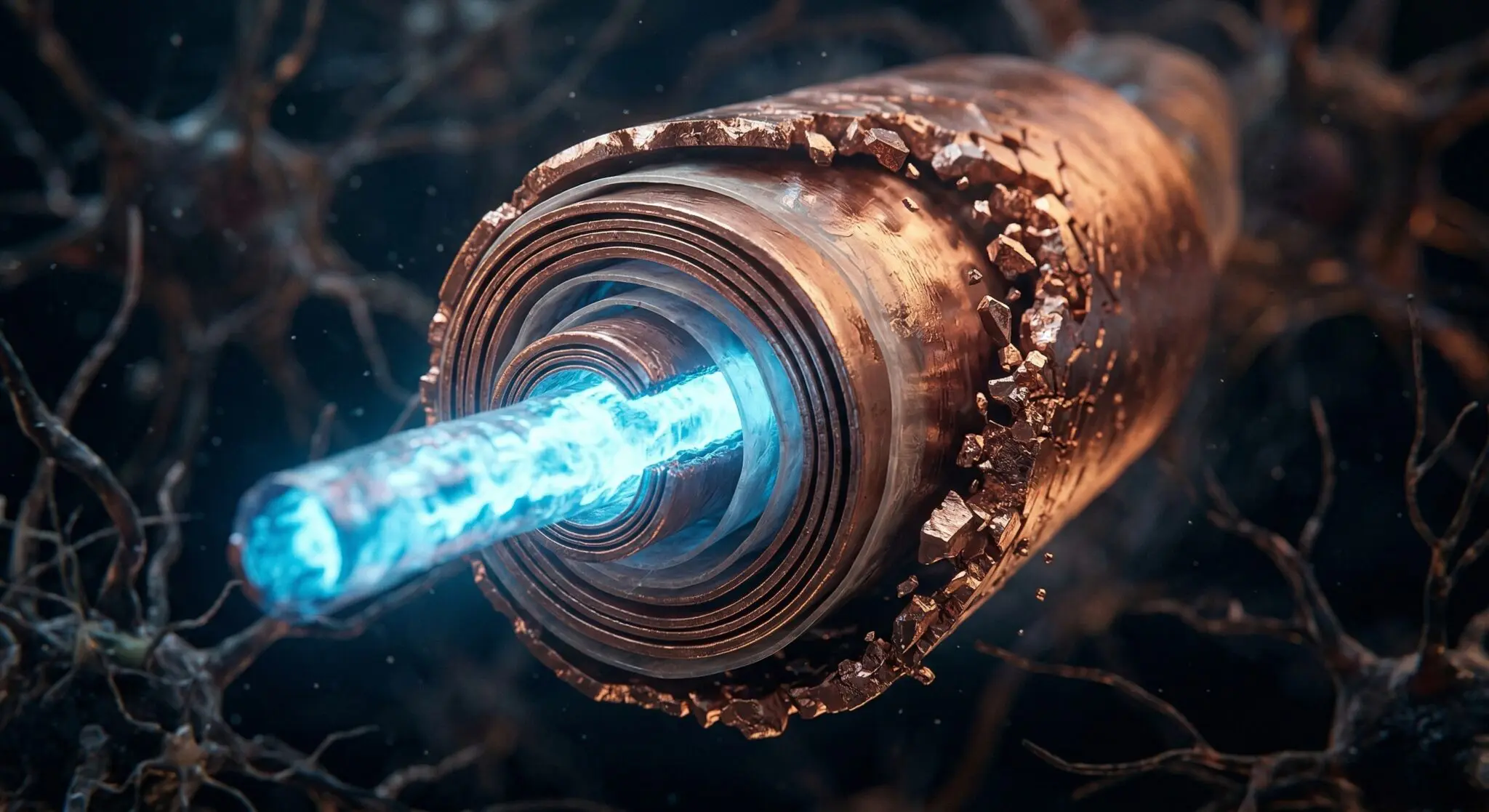
Macro cross-section of neural pathway with copper sheathing forming around blue signal core depicting active brain optimization

The gut barrier itself is a critical variable. Under healthy conditions, the intestinal lining maintains selective permeability, allowing nutrients through while blocking inflammatory molecules and bacterial toxins. Chronic stress, poor diet, disrupted sleep, and certain medications compromise this barrier. Inflammatory compounds then enter the bloodstream. These molecules activate immune signals that ultimately increase the brain’s own barrier permeability, enabling peripheral inflammation to reach brain tissue and trigger responses that impair cognition and destabilize mood.

The Science Behind Depression and Anxiety

Research has demonstrated the causal direction of this relationship with striking clarity. Microbial communities in people with depression differ measurably from those in healthy individuals. Gut transplants from individuals with depression induce low-motivation and anxiety-like behaviors in animal models. This is not correlation. The gut microbiome actively shapes the neurochemical environment in which the brain operates.

The Daily Rhythm of Gut Health

The vagus nerve serves as the primary conduit for gut-to-brain signaling. Vagal afferent fibers, carrying information toward the brain, detect microbial metabolites, inflammatory markers, and neurotransmitter precursors in the gut. They relay this information to brainstem centers that activate the emotional processing, executive control, and hormonal regulation systems. When vagal tone is compromised, the quality and speed of this communication degrades. The brain is effectively cut off from critical regulatory signals originating in the gut.

The circadian dimension of gut-brain health is increasingly recognized as critical. Gut microbes operate on their own daily rhythms, with different bacterial populations dominating at different times of day. These microbial rhythms influence the timed production of neurotransmitter precursors, short-chain fatty acids, and immune-modulating compounds. When eating schedules are irregular, these microbial rhythms are disrupted. Downstream neurotransmitter availability shifts in ways that impair mood stability and cognitive consistency throughout the day.

BDNF — a protein that supports brain cell growth — is itself influenced by gut microbiome health. Gut-derived short-chain fatty acids, particularly butyrate, cross into the brain and boost BDNF production in memory regions. When the microbial populations producing these compounds are depleted by stress or dietary disruption, BDNF signaling drops. The brain’s capacity for learning, memory consolidation, and adaptive thinking is directly impaired. This gut-mediated BDNF pathway explains why the cognitive benefits of exercise often exceed what brain mechanisms alone would predict. Exercise simultaneously increases gut microbiome diversity and brain BDNF through converging pathways.

Beyond Diet: The Complete Approach

Dr. Ceruto’s approach to gut-brain axis optimization addresses this system at the neurological level rather than the dietary level alone. While nutrition matters, the neuroscience of the gut-brain axis extends far beyond what someone eats. It encompasses vagal tone, HPA axis regulation (the body’s central stress-response system), circadian timing of food intake, stress-driven microbiome disruption, and the inflammatory pathways that connect gut barrier integrity to cognitive performance. A neuroscientist addresses the brain side of this equation — how vagal signaling, neurotransmitter production, and inflammatory cascades interact to produce the cognitive and emotional symptoms that conventional gastroenterology and nutrition cannot fully explain. Endocrinologists and gastroenterologists manage the clinical side; Dr. Ceruto provides the neuroscience framework for understanding why the brain is affected and what can be done to optimize that connection.

Mahogany desk with crystal brain sculpture and MindLAB journal in warm lamp light surrounded by leather-bound volumes in institutional Wall Street study

Why Gut-Brain Axis & Neurotransmitter Health Matters in Wall Street

Lower Manhattan’s food environment creates a confluence of gut-disruptive factors poorly understood by the professionals who navigate them daily. The Financial District is defined by extreme time compression: professionals at the major firms routinely skip meals, eat at desks, and consume food in narrow windows between meetings or trading sessions. The structural reality for anyone under deadline is desk-delivery ultra-processed food, client entertainment dinners, and alcohol-heavy networking events — a pattern that disrupts the gut’s internal clock and further degrades microbiome stability.

Chronic stress biochemically reshapes the gut microbiome. The elevated cortisol environment documented in this neighborhood is precisely the trigger for the dysbiosis cascade. Sustained stress-response activation reduces microbial diversity, depletes the bacteria responsible for serotonin precursor metabolism, and compromises gut barrier integrity. For the professional who presents with unexplained anxiety, low mood, and decreased motivation, the gut microbiome — not the external environment — may be the most immediate biological cause.

The proximity of the Seaport’s restaurant strip creates an environment where late-night caloric loading is normalized. This adds circadian misalignment to an already compromised digestive system. Irregular eating schedules disrupt the internal clocks that govern gut motility, enzyme secretion, and microbial feeding cycles — each with downstream consequences for neurotransmitter availability.

Post-pandemic office food culture has become more sophisticated — offices now commonly stock functional foods and adaptogenic beverages. But for the professional under deadline, the structural reality remains desk-delivery meals, erratic schedules, and evening social obligations that prioritize availability over digestive regularity. The biological cost of this pattern compounds invisibly. Each disrupted meal, each stress-driven cortisol spike, each late-night caloric load incrementally degrades the microbiome environment that neurotransmitter production depends on.

The Financial District wellness market has no established providers offering gut-brain axis assessment at the neuroscientific level. Gastroenterologists address pathology. Nutritionists address macros. No practice in Lower Manhattan currently connects microbiome health to neurotransmitter optimization, cognitive performance, and mood regulation with the specificity that Dr. Ceruto’s model offers. For a population whose performance margins are razor-thin, understanding the neurological dimension of gut health represents a significant and untapped advantage.

Dr. Sydney Ceruto, PhD — Founder, MindLAB Neuroscience

Dr. Sydney Ceruto, PhD — Founder & CEO, MindLAB Neuroscience

Dr. Ceruto holds a PhD in Behavioral & Cognitive Neuroscience from NYU and two Master’s degrees from Yale University. She lectures at the Wharton Executive Development Program at the University of Pennsylvania and has been an Executive Contributor to the Forbes Coaching Council since 2019. Dr. Ceruto is the author of The Dopamine Code (Simon & Schuster, June 2026). She founded MindLAB Neuroscience in 2000 and has spent over 26 years pioneering Real-Time Neuroplasticity™ — a methodology that permanently rewires the neural pathways driving behavior, decisions, and emotional responses.

References

Mayer, E. A. (2011). Gut feelings: The emerging biology of gut-brain communication. Nature Reviews Neuroscience, 12(8), 453-466. https://doi.org/10.1038/nrn3071

Foster, J. A., Rinaman, L., & Cryan, J. F. (2017). Stress and the gut-brain axis: Regulation by the microbiome. Neurobiology of Stress, 7, 124-136. https://doi.org/10.1016/j.ynstr.2017.03.001

Parker, A., Fonseca, S., & Carding, S. R. (2020). Gut microbes and metabolites as modulators of blood-brain barrier integrity and brain health. Gut Microbes, 11(2), 135-157. https://doi.org/10.1080/19490976.2019.1638722

Margolis, K. G., & Gershon, M. D. (2021). The gut, its microbiome, and the brain: Connections and communications. Journal of Clinical Investigation, 131(18), e143768. https://doi.org/10.1172/JCI143768

Success Stories

“Nothing was wrong — and that's exactly why no one could help me. I wasn't struggling. I wanted to know what my brain was actually capable of if its resting-state architecture was optimized. Dr. Ceruto mapped my default mode network and restructured how it allocates resources between focused and diffuse processing. The cognitive clarity I operate with now isn't something I'd ever experienced before — and I had no idea it was available.”

Nathan S., Senior Investment Strategist Bridgewater Associates

“I'd optimized everything — diet, fitness, sleep — but my cognitive sharpness was quietly declining and no one could explain why. Dr. Ceruto identified the synaptic density patterns that were thinning and built a protocol to reverse the trajectory. This wasn't prevention in theory. My neuroplasticity reserve is measurably stronger now than it was three years ago. Nothing I'd tried before even addressed the right problem.”

Henrique L., Head of Strategic Planning Galp Lisbon, PT

“After the concussion, my processing speed collapsed — I couldn't hold complex information the way I used to, and no one could explain why the fog wasn't lifting. Dr. Ceruto mapped the damaged pathways and built compensatory networks around them. My brain doesn't work the way it did before the injury. It works differently — and in some ways, more efficiently than it ever did.”

Owen P., Founder & CEO Sports Performance Scottsdale, AZ

“Slower processing, foggier recall, decisions that used to be instant taking longer than they should — I'd been accepting it all as inevitable decline for two years. Dr. Ceruto identified the prefrontal efficiency pattern that was degrading and restructured it at the neurological level. The sharpness didn't just come back. It came back faster and more precise than it was a decade ago. Nothing I'd tried before even addressed the right problem.”

Elliott W., General Partner Andreessen Horowitz

“Four hours a night for over two years — that was my ceiling. Supplements, sleep protocols, medication — nothing touched it because nothing addressed why my brain wouldn't shut down. Dr. Ceruto identified the cortisol loop that was keeping my nervous system locked in a hypervigilant state and dismantled it. I sleep now. Not because I learned tricks — because the pattern driving the insomnia no longer exists.”

Adrian M., Portfolio Manager Citadel New York, NY

“Dr. Ceruto’s methodology took me from a founder on the verge of quitting to a leader capable of building the team and culture that drove Liquid IV’s success. Her ability to restructure how I make decisions and lead under pressure changed the trajectory of the entire company. I don’t say that lightly. The company I built after working with her was fundamentally different from the company I was building before — because I was fundamentally different.”

Brandin Cohen, Founder & CEO CEO, Liquid IV Los Angeles, CA

Frequently Asked Questions About Gut-Brain Axis & Neurotransmitter Health in Wall Street

What is gut-brain axis optimization at MindLAB Neuroscience?

Dr. Ceruto provides neuroscience-based education on how communication between the gut and brain affects neurotransmitter production, cognitive performance, and emotional regulation. This includes understanding vagal signaling — nerve signals that calm the nervous system —, stress-related microbiome disruption, and the mechanisms by which gut health directly shapes brain function.

How does the gut actually affect brain function?

The gut communicates with the brain through the vagus nerve — the body's main calming nerve —, immune signaling, and microbial metabolites that cross the blood-brain barrier. Gut bacteria are directly involved in producing neurotransmitters — chemical messengers between brain cells — including serotonin and GABA. They also produce dopamine precursors. When the microbiome is disrupted by chronic stress or poor dietary patterns, neurotransmitter synthesis is impaired, neuroinflammation increases, and the brain loses access to critical regulatory signals — producing measurable changes in mood, focus, and cognitive performance.

Who typically seeks gut-brain axis services?

Individuals experiencing persistent cognitive or emotional changes that conventional medical evaluation has not fully explained — anxiety that emerged gradually, motivation that has declined without an obvious cause, cognitive fog that persists despite adequate sleep, or digestive symptoms that coincide with periods of high mental demand. Many recognize that something systemic is affecting both their gut and their brain but lack a framework for understanding the connection.

How does someone start working with Dr. Ceruto on gut-brain health?

The process begins with a Strategy Call — a phone-based conversation with Dr. Ceruto to discuss symptoms, history, and whether neuroscience-based gut-brain axis optimization is appropriate. The Strategy Call costs $250 and provides clarity on what a personalized program would involve. Program structure and investment details are discussed during the Strategy Call.

What kind of improvements can someone expect?

Improvements depend on the severity of gut-brain axis disruption and how long it has been active. Individuals often report shifts in mood stability, cognitive clarity, and digestive comfort within the first several weeks as acute stress and circadian factors are addressed (relating to the body's 24-hour biological clock). Deeper changes in vagal tone, microbiome composition, and neurotransmitter balance, which involves chemical messengers between brain cells, develop over months. Dr. Ceruto tracks progress through objective neurological and physiological markers to ensure the system is restoring healthy communication between gut and brain.

Take the First Step Toward Gut-Brain Balance

The Strategy Call is a focused conversation with Dr. Ceruto that maps the specific neural mechanisms driving your concerns and determines the right path forward.

Book a Strategy Call
MindLAB Neuroscience consultation room
Locations

The Intelligence Brief

Neuroscience-backed analysis on how your brain drives what you feel, what you choose, and what you can’t seem to change — direct from Dr. Ceruto.


