





Brain Fog & Cognitive Clarity in Midtown Manhattan

Dr. Sydney Ceruto identifies the neurobiological mechanisms driving cognitive fog and restores the mental clarity that high-stakes professional life demands.

Book a Strategy Call

The experience is unmistakable. Words that once came effortlessly now stall mid-sentence. Decisions that should take minutes stretch into hours of circular deliberation. A document read three times yields no more comprehension than the first pass. This is not a productivity problem. It is not laziness, distraction, or a sign that someone has lost their edge. Brain fog is a measurable neurobiological event with identifiable mechanisms, and it is one of the most misunderstood cognitive complaints in modern professional life.

Brain fog is clinically characterized as a constellation of reduced cognition, impaired working memory — the brain’s mental workspace —, diminished processing speed, word-finding difficulties, and compromised ability to concentrate or multitask. It is not a diagnosis in itself but a symptom cluster arising from dysfunction in specific brain circuits. A large-scale characterization involving nearly 26,000 participants demonstrated that individuals reporting brain fog show significantly lower cognitive scores on tests measuring the ability to inhibit cognitive interference. This confirms that the subjective experience maps directly onto objective neural impairment.

What Drives Cognitive Fog at the Neural Level

The mechanisms behind cognitive fog are precise and well-documented. At the cellular level, neuroinflammation plays a central role. Microglia — the brain’s resident immune cells — shift from their normal surveillance function into an activated state, releasing pro-inflammatory cytokines including interleukin-1 beta, interleukin-6, and tumor necrosis factor-alpha. These molecules directly impair long-term potentiation — the strengthening of neural connections through use — and long-term depression, the cellular processes that underpin learning and memory consolidation. The prefrontal cortex — the brain’s executive command center — is particularly vulnerable, experiencing dendritic retraction and reduced synaptic density that degrades working memory and cognitive flexibility.

When Chronic Stress Compounds the Problem

The hypothalamic-pituitary-adrenal axis — the brain’s primary stress system — represents a second major pathway. Sustained cortisol elevation disrupts the delicate receptor balance in the prefrontal cortex, overstimulating certain receptor types while causing structural changes in the neural architecture that supports working memory. Within as little as one week of chronic stress exposure, measurable dendritic retraction begins in prefrontal neurons. The hippocampus — the brain’s memory center —, which contains the brain’s highest concentration of cortisol receptors, is equally vulnerable: elevated cortisol suppresses hippocampal neurogenesis and reduces the structural substrate needed for new memory formation.

Macro cross-section of neural pathway with copper sheathing forming around blue signal core depicting active brain optimization

How a Weakened Barrier Lets Inflammation In

Blood-brain barrier integrity provides a third critical dimension. This selective barrier normally enforces strict control over which molecules reach brain tissue. When compromised by chronic inflammation, sleep deprivation, or metabolic dysfunction, peripheral immune cells and inflammatory molecules gain access to the brain, triggering localized neuroinflammation that compounds existing cognitive impairment. Increased blood-brain barrier permeability is prospectively associated with cognitive decline progression over time.

Disrupted Rhythms and Post-Viral Recovery

Circadian (relating to the body’s 24-hour biological clock) misalignment adds a fourth layer. When behavioral and environmental cycles fall out of synchrony with the brain’s internal clock, cognitive deterioration follows through mechanisms distinct from simple fatigue. Daily circadian misalignment impairs sustained attention, cognitive throughput, and information processing speed by approximately 12 to 15 percent, with deficits that persist rather than improve across consecutive misaligned days.

Post-viral immune activation has emerged as a particularly relevant mechanism. Even mild respiratory infections can trigger choroid plexus inflammation, which relays inflammatory signals to the brain, activating microglia in subcortical and hippocampal white matter. This cascade can produce a roughly 30 percent reduction in the cells responsible for maintaining the brain’s myelin sheath — oligodendrocytes and their precursor cells. This reduction slows neural conduction velocity and disrupting the brain network synchrony that cognitive processing depends upon. Hippocampal neurogenesis is simultaneously suppressed through interleukin-6 mediated inhibition, impairing the brain’s capacity for new memory encoding. A persistent elevation of the chemokine CCL11 — causally linked to cognitive impairment — has been detected in individuals with post-infectious cognitive symptoms. This provides both a potential biomarker and a mechanistic link between viral exposure and lasting cognitive dysfunction.

The Hidden Cost of Living in a Fog

The economic magnitude of brain fog is staggering. An estimated 2 to 4 million working-age Americans have left the labor force or reduced their work capacity due to post-viral cognitive impairment, translating to $170 to $230 billion in lost earnings annually. The global burden of impaired brain health costs the economy up to $8.5 trillion per year in lost productivity. These are not niche statistics — they reflect the cognitive impairment that millions of professionals experience daily, often without understanding its neurobiological basis.

Finding the Specific Driver Behind Your Fog

What distinguishes Dr. Ceruto’s approach is the precision of root cause identification. Brain fog that originates in neuroinflammation requires different intervention than fog driven by HPA axis dysregulation or circadian misalignment. The perimenopause-driven cognitive fog that affects women in their 40s demands a different strategy than post-viral cognitive impairment or stress-induced prefrontal dysfunction. A neuroscience-informed assessment maps the specific mechanisms at play for each individual, rather than applying generalized strategies that address symptoms without resolving the underlying neural disruption.

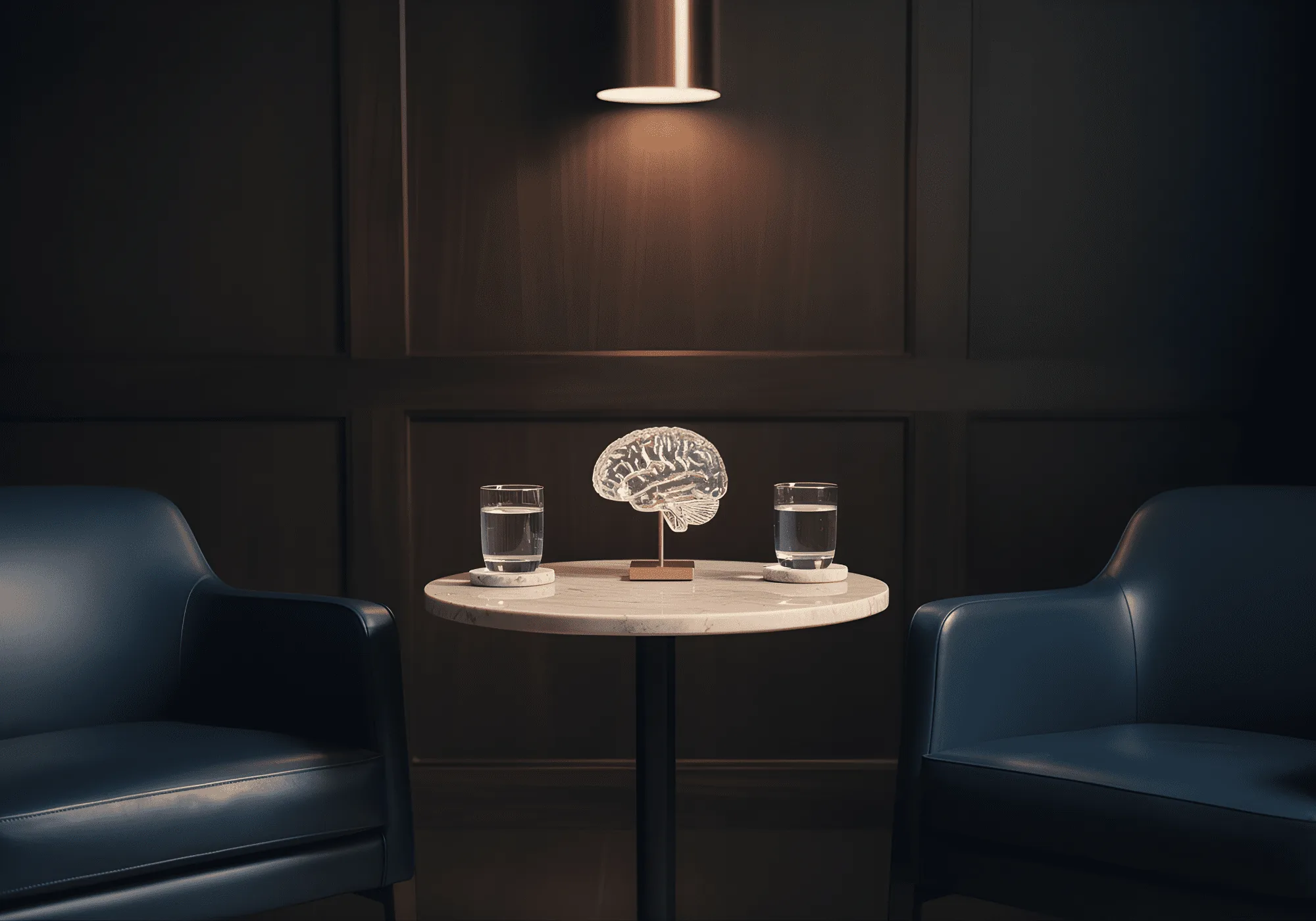
Walnut credenza with crystal brain sculpture and MindLAB journal in diffused dusk light suggesting high-floor Midtown Manhattan private office

The brain’s capacity for recovery is substantial when the right mechanisms are targeted. Neuroplasticity — the brain’s ability to reorganize its synaptic architecture — remains active throughout adulthood. Microglial activation states can shift from pro-inflammatory back to restorative. Blood-brain barrier integrity can be re-established. Circadian rhythms can be recalibrated. The question is not whether cognitive clarity can be restored, but whether the specific biological drivers of its disruption have been accurately identified and addressed.

Why Brain Fog & Cognitive Clarity Matters in Midtown Manhattan

Midtown Manhattan hosts one of the planet’s most concentrated clusters of cognitive-demand professions, making brain fog not a peripheral complaint but a structural occupational hazard. The workforce in Manhattan numbered more than 2.1 million in 2023, with media, advertising, consulting, publishing, and legal professionals concentrated in the corridor between 34th and 59th Streets. NBCUniversal at 30 Rockefeller Plaza, McKinsey’s largest global office, BCG at 10 Hudson Yards, Deloitte, and the advertising holding companies IPG and Omnicom all operate within this zone. Each demands continuous, high-stakes cognitive output from their teams.

The digital cognitive load — the total demand on mental processing capacity — compounds the biological burden. Multitasking reduces cognitive productivity by up to 40 percent. For professionals whose roles encompass strategy, analytics, content production, real-time client communication, and social monitoring simultaneously, the cognitive drain is not episodic but structural.

Post-COVID cognitive residue is particularly acute in this population. Research at the Icahn School of Medicine at Mount Sinai found that brain fog affecting executive functioning persisted for up to eight months post-recovery. The NYC Department of Health and Mental Hygiene launched a multi-year study following 10,000 New Yorkers with Long COVID, with 80 percent of surveyed respondents reporting symptoms persisting beyond one month. Executive function impairment is especially damaging in a professional environment where synthesizing information, making rapid decisions, and communicating under pressure constitute the core professional currency.

The environmental stressors of Midtown itself act as chronic neurological insults. Over 500,000 daily commuters pass through Penn Station alone. Times Square noise levels routinely exceed 80 decibels. Artificial light at all hours disrupts circadian signaling (relating to the body’s 24-hour biological clock). The wellness landscape in Midtown offers gyms, meditation apps, and employee assistance programs. However, what it almost entirely lacks is a provider capable of identifying the specific neurological mechanisms driving cognitive fog and addressing them at the level of brain biology.

Dr. Sydney Ceruto, PhD — Founder, MindLAB Neuroscience

Dr. Sydney Ceruto, PhD — Founder & CEO, MindLAB Neuroscience

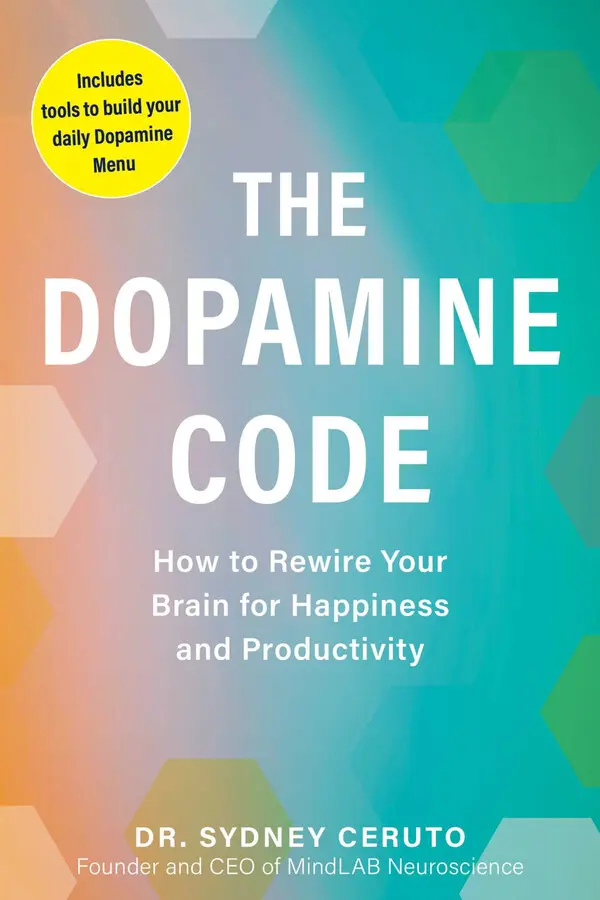
Dr. Ceruto holds a PhD in Behavioral & Cognitive Neuroscience from NYU and two Master’s degrees from Yale University. She lectures at the Wharton Executive Development Program at the University of Pennsylvania and has been an Executive Contributor to the Forbes Coaching Council since 2019. Dr. Ceruto is the author of The Dopamine Code (Simon & Schuster, June 2026). She founded MindLAB Neuroscience in 2000 and has spent over 26 years pioneering Real-Time Neuroplasticity™ — a methodology that permanently rewires the neural pathways driving behavior, decisions, and emotional responses.

References

Monje, M., & Iwasaki, A. (2022). The neurobiology of long COVID. Neuron, 110(21), 3484–3496. https://doi.org/10.1016/j.neuron.2022.10.006

Lin, L., Guo, J., Liu, H., et al. (2024). Brain fog: A narrative review of the most common mysterious cognitive disorder in COVID-19. Molecular Psychiatry, 29(9), 2851–2862. https://doi.org/10.1038/s41380-024-02564-0

Echouffo-Tcheugui, J. B., Conner, S. C., Engelman, C. D., et al. (2018). Circulating cortisol and cognitive and structural brain measures: The Framingham Heart Study. Neurology, 91(21), e1961–e1970. https://doi.org/10.1212/WNL.0000000000006549

Chellappa, S. L., Morris, C. J., & Scheer, F. A. J. L. (2018). Daily circadian misalignment impairs human cognitive performance task-dependently. Scientific Reports, 8(1), 3041. https://doi.org/10.1038/s41598-018-20707-4

Success Stories

“Slower processing, foggier recall, decisions that used to be instant taking longer than they should — I'd been accepting it all as inevitable decline for two years. Dr. Ceruto identified the prefrontal efficiency pattern that was degrading and restructured it at the neurological level. The sharpness didn't just come back. It came back faster and more precise than it was a decade ago. Nothing I'd tried before even addressed the right problem.”

Elliott W., General Partner Andreessen Horowitz

“After the concussion, my processing speed collapsed — I couldn't hold complex information the way I used to, and no one could explain why the fog wasn't lifting. Dr. Ceruto mapped the damaged pathways and built compensatory networks around them. My brain doesn't work the way it did before the injury. It works differently — and in some ways, more efficiently than it ever did.”

Owen P., Founder & CEO Sports Performance Scottsdale, AZ

“I'd optimized everything — diet, fitness, sleep — but my cognitive sharpness was quietly declining and no one could explain why. Dr. Ceruto identified the synaptic density patterns that were thinning and built a protocol to reverse the trajectory. This wasn't prevention in theory. My neuroplasticity reserve is measurably stronger now than it was three years ago. Nothing I'd tried before even addressed the right problem.”

Henrique L., Head of Strategic Planning Galp Lisbon, PT

“Nothing was wrong — and that's exactly why no one could help me. I wasn't struggling. I wanted to know what my brain was actually capable of if its resting-state architecture was optimized. Dr. Ceruto mapped my default mode network and restructured how it allocates resources between focused and diffuse processing. The cognitive clarity I operate with now isn't something I'd ever experienced before — and I had no idea it was available.”

Nathan S., Senior Investment Strategist Bridgewater Associates

“My phone was the first thing I touched in the morning and the last thing I put down at night — and every app blocker, digital detox protocol, and willpower-based system I tried lasted less than a week. Dr. Ceruto identified the variable-ratio reinforcement loop that had hijacked my attention circuits and dismantled it at the neurological level. My phone is still in my pocket. The compulsion to reach for it isn't. That's a fundamentally different kind of fix.”

Tomás R., COO Logistics & Supply Chain Lisbon, PT

“When my youngest left for college, I didn't just feel sad — I felt erased. My entire sense of self had been wired to caregiving for two decades, and I didn't know who I was without it. Years of talk-based approaches hadn't touched it. Dr. Ceruto mapped the identity circuitry that had fused with the role and restructured it. I didn't find a new purpose — I found the one that had been underneath the whole time.”

Diane L., Senior Partner Management Consulting Chicago, IL

Frequently Asked Questions About Brain Fog & Cognitive Clarity in Midtown Manhattan

What is brain fog treatment at MindLAB Neuroscience?

MindLAB Neuroscience does not offer a one-size-fits-all brain fog program. Dr. Ceruto conducts a comprehensive neuroscience-based assessment to identify the specific biological mechanisms driving cognitive impairment — whether neuroinflammatory activation, HPA axis dysregulation — the breakdown of normal control systems —, circadian misalignment, post-viral immune disruption, or a combination. From that assessment, a personalized brain optimization strategy is developed that targets root causes rather than managing symptoms.

What is actually happening in the brain during brain fog?

Brain fog involves measurable disruption to specific neural circuits. The most common mechanisms include microglial activation releasing inflammatory cytokines that impair synaptic plasticity — connection strength changes —, chronic cortisol elevation causing structural changes in prefrontal and hippocampal neurons, blood-brain barrier compromise allowing peripheral inflammatory molecules into brain tissue. Circadian misalignment degrades the timing of cognitive processes. These are not vague or subjective phenomena — they produce quantifiable changes in brain structure and function.

Who typically experiences brain fog, and who benefits from this work?

Brain fog affects people navigating sustained cognitive demands alongside chronic stress, disrupted sleep, post-viral recovery, hormonal transitions, or environmental factors that tax the nervous system. Individuals who notice that their thinking has changed — slower processing, difficulty retrieving words, impaired decisions — represent the population that benefits most from a neuroscience-based approach.

How does someone begin working with Dr. Ceruto on brain fog?

The process begins with a Strategy Call, which is conducted by phone. The $250 fee covers an in-depth conversation where Dr. Ceruto assesses the individual’s cognitive concerns, history, and goals to determine whether MindLAB’s neuroscience framework is the right fit. Program structure and investment details are discussed during the Strategy Call.

How long does it take to see improvements in cognitive clarity?

Timeline varies based on the underlying mechanisms involved. Some individuals notice meaningful shifts in mental clarity within the first few weeks as foundational neurobiological imbalances are addressed. Sustained cognitive restoration — including structural brain changes — typically unfolds over several months of consistent engagement with the personalized optimization strategy.

Take the First Step Toward Cognitive Clarity

The Strategy Call is a focused conversation with Dr. Ceruto that maps the specific neural mechanisms driving your concerns and determines the right path forward.

Book a Strategy Call
MindLAB Neuroscience consultation room
Locations

The Intelligence Brief

Neuroscience-backed analysis on how your brain drives what you feel, what you choose, and what you can’t seem to change — direct from Dr. Ceruto.