





Nervous System Regulation & Vagal Tone in Midtown Manhattan

Dr. Sydney Ceruto applies precision neuroscience to restore autonomic balance and vagal tone — the physiological foundation of cognitive clarity, emotional stability, and stress resilience.

Book a Strategy Call

How Your Body’s Control System Works

The autonomic nervous system — the body’s automatic regulation system — operates beneath conscious awareness, yet it governs some of the most consequential aspects of daily cognitive and emotional life. Whether someone can think clearly under pressure, regulate emotional responses without being hijacked by them, recover quickly after stressful events, or sustain focused attention across long work sessions. All of these capacities depend on the functional state of the autonomic nervous system.

The classical model describes two branches: the sympathetic nervous system, which mobilizes resources for active threat response, and the parasympathetic nervous system, which supports recovery, digestion, and restoration. A more refined framework recognizes that the vagus nerve actually comprises two anatomically and functionally distinct systems with different evolutionary origins. The newer, myelinated branch originates in the nucleus ambiguus and governs the state of calm engagement, social connection, and cognitive flexibility. The older, unmyelinated branch governs the shutdown response — the freeze state that emerges under conditions of extreme overwhelm.

Why Heart Rate Variability Matters

Vagal tone, measured through heart rate variability, quantifies the functional integrity of this system. Heart rate variability captures the millisecond-to-millisecond fluctuation between successive heartbeats, reflecting the dynamic interplay between sympathetic activation and parasympathetic recovery. Higher heart rate variability indicates a more responsive, flexible autonomic system capable of adapting to changing demands. Lower heart rate variability signals a system locked into a narrower operating range, with reduced capacity for cognitive flexibility and emotional regulation — managing emotional responses —.

The relationship between vagal tone and cognitive performance is among the most replicated findings in applied psychophysiology. The central autonomic network governs both executive cognitive function and cardiac vagal output. Because these functions share neural substrates, resting heart rate variability serves as a noninvasive window into the functional state of the prefrontal-subcortical circuit. This determines whether someone is operating from flexible, high-order cognition or threat-reactive primitive systems. Systematic reviews have confirmed that higher heart rate variability consistently predicts superior performance across executive function domains including working memory, inhibitory control, cognitive flexibility, and action cascading.

Macro cross-section of neural pathway with copper sheathing forming around blue signal core depicting active brain optimization

The longitudinal implications are equally significant. A large cohort study following over 2,700 adults aged 44 to 69 demonstrated that midlife heart rate variability predicts the rate of cognitive decline over a decade. This establishes vagal tone not merely as a performance-state variable but as a biomarker of long-term neural trajectory.

When Stress Systems Get Stuck

Chronic sympathetic dominance produces a recognizable cognitive phenotype: decision fatigue with hyperactivated urgency, emotional blunting with preserved reactivity to negative stimuli, and persistent low-grade scanning behavior that interferes with sustained focused attention. The underlying mechanism involves allostatic load — cumulative cost of stress activation. As allostatic load accumulates, the myelinated vagal brake retracts, heart rate variability falls, and the prefrontal inhibitory circuit loses the vagal afferent input it depends on for optimal function.

The specific autonomic signature of burnout has been characterized: emotional exhaustion — the core dimension of burnout — is independently associated with reduced vagal tone during both resting and challenging conditions. The neurophysiology of burnout is not identical to general stress or depression. It is a specific state of vagal resource exhaustion, the physiological mechanism by which prolonged demand outpaces recovery capacity.

The Freeze Response Pattern

A less recognized but equally consequential pattern is dorsal vagal immobilization — the protective freeze response. While chronic sympathetic dominance produces the “wired but tired” state, dorsal vagal activation produces emotional numbness, cognitive dissociation, inability to initiate action, and physical fatigue disproportionate to activity. This state is often misidentified as laziness, depression, or motivational deficiency, when the neurophysiological reality is an ancient protective circuit deployed in response to perceived inescapable overwhelm. Distinguishing between sympathetic overdrive, dorsal vagal shutdown, and mixed autonomic states is essential for developing the right intervention strategy.

Training Your Recovery Response

The speed and completeness of autonomic recovery following challenge is itself a trainable variable. Research on vagal reactivity and flexibility demonstrates that the ability to rapidly restore parasympathetic tone following a stressor is independently predictive of cognitive performance stability. This recovery capacity — rapid restoration following stress — may be the more consequential variable for individuals operating in high-demand environments where stressors are frequent and unavoidable.

Long-Term Nervous System Changes

Dr. Ceruto’s approach to nervous system regulation targets the autonomic setpoint itself — recalibrating baseline through neuroplastic adaptation. This involves engaging the baroreflex sensitization pathway, strengthening prefrontal-subcortical inhibitory circuits, training interoceptive precision, and developing the stress-recovery arc as a distinct trainable capacity.

Walnut credenza with crystal brain sculpture and MindLAB journal in diffused dusk light suggesting high-floor Midtown Manhattan private office

The distinction between state-level and trait-level intervention is critical. State-level intervention produces transient parasympathetic enhancement during and immediately following a practice session. Trait-level recalibration — the actual clinical goal — requires engaging neuroplasticity mechanisms through repeated, structured practice. This produces structural adaptation in the central autonomic network: enhanced baroreflex gain in the brainstem circuit, improved myelination of vagal efferent pathways, and changes in glucocorticoid receptor density in the prefrontal cortex and hippocampus. The result is a genuine shift in the resting autonomic operating point toward higher vagal dominance and greater dynamic range. This creates not just a temporary calm state but a fundamentally more resilient and flexible nervous system.

Why Nervous System Regulation & Vagal Tone Matters in Midtown Manhattan

Midtown Manhattan is arguably the most powerful sustained sympathetic nervous system — the body’s accelerator for stress and alertness — activator on earth. The architecture of the environment, the density of sensory stimulation, and the cultural ethos of the industries present combine to create a chronic hypervigilance — a state of constant threat-scanning — state. Over months and years, this structurally remodels the nervous system.

The sensory load begins before professionals reach their desks. The average maximum noise level on NYC subway platforms has been measured at 94 decibels, with interior car noise averaging 95 decibels. A Columbia University study found that nine in ten New Yorkers are at risk of hearing loss from daily exposure above 70 decibels. NYC received 750,000 noise complaints in 2024, the most common quality-of-life complaint citywide. Research has demonstrated that for every 10-decibel rise in traffic noise, anxiety levels increase 9 to 12 percent.

Times Square, which thousands of Midtown employees traverse twice daily, represents perhaps the most intense sustained sensory bombardment of any commercial district in the world. This is a measure of the body’s ability to calm itself — that cognitive performance depends upon.

The wearable technology trend in this demographic creates both a problem and an opportunity. Midtown professionals are early adopters of devices that quantify heart rate variability, resting heart rate, and recovery scores. Many already know their numbers confirm sympathetic overdrive but lack a provider who can interpret the neuroscience behind the data and intervene at the level of vagal nerve function and nervous system architecture. The return-to-office mandates of 2024 and 2025, which restored daily commute and open-plan environments, have specifically suppressed vagal tone. Forty-one percent of employees subject to forced return-to-office reported increased stress, with 33 percent higher quit rates among those losing flexibility.

Dr. Sydney Ceruto, PhD — Founder, MindLAB Neuroscience

Dr. Sydney Ceruto, PhD — Founder & CEO, MindLAB Neuroscience

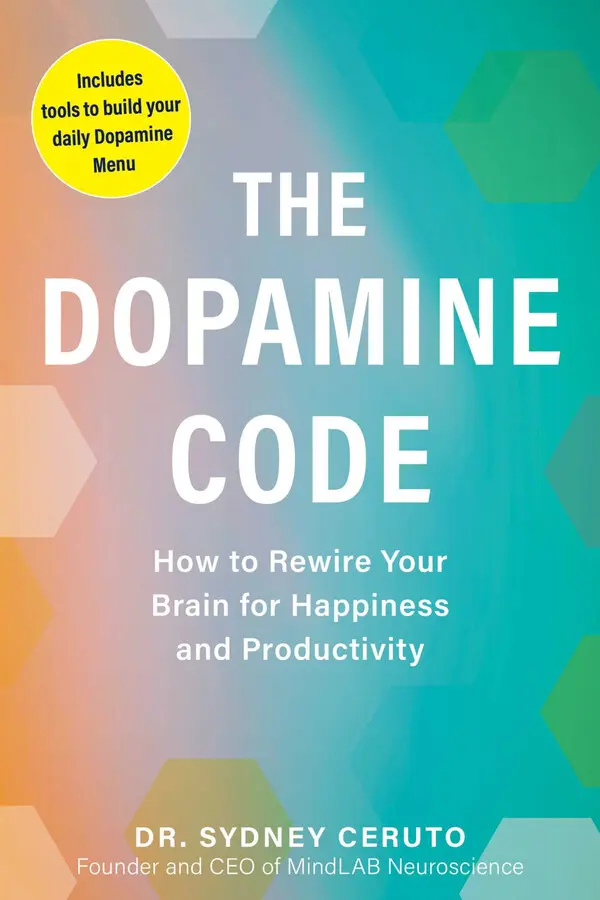
Dr. Ceruto holds a PhD in Behavioral & Cognitive Neuroscience from NYU and two Master’s degrees from Yale University. She lectures at the Wharton Executive Development Program at the University of Pennsylvania and has been an Executive Contributor to the Forbes Coaching Council since 2019. Dr. Ceruto is the author of The Dopamine Code (Simon & Schuster, June 2026). She founded MindLAB Neuroscience in 2000 and has spent over 26 years pioneering Real-Time Neuroplasticity™ — a methodology that permanently rewires the neural pathways driving behavior, decisions, and emotional responses.

References

Forte, G., Favieri, F., & Casagrande, M. (2019). Heart rate variability and cognitive function: A systematic review. Frontiers in Neuroscience, 13, 710. https://doi.org/10.3389/fnins.2019.00710

Jandackova, V. K., Scholes, S., Britton, A., & Steptoe, A. (2024). Midlife heart rate variability and cognitive decline: A large longitudinal cohort study. International Journal of Clinical and Health Psychology, 24(4), 100518. https://doi.org/10.1016/j.ijchp.2024.100518

Porges, S. W. (2022). Polyvagal Theory: A science of safety. Frontiers in Integrative Neuroscience, 16, 871227. https://doi.org/10.3389/fnint.2022.871227

Kanthak, M. K., Stalder, T., Hill, L. K., et al. (2017). Autonomic dysregulation in burnout and depression: Evidence for the central role of exhaustion. Scandinavian Journal of Work, Environment & Health, 43(5), 475–484. https://doi.org/10.5271/sjweh.3647

Success Stories

“Slower processing, foggier recall, decisions that used to be instant taking longer than they should — I'd been accepting it all as inevitable decline for two years. Dr. Ceruto identified the prefrontal efficiency pattern that was degrading and restructured it at the neurological level. The sharpness didn't just come back. It came back faster and more precise than it was a decade ago. Nothing I'd tried before even addressed the right problem.”

Elliott W., General Partner Andreessen Horowitz

“After the concussion, my processing speed collapsed — I couldn't hold complex information the way I used to, and no one could explain why the fog wasn't lifting. Dr. Ceruto mapped the damaged pathways and built compensatory networks around them. My brain doesn't work the way it did before the injury. It works differently — and in some ways, more efficiently than it ever did.”

Owen P., Founder & CEO Sports Performance Scottsdale, AZ

“Nothing was wrong — and that's exactly why no one could help me. I wasn't struggling. I wanted to know what my brain was actually capable of if its resting-state architecture was optimized. Dr. Ceruto mapped my default mode network and restructured how it allocates resources between focused and diffuse processing. The cognitive clarity I operate with now isn't something I'd ever experienced before — and I had no idea it was available.”

Nathan S., Senior Investment Strategist Bridgewater Associates

“I'd optimized everything — diet, fitness, sleep — but my cognitive sharpness was quietly declining and no one could explain why. Dr. Ceruto identified the synaptic density patterns that were thinning and built a protocol to reverse the trajectory. This wasn't prevention in theory. My neuroplasticity reserve is measurably stronger now than it was three years ago. Nothing I'd tried before even addressed the right problem.”

Henrique L., Head of Strategic Planning Galp Lisbon, PT

“Four hours a night for over two years — that was my ceiling. Supplements, sleep protocols, medication — nothing touched it because nothing addressed why my brain wouldn't shut down. Dr. Ceruto identified the cortisol loop that was keeping my nervous system locked in a hypervigilant state and dismantled it. I sleep now. Not because I learned tricks — because the pattern driving the insomnia no longer exists.”

Adrian M., Portfolio Manager Citadel New York, NY

“Outperforming every metric for years and feeling absolutely nothing — no satisfaction, no drive, just a compulsive need to keep going. Executive retreats, meditation protocols, none of it made a difference. Dr. Ceruto identified the dopamine downregulation that was driving the entire pattern. My reward system had essentially gone offline from overstimulation. She didn't teach me to reframe success — she restored the neurochemistry that lets me actually experience it.”

Mikhail D., Senior Partner Corporate Law Washington, DC

Frequently Asked Questions About Nervous System Regulation & Vagal Tone in Midtown Manhattan

What is nervous system regulation at MindLAB Neuroscience?

Dr. Ceruto uses a neuroscience-based framework to assess and optimize autonomic nervous system — the body's automatic regulation system — function. This involves identifying whether the nervous system has shifted into chronic sympathetic dominance, measuring vagal tone — the body's calming ability — through heart rate variability analysis. He develops a personalized strategy to recalibrate the autonomic setpoint — restoring parasympathetic capacity for clarity and regulation — the ability to manage emotional responses —, and stress resilience.

How does vagal tone affect thinking and decision-making?

The central autonomic network shares neural substrates with the executive function circuit in the prefrontal cortex, which controls planning, focus, and task management. Higher vagal tone reflects a more responsive prefrontal inhibitory system capable of suppressing threat-reactive impulses and maintaining working memory under pressure. Lower vagal tone indicates that the prefrontal circuit is operating with reduced input, making cognitive flexibility — shifting thinking between concepts —, emotional regulation, and sustained attention more effortful and less reliable.

Who benefits from nervous system regulation work?

Individuals experiencing patterns consistent with autonomic imbalance — persistent difficulty relaxing even when circumstances permit, emotional reactions that feel disproportionate to the situation, sleep disruption despite fatigue, chronic tension, decision fatigue, or a pervasive sense of being "wired but tired." People whose wearable devices consistently show low heart rate variability or poor recovery scores are seeing data that confirms what the nervous system is already signaling.

How does the process begin?

The first step is a Strategy Call with Dr. Ceruto, conducted by phone. The $250 fee covers an assessment of autonomic health history, stress exposure, current symptoms, and goals. Dr. Ceruto determines whether nervous system regulation is the right focus and discusses program structure and investment details during the call.

How long does autonomic recalibration take?

Acute shifts in autonomic state can occur within a single session through targeted breathing and regulation techniques. However, the goal of Dr. Ceruto’s work is trait-level recalibration — shifting the baseline autonomic operating point through neuroplastic adaptation (related to the brain's ability to rewire itself). Research indicates that measurable baroreflex gain increases and structural autonomic setpoint shifts require approximately 8 to 12 weeks of consistent practice, with robust resting improvements solidifying over three months of sustained engagement.

Take the First Step Toward Nervous System Balance

The Strategy Call is a focused conversation with Dr. Ceruto that maps the specific neural mechanisms driving your concerns and determines the right path forward.

Book a Strategy Call
MindLAB Neuroscience consultation room
Locations

The Intelligence Brief

Neuroscience-backed analysis on how your brain drives what you feel, what you choose, and what you can’t seem to change — direct from Dr. Ceruto.