Authenticity & Self-Expression on Wall Street

The performance earns the bonus. It doesn't have to cost you the self.

There is a version of you that knows exactly who it is. And there is the version you've learned to perform — the one that gets accepted, succeeds in the room, and keeps everything running. The gap between those two versions has a neural signature, and it costs more than most people realize.

I work with people who have spent years — sometimes decades — living inside a performance that works by every external measure and feels hollow from the inside. This is not a character flaw or a failure of self-awareness. It is a learned neural pattern. And patterns can be changed.

Book a Strategy Call

When the Performance Becomes the Problem

Most people who feel like they are performing rather than living did not decide to start performing. The mask formed gradually — as a response to environments where authenticity carried real social risk. A family system where certain emotions weren’t safe. A school context where standing out meant getting hurt. A workplace that rewarded a particular version of professional identity and quietly penalized anything outside it.

The brain is extraordinarily good at adapting to these environments. When authentic expression is repeatedly met with rejection, withdrawal of approval, or social consequence, the brain learns to suppress it. The prefrontal cortex — the brain’s executive center — begins to regulate and dampen responses before they surface. Over time, this suppression becomes automatic. It doesn’t feel like a choice because it isn’t one anymore. It has become a trained default.

The technical term for this is social masking — the active regulation of authentic emotional and behavioral responses in social contexts. What begins as a deliberate strategy for navigating a difficult environment eventually runs without conscious input. You walk into a room and the mask goes on before you’ve processed that you put it on.

The Neural Cost of Sustained Identity Performance

Maintaining a performed identity is not passive. It requires continuous active monitoring — scanning the environment for cues about what is expected, suppressing responses that fall outside that expectation, and generating responses that conform to the performance. This monitoring draws on the same prefrontal resources the brain uses for decision-making, focus, and emotional regulation.

The result is a particular kind of exhaustion that doesn’t match the surface-level demands of a day. You had a normal Tuesday. Nothing catastrophically hard happened. But by evening, the depletion is profound. That depletion is not laziness or sensitivity — it is the metabolic cost of running two parallel systems simultaneously: the authentic internal experience and the performed external identity.

There is also a deeper cost. When the brain consistently suppresses authentic response, the signal chain between internal experience and outward expression becomes unreliable. Over time, some people lose access to what they actually feel, want, or prefer. This is not because those capacities were damaged — it is because the neural pathways that surface authentic response have been underused long enough to require deliberate excavation to reactivate. The question what do I actually want? produces not a clear answer but a fog.

Why Insight Alone Does Not Dissolve the Mask

Most people who struggle with authenticity already understand intellectually that they are performing. Self-awareness about the pattern is rarely the missing piece. What people discover is that knowing you wear a mask does not make it easier to take off. The mask formed as a survival strategy — its persistence is not irrational. The brain’s threat-detection circuitry — the amygdala — treats social rejection with the same urgency as physical danger. When the amygdala tags authentic expression as dangerous, the prefrontal override that could allow it is suppressed before it operates.

This is why willpower-based approaches — deciding to be more authentic, forcing yourself to say the real thing — produce the experience of running into a wall. The suppression mechanism is not located in the part of the brain that responds to decisions. It is located deeper, in automatic regulatory circuits that predate conscious choice.

Sustainable change requires working at the level where the suppression was learned. That means identifying what taught the brain that authenticity was unsafe. It means systematically updating those learned associations through memory reconsolidation — the window during which existing patterns can be rewritten rather than merely overridden.

What Changes

The mask is not a character flaw. It formed in service of something real — belonging, safety, survival in environments that penalized authentic expression. Understanding that is not a small thing. It changes the relationship to the pattern itself, and that shift in relationship is often where the work begins.

The work is not about becoming a different person. It is about closing the gap between who you are and who you are allowing yourself to be. The aim is not spontaneous oversharing or performance of radical authenticity — another kind of mask. The aim is accurate self-expression: the capacity to be internally consistent across contexts, to know what you actually think and feel, and to express it without the prior running cost of suppression.

People who do this work describe a specific shift: the exhaustion of Tuesday becomes manageable. Relationships that felt like performances begin to feel real. Decisions become cleaner because the signal about what you actually want is no longer filtered through layers of what you’re supposed to want. The mask doesn’t disappear overnight — but it stops running on autopilot. And the moment you can choose whether to put it on, you are no longer imprisoned by it.

The brain that learned to perform can learn to express. That is not optimism. It is neuroscience.

Mahogany desk with crystal brain sculpture and MindLAB journal in warm lamp light surrounded by leather-bound volumes in institutional Wall Street study

Why Authenticity & Self-Expression Matters in Wall Street

Wall Street has the most codified professional performance environment in America. Dress standards, language conventions, behavioral norms — every variable is regulated, often without anyone explicitly stating the rules. How you speak in the elevator versus the trading floor versus the MD’s office: all of it is governed. You absorb the code by watching who advances. You absorb them by watching who advances and who doesn’t. Deviation is not punished through explicit feedback; it simply registers as a signal that you don’t belong.

In this environment, the mask is not only accepted — it is the product. The analyst who projects calm certainty during volatile markets. The managing director who performs strategic clarity while running on incomplete information. The associate who executes apparent confidence during client pitches regardless of what they actually feel. These are not dishonest performances. They are professional survival adaptations that the culture has made mandatory. The Bloomberg terminal row is as much a stage as a workstation.

The specific pattern this produces is a professional identity so thoroughly performed that the person inside it loses track of where the role ends and the self begins. This is not metaphorical. When the prefrontal cortex has been recruited for identity suppression continuously over years, the process of identifying what you actually think — separate from what the role requires you to think — becomes genuinely difficult. People describe sitting in high-level strategy sessions and realizing they don’t know if the position they’re articulating is one they believe or one they’ve learned to perform for this room.

Post-pandemic remote work exposed this for a significant number of Wall Street professionals. The two years of working from home — outside the physical environment that cued the performance — gave people access to a version of themselves they had not occupied since before the career took hold. The return-to-office mandates at Goldman Sachs, JPMorgan, BlackRock, and other major firms were not merely logistical decisions. For many people, they were a forced re-entry into the performed identity after a period of real, if unexpected, authenticity. The depletion of re-entry was immediate and notable.

The financial industry also ties identity performance to compensation in explicit ways. Bonuses reward the presentation of certainty, decisiveness, and performance-readiness — qualities that are partly genuine and partly performed. This creates a structural incentive against authenticity. If the real version of you is uncertain, ambivalent, or in need of recovery, the financial system penalizes that disclosure. The mask is not just culturally enforced; it is economically reinforced.

What people who contact MindLAB from the Wall Street context typically describe is not a desire to leave the industry or abandon the career. It is a desire to inhabit the work from a position of genuine solidity rather than continuous performance. To walk out at the end of the day without the specific exhaustion that comes from running two parallel systems simultaneously. That shift is possible. It begins not with changing the performance but with understanding how the neural pattern that makes the performance automatic was originally written.

Dr. Sydney Ceruto, PhD — Founder, MindLAB Neuroscience

Dr. Sydney Ceruto, PhD — Founder & CEO, MindLAB Neuroscience

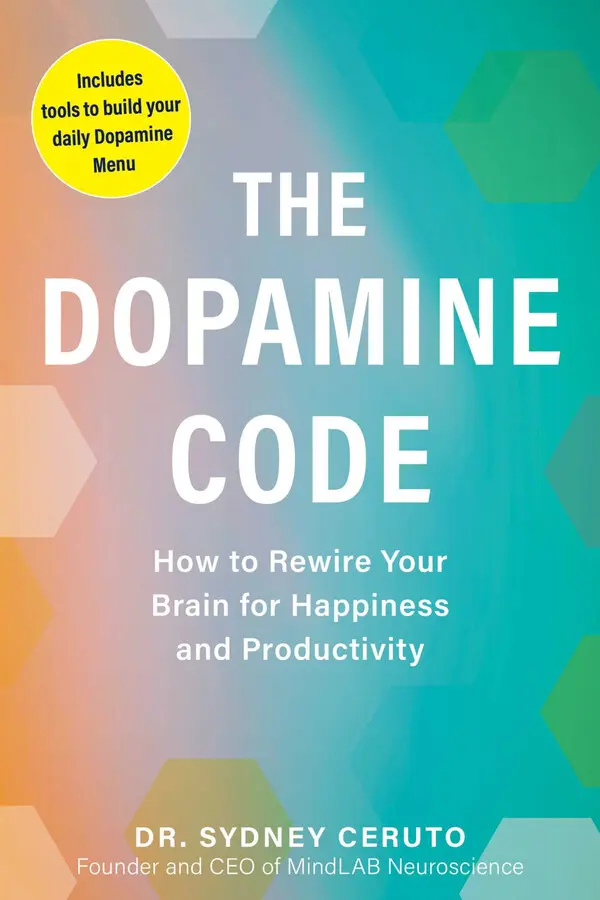
Dr. Ceruto holds a PhD in Behavioral & Cognitive Neuroscience from NYU and two Master’s degrees from Yale University. She lectures at the Wharton Executive Development Program at the University of Pennsylvania and has been an Executive Contributor to the Forbes Coaching Council since 2019. Dr. Ceruto is the author of The Dopamine Code (Simon & Schuster, June 2026). She founded MindLAB Neuroscience in 2000 and has spent over 26 years pioneering Real-Time Neuroplasticity™ — a methodology that permanently rewires the neural pathways driving behavior, decisions, and emotional responses.

References

Grandey, A. A., & Gabriel, A. S. (2015). Emotional labor at a crossroads: Where do we go from here? *Annual Review of Organizational Psychology and Organizational Behavior*, 2(1), 323–349. https://doi.org/10.1146/annurev-orgpsych-032414-111400

Gross, J. J. (2002). Emotion regulation: Affective, cognitive, and social consequences. *Psychophysiology*, 39(3), 281–291. https://doi.org/10.1017/S0048577201393198

Kernis, M. H., & Goldman, B. M. (2006). A multicomponent conceptualization of authenticity: Theory and research. *Advances in Experimental Social Psychology*, 38, 283–357. https://doi.org/10.1016/S0065-2601(06)38006-9

Roberts, B. W., & Mroczek, D. (2008). Personality trait change in adulthood. *Current Directions in Psychological Science*, 17(1), 31–35. https://doi.org/10.1111/j.1467-8721.2008.00543.x

Success Stories

“Dr. Ceruto's methodology took me from a founder on the verge of quitting to a leader capable of building the team and culture that drove Liquid IV's success. Her ability to restructure how I make decisions and lead under pressure changed the trajectory of the entire company. I don't say that lightly. The company I built after working with her was fundamentally different from the company I was building before — because I was fundamentally different.”

Brandin C. — Tech Founder Los Angeles, CA

“I knew the scrolling was a problem, but I didn't understand why I couldn't stop — or why it left me feeling hollow every time. Dr. Ceruto identified the dopamine-comparison loop that had fused my sense of worth to a feed. Years of trying to set boundaries with my phone hadn't worked because the problem was never the phone. Once the loop broke, the compulsion just stopped. My relationships started recovering almost immediately.”

Anika L. — Creative Director Los Angeles, CA

“When my youngest left for college, I didn't just feel sad — I felt erased. My entire sense of self had been wired to caregiving for two decades, and I didn't know who I was without it. Years of talk-based approaches hadn't touched it. Dr. Ceruto mapped the identity circuitry that had fused with the role and restructured it. I didn't find a new purpose — I found the one that had been underneath the whole time.”

Diane L. — Nonprofit Director Chicago, IL

“Ninety-hour weeks felt like discipline — the inability to stop felt like a competitive advantage. Nothing I tried touched it because nothing identified what was actually driving it. Dr. Ceruto mapped the dopamine loop that had fused my sense of identity to output. Once that circuit was visible, she dismantled it. I still work at a high level. I just don't need it to know who I am anymore.”

Jason M. — Private Equity New York, NY

“I struggled with debilitating anxiety for years, trying countless therapies and medications with little success. Finding Dr. Ceruto and her neuroscience-based approach was truly life-changing. From our very first session, her deep knowledge of brain science and how it applies to anxiety gave me real hope. What sets her apart is that perfect blend of expertise and compassion — she genuinely cared about my progress and responded quickly even outside of our scheduled sessions. I can now enjoy social situations and excel at work.”

Brian T. — Architect Chicago, IL

“The way I was processing decisions under pressure had a cost I couldn't see — until Dr. Ceruto mapped it. She identified the neural pattern driving my reactivity in high-stakes situations and restructured it at the root. I don't just perform better under pressure now. I think differently under pressure. That's not something any executive coach or performance program ever came close to delivering.”

Rob W. — Portfolio Manager Manhattan, NY

Frequently Asked Questions About Authenticity & Self-Expression

What does it actually mean to feel like I'm performing?

It means there is a gap between your internal experience and what you present externally — and that managing that gap has become automatic and costly. The brain learned, in specific environments, that authentic expression carried social risk. The prefrontal cortex developed a pattern of suppressing authentic responses before they surfaced. Over time, that suppression runs without conscious input, which is why it feels less like a choice and more like an invisible wall between who you are and what you allow others to see.

I know I wear a mask — why can't I just decide to take it off?

Because the mask isn't maintained by conscious decision — it's maintained by a trained automatic response in the brain's threat-detection circuitry. When the amygdala has learned to tag authentic expression as socially dangerous, it suppresses that expression before conscious choice can intervene. Deciding to be more authentic is like deciding not to flinch when someone throws something at your face. The suppression mechanism runs faster than the decision. The work is to update the underlying threat association, not override it through willpower.

I have a successful career and a full life — why does everything feel hollow?

Because success built through performance doesn't satisfy the same neural circuits as success that feels genuinely yours. The brain has separate mechanisms for external achievement and internal self-congruence — the experience of living in alignment with your actual values and identity. Someone can hit every external marker and still feel empty if the self that achieved those things was largely a performance. The hollowness is the brain signaling that the person doing the living and the person inhabiting the life aren't fully the same.

I don't know what I actually want anymore. Is that part of this?

Yes. When the brain has suppressed authentic response consistently over time, the signal chain between internal experience and conscious awareness can become unreliable. The pathways that surface authentic preferences — what you actually want, feel, or believe — have been underused long enough that they require deliberate work to reactivate. The fog around what do I want? is not a sign that there's nothing there. It's a sign that the access has been blocked, not the capacity itself.

Is this the same as imposter syndrome?

They overlap but they're distinct. Imposter syndrome is specifically about the gap between external achievement and internal self-assessment — feeling like a fraud despite evidence of competence. Authenticity patterns are about the gap between who you are and who you perform being — and they can coexist with genuine competence and confidence. Someone can be fully confident in their professional abilities while still feeling like the person performing those abilities is not entirely real. The neural mechanisms are related but not identical.

How is this different from just being private or introverted?

Privacy and introversion are preferences about how much internal experience to share and how much social stimulation you need. Authenticity suppression is a learned automatic pattern where the brain blocks authentic expression regardless of your preference — not because you've chosen to keep something private, but because the threat-detection system treats disclosure as dangerous. The difference shows up in how it feels: privacy feels like a choice; suppression feels like an inability to access or express the real thing even when you want to.

Can someone be authentic at work and still maintain appropriate professional boundaries?

Yes, and this distinction matters. Authenticity doesn't mean displaying every internal state in every context — that's not authenticity, it's a different kind of performance. Internal consistency — being the same person across contexts, with your actual values and responses accessible to you — is compatible with context-appropriate expression. The goal isn't to be maximally transparent everywhere. The goal is that when you're not sharing something, it's a choice, not an automatic neural suppression you have no access to.

What does working with Dr. Ceruto actually involve?

It begins with a Strategy Call — a focused, one-hour phone conversation at a $250 fee. That call is the starting point for understanding where the pattern formed, what it's costing, and whether the work I do is the right fit for your situation. Investment details for ongoing work are discussed during the Strategy Call. Nothing is packaged in advance of understanding the actual neural architecture of your specific pattern.

How long does it take to see change?

That depends on how long the pattern has been running and how many layers of environmental reinforcement it's built on. Some people notice shifts in the first few weeks — a specific kind of internal clarity or a reduction in the depletion that comes with sustained performance. Durable change — where the suppression pattern genuinely loosens its hold on automatic behavior — typically takes longer and unfolds in stages rather than as a single event. The brain's memory reconsolidation process, which is how learned patterns can be rewritten rather than merely managed, works on its own timeline.

I've been in therapy for years and I still feel like I'm performing. Why?

Many approaches to this kind of work focus primarily on insight — understanding where the pattern came from and what it means. Insight is valuable, but it operates at the level of conscious narrative, while the suppression mechanism operates at the level of automatic neural regulation. Knowing the story of the mask doesn't necessarily update the circuitry that keeps it on. The work I do is aimed at the automatic layer — the learned threat associations and trained suppression responses that persist regardless of how well someone understands them intellectually.

Also available in: Miami · Midtown Manhattan · Beverly Hills · Lisbon

Take the First Step

The Strategy Call is a focused conversation with Dr. Ceruto that maps the specific neural mechanisms driving your concerns and determines the right path forward.

Book a Strategy Call
MindLAB Neuroscience consultation room
Locations

The Intelligence Brief

Neuroscience-backed analysis on how your brain drives what you feel, what you choose, and what you can’t seem to change — direct from Dr. Ceruto.