Trauma Recovery in Miami

Miami's forward momentum is real — but it doesn't reach the subcortical systems where unresolved threat patterns live. Neural restructuring does.

Trauma is not a memory. It is a neural reorganization — a structural change in how the brain scans for threat, interprets safety, and allocates attention across every waking moment. When something overwhelming happens and the brain does not complete its threat-response cycle, the pattern does not simply resolve with time. It encodes. The nervous system retains the alarm, even when the original event is over, because the circuits responsible for distinguishing past from present have been altered by the experience itself.

At MindLAB Neuroscience, I work at the level where trauma patterns actually live: the threat-detection architecture, the memory consolidation systems, the emotional regulation circuits that were shaped by experiences the brain could not fully process at the time. This is not about revisiting what happened. It is about restructuring how the brain is currently functioning as a result of what happened — so that the alarm stops firing when there is no fire, and the patterns that formed in response to danger stop governing a life that is no longer in it.

Book a Strategy Call

Why Trauma Persists Long After the Event

The most common misunderstanding about trauma is temporal: people assume that once enough time passes, the brain moves on. Time does not resolve trauma patterns. Understanding what happened does not resolve them. Retelling the experience does not resolve them. The reason is architectural — the patterns are not stored in the narrative layer of the brain. They are encoded in subcortical systems that predate language, operate below conscious awareness, and govern the most fundamental question the brain continuously asks: Am I safe right now?

The amygdala — the brain’s primary threat-detection structure — does not distinguish between a memory and a present-moment threat. It responds to cues, patterns, and associations. When an experience was sufficiently overwhelming, the amygdala encodes the sensory, emotional, and contextual features of that experience as threat signatures. From that point forward, any input that resembles those features — a tone of voice, a physical sensation, a particular kind of silence, a social dynamic — can reactivate the full threat-response sequence, even when the actual danger is gone.

This is why trauma patterns so often feel disproportionate to the trigger. The trigger is current; the response belongs to the original encoded experience. The brain is not overreacting. It is executing a program that was written under very different conditions, in a survival context where that level of response was appropriate. The problem is not the brain’s responsiveness. It is that the program has not been updated to reflect the current environment.

How Threat-Detection Systems Get Rewired

Under ordinary circumstances, the brain’s threat-detection circuits and its prefrontal regulatory systems — the regions responsible for context evaluation, inhibition, and the capacity to assess whether a perceived threat is real — work in a calibrated relationship. The amygdala signals alarm; the prefrontal system evaluates the signal and, when appropriate, inhibits the response. The system is fast, efficient, and most of the time, accurate.

Overwhelming experience disrupts this calibration. When the threat-response system is activated beyond the threshold that the regulatory circuits can contain, the regulatory system can be temporarily overwhelmed or bypassed entirely. The experience gets encoded in a state of high arousal, without the contextual modulation that would normally allow the brain to file the memory as resolved. The result is a pattern that functions like an open loop — a threat-response sequence that was never completed and therefore remains active at a subcortical level, scanning for the conditions that originally triggered it.

Over time, this sensitization — the lowering of the threshold at which the threat-detection system activates — can spread. Contexts that bear superficial similarity to the original experience begin to trigger the response. The window of tolerance — the range of activation within which the brain can function in an organized, responsive way — narrows. Environments that feel safe to others feel effortful or dangerous. Relationships that should be sources of stability feel threatening. The brain has reorganized itself around the architecture of an experience it could not fully process, and is now operating as though that experience is ongoing.

The Gap Between Insight and Resolution

One of the most disorienting aspects of living with unresolved trauma patterns is the gap between what you understand intellectually and how your nervous system responds. People who come to me have often done significant work — they can name the patterns, trace their origins, articulate exactly how the past is operating in the present. The understanding is real. And the patterns persist anyway.

This gap is not a failure of effort or intelligence. It is a structural feature of how trauma encodes. The circuits that maintain threat-sensitization patterns are not the same circuits that process narrative and insight. The prefrontal cortex — the region that integrates language, reasoning, and conscious understanding — does not have direct, reliable authority over the subcortical systems that are running the threat-response program. Understanding why you respond the way you do does not, by itself, change the neural circuitry responsible for the response.

Resolution requires working at the level where the pattern lives — not above it. This means targeting the threat-detection architecture directly: restructuring the relationship between the amygdala’s alarm system and the prefrontal regulatory circuits, rebuilding the brain’s capacity for accurate context evaluation, and completing the threat-response cycles that were left open. This is precise, mechanism-level work. It is entirely different from processing the past, and it is why insight alone — however accurate — so rarely produces the change people are looking for.

Survival Mode Is Not a Permanent State

The brain that has been organized around threat is not a broken brain. It is a brain that adapted, successfully, to conditions that required that adaptation. The hypervigilance, the reactivity, the difficulty trusting safety, the patterns that look like they are making life harder — these were functional responses to experiences that made them necessary. The problem is not that the brain adapted. The problem is that the adaptation has outlasted the context that required it.

Neuroplasticity — the brain’s capacity to reorganize in response to new experience — does not have an expiration date. The circuits that were reshaped by overwhelming experience can be reshaped again by sustained, targeted work that provides the inputs the brain needs to complete its recalibration. The amygdala’s threat-detection threshold can be reset. The prefrontal system’s regulatory capacity can be rebuilt. The window of tolerance can be expanded. These are not metaphors. They are descriptions of structural changes that occur when the right kind of work is applied with sufficient precision and consistency.

What changes is not the memory of what happened. What changes is the neural architecture that is currently determining how you respond to everything that is happening now. The past stays the past. The patterns stop governing the present. That distinction — between what was experienced and how the brain is currently functioning as a result — is the precise location where my work operates.

Marble console with crystal brain sculpture and MindLAB journal in warm Miami evening light with tropical hardwood and copper accents

Why Trauma Recovery Matters in Miami

Trauma Recovery in Miami

Miami holds more unprocessed trauma than it acknowledges. The city’s surface — the brightness, the movement, the relentless forward momentum of a place that reinvents itself in plain sight — functions as a cultural dissociative layer. What you carry here is supposed to stay beneath the level of visibility. The work of getting up, performing, projecting success or beauty or ambition, is so structurally embedded in Miami’s social architecture that the patterns beneath it rarely get named for what they are.

For Miami’s Hispanic and Latino communities — approximately 70% of Miami-Dade’s population — the patterns run through families and across generations. Venezuelan families who fled Maduro’s Venezuela after 2015 carry encoded threat responses that were written in a context of genuine political danger: surveillance, food insecurity, the experience of watching institutions collapse. Those patterns did not stay in Caracas. They arrived in Brickell, in Doral, in Coral Gables, embedded in the nervous systems of people who are now rebuilding lives in a city that moves too fast to look closely. Cuban-American families whose displacement history spans sixty years carry generational patterns that were never resolved because the context that demanded them — exile, rupture, the ongoing impossibility of return — was never resolved either. Colombian families navigating post-conflict identities carry the neural signatures of violence and instability that shaped their family systems at the structural level.

These are not abstract historical facts. They are active neural patterns operating in the present, shaping how families communicate, how conflicts are managed, how safety is assessed, how close people allow themselves to get before the threat-detection system intervenes. The brain that was trained in an environment of genuine danger does not automatically recalibrate when the environment becomes materially safer. It retains its sensitization until something specifically addresses the circuitry that encoded it.

Miami’s transplant class — the finance professionals, tech workers, and entrepreneurs who relocated from New York, San Francisco, and Chicago following Florida’s tax advantages — carries a different but equally real set of patterns. Career rupture, whether through layoffs, company failures, or the forced reinventions of the pandemic years, encodes in the threat-detection system as a form of loss that the brain cannot easily categorize. The job ended; the neural alarm did not. What arrives in Miami as a “fresh start” often includes an unexamined package of survival responses built during periods that felt genuinely threatening — and the sunshine and space of a new city does not reach the subcortical systems where those responses live.

South Beach’s image culture provides a particularly effective dissociative environment. The body is always available as a project — a surface that can be managed, perfected, maintained — and for people whose inner experience is organized around unresolved threat, the external project of physical appearance can absorb enormous attention without touching the patterns underneath. Wynwood’s creative community attracts people who are processing through art what conversation has not been able to reach. There is real value in creative expression, and creative expression does not, by itself, restructure the neural architecture that trauma reorganized.

My work in Miami addresses the specific neural patterns that this city’s history and culture produce. The threat-detection architecture does not care whether the original experience was political exile, career collapse, or the chronic stress of navigating a social environment that demands constant performance. What matters is how the pattern encoded and how precisely the restructuring work can target it. That precision is what makes the difference between managing the pattern and actually resolving it.

Dr. Sydney Ceruto, PhD — Founder, MindLAB Neuroscience

Dr. Sydney Ceruto, PhD — Founder & CEO, MindLAB Neuroscience

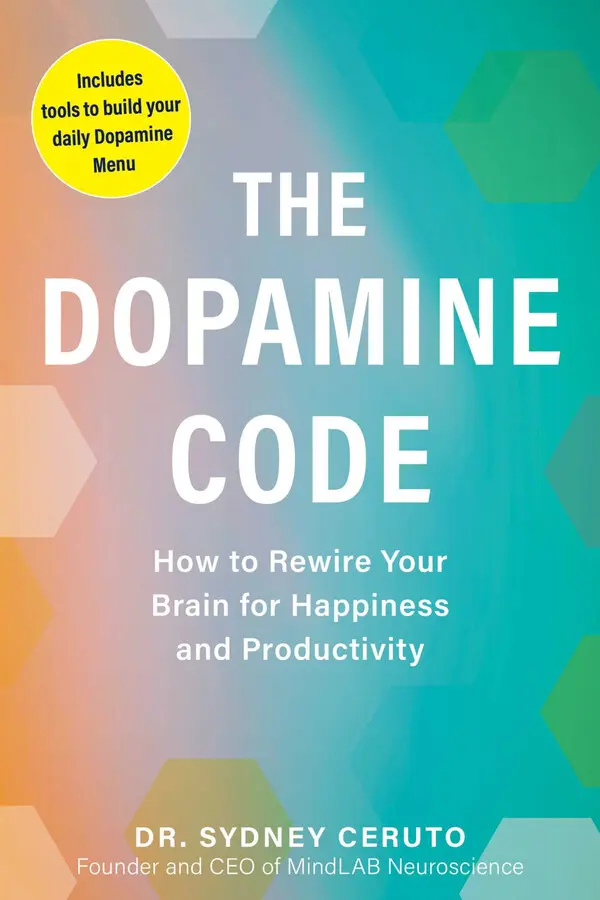
Dr. Ceruto holds a PhD in Behavioral & Cognitive Neuroscience from NYU and two Master’s degrees from Yale University. She lectures at the Wharton Executive Development Program at the University of Pennsylvania and has been an Executive Contributor to the Forbes Coaching Council since 2019. Dr. Ceruto is the author of The Dopamine Code (Simon & Schuster, June 2026). She founded MindLAB Neuroscience in 2000 and has spent over 26 years pioneering Real-Time Neuroplasticity™ — a methodology that permanently rewires the neural pathways driving behavior, decisions, and emotional responses.

References

van der Kolk, B. A. (1994). The body keeps the score: Memory and the evolving psychophysiology of posttraumatic stress. Harvard Review of Psychiatry, 1(5), 253–265. https://doi.org/10.3109/10673229409017088

Rauch, S. L., van der Kolk, B. A., Fisler, R. E., Alpert, N. M., Orr, S. P., Savage, C. R., Fischman, A. J., Jenike, M. A., & Pitman, R. K. (1996). A symptom provocation study of posttraumatic stress disorder using positron emission tomography and script-driven imagery. Archives of General Psychiatry, 53(5), 380–387. https://doi.org/10.1001/archpsyc.1996.01830050014003

Bremner, J. D. (2006). Traumatic stress: Effects on the brain. Dialogues in Clinical Neuroscience, 8(4), 445–461. https://doi.org/10.31887/DCNS.2006.8.4/jbremner

Shin, L. M., & Liberzon, I. (2010). The neurocircuitry of fear, stress, and anxiety disorders. Neuropsychopharmacology, 35(1), 169–191. https://doi.org/10.1038/npp.2009.83

Success Stories

“The same relational patterns my mother and grandmother lived through kept repeating in my own life — the hypervigilance, the emotional shutdown, the inability to feel safe even when nothing was wrong. Dr. Ceruto identified the epigenetic stress signatures driving the pattern and restructured them at the neurological level. The cycle that ran through three generations stopped with me.”

Gabriela W. — Real Estate Developer Miami, FL

“Unfortunate consequences finally forced me to deal with my anger issues. Nothing was clicking until I found Sydney's approach. Her insightfulness and warm manner helped me through a very low point in my life. Together we worked through all my pent-up anger and rage, and she gave me real tools to manage it going forward. I now work to help others learn how to control their own anger.”

Gina P. — Trial Attorney Naples, FL

“I could perform at the highest level professionally and still feel hijacked emotionally in my closest relationships. Dr. Ceruto identified the limbic imprint — an amygdala encoding from childhood that was running every intimate interaction I had. She dismantled it. The reactivity isn't something I regulate anymore. The pattern that generated it is gone.”

Natasha K. — Art Advisor Beverly Hills, CA

“Every close relationship I had eventually hit the same wall — I'd flood emotionally and shut down or explode, and nothing I'd tried gave me real control over it. Dr. Ceruto identified that my autonomic nervous system was defaulting to fight-or-flight the moment real intimacy was on the line. She restructured the default. The flooding stopped because the trigger architecture changed.”

Simone V. — Publicist New York, NY

“The numbness crept in so gradually I didn't notice until I couldn't feel anything — not stress, not connection, not even relief when things went well. Dr. Ceruto identified it as a dorsal vagal shutdown — my nervous system had flatlined as a survival strategy. Within ninety days, the signal came back. I feel things again, clearly and without overwhelm.”

Marcus H. — Fund Manager Dallas, TX

“When I first started with Dr. Ceruto, I'd felt at a standstill for two years. Over several months, we worked through my cognitive distortions and I ultimately landed my dream job after years of rejections. She is both gentle and assertive — she tells it like it is, and you're never second-guessing what she means. She takes a personal interest in my mental, emotional, and physical wellbeing.”

Chelsea A. — Publicist Dublin, IE

Frequently Asked Questions About Trauma Recovery

What is the difference between a traumatic event and a trauma pattern?

A traumatic event is what happened. A trauma pattern is what the brain did in response — the neural reorganization that occurred when the threat-detection system encountered something it could not fully process and integrate. Two people can experience similar events and have very different neural outcomes depending on their prior history, the resources available to them at the time, and the conditions under which the experience encoded. My work focuses on the pattern — the current state of the neural architecture — not on the event itself. Understanding what happened matters far less than understanding how the brain is currently functioning as a result.

Do I need to talk through what happened in order to resolve trauma patterns?

No. In fact, one of the most important things neuroscience has clarified about unresolved trauma patterns is that the narrative account of what happened is stored in different brain systems than the threat-response pattern that needs to be restructured. Talking about the experience activates the cortical, language-based systems — the regions that construct and tell the story. The subcortical systems where the threat-sensitization lives are not reliably reached through narrative. Some people find value in articulating their experience; others find that the retelling reactivates the pattern without resolving it. My approach is oriented toward the neural architecture, not the story. The story can inform the work without being the primary vehicle for it.

How do I know if what I'm experiencing is a trauma pattern versus something else?

The distinguishing feature of a trauma pattern is its relationship to context: responses that feel disproportionate to the current trigger, reactions that seem to belong to a different situation than the one you are in, emotional or physiological activations that arrive faster than conscious thought, and difficulty returning to baseline once the system has been activated. These are all indicators that the threat-detection architecture is running programs encoded in a previous context and applying them to the current one. I do not assess or name what you are experiencing using diagnostic categories. What I assess is how your specific neural systems are currently functioning — and whether that functioning is producing patterns that are interfering with how you want to live.

Why haven't years of working on this resolved the patterns?

Because the work, however valuable, has most likely been operating above the level where the patterns are encoded. Insight, narrative processing, behavioral strategies, and even many body-based practices work at or above the threshold of conscious experience. They can produce real and meaningful shifts in how you understand and manage what you are experiencing. What they do not reliably do is restructure the subcortical threat-detection architecture — the amygdala-anchored circuitry that encodes and maintains the sensitization. That architecture is not accessible through approaches that require conscious engagement with it. It requires a different kind of work, targeted at a different level of the neural system.

Can trauma patterns affect physical health, not just emotional responses?

Yes, and this is one of the most well-documented areas in the relevant research literature. The threat-response system — when maintained in a state of chronic activation — produces sustained physiological effects: elevated cortisol, altered immune function, disrupted sleep architecture, cardiovascular impact, and changes in the body's inflammatory responses. These are not psychosomatic in the dismissive sense. They are the direct biological outputs of a nervous system running in survival mode for an extended period. Addressing the neural patterns that maintain that activation typically produces downstream physical changes as well, because the system that was running the alarm is no longer running it at the same intensity or frequency.

What does a Strategy Call involve, and is it right for me?

A Strategy Call is a one-hour phone consultation — not a virtual session, not an in-person meeting. It is a precision conversation: I assess your specific neural patterns, the experiences and environments that shaped them, and whether my methodology is the right fit for your situation. The fee is $250. This does not apply toward any program investment. The call is designed to give you a clear, honest picture of what the work would involve and what outcomes are realistic for your particular case. If my approach is not the right fit for what you are dealing with, I will tell you that directly rather than proceed with work that is unlikely to produce what you need.

Is it possible to recover from patterns that encoded in childhood or very early in life?

The brain retains neuroplasticity throughout adult life — the capacity to reorganize neural architecture in response to new experience does not close after childhood. Patterns that encoded early are often more deeply embedded and more central to the overall self-organizing system, which means the work is more foundational and may take longer. But the encoding depth does not make restructuring impossible. What it means is that the work needs to be more precise, more sustained, and more carefully calibrated to the specific architecture built by early experience — as opposed to the work required for patterns that encoded in adult contexts, which tends to be more discrete and localized.

Can someone function well outwardly and still have significant unresolved trauma patterns?

This is among the most common presentations I encounter. High-functioning individuals — people who are managing demanding family systems, professional responsibilities, and complex relationships while appearing entirely composed — often carry the most deeply embedded and least-examined patterns, precisely because their capacity for compensatory functioning has been sufficient to prevent the external collapse that typically prompts people to seek help. The cost of that compensation is significant and usually invisible: the chronic vigilance, the energy expenditure required to maintain the gap between internal experience and external presentation, the progressive narrowing of what feels genuinely safe. The functional surface does not indicate the absence of a pattern. It often indicates a pattern that has been expertly managed for a long time.

How is this different from other approaches to trauma?

Most established approaches to unresolved trauma patterns work through the mechanism of exposure and narrative processing — helping the brain recontextualize the experience through controlled reengagement with the material. These approaches have genuine value for many people, and they are not what I do. My work is oriented toward the neural architecture itself: the specific configuration of the threat-detection system, the regulatory circuits, and the systems responsible for memory consolidation and context evaluation. I am working with the structure of how the brain is currently functioning — not facilitating reprocessing of the past. The distinction is not semantic. It determines the level at which the intervention operates, and therefore what kind of change is possible.

How do I take the first step?

The entry point is a Strategy Call — a one-hour phone consultation at a fee of $250. Before that call happens, I review what you share about your situation to ensure I can offer something genuinely useful. I do not take every inquiry. The call is not a preliminary step toward selling you a program. It is a precision assessment: I evaluate whether my methodology is the right fit for your specific neural architecture and circumstances, and I tell you honestly what I find. If the work is right for you, we will have a clear plan by the end of the hour. If it is not, I will tell you that too.

Also available in: Wall Street · Midtown Manhattan · Beverly Hills · Lisbon

Take the First Step

The Strategy Call is a focused conversation with Dr. Ceruto that maps the specific neural mechanisms driving your concerns and determines the right path forward.

Book a Strategy Call
MindLAB Neuroscience consultation room
Locations

The Intelligence Brief

Neuroscience-backed analysis on how your brain drives what you feel, what you choose, and what you can’t seem to change — direct from Dr. Ceruto.