





Emotional Triggers & Reactivity on Wall Street

Finance culture selects for fast amygdala response. The problem is that the amygdala doesn't know when the trading day ends.

You already know the reaction was too big for what actually happened. You can see it afterward — the moment the door slammed, the conversation that ended badly, the silence that lasted three days over something that shouldn't have mattered. What you can't explain is why it keeps happening, or why knowing it's happening doesn't stop it. At MindLAB Neuroscience, I work with people whose emotional reactions have become decoupled from the current situation — firing at a volume that belongs to a different time, a different threat, a different version of their life.

Emotional triggers are not a character flaw or a sign of instability. They are a neural pattern — one with an identifiable mechanism, a specific origin in the brain's threat-detection architecture, and genuine capacity for change. When the pattern is addressed at the level of the brain, reactivity recalibrates. Not because you become less sensitive, but because the brain stops firing at threats that no longer exist.

Book a Strategy Call

Why the Reaction Is Always Too Big

The most disorienting thing about being triggered is the mismatch. The event is small. The response is not. And somewhere between the stimulus and the reaction, something in the brain took a detour.

That detour has a location. The amygdala — the brain’s threat-detection center — is responsible for scanning incoming information and flagging danger. In most circumstances it does this accurately, matching the intensity of the response to the real level of threat. But experience shapes the amygdala’s calibration. Repeated exposure to genuine threat — whether in childhood, in a previous relationship, or in any sustained environment where the stakes were high and the person was vulnerable — encodes threat patterns into the amygdala’s operating logic. It learns, at the neural level, what signals mean danger.

The problem emerges when the encoded patterns are carried forward into circumstances that are not dangerous. The amygdala is pattern-matching, not reasoning. It does not evaluate whether the current context actually warrants the response. When it detects a signal that resembles a past threat — a tone of voice, a phrase, a physical sensation, a social dynamic — it fires with the same urgency it learned from the original experience. The reaction arrives before conscious awareness can intervene. This is why knowing the reaction is disproportionate doesn’t stop it. The knowing happens afterward. The amygdala already fired.

The Gap Between Then and Now

Triggers are, in the most precise sense, the brain’s evidence that past experience is still encoded as present threat. The original situation — whatever made the amygdala calibrate the way it did — is not here anymore. But the neural signature of that situation is. And the brain cannot tell the difference between a current stimulus that resembles a past threat and the past threat itself.

This is not a failure of memory or a problem with emotional immaturity. It is the mechanics of how the amygdala encodes and retrieves threat information. The encoding is associative and sensory — it attaches to specific inputs rather than to explicit narrative. This is why triggers can be activated by things that seem unrelated to the original experience: a smell, a posture, a particular quality of silence, the way someone looks at you from across a room. The amygdala recognized a pattern. The conscious mind is still catching up.

The prefrontal cortex — the brain region responsible for context, judgment, and the modulation of emotional responses — is designed to step in and regulate what the amygdala initiates. In a well-calibrated system, the prefrontal cortex receives the amygdala’s signal, evaluates the actual threat level, and adjusts the response accordingly. In a sensitized system, this regulatory loop is overwhelmed or bypassed. The amygdala’s response is too fast and too strong for the prefrontal cortex to moderate effectively in real time. The reaction lands before regulation can engage.

What Sensitization Looks Like Over Time

Amygdala sensitization is a cumulative process. The more times a particular threat pattern is activated, the lower the threshold for activation becomes. Over time, triggers that once required a significant stimulus to fire can be activated by smaller and smaller inputs. The system is not becoming more fragile — it is becoming more efficient at doing what it learned to do. It just learned the wrong calibration.

This is why reactivity often intensifies in periods of accumulated stress. When the regulatory resources of the prefrontal cortex are depleted — by sleep deprivation, sustained pressure, relational strain, or the ongoing low-level activation that comes with certain environments — the amygdala’s responses are less modulated and more immediate. The same trigger that might have produced a contained reaction on a good day produces a full response on a difficult one. The trigger didn’t change. The regulatory buffer did.

The cumulative effect on relationships is significant. Reactivity puts the people around someone in the position of managing unpredictable responses, which typically produces one of two outcomes: they learn to walk on eggshells, which confirms the implicit threat pattern the amygdala is running, or they pull away, which activates abandonment or rejection patterns. Either way, the relational environment starts to conform to the brain’s encoded expectations — which reinforces the original sensitization rather than correcting it.

What Changes When the Brain Recalibrates

The work I do at MindLAB targets the neural mechanisms responsible for trigger sensitization — primarily the amygdala’s threat-encoding patterns and the prefrontal cortex’s capacity to modulate them. This is not anger management or emotional regulation in the conventional sense. It is not about learning to pause before reacting, though that capacity often improves as the underlying architecture shifts.

The goal is recalibration: changing what the amygdala recognizes as threat, reducing the intensity and speed of responses to neutral stimuli that have been mislabeled as dangerous, and rebuilding the regulatory loop between the threat-detection system and the brain’s context-evaluating circuits. When this recalibration occurs, the reaction is no longer decoupled from the current situation. The response is proportionate because the brain is finally reading the current situation rather than the archived one.

People who have worked through this process describe a specific kind of change: the trigger still arrives — they recognize the familiar signal — but it no longer compels. There is a gap between the stimulus and the response where before there was none. That gap is not suppression. It is the prefrontal cortex doing its job. The amygdala has been recalibrated. The old pattern is no longer driving.

If your reactions have become a source of confusion or damage — to relationships, to your professional life, or to your own sense of who you are — the explanation is neural, not characterological. The response pattern was learned. Learned patterns change. That is not optimism. It is how the brain works.

Why Emotional Triggers & Reactivity Matters in Wall Street

The trading floor is a trigger environment by explicit design. The architecture of high-frequency finance — where threat-response speed is the primary competitive advantage — selects for amygdalae that fire fast. The culture rewards people whose threat-detection systems are sensitized, not calibrated. Over time, working in that environment does to the brain exactly what it was designed to do: it trains the amygdala to respond to a very wide class of stimuli as though they carry survival stakes.

Mahogany desk with crystal brain sculpture and MindLAB journal in warm lamp light surrounded by leather-bound volumes in institutional Wall Street study

The problem arrives when the trading day ends. The amygdala does not clock out. The threat-detection circuits that have been trained on market volatility, desk performance metrics, and the social hierarchy of the floor continue running at the same sensitivity in the elevator, at dinner, in conversations with family, in any environment that contains inputs the brain has learned to evaluate for danger. The professional asset becomes the personal liability. The reactor that makes someone effective in the pit makes them unpredictable at home.

Market volatility is a trigger event in a technical sense for anyone who has encoded financial loss as threat. The March 2025 market environment — tariff volatility, sector rotations, the uncertainty that followed several consecutive weeks of significant drawdowns — produced threat-activation events not just for active traders but for portfolio managers, analysts, and advisors whose amygdalae are calibrated to market signals as existential inputs. The reaction to a red day is not purely cognitive. It is physiological. The body responds to the P&L as though the threat were physical.

Bonus announcements are a particularly concentrated trigger event for worth-assessment circuits. The annual cycle — building toward year-end, the conversation with the manager, the number — is a high-stakes evaluation event that the amygdala has learned to treat as a verdict on personal worth rather than a business decision. For people who carry encoded patterns around adequacy and belonging, this cycle activates responses that arrive far in advance of the actual announcement and persist well after it. The number arrives and is immediately metabolized through a threat lens regardless of what it says.

JPMorgan’s March 2025 return-to-office mandate — full five-day in-office requirement across managing director and above — reintroduced a specific trigger context for people who had reorganized their regulation strategies around remote work. The office environment had previously encoded threat patterns related to visibility, hierarchy, and performance evaluation. Remote work had functionally reduced the activation frequency of those patterns. The RTO mandate did not just change logistics. It reactivated a threat environment the amygdala had never actually finished processing.

Colleagues who survived the 2008 financial crisis carry encoded patterns from a genuinely high-threat period — job losses, firm collapses, the systemic event that reorganized an industry in months. Those patterns activate during any environment that resembles 2008: significant volatility, institutional uncertainty, visible colleague distress. The activation is not a memory. It is a current amygdala response to a stimulus that matches an encoded threat signature. The colleague who becomes markedly more reactive during any volatility spike is not choosing that reaction. The brain is executing a program it wrote fifteen years ago.

The work of recalibrating trigger responses in this environment is not about reducing competitiveness or emotional blunting. It is about separating the threat signals that warrant a survival response from the signals that do not — and restoring the prefrontal cortex’s capacity to make that distinction in real time rather than only in retrospect. That distinction is the difference between professional effectiveness and compulsive reactivity.

If you are on Wall Street and the reactions that serve you at the desk are causing damage everywhere else — a Strategy Call is a focused conversation about what is actually driving that pattern. Phone only. $250. It is a real assessment, not a sales call.

Dr. Sydney Ceruto, PhD — Founder, MindLAB Neuroscience

Dr. Sydney Ceruto, PhD — Founder & CEO, MindLAB Neuroscience

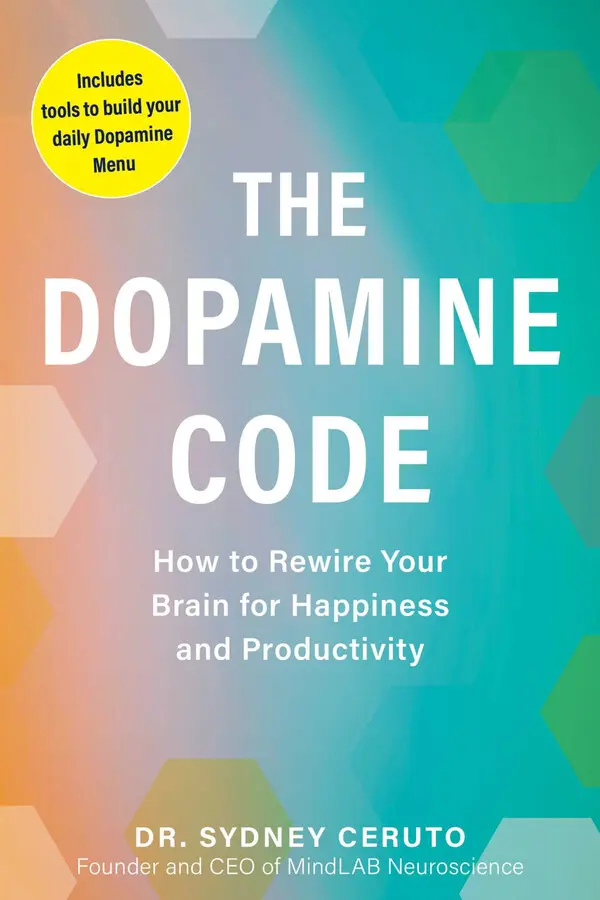
Dr. Ceruto holds a PhD in Behavioral & Cognitive Neuroscience from NYU and two Master’s degrees from Yale University. She lectures at the Wharton Executive Development Program at the University of Pennsylvania and has been an Executive Contributor to the Forbes Coaching Council since 2019. Dr. Ceruto is the author of The Dopamine Code (Simon & Schuster, June 2026). She founded MindLAB Neuroscience in 2000 and has spent over 26 years pioneering Real-Time Neuroplasticity™ — a methodology that permanently rewires the neural pathways driving behavior, decisions, and emotional responses.

References

LeDoux, J. E. (2000). Emotion circuits in the brain. *Annual Review of Neuroscience*, 23(1), 155–184. https://doi.org/10.1146/annurev.neuro.23.1.155

Ochsner, K. N., & Gross, J. J. (2005). The cognitive control of emotion. *Trends in Cognitive Sciences*, 9(5), 242–249. https://doi.org/10.1016/j.tics.2005.03.010

Shin, L. M., & Liberzon, I. (2010). The neurocircuitry of fear, stress, and anxiety disorders. *Neuropsychopharmacology*, 35(1), 169–191. https://doi.org/10.1038/npp.2009.83

Arnsten, A. F. T. (2009). Stress signalling pathways that impair prefrontal cortex structure and function. *Nature Reviews Neuroscience*, 10(6), 410–422. https://doi.org/10.1038/nrn2648

Success Stories

“The same relational patterns my mother and grandmother lived through kept repeating in my own life — the hypervigilance, the emotional shutdown, the inability to feel safe even when nothing was wrong. Dr. Ceruto identified the epigenetic stress signatures driving the pattern and restructured them at the neurological level. The cycle that ran through three generations stopped with me.”

Gabriela W. — Real Estate Developer Miami, FL

“Every close relationship I had eventually hit the same wall — I'd flood emotionally and shut down or explode, and nothing I'd tried gave me real control over it. Dr. Ceruto identified that my autonomic nervous system was defaulting to fight-or-flight the moment real intimacy was on the line. She restructured the default. The flooding stopped because the trigger architecture changed.”

Simone V. — Publicist New York, NY

“The numbness crept in so gradually I didn't notice until I couldn't feel anything — not stress, not connection, not even relief when things went well. Dr. Ceruto identified it as a dorsal vagal shutdown — my nervous system had flatlined as a survival strategy. Within ninety days, the signal came back. I feel things again, clearly and without overwhelm.”

Marcus H. — Fund Manager Dallas, TX

“I could perform at the highest level professionally and still feel hijacked emotionally in my closest relationships. Dr. Ceruto identified the limbic imprint — an amygdala encoding from childhood that was running every intimate interaction I had. She dismantled it. The reactivity isn't something I regulate anymore. The pattern that generated it is gone.”

Natasha K. — Art Advisor Beverly Hills, CA

“Unfortunate consequences finally forced me to deal with my anger issues. Nothing was clicking until I found Sydney's approach. Her insightfulness and warm manner helped me through a very low point in my life. Together we worked through all my pent-up anger and rage, and she gave me real tools to manage it going forward. I now work to help others learn how to control their own anger.”

Gina P. — Trial Attorney Naples, FL

“Every metric was green and I felt nothing. Nothing conventional touched the actual problem. Dr. Ceruto identified that my dopamine baseline had shifted so high from constant reward-chasing that normal achievement couldn't register anymore. She recalibrated the reward system itself. I didn't need more success. I needed my brain to actually experience the success I already had.”

Rafael G. — Screenwriter New York, NY

Frequently Asked Questions About Emotional Triggers & Reactivity

Why do my reactions feel so out of proportion to what actually happened?

Because the reaction belongs to a different situation than the one in front of you. The amygdala — the brain's threat-detection center — pattern-matches incoming information against encoded threat signatures from past experience. When a current stimulus resembles a past threat closely enough, the amygdala fires with the intensity appropriate to the original, not the current event. The reaction is calibrated to what you learned to fear, not to what is actually happening. That mismatch is neurological, not a sign of instability or weakness.

Why can't I stop myself even when I know I'm overreacting?

The amygdala fires faster than conscious awareness can intervene. By the time the reasoning part of the brain recognizes that the response is disproportionate, the amygdala has already initiated the reaction. Knowing doesn't help in the moment because knowing and reacting are handled by different brain systems operating at different speeds. The goal is not to add a mental step between stimulus and reaction — it is to recalibrate the threat-detection system so the reaction itself becomes proportionate.

Can I identify my triggers, or do I have to wait to be surprised by them?

Both kinds exist. Some triggers become identifiable with attention — specific inputs that reliably activate a response, and which can be connected to their pattern once the neural mechanism is understood. Others remain partially opaque because the encoding is sensory and associative rather than narrative. The amygdala stores threat signatures in sensory fragments: tone, posture, atmosphere, physical sensation. These activate faster than the conscious mind can intercept them. Identifying patterns is useful work, but identification alone does not change the encoding.

Why do I get triggered more easily when I'm tired or stressed?

The prefrontal cortex — the brain region responsible for moderating the amygdala's responses — requires regulatory resources to function. When those resources are depleted by stress, poor sleep, or sustained pressure, the prefrontal cortex has less capacity to modulate what the amygdala initiates. The same trigger that produced a contained response on a good day produces a full response when regulatory capacity is low. The trigger didn't change. The buffer did.

Are emotional triggers always connected to something specific that happened in the past?

Often, but not always with a clear narrative connection. The amygdala encodes threat through experience, and those experiences don't have to be dramatically traumatic to produce sensitized responses. Sustained environments of unpredictability, conditional approval, relational instability, or high-stakes evaluation can calibrate the threat-detection system toward sensitivity even without a single identifiable origin event. The work does not require excavating a specific past experience. It requires addressing the current neural pattern regardless of its source.

What does it actually feel like when triggers are recalibrated?

People describe it as the arrival of a gap. The familiar signal comes — the thing that used to compel a reaction — and there is now space between the signal and the response. Not suppression, not white-knuckling a reaction into submission. The response is simply not as large, because the amygdala has updated its threat assessment and the prefrontal cortex can do its regulatory work. The trigger still registers. It no longer drives.

How is this different from learning to manage my emotions better?

Emotional management approaches work downstream of the trigger — they teach strategies for what to do after the amygdala has already fired. What I do at MindLAB works upstream: on the amygdala's encoding and the prefrontal cortex's regulatory capacity. The aim is not to give you better tools for handling a reaction that will keep arriving. It is to change the calibration so the reaction itself reflects the actual situation rather than an archived one. That is a different level of intervention.

Can old triggers be completely erased, or do they always come back?

The neural encoding that underlies a trigger does not disappear — the amygdala does not delete threat signatures. What changes through recalibration is the threshold and intensity of activation. The pattern becomes less sensitive: it requires a stronger or more specific input to fire, the response is less intense when it does fire, and the prefrontal cortex is better positioned to moderate what the amygdala initiates. The trigger loses its compulsive quality. That is not erasure — it is a fundamentally different relationship with the pattern.

How do I schedule a Strategy Call, and what should I expect?

A Strategy Call is a one-hour phone conversation — $250 — in which we examine your specific reactivity patterns, what appears to be driving them, and what the work of addressing them at the neural level would involve. It is a real assessment, not an introduction to a sales process. You will leave with a clearer picture of what is happening and what would need to change. If there is a fit for deeper work, we discuss what that looks like. The number to call is on this page.

Is working on emotional triggers something only people with serious problems do?

No. The range of people who benefit from this work is wide. Some carry deeply sensitized patterns that have significantly affected major relationships and professional outcomes over years. Others experience reactivity that is manageable most of the time but reliably activates in specific contexts — at home, at work, in evaluative situations, with particular people. There is no severity threshold required. What matters is whether the pattern is causing damage that you would rather not continue sustaining.

Also available in: Miami · Midtown Manhattan · Beverly Hills · Lisbon

Take the First Step

The Strategy Call is a focused conversation with Dr. Ceruto that maps the specific neural mechanisms driving your concerns and determines the right path forward.

Book a Strategy Call
MindLAB Neuroscience consultation room
Locations

The Intelligence Brief

Neuroscience-backed analysis on how your brain drives what you feel, what you choose, and what you can’t seem to change — direct from Dr. Ceruto.