Emotional Flashbacks in Miami

Miami's sensory richness — salt air, music, specific light — activates stored emotional patterns before conscious memory catches up. The feeling arrives. The source doesn't.

You are sitting in a meeting, or a restaurant, or your own living room — and something floods in. Not a memory. A feeling. Heavy, urgent, achingly familiar. You know it isn't about what's in front of you, but your body disagrees completely. The sensation is from somewhere else, some other time. The situation doesn't explain it. You can't find the source.

This is how emotional memory works when it is still unresolved. At MindLAB Neuroscience, I work with people whose past experiences left encoded emotional patterns that continue to fire in present circumstances — not because those people are fragile or broken, but because the brain stored the feeling long before it stored the story. The work is not about finding the memory. It is about reaching the circuit and changing what it does.

Book a Strategy Call

The Feeling Without the Memory

Most people understand a memory as a story with a beginning, a context, and a timeline. You remember where you were. You remember the sequence. What happened before and what came after are attached to the event like a frame. But emotional memory does not work this way.

The brain’s amygdala — the structure centrally involved in encoding emotionally significant experiences — stores feeling states with a degree of independence from narrative. It encodes the emotional signature of an experience: the fear, the shame, the collapse of safety, the specific quality of being overwhelmed. What it does not necessarily store is the narrative context. The when, the who, the what-led-to-this. Those pieces are processed through a separate memory architecture that is more vulnerable to disruption, especially when the original experience was intense or occurred before the brain had the capacity to construct a coherent story around it.

The result is what happens during an emotional flashback: a current stimulus activates the stored emotional signature, and the full intensity of the original feeling arrives — without the narrative that would contextualize it. The person experiences the emotion as present-tense. The brain is not producing a memory. It is running a stored state. The distinction is critical, because it explains why the standard approaches — talking through what happened, tracing the feeling to its source, constructing narrative around it — often produce limited relief. The feeling is not stored in the narrative system. It is stored in the emotional one.

How Reconsolidation Keeps the Loop Running

Every time an emotional memory is activated, it enters a brief window of instability. During this window, the brain can update the stored pattern — incorporating new information, revising the emotional charge, integrating a different response. This process is called memory reconsolidation, and it is the brain’s built-in mechanism for adjusting emotional learning as circumstances change.

In an ideal world, this is how unresolved emotional patterns resolve naturally: they are activated, updated with new experience, and re-stored with reduced intensity or altered meaning. The problem is that reconsolidation requires specific conditions to produce genuine updating. If the memory is activated but the same response runs without interference — if the emotional pattern fires and the person simply endures it until it passes — the reconsolidation window closes and the pattern is re-stored intact. Sometimes stronger. The brain has rehearsed the response again, reinforcing the circuit rather than revising it.

This is why emotional flashbacks can persist for years or decades without spontaneously diminishing, even in people who have done significant amounts of reflective work. The circuit is not waiting to be understood. It is waiting to be interrupted during reconsolidation with an experience that genuinely changes what gets re-stored.

Why the Feeling Arrives Without the Memory

Emotional memories are encoded during experiences of significant stress or intensity — conditions under which the brain prioritizes rapid, survival-relevant storage over narrative coherence. The emotional signature is captured efficiently. The contextualizing narrative may be encoded incompletely, stored in fragments, or never assembled into a retrievable whole.

Early life experiences are particularly prone to this pattern. Before approximately age three, the brain does not have the neurological architecture to reliably construct narrative memory. The hippocampus — which organizes episodic memory into coherent sequences — is still developing. But the amygdala, which encodes emotional states, is functional and active. A child who experiences something overwhelming in those years will have no narrative access to that experience as an adult. But the emotional encoding may remain fully intact.

This creates a situation that many people describe as inexplicable: a feeling that has no source, arrives without warning, and carries an intensity that seems wildly out of proportion to the circumstances. The brain is not being irrational. It is faithfully replaying a stored emotional state in response to a cue that pattern-matches to the original encoding — a smell, a quality of light, a tone of voice, a particular social dynamic. The cue does not need to be identical. It needs to be similar enough to activate the pattern. And once activated, the full emotional state follows.

What Changes When the Circuit Changes

The work I do at MindLAB is not an excavation of the past. It does not require locating the original experience or constructing a narrative around it. What it requires is reaching the emotional circuit — engaging it in ways that open the reconsolidation window — and providing the conditions under which the stored pattern genuinely updates rather than simply replaying again.

When that work succeeds, the specific quality of an emotional flashback changes. The feeling may still arrive in response to a similar cue, but it is no longer flooding. It does not carry the same urgency or the same uncontrollable quality. There is more space between the activation and the response. Eventually, many people find that the previously overwhelming feeling has become simply a feeling — one that can be noticed, named, and moved through without hijacking the present moment.

This is not the suppression of emotion. It is the restoration of proportionality. The brain is no longer sending emergency-level signals in response to cues that do not warrant them. The stored pattern has been updated. What was encoded as catastrophic has been re-stored as history — something that happened, that was real, that no longer needs to be re-experienced in real time in order to be held.

If feelings arrive in your body that belong to another time — if you are regularly overwhelmed by something you cannot trace, or if you find yourself reacting to present circumstances with an intensity that clearly comes from somewhere else — that is not a character issue. It is not sensitivity or weakness or a failure to move on. It is an emotional circuit that is still running a pattern that can be changed.

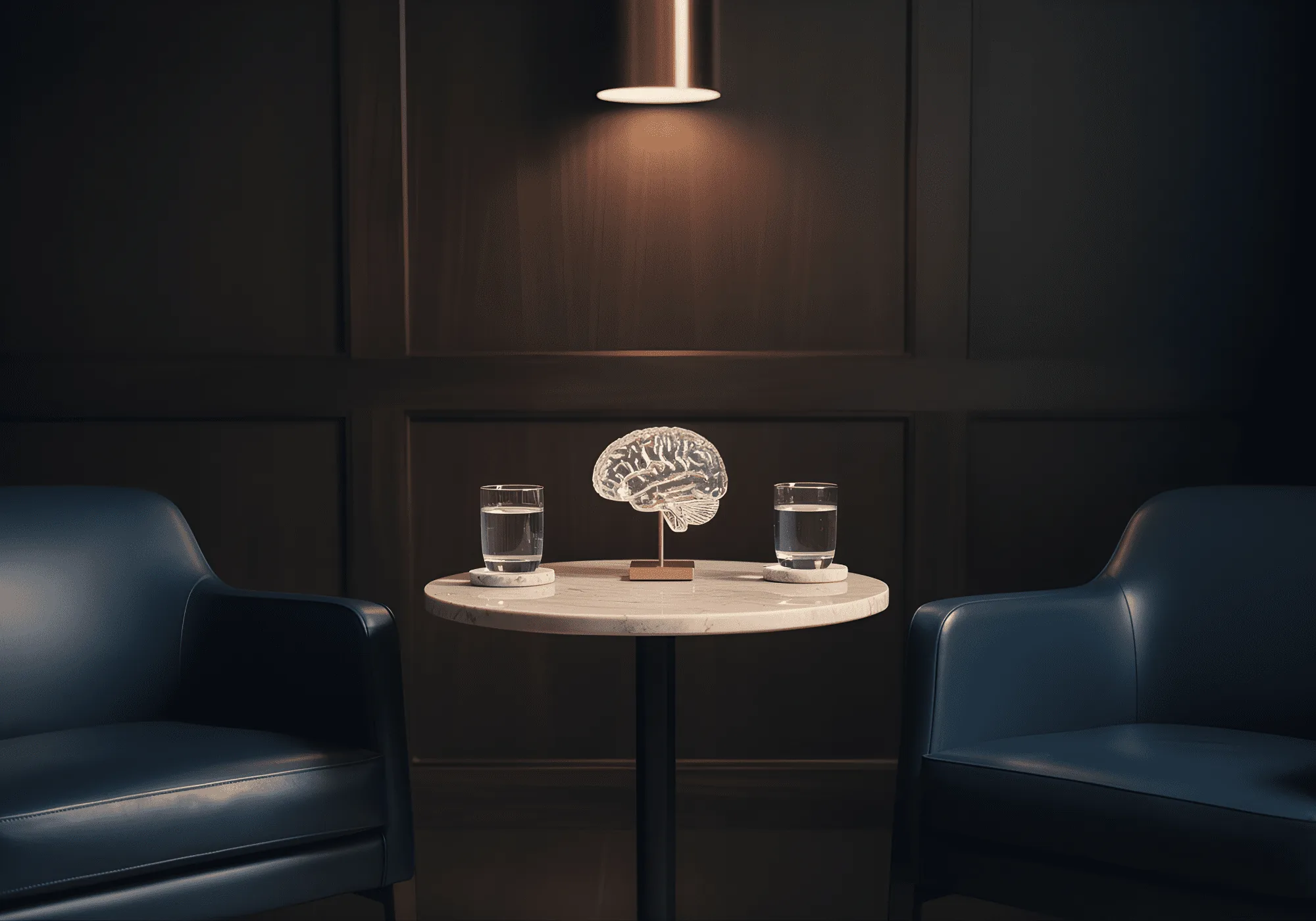
Marble console with crystal brain sculpture and MindLAB journal in warm Miami evening light with tropical hardwood and copper accents

Why Emotional Flashbacks Matters in Miami

Miami is a city built on sensory intensity, and sensory intensity is one of the brain’s most reliable routes into stored emotional memory. The salt air off Biscayne Bay, the particular quality of afternoon light before a summer storm, the rhythm of a clave beat coming through a restaurant door — these are not neutral inputs. For people whose formative experiences were encoded in sensory-rich environments, they are activation cues. They arrive before conscious processing catches up.

For Miami’s large Latin American community — the Venezuelan and Colombian families who relocated over the past decade, the Cuban families whose history in this city spans generations, the recent arrivals from across South and Central America — this dynamic takes a specific and sometimes disorienting form. A particular food, a regional accent, a genre of music from childhood can deliver an emotional state from a prior life with no narrative attached. The food arrives. The feeling arrives. The original context does not.

This is especially pronounced for people who left their countries of origin in circumstances of urgency, uncertainty, or loss. The act of migration encodes emotional patterns during exactly the conditions under which the brain stores feeling over narrative: high stress, disrupted attachment, rapid change, incomplete goodbyes. Those patterns remain embedded. Years later, in Miami, a stimulus that pattern-matches to the original encoding brings the stored emotional state back — the specific grief of departure, the specific disorientation of arrival, the specific suspension between two worlds — without the story that would frame it as past.

The transplant experience more broadly carries its own version. Someone who left New York for Miami — whether for tax reasons, climate, cost, or the need for a different chapter — may encounter a smell, a sound, a particular social dynamic that activates the emotional state of what was left behind. Not the memory of New York. The feeling of the life they were living there: the specific quality of belonging, or longing, or unfinished business. The feeling arrives fully formed in Brickell or Coconut Grove, in a context that has nothing to do with it.

South Beach’s social environments — the particular pressure of image, body, and visible worth that the culture amplifies — create their own emotional flashback terrain. A certain kind of social gathering, a specific quality of being seen and assessed, can activate emotional patterns around worth and belonging that were first encoded in adolescence. The present setting is not the source. The present setting is the trigger. The feeling that floods in belongs to a different room, a different age, a different version of the person standing in it now.

The Brickell office environment adds another layer for people who arrived there from prior high-pressure professional contexts. Walking into a conference room with a certain dynamic — a particular quality of authority, evaluation, or competitive pressure — can activate the full emotional state of an earlier professional environment where something was at stake in ways that shaped the nervous system’s response patterns. The current meeting is not the issue. The circuit is the issue.

If you are in Miami and you find yourself flooded by feelings you cannot account for — feelings that seem to belong somewhere else, some other time — that is not a mystery about your past. It is a present-tense pattern in a circuit that can be reached. A Strategy Call is a phone conversation. $250. The starting point for understanding what is actually running and what it would take to change it.

Dr. Sydney Ceruto, PhD — Founder, MindLAB Neuroscience

Dr. Sydney Ceruto, PhD — Founder & CEO, MindLAB Neuroscience

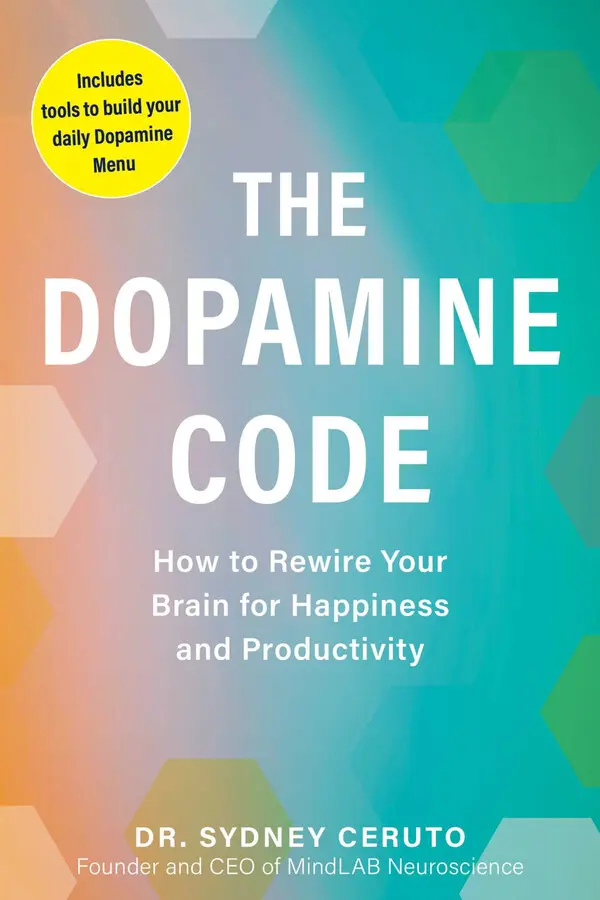
Dr. Ceruto holds a PhD in Behavioral & Cognitive Neuroscience from NYU and two Master’s degrees from Yale University. She lectures at the Wharton Executive Development Program at the University of Pennsylvania and has been an Executive Contributor to the Forbes Coaching Council since 2019. Dr. Ceruto is the author of The Dopamine Code (Simon & Schuster, June 2026). She founded MindLAB Neuroscience in 2000 and has spent over 26 years pioneering Real-Time Neuroplasticity™ — a methodology that permanently rewires the neural pathways driving behavior, decisions, and emotional responses.

References

Nader, K., Schafe, G. E., & LeDoux, J. E. (2000). Fear memories require protein synthesis in the amygdala for reconsolidation after retrieval. *Nature*, 406(6797), 722–726. https://doi.org/10.1038/35021052

LeDoux, J. E. (1996). *The Emotional Brain: The Mysterious Underpinnings of Emotional Life*. Simon & Schuster.

Ecker, B., Ticic, R., & Hulley, L. (2012). *Unlocking the Emotional Brain: Eliminating Symptoms at Their Roots Using Memory Reconsolidation*. Routledge.

van der Kolk, B. A. (1994). The body keeps the score: Memory and the evolving psychobiology of posttraumatic stress. *Harvard Review of Psychiatry*, 1(5), 253–265. https://doi.org/10.3109/10673229409017088

Success Stories

“Every close relationship I had eventually hit the same wall — I'd flood emotionally and shut down or explode, and nothing I'd tried gave me real control over it. Dr. Ceruto identified that my autonomic nervous system was defaulting to fight-or-flight the moment real intimacy was on the line. She restructured the default. The flooding stopped because the trigger architecture changed.”

Simone V. — Publicist New York, NY

“I could perform at the highest level professionally and still feel hijacked emotionally in my closest relationships. Dr. Ceruto identified the limbic imprint — an amygdala encoding from childhood that was running every intimate interaction I had. She dismantled it. The reactivity isn't something I regulate anymore. The pattern that generated it is gone.”

Natasha K. — Art Advisor Beverly Hills, CA

“Unfortunate consequences finally forced me to deal with my anger issues. Nothing was clicking until I found Sydney's approach. Her insightfulness and warm manner helped me through a very low point in my life. Together we worked through all my pent-up anger and rage, and she gave me real tools to manage it going forward. I now work to help others learn how to control their own anger.”

Gina P. — Trial Attorney Naples, FL

“The same relational patterns my mother and grandmother lived through kept repeating in my own life — the hypervigilance, the emotional shutdown, the inability to feel safe even when nothing was wrong. Dr. Ceruto identified the epigenetic stress signatures driving the pattern and restructured them at the neurological level. The cycle that ran through three generations stopped with me.”

Gabriela W. — Real Estate Developer Miami, FL

“The numbness crept in so gradually I didn't notice until I couldn't feel anything — not stress, not connection, not even relief when things went well. Dr. Ceruto identified it as a dorsal vagal shutdown — my nervous system had flatlined as a survival strategy. Within ninety days, the signal came back. I feel things again, clearly and without overwhelm.”

Marcus H. — Fund Manager Dallas, TX

“When my youngest left for college, I didn't just feel sad — I felt erased. My entire sense of self had been wired to caregiving for two decades, and I didn't know who I was without it. Dr. Ceruto mapped the identity circuitry that had fused with the role and restructured it. I didn't find a new purpose — I found the one that had been underneath the whole time.”

Diane L. — Nonprofit Director Chicago, IL

Frequently Asked Questions About Emotional Flashbacks

What exactly is an emotional flashback?

An emotional flashback is the full arrival of a past emotional state in a present moment — without the narrative memory that would explain where it came from. A current situation activates a stored emotional pattern, and the feeling floods in at its original intensity. It is not a visual replay of an event. It is the re-experiencing of a feeling that was encoded in the body and brain during a prior significant experience. The present circumstances may be minor or entirely unrelated to the original source. That does not change the intensity of what arrives.

Why does a feeling arrive without a memory attached to it?

Emotional memory and narrative memory are stored through different systems. The brain's emotional storage runs through structures that function independently of the system that constructs sequential, story-based recall. When an experience is encoded under conditions of high stress, very early in life, or with significant disruption, the emotional signature may be captured with full fidelity while the narrative around it is incomplete or inaccessible. The feeling is stored whole. The story is not — or does not exist yet as a retrievable memory. When a current stimulus activates the stored emotional pattern, the feeling arrives. The context does not come with it.

How is this different from just being reminded of something?

Being reminded of something produces a memory — a mental representation of a past event that you can observe, contextualize, and hold at some distance from the present. An emotional flashback produces a state. You are not observing a memory of feeling afraid or overwhelmed or worthless. You are feeling it, in your body, in present tense, at the intensity of the original encoding. The distinction matters because it explains why the experience is so disorienting. The mind knows this is not current. The body does not know that. The stored state is running as if it is happening now.

Why are these feelings triggered by things that seem unrelated?

The brain's pattern-recognition system does not require an exact match to activate a stored emotional state. It requires sufficient similarity — in sensory detail, social dynamic, tone, physical sensation, or emotional texture — to recognize the pattern as a match to something previously encoded. The current trigger does not need to be the same situation as the original experience. It only needs to resemble it enough for the circuit to fire. This is why a smell, a quality of light, a particular way someone speaks, or an abstract social dynamic can activate a feeling that seems to have no logical connection to the present moment. The connection is in the pattern, not the narrative.

I've done a lot of work on my past. Why do these feelings still arrive?

Reflective and narrative work engages the brain's story-building systems — the capacity to understand, contextualize, and find meaning in past experiences. That work has genuine value. But emotional memory is stored in circuits that do not primarily respond to insight or understanding. The reconsolidation process that would actually update the stored emotional pattern requires engaging the circuit directly, not constructing a better narrative about it. This is why many people find that years of reflective work have given them significant understanding of their patterns without changing the intensity of the experiences themselves. The understanding and the circuit are located in different places in the brain.

Is this something that only happens to people who have experienced severe trauma?

No. Emotional memory encoding happens across a wide range of intensity. The same mechanism that operates in severe cases operates in milder ones — the specifics differ, not the structure. People who carry stored emotional patterns from childhood environments, from significant relational experiences, from professional upheaval, or from the accumulated weight of ongoing pressure can all experience emotional flashbacks. The threshold is not a particular category of event. It is whether the original experience was significant enough for the brain to encode its emotional signature in a way that remains active and reactive to current cues.

What does working on emotional flashbacks actually involve?

The work targets the stored emotional circuit — not the narrative around it. It involves engaging the pattern in ways that open the reconsolidation window, and providing the conditions under which the brain can genuinely update what is stored rather than simply replay it. This is not excavating the past or constructing a better story about what happened. It is precision work at the level of the emotional memory system itself. The goal is a changed circuit: one that no longer sends emergency-level signals in response to present-day cues that do not warrant them.

Will I need to know where the feeling originally came from?

Not necessarily, and not as a prerequisite. The approach I use works at the circuit level — which means it can engage the emotional pattern directly, without requiring that a full narrative be reconstructed around its origin. For many people, the source is genuinely inaccessible: the original encoding happened before narrative memory was fully functional, or the circumstances were sufficiently fragmented that no coherent story is retrievable. The absence of a clear origin story does not prevent the work from reaching the circuit. The circuit is accessible through the emotional pattern itself, not only through the narrative that may or may not accompany it.

What happens during a Strategy Call?

A Strategy Call is a one-hour phone conversation — $250 — in which we examine what you are experiencing, the specific patterns and triggers you have noticed, and what the work of reaching those circuits would actually involve. It is not a sales conversation. It is a real assessment of what is happening and what a genuine path forward looks like. You will leave with more clarity about the neural mechanisms driving your experience and what addressing them at the right level would require. If there is a fit for deeper work, we discuss what that looks like. If there is not, you still leave with more understanding than you arrived with.

Can emotional flashbacks be completely eliminated?

The goal is not elimination — it is recalibration. The capacity to have emotional responses to meaningful cues is not a malfunction. What becomes disruptive is emotional memory that fires at full original intensity in response to present-day cues that do not warrant that response, without any narrative context to make sense of the experience. When the circuit is updated, the same cues may still register — but proportionately, without flooding, and with the capacity to recognize what is happening rather than being consumed by it. The past stops running in the present. It becomes past.

Also available in: Wall Street · Midtown Manhattan · Beverly Hills · Lisbon

Take the First Step

The Strategy Call is a focused conversation with Dr. Ceruto that maps the specific neural mechanisms driving your concerns and determines the right path forward.

Book a Strategy Call
MindLAB Neuroscience consultation room
Locations

The Intelligence Brief

Neuroscience-backed analysis on how your brain drives what you feel, what you choose, and what you can’t seem to change — direct from Dr. Ceruto.