





Trust & Vulnerability in Beverly Hills

Entertainment runs on performed relationships. When performed and genuine use the same vocabulary, the brain's trust circuits cannot find the difference — and learn not to try.

If you have spent years keeping people at a careful distance — not because you don't want connection, but because something in you treats closeness as a threat — that is not a personality trait. It is a neural pattern. At MindLAB Neuroscience, I work with people whose trust circuits have been recalibrated by experiences that made openness dangerous, and who now find that the protective system meant to keep them safe has become the thing standing between them and the life they want.

The brain that learned to guard against betrayal did exactly what it was supposed to do. The problem is that it kept doing it long after the original danger passed — scanning every relationship for threat signals, treating vulnerability as exposure, and encoding connection itself as risk. That architecture can be changed. Not by deciding to trust more, but by working at the level where the pattern actually lives.

Book a Strategy Call

What the Brain Does After Trust Breaks

Trust is not an attitude or a personality feature. It is a functional output of specific neural circuits — circuits that assess safety, predict the behavior of others, and regulate the risk of allowing someone close. When those circuits are calibrated by experiences of betrayal, violation, or relational unpredictability, they don’t reset when the danger is gone. They update their model. The new model says: people hurt you. Closeness is how it happens. The rational response is distance.

The amygdala — the brain’s primary threat-detection and emotional encoding system — plays a central role in this recalibration. When a significant betrayal occurs, the amygdala encodes the emotional content with high priority: this mattered, it was dangerous, remember it. In healthy circumstances, that encoding is useful. But when betrayal is repeated, early, or sufficiently severe, the amygdala’s threat-detection system generalizes. It begins applying the threat signal not just to situations that closely resemble the original, but to relational closeness itself. The person standing in front of you — whoever they are — triggers the same activation as the person who hurt you, because the circuit is pattern-matching on proximity, not on that specific individual’s behavior.

Alongside this, the brain’s bonding systems — which depend on a neurochemical environment that supports openness and reduced threat activation — become disrupted. The prefrontal cortex is responsible for the kind of measured social reasoning that allows trust to be calibrated appropriately: assessing evidence, updating based on experience, distinguishing between genuine risk and anticipated risk. When the threat-detection system is chronically elevated, it competes with prefrontal regulation. The result is a brain that is running a high-vigilance defensive program in situations that may not warrant it — because the circuit learned its lesson in a context where that program was genuinely necessary.

Why Vulnerability Registers as Threat

Vulnerability — being known, being seen, allowing someone else to have access to what matters to you — requires the brain to tolerate a specific kind of exposure. In a nervous system calibrated for safety, that exposure is manageable. In a nervous system that learned that exposure leads to harm, vulnerability and threat become neurologically synonymous.

This is not a cognitive confusion that can be corrected by reasoning. The association was encoded at a level that precedes deliberate thought. When someone with a disrupted trust architecture moves toward closeness, the brain does not pause and evaluate whether this person is genuinely dangerous. It activates the defensive response first — the pull back, the guarded answer, the managed reveal that discloses enough to maintain connection without actually allowing access. The walls go up not because of a decision but because a circuit fired.

The brain’s bonding circuitry also carries a specific vulnerability around repeated violations. Each subsequent betrayal — even a smaller one — is processed against the backdrop of prior betrayals. The amygdala doesn’t evaluate each rupture independently. It adds them. Over time, even ordinary disappointments trigger a response that draws on the full weight of the accumulated history. The person who cancels plans at the last minute isn’t just canceling plans — they are, neurologically, activating a threat response calibrated by everything that came before. The reaction feels disproportionate to outsiders. From inside the nervous system, it is perfectly logical.

The Cost of the Protective System

A brain organized around relational protection is not broken. It is adaptive — adapted to an environment that required exactly this. The problem is that the adaptation doesn’t know when to turn off. The circuit that kept you safe in one context continues operating in all contexts, regardless of actual threat level.

The costs accumulate. Relationships that begin with genuine potential reach a ceiling — the point at which deeper access would be required, and the defensive architecture activates to prevent it. Intimacy is sought in theory and avoided in practice. The longing for connection and the fear of it operate simultaneously, producing a specific kind of exhaustion: wanting something and being unable to stop protecting yourself against it.

There is also a secondary cost that often goes unexamined. The energy required to maintain a high-vigilance relational posture is significant. Monitoring for threat signals, managing reveals, maintaining the architecture of emotional distance — these are not passive states. They are active neural work, running continuously in the background, consuming resources that would otherwise be available for presence, creativity, and the ordinary business of being in relationship with people.

What Changes When the Circuit Changes

The trust circuits are not fixed. The brain that learned to treat closeness as threat also has the capacity to learn something different — not by overriding the protective response with willpower, but by working directly on the neural architecture driving it.

The work I do at MindLAB targets the specific mechanisms involved: recalibrating the amygdala’s generalization of threat, rebuilding prefrontal capacity to assess actual versus anticipated relational risk, and restoring the neurochemical conditions that allow bonding circuitry to function without constant interference from the defensive system. This is not about deciding to be more open. It is about changing what the brain registers when openness becomes possible.

People who have worked through this process describe a particular shift: not the absence of discernment — the ability to assess whether someone is actually safe remains — but the absence of the automatic wall. The moment when closeness becomes available, the circuit no longer fires the same alarm. The option to connect stops feeling like a trap. That shift is not a decision. It is a neurological change, and it changes what relationships actually feel like to be in.

If you have walls that went up for good reasons and have stayed up past their usefulness — if the thing you most want and the thing you most avoid are the same thing — that is a pattern that can be addressed at the level where it lives.

Walnut desk with marble inlay crystal brain sculpture and MindLAB journal in warm California afternoon light in Beverly Hills private study

Why Trust & Vulnerability Matters in Beverly Hills

The entertainment industry runs on performed relationships. The table read where everyone says the script is brilliant. The meeting where the executive is passionate about your project. The handshake deal that evaporates when priorities shift. The agent who is your advocate until you are no longer bankable. The people in this industry are not uniquely dishonest — they are operating within a system where the performance of enthusiasm is the social currency, and where genuine feeling is managed information. For a brain trying to calibrate who is actually safe, the signal environment in Los Angeles is exceptionally difficult to read.

This creates a very specific trust problem. The ordinary social cues that the brain uses to assess authenticity — consistency between words and actions, disclosures that carry real personal cost, behavior that holds across different contexts — are all professionally managed in entertainment. Everyone has a publicist, literally or functionally. Everyone has a version of themselves that they present to the room. For people with an already disrupted trust architecture, an environment where presentation management is universal makes the task of distinguishing genuine safety from performed safety genuinely difficult. The circuit that scans for threat is not wrong to scan here.

The plastic surgery culture adds a layer specific to Beverly Hills. Trusting someone to alter your face is one of the most intimate acts of physical vulnerability a person can perform — you are handing the management of your appearance, your identity, your social presentation to another person and accepting their judgment. In a city where that result will be publicly evaluated and compared against an aesthetic standard that keeps moving, the vulnerability required is significant. When results disappoint — when the trust placed in the surgeon’s judgment, or the system’s promise of improvement, does not deliver — it encodes in the trust architecture alongside whatever else is there.

Tori Spelling’s public disclosure in 2025 about the psychological weight of years of appearance speculation illustrated something specific: what happens to trust in self-presentation when the external world has established that your appearance is public property, subject to comment, comparison, and criticism by people with no relationship to you. This is a form of involuntary exposure — vulnerability without consent — and it activates the same circuits as deliberate betrayal. The body becomes a space that cannot be trusted to be safe from evaluation.

The West Hollywood creative community — writers, directors, musicians, artists in orbit around the industry without full membership in it — carries a trust pattern specific to proximity. These are people whose relationships are genuine but whose professional context is always also evaluative. The friend who is also the potential collaborator. The colleague who is also the competitor for the same commission. Genuine connection is possible here and does happen, but the relational environment requires a constant low-level assessment that the brain often cannot separate from threat-scanning. Friendship feels complicated because it often is.

Rodeo Drive and the broader Beverly Hills social context also perform trust in specific ways. The transactions on that corridor are not merely commercial — they are trust performances. The sales associate who remembers your name, the restaurant where your reservation is honored, the access that signals belonging — these are signals the brain reads as social safety. When they are withdrawn, or when someone realizes they were always contingent on purchasing power rather than relationship, the brain processes it as a relational rupture even if it looked like a commercial one.

If you are in this environment and the work of maintaining vigilance — reading rooms, managing reveals, scanning for who actually means what they say — has become the dominant mode of your relational life, that is not sharp instinct. It is an exhausted nervous system doing its best in difficult conditions. A Strategy Call is an hour of real conversation. Phone only. $250.

Dr. Sydney Ceruto, PhD — Founder, MindLAB Neuroscience

Dr. Sydney Ceruto, PhD — Founder & CEO, MindLAB Neuroscience

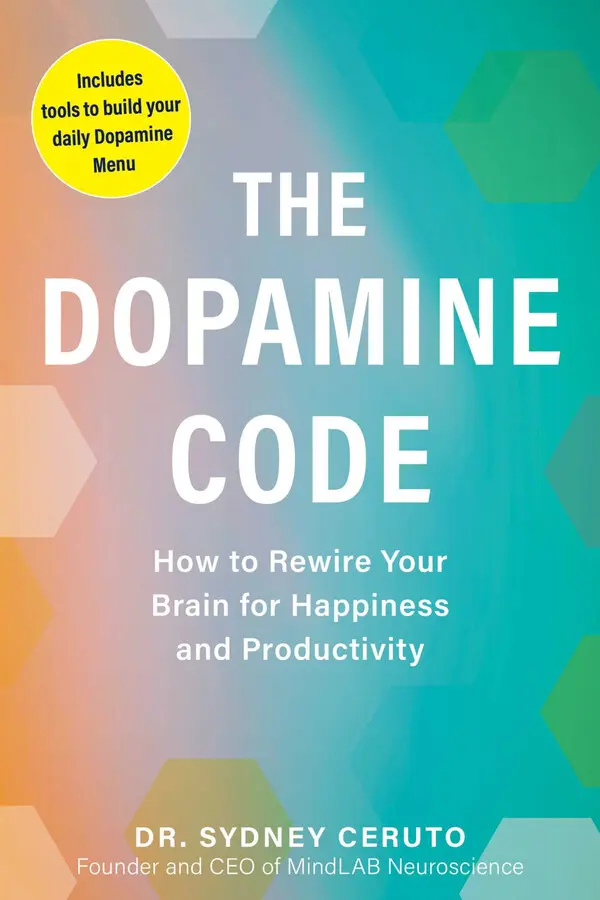
Dr. Ceruto holds a PhD in Behavioral & Cognitive Neuroscience from NYU and two Master’s degrees from Yale University. She lectures at the Wharton Executive Development Program at the University of Pennsylvania and has been an Executive Contributor to the Forbes Coaching Council since 2019. Dr. Ceruto is the author of The Dopamine Code (Simon & Schuster, June 2026). She founded MindLAB Neuroscience in 2000 and has spent over 26 years pioneering Real-Time Neuroplasticity™ — a methodology that permanently rewires the neural pathways driving behavior, decisions, and emotional responses.

References

Adolphs, R. (2002). Trust in the brain. *Nature Neuroscience*, 5(3), 192–193. https://doi.org/10.1038/nn0302-192

Fett, A.-K. J., Shergill, S. S., Joyce, D. W., Riedl, A., Bhatt, M., Bhatt, D. L., & Simonsen, L. (2012). To trust or not to trust: The dynamics of social interaction in psychosis. *Brain*, 135(3), 976–984. https://doi.org/10.1093/brain/awr359

Kosfeld, M., Heinrichs, M., Zak, P. J., Fischbacher, U., & Fehr, E. (2005). Oxytocin increases trust in humans. *Nature*, 435(7042), 673–676. https://doi.org/10.1038/nature03701

Lanius, R. A., Vermetten, E., & Pain, C. (Eds.). (2010). *The Impact of Early Life Trauma on Health and Disease: The Hidden Epidemic*. Cambridge University Press.

Success Stories

“The numbness crept in so gradually I didn't notice until I couldn't feel anything — not stress, not connection, not even relief when things went well. Dr. Ceruto identified it as a dorsal vagal shutdown — my nervous system had flatlined as a survival strategy. Within ninety days, the signal came back. I feel things again, clearly and without overwhelm.”

Marcus H. — Fund Manager Dallas, TX

“I could perform at the highest level professionally and still feel hijacked emotionally in my closest relationships. Dr. Ceruto identified the limbic imprint — an amygdala encoding from childhood that was running every intimate interaction I had. She dismantled it. The reactivity isn't something I regulate anymore. The pattern that generated it is gone.”

Natasha K. — Art Advisor Beverly Hills, CA

“Every close relationship I had eventually hit the same wall — I'd flood emotionally and shut down or explode, and nothing I'd tried gave me real control over it. Dr. Ceruto identified that my autonomic nervous system was defaulting to fight-or-flight the moment real intimacy was on the line. She restructured the default. The flooding stopped because the trigger architecture changed.”

Simone V. — Publicist New York, NY

“Unfortunate consequences finally forced me to deal with my anger issues. Nothing was clicking until I found Sydney's approach. Her insightfulness and warm manner helped me through a very low point in my life. Together we worked through all my pent-up anger and rage, and she gave me real tools to manage it going forward. I now work to help others learn how to control their own anger.”

Gina P. — Trial Attorney Naples, FL

“The same relational patterns my mother and grandmother lived through kept repeating in my own life — the hypervigilance, the emotional shutdown, the inability to feel safe even when nothing was wrong. Dr. Ceruto identified the epigenetic stress signatures driving the pattern and restructured them at the neurological level. The cycle that ran through three generations stopped with me.”

Gabriela W. — Real Estate Developer Miami, FL

“I'd relocated internationally before, but this time my nervous system wouldn't settle. Everything unfamiliar registered as danger — new people, new routines, new sounds. Dr. Ceruto identified that my nervous system was coding unfamiliarity itself as threat and restructured the response at its source. The world stopped feeling hostile. I stopped bracing.”

Katarina L. — Gallerist Zurich, CH

Frequently Asked Questions About Trust & Vulnerability

Why do I push people away even when I actually want them close?

Because wanting connection and the brain's defensive response to it are running simultaneously — and the defensive response is faster. The circuit that learned to treat closeness as exposure fires before the conscious desire for connection can override it. This is not ambivalence about people. It is a split-second neural sequence in which the protective system activates before the reasoning system has a chance to assess whether the threat is real. The result feels like self-sabotage. Neurologically, it is a circuit doing its job — just a job that no longer fits the situation.

I've been hurt before. Isn't it reasonable to be guarded?

Yes — up to a point. A brain that has learned from genuine betrayal is doing exactly what brains are supposed to do. The problem is that the protective pattern generalizes: the threat-detection system begins applying the same response to situations that resemble the original, not just situations that actually warrant it. At that point, the protection is no longer calibrated to actual risk — it is running on a prior that was written in a different context. The goal is not to remove discernment. It is to restore accuracy, so that the protective response is proportionate to what is actually in front of you.

What is it about vulnerability that feels so dangerous?

Vulnerability requires allowing someone access to what matters to you, which means giving them the capacity to affect you. For a nervous system calibrated by experiences where that access led to harm, the brain has encoded a direct association: openness leads to exposure leads to pain. That association was not a mistake — it was learned from real events. But it now activates in response to the potential for closeness, not just the presence of actual threat. The brain does not distinguish between the risk of being hurt and the certainty of it. It responds to the possibility with the urgency appropriate to the certainty.

Can a person learn to trust after significant betrayal?

Yes — not by deciding to, but by working at the level of the circuits that were affected by the betrayal. The amygdala's threat-assessment model was updated by the experience; it can be updated again. The prefrontal capacity to assess actual versus anticipated relational risk was disrupted; it can be restored. The neurochemical environment that supports genuine openness was destabilized; it can be recalibrated. None of this happens through insight alone, through positive thinking, or through the passage of time. It happens through direct work on the neural architecture involved.

Why does my reaction to someone letting me down feel so much bigger than the situation warrants?

Because the amygdala's threat-response doesn't evaluate each disappointment independently. It processes each new rupture against the full history of prior ruptures — adding rather than averaging. A small letting-down lands with the emotional weight of everything that came before it, because the neural circuit activated by the current event is the same circuit that was activated by much larger ones. The response feels disproportionate from the outside. From inside the nervous system, it is the accumulated weight of prior experience being activated by a present trigger. That pattern can be addressed directly.

How does this kind of work differ from just talking about what happened to me?

Talking about what happened is not the same as changing the circuits that are still responding to it. Narrative processing — understanding the story of how you got here — can be useful context, but it does not directly modify the threat-detection architecture that is generating the current pattern. The work I do at MindLAB targets the neural mechanisms involved: the amygdala's generalization of threat, the prefrontal capacity to assess relational risk accurately, the bonding circuitry that was disrupted. The goal is to change what the brain does, not just what you know about why it does it.

I function fine in professional relationships. Why is personal trust so much harder?

Professional relationships are bounded — they have explicit rules, defined roles, and a structure that limits the degree of access required. The threat-detection system can calibrate to those constraints. Personal relationships require a qualitatively different kind of access: being known outside of performance, being seen in states that aren't managed, allowing someone to matter to you in ways that cannot be controlled. For a nervous system that learned to treat that kind of exposure as dangerous, professional trust and personal trust operate on entirely different risk assessments. Functioning well in one context does not mean the circuits involved in the other have been addressed.

Does early experience always explain adult trust difficulties?

Early relational experience is often the origin — it is when the brain encodes its initial template for what relationships mean and what safety looks like. But the trust circuits are also affected by significant adult experiences: a major betrayal by a partner, a professional community that revealed its loyalty was conditional, a violation in a context where safety had been explicitly promised. The neural mechanism is the same regardless of when the encoding happened. The work addresses the current pattern, not only its timeline. When it began matters less than what it is doing now.

What does a Strategy Call involve?

A Strategy Call is a one-hour phone conversation — $250 — in which we examine your specific situation: what the pattern looks like, when it activates, what it has cost you, and what the work would actually involve at the neural level. It is a real assessment, not a sales process. You leave with a clearer understanding of what is happening and what would need to change. If there is a fit for deeper work, we discuss what that looks like. If there isn't, you still have significantly more clarity than when you arrived.

Is it possible to want connection and also genuinely prefer to be alone?

Yes, and the distinction matters. Some people are genuinely oriented toward solitude — it is restorative rather than protective, and the preference is not driven by fear of what connection might cost. Others experience what feels like a preference for solitude but is actually the brain's defensive architecture making connection feel too effortful or too dangerous to pursue. The difference is in what solitude feels like: relief from an intrinsically manageable thing, or relief from something that feels like threat. If the walls feel less like a choice and more like the only option, that distinction is worth examining.

Also available in: Miami · Wall Street · Midtown Manhattan · Lisbon

Take the First Step

The Strategy Call is a focused conversation with Dr. Ceruto that maps the specific neural mechanisms driving your concerns and determines the right path forward.

Book a Strategy Call
MindLAB Neuroscience consultation room
Locations

The Intelligence Brief

Neuroscience-backed analysis on how your brain drives what you feel, what you choose, and what you can’t seem to change — direct from Dr. Ceruto.