Trauma & Emotional Regulation Support in Lisbon

Trauma is not a memory — it is a reorganization of the brain's threat-detection, emotional regulation, and relational systems. When these circuits are recalibrated by overwhelming experience, they do not reset on their own. The downstream patterns — hypervigilance, emotional flooding, trust collapse, flashbacks without memory — persist because the architecture that produces them was never addressed. Dr. Ceruto's methodology identifies and intervenes at the level of the neural circuits themselves, creating structural change that insight, time, and narrative processing cannot reach.

Book a Strategy Call

Trauma Recovery

Trauma is not a memory. It is a neural reorganization — a structural change in how the brain scans for threat, interprets safety, and allocates attention across every waking moment. When something overwhelming happens and the brain does not complete its threat-response cycle, the pattern does not simply resolve with time. It encodes. The nervous system retains the alarm, even when the original event is over, because the circuits responsible for distinguishing past from present have been altered by the experience itself.

Learn more about Trauma Recovery in Lisbon →

Emotional Dysregulation

The reaction was bigger than the situation — and you knew it, even as it was happening. The intensity came out of nowhere, or so it seemed, and now there’s the familiar aftermath: the confusion, the exhaustion, the gap between who you intend to be and what actually emerges when the pressure hits. At MindLAB Neuroscience, I work with people whose emotional responses no longer feel calibrated to the actual events triggering them — not to manage symptoms, but to address the neural architecture driving the pattern.

Learn more about Emotional Dysregulation in Lisbon →

Emotional Triggers & Reactivity

You already know the reaction was too big for what actually happened. You can see it afterward — the moment the door slammed, the conversation that ended badly, the silence that lasted three days over something that shouldn’t have mattered. What you can’t explain is why it keeps happening, or why knowing it’s happening doesn’t stop it. At MindLAB Neuroscience, I work with people whose emotional reactions have become decoupled from the current situation — firing at a volume that belongs to a different time, a different threat, a different version of their life.

Learn more about Emotional Triggers & Reactivity in Lisbon →

Childhood Patterns & Adult Behavior

The patterns that feel most like personality — the reflexive self-protection, the relationships that repeat, the situations you keep finding yourself in despite knowing better — often have nothing to do with character. They are neural architecture, encoded before you had language to name them. At MindLAB Neuroscience, I work with adults whose earliest experiences wrote behavioral programs that have been running, largely unexamined, ever since.

Learn more about Childhood Patterns & Adult Behavior in Lisbon →

Hypervigilance & Safety

There is a specific exhaustion that belongs to people whose brain never fully stands down — who scan a room before relaxing into it, who read subtext in silence, who cannot sit with their back to a door. That is not paranoia and it is not weakness. It is a nervous system that learned to stay on guard because, at some point, staying on guard was the right call. The problem is that the system never got the signal that the threat had passed.

Learn more about Hypervigilance & Safety in Lisbon →

Emotional Flashbacks

You are sitting in a meeting, or a restaurant, or your own living room — and something floods in. Not a memory. A feeling. Heavy, urgent, achingly familiar. You know it isn’t about what’s in front of you, but your body disagrees completely. The sensation is from somewhere else, some other time. The situation doesn’t explain it. You can’t find the source.

Learn more about Emotional Flashbacks in Lisbon →

Trust & Vulnerability

If you have spent years keeping people at a careful distance — not because you don’t want connection, but because something in you treats closeness as a threat — that is not a personality trait. It is a neural pattern. At MindLAB Neuroscience, I work with people whose trust circuits have been recalibrated by experiences that made openness dangerous, and who now find that the protective system meant to keep them safe has become the thing standing between them and the life they want.

Learn more about Trust & Vulnerability in Lisbon →
Dr. Sydney Ceruto, PhD — Founder, MindLAB Neuroscience

Dr. Sydney Ceruto, PhD — Founder & CEO, MindLAB Neuroscience

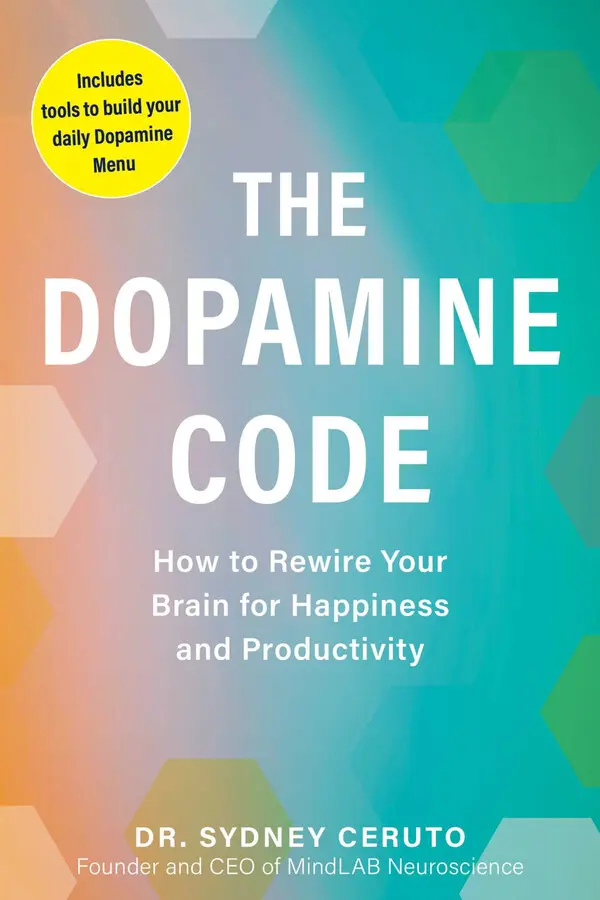
Dr. Ceruto holds a PhD in Behavioral & Cognitive Neuroscience from NYU and two Master’s degrees from Yale University. She lectures at the Wharton Executive Development Program at the University of Pennsylvania and has been an Executive Contributor to the Forbes Coaching Council since 2019. Dr. Ceruto is the author of The Dopamine Code (Simon & Schuster, June 2026). She founded MindLAB Neuroscience in 2000 and has spent over 26 years pioneering Real-Time Neuroplasticity™ — a methodology that permanently rewires the neural pathways driving behavior, decisions, and emotional responses.

References

van der Kolk, B. A. (1994). The body keeps the score: Memory and the evolving psychobiology of posttraumatic stress. *Harvard Review of Psychiatry*, 1(5), 253-265. https://doi.org/10.3109/10673229409017088

Shin, L. M., & Liberzon, I. (2010). The neurocircuitry of fear, stress, and anxiety disorders. *Neuropsychopharmacology*, 35(1), 169-191. https://doi.org/10.1038/npp.2009.83

LeDoux, J. E. (2000). Emotion circuits in the brain. *Annual Review of Neuroscience*, 23(1), 155-184. https://doi.org/10.1146/annurev.neuro.23.1.155

Nader, K., Schafe, G. E., & Le Doux, J. E. (2000). Fear memories require protein synthesis in the amygdala for reconsolidation after retrieval. *Nature*, 406(6797), 722-726. https://doi.org/10.1038/35021052

Success Stories

“The same relational patterns my mother and grandmother lived through kept repeating in my own life — the hypervigilance, the emotional shutdown, the inability to feel safe even when nothing was wrong. Dr. Ceruto identified the epigenetic stress signatures driving the pattern and restructured them at the neurological level. The cycle that ran through three generations stopped with me.”

Gabriela W. — Real Estate Developer Miami, FL

“Every close relationship I had eventually hit the same wall — I'd flood emotionally and shut down or explode, and nothing I'd tried gave me real control over it. Dr. Ceruto identified that my autonomic nervous system was defaulting to fight-or-flight the moment real intimacy was on the line. She restructured the default. The flooding stopped because the trigger architecture changed.”

Simone V. — Publicist New York, NY

“I could perform at the highest level professionally and still feel hijacked emotionally in my closest relationships. Dr. Ceruto identified the limbic imprint — an amygdala encoding from childhood that was running every intimate interaction I had. She dismantled it. The reactivity isn't something I regulate anymore. The pattern that generated it is gone.”

Natasha K. — Art Advisor Beverly Hills, CA

“Unfortunate consequences finally forced me to deal with my anger issues. Nothing was clicking until I found Sydney's approach. Her insightfulness and warm manner helped me through a very low point in my life. Together we worked through all my pent-up anger and rage, and she gave me real tools to manage it going forward. I now work to help others learn how to control their own anger.”

Gina P. — Trial Attorney Naples, FL

“The numbness crept in so gradually I didn't notice until I couldn't feel anything — not stress, not connection, not even relief when things went well. Dr. Ceruto identified it as a dorsal vagal shutdown — my nervous system had flatlined as a survival strategy. Within ninety days, the signal came back. I feel things again, clearly and without overwhelm.”

Marcus H. — Fund Manager Dallas, TX

“Dr. Ceruto's methodology took me from a founder on the verge of quitting to a leader capable of building the team and culture that drove Liquid IV's success. Her ability to restructure how I make decisions and lead under pressure changed the trajectory of the entire company. The company I built after working with her was fundamentally different — because I was fundamentally different.”

Brandin C. — Tech Founder Los Angeles, CA

Frequently Asked Questions About Trauma & Emotional Regulation

What is the neuroscience behind trauma patterns?

Trauma reorganizes the brain's threat-detection, emotional regulation, and relational systems. The amygdala — the brain's primary threat-assessment center — becomes sensitized, firing at lower thresholds. The prefrontal cortex — responsible for contextual evaluation and emotional regulation — loses influence over these responses. The result is a nervous system operating as though the threatening experience is still occurring, producing patterns like hypervigilance, emotional flooding, and trust collapse that persist long after the original events.

How is this different from traditional trauma approaches?

Most approaches work through narrative — retelling the story, reprocessing the memory, building coping strategies around the symptoms. Dr. Ceruto's methodology works at the level of the neural circuits that were reorganized by the experience. The distinction matters because trauma encoding lives in subcortical systems that narrative processing does not reach. Structural change requires intervention at the circuit level, not the story level.

Do I need to relive traumatic experiences during this work?

No. The methodology does not require narrative retelling or deliberate re-exposure to traumatic material. Dr. Ceruto works with the neural architecture — the circuits that were reorganized — not the memory content. This is a fundamental distinction from approaches that rely on processing the narrative of what happened.

Who typically seeks help with trauma and emotional regulation?

People from every background. Some carry patterns from childhood experiences that continue to drive adult behavior. Others are navigating the aftermath of recent events — career upheaval, relationship rupture, displacement, loss. Many have tried other approaches and found that while they gained insight into their patterns, the patterns themselves did not change. What they share is the recognition that understanding the problem has not been sufficient to resolve it.

How long does it take to see results?

The initial diagnostic mapping — identifying exactly which circuits are maintaining the pattern — typically produces clarity within the first one to two sessions. Structural change in threat-detection and emotional regulation patterns generally becomes measurable within the first 30 to 60 days of intensive work. The timeline depends on the depth and duration of the encoding, but the methodology targets the architecture directly rather than working around it.

What does a Strategy Call involve?

The Strategy Call is a 60-minute phone conversation where Dr. Ceruto assesses the specific neural patterns driving your concerns. It is diagnostic, not promotional — by the end of the call, you will understand what is happening neurologically, whether this methodology fits your situation, and what the path forward looks like. The call is conducted by phone intentionally — eliminating visual stimuli activates deeper processing pathways. The fee is $250.

How much does the program cost?

Program structure and investment details are discussed during the Strategy Call, once Dr. Ceruto has assessed your specific situation and can recommend the appropriate scope of work. The investment reflects the depth, exclusivity, and permanence of the results.

Can trauma patterns affect physical health?

Yes. When the brain's threat-detection system remains activated, the body sustains elevated cortisol, disrupted sleep architecture, suppressed immune function, and chronic inflammation. These are not psychosomatic — they are the downstream physiological consequences of neural circuits operating in sustained threat mode. Addressing the root neural pattern often produces measurable improvement in physical symptoms.

Is this work available remotely?

Yes. Dr. Ceruto works with clients regardless of location. Strategy Calls are conducted by phone. Program delivery is structured around each client's life and circumstances — the methodology intervenes in real-time, real-world moments, not in a clinical setting.

What if I'm not sure my issues are trauma-related?

Many people arrive uncertain whether their patterns qualify as trauma-related. The Strategy Call is designed to clarify exactly this. Dr. Ceruto's diagnostic methodology identifies the root neural pattern regardless of how you currently understand or label it. You do not need a self-diagnosis before reaching out.

Trauma and emotional regulation patterns that persist despite effort have a neural source.

The Strategy Call is a focused conversation with Dr. Ceruto that maps the specific neural mechanisms driving your concerns and determines the right path forward.

Book a Strategy Call
MindLAB Neuroscience consultation room
Locations

The Intelligence Brief

Neuroscience-backed analysis on how your brain drives what you feel, what you choose, and what you can’t seem to change — direct from Dr. Ceruto.