Addiction & Compulsive Behavior in Miami

Miami's stimulation architecture is real — and so is what it does to dopamine circuitry over time. Compulsion isn't a lifestyle choice. It's a neural recalibration.

Addiction is not a character flaw, a weakness of will, or a failure to want recovery badly enough. It is a specific set of changes in the brain's reward circuitry — the dopaminergic systems responsible for learning, motivation, and the encoding of what feels worth pursuing. When those circuits are hijacked by a substance, a behavior, or a pattern of stimulation that produces supraphysiological reward signals, the brain reorganizes around the hijack. The compulsion that follows is not a choice being made. It is the output of a neural architecture that has been fundamentally restructured — one that now treats the source of compulsion as a survival priority, not a preference.

At MindLAB Neuroscience, I work at the level where addiction and compulsive patterns actually live: the reward system architecture, the dopamine desensitization that drives escalating use, and the consolidation loops that make the pattern self-reinforcing over time. This is not a conversation about willpower or motivation. It is precision work on the circuitry that has learned the wrong thing — and on rebuilding the brain's capacity to assign value accurately, so that the compulsive pull loses the structural authority it has acquired.

Book a Strategy Call

Key Points

  1. Addiction follows a predictable neural trajectory: voluntary action becomes habitual, then compulsive, as control shifts from prefrontal cortex to dorsal striatum.
  2. The reward system does not malfunction in addiction — it is restructured. The brain’s learning systems have encoded the compulsive behavior as the highest-priority survival response.
  3. Withdrawal and craving are not psychological weakness — they are the output of an allostatic shift in the brain’s stress and reward systems that has redefined the baseline.
  4. Relapse patterns map directly to neural trigger circuits that fire below conscious awareness — addressing relapse requires addressing these circuits, not just building awareness of triggers.
  5. Recovery is not the absence of compulsive behavior. It is the restoration of prefrontal executive control over a reward system that has been architecturally hijacked.

What Addiction Actually Is at the Neural Level

“Compulsive behavior is not a failure of willpower. It is the brain’s reward system operating exactly as it has been architecturally configured to operate — and architecture can be rebuilt.”

The word addiction carries enormous cultural weight — and almost none of it points toward what is actually happening in the brain. Strip away the moral framing, the disease model, the willpower narratives, and what remains is this: a set of reward circuits that have been recalibrated around a stimulus that produces a dopamine signal far stronger than anything the brain evolved to handle. The nucleus accumbens — the brain’s primary reward processing structure — responds to that signal by encoding the associated behavior or substance as categorically important. Not pleasurable. Important — in the way that water and food and safety are important, at a level below conscious deliberation.

This is why the behavioral output looks like it overrides reason, relationships, and self-interest. It is not overriding them. It is operating on a layer that precedes them. The frontal cortex — the region responsible for evaluating consequences, weighing long-term outcomes, and applying brakes to impulse — has diminished regulatory authority over the reward system once the pattern has consolidated. The circuits have been reorganized. The compulsion is not a bad decision being made. It is the predictable output of a restructured neural architecture doing exactly what it was trained to do.

The Dopamine Desensitization Loop

The mechanism that transforms repeated use into compulsion is dopamine desensitization — a neuroadaptive process that is counterintuitive but critical to understand. Each time the reward system is activated by a supraphysiological stimulus, the brain compensates by downregulating its own dopamine sensitivity. The receptors responsible for registering the reward signal reduce in number or in responsiveness. The system is attempting to maintain homeostasis — to keep the overall reward signal within a manageable range.

The consequence is the escalation pattern that defines addiction: what produced the desired effect at a lower intensity no longer does, because the system has recalibrated to a new baseline. More is required to produce the same signal. And critically — ordinary pleasures, the ones that evolved to maintain motivation for activities that support survival and connection, now register as insufficient. The desensitized system does not find them rewarding because they cannot compete with the recalibrated threshold. The world goes flat. The substance or behavior becomes the only thing that registers at all.

This is the neurological root of what gets described as the addictive personality, or the sense that life without the substance feels empty, purposeless, or unbearable. The reward system is not broken. It is operating correctly within its new parameters. Those parameters are the problem — and they are what restructuring work addresses.

How Compulsive Loops Consolidate

Repetition is how the brain learns — and how it encodes compulsive patterns. The basal ganglia — the region most centrally involved in habit formation — consolidates behaviors that are repeated in consistent contexts with consistent reward outcomes. The consolidation process is efficient and progressive: each repetition deepens the groove, reduces the effortful quality of the behavior, and moves the execution closer to automaticity. What began as a deliberate choice becomes, over time, a habit. What became a habit becomes, with sufficient repetition and dopamine reinforcement, a compulsive drive that operates below the threshold of conscious initiation.

This is why people experiencing addiction patterns often describe a gap between intention and action — the decision to stop, made in a prefrontal state of reflective clarity, that dissolves when the cue-triggered loop activates. The gap is real and it is structural. The prefrontal decision was made in one neural state; the compulsive execution occurs in another, one in which the regulatory systems that supported that decision have been temporarily overridden by the activated reward circuit. Willpower is not the variable. Neural architecture is.

Consolidation also explains why interrupting the pattern requires more than removing access to the substance or behavior. The loop — the cue, the craving, the behavior, the reward — is encoded in the basal ganglia and related structures in a form that can be reactivated by any element of the original context: the environment, the time of day, the emotional state, the social setting, the internal physical state. The pattern is waiting, not resolved, until the underlying circuitry is specifically addressed.

Why Willpower Is the Wrong Tool

Willpower operates through the prefrontal cortex — specifically through the inhibitory control systems that can suppress impulses when they are functioning at adequate regulatory capacity. This is a real and useful faculty. It is also a limited one, and its limitations are precise: inhibitory control degrades under stress, fatigue, negative affect, and the specific neurochemical conditions produced by dopamine desensitization. The conditions that surround addiction and compulsive behavior are exactly the conditions under which willpower is least available.

This is not a coincidence or a design flaw. The reward system’s hijack of motivational priority is specifically structured to minimize the effectiveness of frontal inhibition. A brain that has reorganized around a compulsive pattern has, in effect, reduced the regulatory authority of the circuits that willpower depends on. Asking someone to use willpower to overcome addiction is asking a specific neural system to outperform another neural system that has been specifically organized to defeat it. The outcome is predictable — and it has nothing to do with the person’s character, commitment, or desire to change.

The structural intervention is not about building more willpower. It is about addressing the architecture that has reduced willpower’s efficacy: resensitizing the reward system, rebuilding the regulatory relationship between the frontal circuits and the reward structures, and dismantling the consolidated loop at the level where it was built. This is mechanism-level work. It produces mechanism-level change.

The Role of Emotional State in Compulsive Activation

Compulsive patterns rarely operate in isolation from emotional states. Stress, negative affect, loneliness, boredom, and the specific discomfort produced by dopamine desensitization — the anhedonia that makes ordinary life feel flat and unrewarding — are among the most reliable activators of the compulsive loop. The emotional state does not cause the addiction. It is one of the cues that the consolidated pattern has been trained to respond to — a trigger that activates the craving sequence because that sequence has repeatedly been the brain’s answer to emotional dysregulation.

Marble console with crystal brain sculpture and MindLAB journal in warm Miami evening light with tropical hardwood and copper accents

This is why emotional regulation and reward system restructuring are not separable interventions in this work. The patterns reinforce each other: compulsive behavior temporarily relieves negative affect, negative affect triggers the compulsive behavior, and the cycle deepens both the desensitization and the emotional dysregulation simultaneously. Addressing one without the other leaves the consolidation loop with an intact activation pathway. My work addresses the interconnection directly — targeting the reward architecture, the stress-response circuitry, and the regulatory capacity that allows the brain to tolerate the emotional states that would otherwise drive the compulsive activation.

Marker Traditional Approach Neuroscience-Based Approach Why It Matters
Model Addiction as a behavioral pattern sustained by emotional pain, habit, and environmental triggers Addiction as a progressive neural circuit reorganization where control shifts from cortical to subcortical systems through measurable stages
Intervention Group support, cognitive-behavioral strategies, trigger avoidance, and step-based recovery programs Targeted restoration of prefrontal executive control and recalibration of the reward and stress systems that maintain compulsive patterns
Relapse Prevention Ongoing vigilance, sponsor support, and meeting attendance Restructuring the neural trigger circuits so that craving signals are processed and regulated before reaching the threshold for compulsive action

Why Addiction & Compulsive Behavior Matters in Miami

Addiction & Compulsive Behavior in Miami

Miami is structurally organized around stimulation. The architecture of the city — the nightlife corridors of South Beach and Wynwood, the bottle-service culture that turns socializing into a competitive display, the omnipresent pressure to perform vitality — creates an environment where reward-system activation is continuous and the social cost of opting out is real. This is not a judgment about Miami’s culture. It is an observation about how environments shape neural exposure, and how sustained exposure to high-intensity reward stimuli reshapes the dopamine system’s baseline expectations over time.

Miami’s Latin American communities bring a set of social norms around alcohol — in Venezuelan, Colombian, Cuban, and Brazilian family and professional contexts — in which drinking is embedded in hospitality, celebration, masculinity, and social belonging at a structural level. Refusing a drink is not simply a personal preference; it is a social signal. The neural risk is not in the norms themselves — it is in the gap between social expectation and internal state, in the way that regular drinking in contexts of obligation gradually recalibrates the reward system in the direction of compulsion without any single episode marking the transition. The pattern consolidates quietly, under the cover of cultural legitimacy.

Cocaine’s historical association with Miami is not merely a media narrative. It reflects documented distribution economics — Miami has functioned as an entry point in South American supply routes for decades — and the legacy shapes current use patterns in ways that are still visible in the substance landscape. For Brickell’s finance and tech professional class, stimulant use sits at the intersection of performance enhancement, social ritual, and the reward-cycle structure of financial work itself: the deal closes, the bonus hits, the celebratory escalation that follows. The dopamine system does not distinguish between the reward of financial success and the reward of the substance used to mark it. Both train the same circuits. Both lower the same threshold.

The Instagram influencer economy centered in Miami adds a behavioral addiction dimension that is rarely named directly. A professional identity built around follower counts, engagement metrics, and the continuous performance of an aspirational lifestyle creates a compulsive checking pattern — the notification loop — that activates the nucleus accumbens with each positive signal and creates a low-grade but continuous reward-seeking behavior that mirrors the structural features of any other compulsive loop. The variable reward schedule — not knowing whether the next post will perform, whether the next check will bring good or bad news — is precisely the conditioning structure most effective at producing compulsive behavior.

Seminole Hard Rock in Hollywood — the largest casino east of Las Vegas — provides a behavioral addiction infrastructure that is geographically inseparable from Miami’s social fabric. Gambling activates the reward system through the same dopaminergic mechanisms as substance use; the neural architecture does not distinguish between chemical and behavioral reward hijacking. For people whose dopamine system has already been sensitized by other compulsive patterns, the casino environment operates as a convergence point for multiple reward circuit activations simultaneously: the lights, the sounds, the social energy, and the gaming itself all provide input to a system that has been trained to seek this kind of stimulation.

The no-state-income-tax transplant population — New York, Chicago, and California professionals who relocated to Miami for financial and lifestyle reasons — brings its own compulsive patterns, often unexamined. Stress patterns that were managed with substances or compulsive behaviors in the previous city do not dissolve with relocation. They arrive in Miami alongside the ambition that drove the move, and meet an environment that offers more, not fewer, structural opportunities for reward-system activation. Different setting, same circuitry.

My work in Miami addresses the specific neural patterns that this environment produces and amplifies — the dopamine desensitization from sustained high-stimulation exposure, the social-embedding of compulsive behaviors, and the particular way Miami’s culture makes it easy to mistake stimulation management for living well. The restructuring work operates on the circuits, not the lifestyle. What changes is the neural architecture that has been making the compulsion feel necessary.

Dr. Sydney Ceruto, PhD — Founder, MindLAB Neuroscience

Dr. Sydney Ceruto, PhD — Founder & CEO, MindLAB Neuroscience

Dr. Ceruto holds a PhD in Behavioral & Cognitive Neuroscience from NYU and two Master’s degrees from Yale University. She lectures at the Wharton Executive Development Program at the University of Pennsylvania and has been an Executive Contributor to the Forbes Coaching Council since 2019. Dr. Ceruto is the author of The Dopamine Code (Simon & Schuster, June 2026). She founded MindLAB Neuroscience in 2000 and has spent over 26 years pioneering Real-Time Neuroplasticity™ — a methodology that permanently rewires the neural pathways driving behavior, decisions, and emotional responses.

References

Koob, G. F., & Volkow, N. D. (2016). Neurobiology of addiction: a neurocircuitry analysis. Lancet Psychiatry, 3(8), 760–773. https://doi.org/10.1016/S2215-0366(16)00104-8

Everitt, B. J., & Robbins, T. W. (2005). Neural systems of reinforcement for drug addiction: from actions to habits to compulsion. Nature Neuroscience, 8(11), 1481–1489. https://doi.org/10.1038/nn1579

Lüscher, C., Robbins, T. W., & Everitt, B. J. (2020). The transition to compulsion in addiction. Nature Reviews Neuroscience, 21(5), 247–263. https://doi.org/10.1038/s41583-020-0289-z

Success Stories

“I knew the scrolling was a problem, but I didn't understand why I couldn't stop — or why it left me feeling hollow every time. Dr. Ceruto identified the dopamine-comparison loop that had fused my sense of worth to a feed. Years of trying to set boundaries with my phone hadn't worked because the problem was never the phone. Once the loop broke, the compulsion just stopped. My relationships started recovering almost immediately.”

Anika L. — Creative Director Los Angeles, CA

“Ninety-hour weeks felt like discipline — the inability to stop felt like a competitive advantage. Nothing I tried touched it because nothing identified what was actually driving it. Dr. Ceruto mapped the dopamine loop that had fused my sense of identity to output. Once that circuit was visible, she dismantled it. I still work at a high level. I just don't need it to know who I am anymore.”

Jason M. — Private Equity New York, NY

“Willpower, accountability systems, cutting up cards — none of it worked because none of it addressed what was actually driving the behavior. Dr. Ceruto identified the reward prediction error that had been running my purchasing decisions for over a decade. Once the loop was visible, it lost its power. The compulsion didn't fade — it stopped.”

Priya N. — Fashion Executive New York, NY

“My phone was the first thing I touched in the morning and the last thing I put down at night — and every app blocker, digital detox protocol, and willpower-based system I tried lasted less than a week. Dr. Ceruto identified the variable-ratio reinforcement loop that had hijacked my attention circuits and dismantled it at the neurological level. My phone is still in my pocket. The compulsion to reach for it isn't. That's a fundamentally different kind of fix.”

Tomas R. — Architect Lisbon, PT

“Endocrinologists, sleep clinics, functional medicine — every specialist cleared me, and no one could tell me why I was exhausted every single day. Dr. Ceruto identified that my HPA axis was locked in a low-grade stress activation I couldn't feel consciously. Once that pattern was disrupted at the neurological level, my energy came back in a way that felt completely foreign. I'd forgotten what it was like to not be tired.”

Danielle K. — Luxury Hospitality Beverly Hills, CA

“It took years and many other professionals — not to mention tens of thousands of dollars — before I was recommended to Dr. Ceruto. I’d been suffering with chronic anxiety, OCD, and distorted thinking. After just two sessions, I started to see positive change. By the time my program ended, I had my sanity and my life back. Sydney creates a warm, supportive atmosphere where I found myself sharing things I’ve never told anyone. She is there for you anytime you need her.”

Nicholas M. — Private Equity Hong Kong

Frequently Asked Questions About Addiction & Compulsive Behavior

What is actually happening in the brain when a compulsive pattern forms?

A compulsive pattern forms when repeated exposure to a high-intensity reward stimulus causes the brain's reward circuits to reorganize around that stimulus as a motivational priority. The nucleus accumbens — the brain's primary reward processing structure — encodes the associated behavior or substance as categorically important, not merely pleasurable. Over time, the frontal systems responsible for evaluating consequences and applying behavioral brakes have diminished regulatory authority over the activated reward circuit. The result is a neural architecture that produces compulsive behavior not through a failure of decision-making but through a structural recalibration of the systems that govern motivation, value, and drive. The behavior is the output of that architecture, not a choice being made moment to moment.

Why does the compulsion feel stronger than reason, relationships, or self-interest?

Because the compulsion is operating on a layer that precedes all three. The reward circuits — once consolidated around a compulsive pattern — function at a subcortical level that the frontal cortex's evaluative capacity cannot reliably override, especially under the conditions of stress, negative affect, and dopamine desensitization that surround the pattern. This is not a metaphor. The brain has reorganized its motivational hierarchy in a specific direction. Reason, relationship awareness, and long-term self-interest are all prefrontal operations — they require the frontal systems to have adequate regulatory authority. When the reward architecture has been hijacked, that authority has been structurally compromised. Knowing the behavior is harmful and being unable to stop are entirely compatible neurological states.

What is dopamine desensitization and why does it make things worse over time?

Dopamine desensitization is a neuroadaptive process in which the brain, in response to repeated supraphysiological reward activation, reduces its own sensitivity to dopamine by downregulating the receptors that register the reward signal. This produces two simultaneous consequences: more of the original stimulus is required to produce the same effect, because the threshold has risen; and ordinary life activities — the ones that evolved to provide adequate reward signal for motivation and wellbeing — no longer register as rewarding, because they cannot meet the recalibrated baseline. The result is the escalation pattern and the pervasive anhedonia — the sense that nothing feels good anymore — that defines the progressive phase of compulsive behavior. The system is not broken. It has adapted to the wrong inputs, and it needs those inputs to recalibrate in the opposite direction.

Why don't insight and understanding resolve the pattern?

Because insight operates through the cortical systems — the narrative, reasoning, and language-processing regions — and the compulsive pattern is encoded in subcortical structures that those systems do not have direct, reliable authority over. You can understand the neuroscience of your compulsion with complete accuracy and still be unable to stop. This is not a failure of insight. It is a structural feature of where the pattern lives. The basal ganglia, where compulsive loops consolidate, is not accessible through reflection. The reward system recalibration required does not happen through understanding. It requires work targeted at the neural level where the pattern is encoded — not at the level above it where the understanding of it lives.

Is this a disease, a moral failing, or something else?

It is neither. Framing compulsive patterns as disease can be useful in reducing stigma, but it can also obscure the mechanism — and the mechanism is what matters for producing change. What actually happens is a precise neuroadaptive process: the reward circuitry reorganizes in response to its inputs, and the reorganization produces compulsive behavior as a structural output. The pattern is not a flaw in character or a moral deficit. It is also not a fixed disease state. It is a neural architecture that was shaped by specific experiences and exposures — and that can be reshaped by work that addresses it at the right level. The brain retains its capacity for structural reorganization. That is the relevant fact.

What is the difference between a habit and a compulsive pattern?

A habit is a behavior that has been automated through repetition — executed with less effortful deliberation than when it was new, but still responsive to reflective interruption and change. A compulsive pattern has progressed to a point where the behavior is driven by a consolidated reward circuit that operates below the threshold of conscious initiation and resists interruption even when the person actively wants to stop. The distinguishing feature is the gap between intention and behavior: the decision to stop, made in a moment of clarity, that dissolves when the cue-triggered loop activates. That gap is a structural indicator. It signals that the pattern has crossed from habit into the territory of consolidated compulsion — and that the intervention required is different in kind from habit change.

Why do behavioral addictions — gambling, shopping, compulsive checking — follow the same patterns as substance use?

Because the brain does not distinguish between chemical and behavioral reward hijacking at the circuit level. Gambling, compulsive shopping, gaming, and social media loops all activate the nucleus accumbens through the same dopaminergic mechanism as substances that produce chemical reward signals. The variable reward schedule — not knowing whether the next bet, post, or purchase will produce a positive outcome — is actually a more powerful conditioning structure than consistent reward, because it keeps the reward-prediction system in a state of continuous anticipatory activation. The escalation pattern, the desensitization, the loss of control, and the interference with other valued activities are structurally identical whether the driver is a substance or a behavior. The treatment of behavioral addictions as categorically different from substance patterns is a clinical convention, not a neural reality.

What does a Strategy Call involve, and how is it different from an intake assessment?

A Strategy Call is a one-hour phone consultation — not a virtual session, not an in-person meeting. It is a precision conversation in which I assess the specific neural patterns you are dealing with, the experiences and environments that shaped them, and whether my methodology is the right fit for your situation. The fee is $250. This does not apply toward any program investment. I review what you share before the call to determine whether I can offer something genuinely useful. I do not take every inquiry — if my approach is not the right fit, I will tell you that directly. The call is not a step toward selling you on a program. It is a precision assessment, and its output is an honest answer about what the work would involve and whether it is right for you.

Can someone have a compulsive pattern and still be high-functioning?

Yes — and this is one of the most common presentations in the work I do. The neural pattern and the external performance are not in direct conflict until the compensation cost becomes unsustainable. High-functioning individuals often have significant executive capacity that allows them to manage the pattern — to contain it, schedule it, compartmentalize it, and prevent it from visibly destabilizing the areas of life that matter most. The compensation works, sometimes for years. The cost is real: chronic vigilance, the energy expenditure of maintaining the gap between internal state and external presentation, the progressive narrowing of what feels genuinely rewarding. The functional surface does not indicate the absence of a compulsive pattern. It often indicates a pattern that has been managed skillfully for a long time — and that has not been structurally addressed because the management has been sufficient to avoid crisis.

Is there a book or resource I can read to understand the neuroscience more deeply?

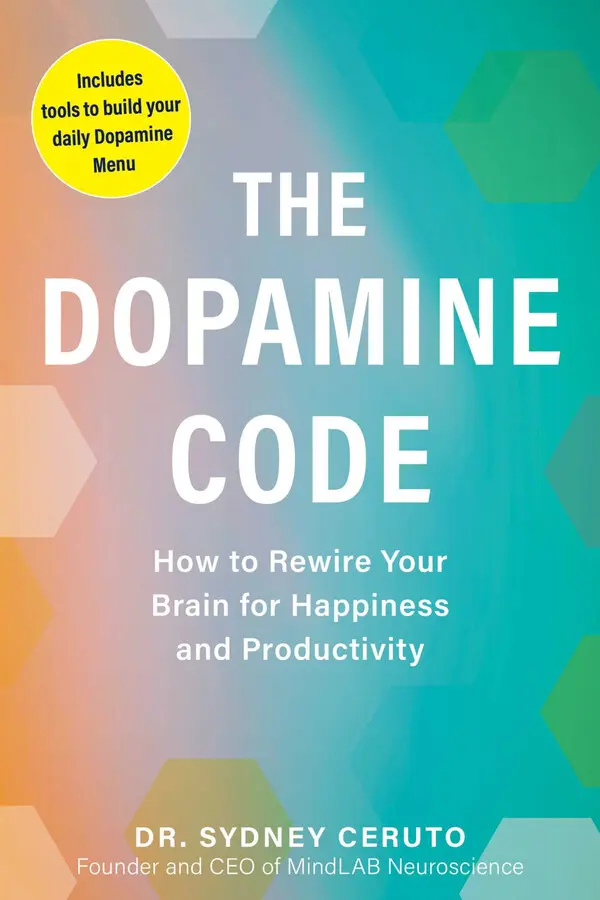
The science of dopamine, reward system function, and the pleasure-pain balance is exactly what I cover in depth in my forthcoming book The Dopamine Code (Simon & Schuster, June 2026). Chapter 3 addresses the pleasure-pain balance and dopamine hijacking specifically — including the desensitization mechanism, why reset is possible, and what the full restructuring framework looks like. For anyone who wants to understand the neuroscience behind what they are experiencing before taking next steps, it provides the complete framework. Learn more about the book.

Also available in: Wall Street · Midtown Manhattan · Beverly Hills · Lisbon

Take the First Step

The Strategy Call is a focused conversation with Dr. Ceruto that maps the specific neural mechanisms driving your concerns and determines the right path forward.

Book a Strategy Call
MindLAB Neuroscience consultation room

The Dopamine Code

Decode Your Drive

Why Your Brain Rewards the Wrong Things

Your brain's reward system runs every decision, every craving, every crash — and it was never designed for the life you're living. The Dopamine Code is Dr. Ceruto's framework for understanding the architecture behind what drives you, drains you, and keeps you locked in patterns that willpower alone will never fix.

Published by Simon & Schuster, The Dopamine Code is Dr. Ceruto's framework for building your own Dopamine Menu — a personalized system for motivation, focus, and enduring life satisfaction.

Order Now

Ships June 9, 2026

The Dopamine Code by Dr. Sydney Ceruto — Decode Your Drive
Locations

The Intelligence Brief

Neuroscience-backed analysis on how your brain drives what you feel, what you choose, and what you can’t seem to change — direct from Dr. Ceruto.