Social Media & Phone Addiction in Midtown Manhattan

Midtown's media professionals understand every manipulation in the feed — and still can't stop scrolling. Comprehension is not protection from the circuit.

If you've picked up your phone to check something specific and found yourself still scrolling twenty minutes later — not because you wanted to, but because you couldn't find an exit — you're not dealing with a willpower problem. You're dealing with a system specifically engineered to exploit the way your brain assigns reward.

At MindLAB Neuroscience, I work with the compulsive patterns that phone and social media use has created in the brain's reward architecture. This is addiction neuroscience applied to the most accessible compulsion of our time. The trigger lives in your pocket. The circuit runs constantly. The work addresses it at the source.

Book a Strategy Call

Key Points

  1. This is why social media use so consistently produces the specific combination of compulsion and distress — you cannot stop checking, and checking reliably makes you feel worse.
  2. The circuit that drives the behavior and the circuit that suffers from it are different circuits running simultaneously.
  3. The visual, auditory, and tactile signal of a notification activates the brain's orienting response — the automatic, involuntary shift of attention toward potential threat or reward.
  4. The brain's reward circuitry evolved in a social environment where status and belonging were survival variables.
  5. Social comparison — evaluating your standing relative to others — activates the mesolimbic dopamine pathway as a tracking signal.
  6. The nucleus accumbens — the brain's primary reward-processing structure — responds more powerfully to unpredictable reward than to reliable reward.
  7. The dopamine signal fires not just when the reward arrives, but in anticipation of it.

The Most Engineered Addiction Available

“This is what makes the loop compulsive: you are not scrolling to find something you want.”

Every other behavioral compulsion requires some access barrier — a casino requires travel, alcohol requires purchase, a drug requires supply. Social media requires nothing except the device already in your hand. The trigger is always present. The reward is always one scroll away. The variable ratio schedule never closes.

This is not a coincidence. It is the result of deliberate engineering. The people who designed these systems understood, at a neurological level, what drives compulsion — and they built for it.

Variable Ratio Reinforcement: The Slot Machine in Your Hand

The most addictive reinforcement schedule in behavioral science is the variable ratio — reward delivered unpredictably, after a variable number of responses. Slot machines use it. So does the social media feed.

Every scroll is a pull of the lever. Sometimes the next post is interesting. Sometimes it isn’t. Sometimes a notification arrives. Sometimes the feed is empty. The unpredictability is not a design flaw — it is the core mechanism. The nucleus accumbens — the brain’s primary reward-processing structure — responds more powerfully to unpredictable reward than to reliable reward. The dopamine signal fires not just when the reward arrives, but in anticipation of it. The wanting state activates before the reward does. This is what makes the loop compulsive: you are not scrolling to find something you want. Your brain is scrolling because the anticipation state itself has become the reward.

Social Comparison as Dopamine Trigger

The brain’s reward circuitry evolved in a social environment where status and belonging were survival variables. Social comparison — evaluating your standing relative to others — activates the mesolimbic dopamine pathway as a tracking signal. When the comparison is favorable, the signal is rewarding. When it is unfavorable, the threat response activates.

Social media feeds this circuit continuously. Every image, caption, and follower count is a comparison data point. The brain processes them automatically, below the level of conscious decision. You don’t choose to compare yourself to what you’re seeing. The circuit runs before the choice arrives. This is why social media use so consistently produces the specific combination of compulsion and distress — you cannot stop checking, and checking reliably makes you feel worse. The circuit that drives the behavior and the circuit that suffers from it are different circuits running simultaneously.

Notification-Driven Attention Hijacking

Every notification is an interruption engineered to feel urgent. The visual, auditory, and tactile signal of a notification activates the brain’s orienting response — the automatic, involuntary shift of attention toward potential threat or reward. This response evolved to detect environmental change rapidly. It was not designed for an environment that generates forty to eighty interruption signals per day.

The result is an attentional system in a state of continuous partial engagement. The prefrontal cortex — responsible for sustained focus and deliberate decision-making — cannot enter the sustained engagement states it needs when the orienting response fires this frequently. The phone isn’t just a distraction. It is actively degrading the neural capacity for the focused work that most people describe as most meaningful.

What makes this compulsive rather than merely distracting: many people describe checking notifications as something they do involuntarily, before they’ve consciously decided to. The hand reaches for the phone. The screen is unlocked. The apps are opened. The decision to check arrived after the behavior was already underway. That is not a choice problem. That is a circuit running faster than deliberate intention can intercept it.

Novelty-Seeking and the Infinite Feed

The brain has a dedicated appetite for novelty. New stimuli are prioritized by the attentional system and processed as potential reward. This is adaptive — in a stable environment, novelty reliably signaled something worth investigating.

The infinite scroll format exploits this directly. There is always more content. The feed never ends. The novelty signal never stops firing because the supply of new stimuli is genuinely unlimited. Every platform has been specifically designed to ensure that the moment when new content might run out — the natural stopping cue that exists in any finite medium — never arrives. The book ends. The episode ends. The feed does not.

When the novelty-seeking circuit has no natural stopping cue, the session length is determined entirely by competing demands — another notification, a physical need, an external obligation. The brain has no internal mechanism to generate the stopping signal on its own, because the circuit that would generate it is the one that detects the end of available stimuli. The end never comes. The circuit stays open.

Why This Qualifies as Addiction, Not Just Habit

The clinical distinction between habit and addiction rests on two variables: compulsion despite consequence and inability to stop despite wanting to. A habit is a behavior pattern that persists because it is convenient or rewarding. An addiction is a behavior pattern that persists despite being neither — one that continues even when the person clearly sees the cost and clearly wants to stop.

People who use social media compulsively regularly describe both criteria. They know the use is affecting their sleep, their concentration, their relationship quality, and their sense of themselves. They have decided to stop or reduce, sometimes repeatedly. They have deleted apps and reinstalled them. The pattern continues. This is the architecture of compulsion — not weakness, not lack of discipline, but a reward circuit that has been sufficiently trained that it overrides deliberate intention reliably and repeatedly.

What Changes When the Circuit Changes

The goal of this work is not to eliminate technology use. For most people in modern life, that is neither realistic nor necessary. The goal is to change the relationship between the circuit and the behavior — specifically, to restore the prefrontal capacity to intercept the automatic reaching, to evaluate whether a check serves anything real, and to generate a genuine choice where previously there was only an automatic response.

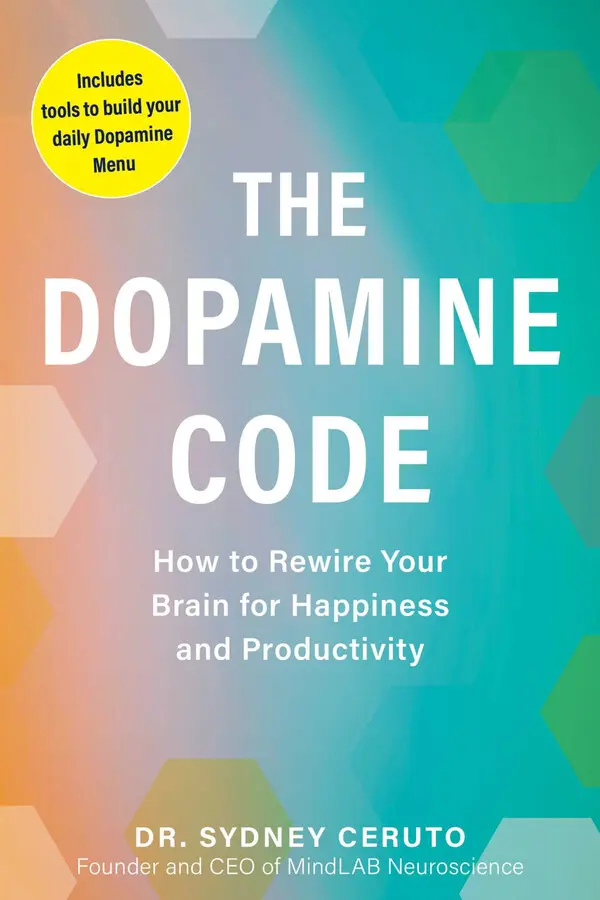
This requires working at the level of the reward architecture itself: understanding which specific reinforcement signals have been most precisely exploited, what the brain has learned to anticipate from different platforms and notification types, and how to recalibrate the anticipatory dopamine signal so that it is no longer the primary driver of the behavior. For a complete framework on how technology hijacks your dopamine system — and how to reclaim it — I cover the full science in my forthcoming book The Dopamine Code (Simon & Schuster, June 2026). Chapter 5 addresses this directly. Learn more.

The Work

My approach begins by mapping the specific reinforcement patterns that are running hardest for you — the platforms, the notification types, the times of day, the emotional states that make the compulsive reaching most automatic. We identify what the circuit has been trained to anticipate and what threat signals are running in parallel.

From there, the work is systematic. We rebuild the prefrontal capacity to intercept the automatic behavior before it completes. We recalibrate the reward signal so that the anticipatory state loses its grip. We address the underlying drivers — anxiety, boredom tolerance, social comparison sensitivity — that the compulsive use has been managing, however inefficiently. The phone remains a tool. The circuit stops running it.

Marker What You Experience What's Happening Neurologically What We Restructure
Most Engineered Addiction Available Social media requires nothing except the device already in your hand. The reward is always one scroll away. Every other behavioral compulsion requires some access barrier — a casino requires travel, alcohol requires purchase, a drug requires supply.
Variable Ratio Reinforcement: The Slot This is what makes the loop compulsive: you are not scrolling to find something you want. The nucleus accumbens — the brain's primary reward-processing structure — responds more powerfully to unpredictable reward than to reliable reward. The most addictive reinforcement schedule in behavioral science is the variable ratio — reward delivered unpredictably, after a variable number of responses.
Social Comparison as Dopamine Trigger This is why social media use so consistently produces the specific combination of compulsion and distress — you cannot stop checking, and checking reliably makes you feel worse. The brain's reward circuitry evolved in a social environment where status and belonging were survival variables. The brain's reward circuitry evolved in a social environment where status and belonging were survival variables.
Notification-Driven Attention Hijacking The result is an attentional system in a state of continuous partial engagement. The visual, auditory, and tactile signal of a notification activates the brain's orienting response — the automatic, involuntary shift of attention toward potential threat or reward. This response evolved to detect environmental change rapidly.
Novelty-Seeking and the Infinite Feed New stimuli are prioritized by the attentional system and processed as potential reward. The brain has no internal mechanism to generate the stopping signal on its own, because the circuit that would generate it is the one that detects the end of available stimuli. New stimuli are prioritized by the attentional system and processed as potential reward.
This Qualifies as Addiction, Not The clinical distinction between habit and addiction rests on two variables: compulsion despite consequence and inability to stop despite wanting to. This is the architecture of compulsion — not weakness, not lack of discipline, but a reward circuit that has been sufficiently trained that it overrides deliberate intention reliably and repeatedly. The clinical distinction between habit and addiction rests on two variables: compulsion despite consequence and inability to stop despite wanting to.

Why Social Media & Phone Addiction Matters in Midtown Manhattan

Phone Addiction in Midtown: Addicted to the Medium You Produce

Midtown Manhattan’s advertising and media professionals occupy a specific irony in the social media compulsion landscape: they are the people who understand, technically and professionally, exactly how the platforms exploit the reward circuit. They have sat in strategy sessions about engagement optimization. They have built the variable ratio schedules into content calendars. They know the mechanism in detail. And they still cannot put their phones down.

Walnut credenza with crystal brain sculpture and MindLAB journal in diffused dusk light suggesting high-floor Midtown Manhattan private office

Understanding a system does not exempt you from it. The nucleus accumbens does not respond differently to a dopamine trigger when the person experiencing it can explain the neuroscience. The circuit runs on architecture, not on awareness. This is one of the most consistent observations I make working with media professionals: comprehension of the manipulation is not protection from it.

The Omnicom-IPG Doom-Scroll

The Omnicom-IPG merger — announced in late 2024 and still working through consolidation — produced one of the advertising industry’s largest headcount reductions in recent memory. For professionals inside these agencies and the many firms positioned downstream, the ongoing news cycle about the integration is not background information. It is direct threat information about their own position.

The compulsive consumption of industry news — Campaign, AdAge, LinkedIn posts from former colleagues announcing transitions, threads on Fishbowl about which departments are being cut — is not recreational. It is threat-monitoring behavior, driven by the same amygdala activation that drives any compulsive scanning for danger signals. The phone check that appears to be news consumption is running on the anxiety circuit. The relief that should arrive when the check produces no new threatening information does not arrive — because the circuit does not update on negative findings. It continues scanning. The next check is always imminent.

The AI Displacement Narrative

Creative professionals across Midtown are consuming a continuous stream of AI displacement content — articles about which creative functions are being automated, demonstrations of AI-generated campaigns, news about agencies reducing headcount in copywriting and design. For someone whose professional identity is built on creative capability, this content activates the threat circuit with a specific intensity.

The compulsive engagement with this narrative follows a recognizable pattern. The person checks not because they expect to find reassuring information — they rarely do — but because the threat circuit is searching for clarity about the danger. Each article provides a brief moment of felt understanding: this is what I’m dealing with. Then the circuit resets. New content arrives. The next check becomes necessary. Hours can pass in this loop, ostensibly as professional research, functioning neurologically as compulsive threat-monitoring.

The Commute as Compulsion Window

Midtown’s workforce commutes at scale — subway, Metro-North, Long Island Rail Road, New Jersey Transit. The commute is the most unstructured time in the day: no desk, no task list, no social obligation to appear productive. For the brain running a social media compulsion, unstructured time is compulsion time. The absence of an external task creates the opening the circuit has been waiting for all day.

The commute screen session is often the longest uninterrupted social media use of the day precisely because it is the moment with the fewest competing demands on attention. The phone comes out before the person has consciously decided to use it. The ride ends and the session ends — not because the person decided to stop, but because the stop arrived. This is the compulsion pattern operating without interference: behavior that starts automatically, runs until an external stopping cue arrives, and produces no internal signal that it has served its purpose.

Comparing Output to What AI Makes

A specific and acutely distressing social media behavior has emerged among Midtown creative professionals: compulsive comparison of their own work to AI-generated output. Instagram and LinkedIn feeds now surface AI-generated visual content, AI-written copy, and AI-produced campaigns — often performing extremely well by engagement metrics. The social comparison circuit, which was already running against human peers, now has a new comparison class that does not sleep, does not charge, and does not have creative blocks.

The compulsive checking of these feeds is not vanity. It is a threat response looking for information about professional survival, routed through the same platform architecture that exploits the reward circuit for entertainment. The circuit does not distinguish between the two purposes. The distress and the compulsion compound each other. The work addresses both at the level of the circuit that is running them.

Dr. Sydney Ceruto, PhD — Founder, MindLAB Neuroscience

Dr. Sydney Ceruto, PhD — Founder & CEO, MindLAB Neuroscience

Dr. Ceruto holds a PhD in Behavioral & Cognitive Neuroscience from NYU and two Master’s degrees from Yale University. She lectures at the Wharton Executive Development Program at the University of Pennsylvania and has been an Executive Contributor to the Forbes Coaching Council since 2019. Dr. Ceruto is the author of The Dopamine Code (Simon & Schuster, June 2026). She founded MindLAB Neuroscience in 2000 and has spent over 26 years pioneering Real-Time Neuroplasticity™ — a methodology that permanently rewires the neural pathways driving behavior, decisions, and emotional responses.

References

Schultz, W. (2015). Neuronal reward and decision signals: From theories to data. *Physiological Reviews*, 95(3), 853–951. https://doi.org/10.1152/physrev.00023.2014

Montag, C., Lachmann, B., Herrlich, M., & Zweig, K. (2019). Addictive features of social media/messenger platforms and freemium games against the background of psychological and economic theories. *International Journal of Environmental Research and Public Health*, 16(14), 2612. https://doi.org/10.3390/ijerph16142612

Andreassen, C. S., Pallesen, S., & Griffiths, M. D. (2017). The relationship between addictive use of social media, narcissism, and self-esteem: Findings from a large national survey. *Addictive Behaviors*, 64, 287–293. https://doi.org/10.1016/j.addbeh.2016.03.006

Fardouly, J., Diedrichs, P. C., Vartanian, L. R., & Halliwell, E. (2015). Social comparisons on social media: The impact of Facebook on young women’s body image concerns and mood. *Body Image*, 13, 38–45. https://doi.org/10.1016/j.bodyim.2014.12.002

Success Stories

“Ninety-hour weeks felt like discipline — the inability to stop felt like a competitive advantage. Nothing I tried touched it because nothing identified what was actually driving it. Dr. Ceruto mapped the dopamine loop that had fused my sense of identity to output. Once that circuit was visible, she dismantled it. I still work at a high level. I just don't need it to know who I am anymore.”

Jason M. — Private Equity New York, NY

“My phone was the first thing I touched in the morning and the last thing I put down at night — and every app blocker, digital detox protocol, and willpower-based system I tried lasted less than a week. Dr. Ceruto identified the variable-ratio reinforcement loop that had hijacked my attention circuits and dismantled it at the neurological level. My phone is still in my pocket. The compulsion to reach for it isn't. That's a fundamentally different kind of fix.”

Tomas R. — Architect Lisbon, PT

“Willpower, accountability systems, cutting up cards — none of it worked because none of it addressed what was actually driving the behavior. Dr. Ceruto identified the reward prediction error that had been running my purchasing decisions for over a decade. Once the loop was visible, it lost its power. The compulsion didn't fade — it stopped.”

Priya N. — Fashion Executive New York, NY

“I knew the scrolling was a problem, but I didn't understand why I couldn't stop — or why it left me feeling hollow every time. Dr. Ceruto identified the dopamine-comparison loop that had fused my sense of worth to a feed. Years of trying to set boundaries with my phone hadn't worked because the problem was never the phone. Once the loop broke, the compulsion just stopped. My relationships started recovering almost immediately.”

Anika L. — Creative Director Los Angeles, CA

“I attended a lecture Dr. Ceruto was giving at my graduate school in New York and was blown away by how much I could relate to. Everything about the mind and brain made sense in a way it never had before. I booked a consultation that same day. I was confused, anxious, and unable to commit to any decision — my career and personal life were at a standstill. Dr. Ceruto changed my entire perspective. She utilizes cognitive neuroscience so practically that results come almost immediately.”

Patti W. — Graduate Student Manhattan, NY

“It took years and many other professionals — not to mention tens of thousands of dollars — before I was recommended to Dr. Ceruto. I’d been suffering with chronic anxiety, OCD, and distorted thinking. After just two sessions, I started to see positive change. By the time my program ended, I had my sanity and my life back. Sydney creates a warm, supportive atmosphere where I found myself sharing things I’ve never told anyone. She is there for you anytime you need her.”

Nicholas M. — Private Equity Hong Kong

Frequently Asked Questions About Social Media & Phone Addiction

Is phone addiction real, or am I just bad at self-control?

Phone addiction is real in the neurological sense that matters: behavior that continues despite consequence, despite repeated decisions to stop, and despite the person clearly wanting to stop. That is the architecture of compulsion — not a character deficit. The platforms you are using were specifically engineered to exploit the brain's variable ratio reinforcement mechanism — the same mechanism that makes slot machines compulsive. The fact that you cannot simply decide to stop is not a willpower failure. It is evidence that the circuit is running at the level where decisions happen too slowly to intercept it.

I've deleted the apps before. They always come back. What makes your approach different?

Deleting apps operates at the level of access removal — it makes the trigger temporarily unavailable. It does not change the reward circuit that drives the compulsion. When the app returns, the circuit picks up exactly where it stopped, often with increased intensity because the deprivation period activated the wanting state without satisfying it. My work addresses the reward architecture itself: what the circuit has been trained to anticipate, how the dopamine signal fires in advance of the behavior, and how to recalibrate that anticipatory response so that the compulsive reaching loses its automatic quality. Access management can be useful tactically. It is not the mechanism of change.

My phone is genuinely essential for work. How do I address the compulsion without eliminating what I actually need?

This is the central practical question, and the answer is that the goal is never device elimination — it is circuit change. The brain can learn to use a phone for legitimate purposes and not continue past the point where the legitimate purpose has been served. That requires rebuilding the prefrontal capacity to evaluate what a check is actually for and to generate a stopping signal once the purpose is complete. Currently that stopping signal is not available because the compulsion has degraded it. The work restores it. The phone remains a tool. The circuit stops running it after you've put it down.

Why do I feel anxious when my phone is in another room, even when I'm not expecting anything important?

The anxious pull in the absence of the phone is the anticipatory dopamine state looking for its source. The reward circuit has been trained to associate the phone with a continuous possibility of reward — a new message, a notification, an engagement update, something interesting in the feed. When the phone is unavailable, the circuit does not conclude that nothing important is happening. It generates an urgency signal whose function is to move you toward the reward source. That anxiety is neurological, not rational. It is the circuit, not the situation. Understanding this precisely is the first step toward being able to sit with the feeling rather than resolve it by reaching for the device.

I understand exactly how the apps manipulate me. Why doesn't that help?

Understanding a reinforcement system does not exempt you from it. The nucleus accumbens processes the dopamine signal before the prefrontal cortex processes the explanation. The circuit activates first. The awareness arrives afterward. This is not a failure of intelligence — it is the sequencing of how the brain processes reward. The work that changes the compulsion operates at the level of the reward architecture itself, not at the level of the conceptual understanding that runs above it. Comprehension is useful context. It is not the mechanism of change.

I notice I check my phone more when I'm stressed or anxious. Is that related?

Yes, and the relationship is important to understand. Social media use temporarily reduces the activation of the brain's default stress circuitry — not because it provides relief, but because the novelty stimulus and the reward anticipation occupy the attentional system in a way that crowds out the stress signal briefly. The brain learns this association quickly. When stress rises, the circuit routes toward the behavior that has reliably, if temporarily, reduced the subjective experience of stress. This is the same mechanism by which food and alcohol function as anxiety management tools. The behavior is not the problem you think you have — it is managing another problem. Both need to be addressed.

My social media use makes me feel worse about myself, but I still can't stop checking. How does that make sense?

This is one of the most consistent features of social media compulsion and one of the clearest indicators that what is operating is a circuit, not a choice. The social comparison system and the reward-seeking system are different neural circuits running simultaneously. The reward circuit drives the check. The social comparison circuit processes the content. The distress that follows does not update the reward circuit's behavior — the reward circuit is tracking anticipated reward, not retrospective consequence. The result is a loop that feels irrational from the outside and inevitable from the inside. Changing it requires working with both circuits — not just the one that makes you feel bad, but the one that keeps sending you back.

How is this different from just having a screen time problem?

Screen time is a measure. Compulsion is a mechanism. Someone can have high screen time and be using their device with genuine agency — choosing to watch something, choosing to read, choosing to engage. Someone else can have moderate screen time that is entirely compulsive — every session driven by automatic reaching, none of it chosen, all of it ending because an external stopping cue arrived rather than because the person decided to stop. The distinction that matters is not duration. It is whether the behavior is under deliberate control. If you have tried to change the pattern and cannot, if the decisions to stop do not hold, if the reaching happens before the choice arrives — that is compulsion, regardless of the numbers.

How does the Strategy Call work?

The Strategy Call is a one-hour phone conversation. Not a session, not a consultation — a precise, unhurried conversation about what you are navigating, how the specific compulsive pattern is structured for you, and whether my approach is the right fit for what you need. The fee is $250. Investment details for the work itself are discussed during the call.

Can someone actually change this pattern, or is it just how the brain works now?

The brain that was trained into a compulsive pattern can be retrained out of it. Neural circuits are not static — they are shaped by experience, and they can be reshaped by systematic, targeted work on the reward architecture that drives the behavior. This is not a fast process. Circuits built over years of continuous reinforcement do not restructure in weeks. But the change, when it is real, is structural — which means the pattern does not quietly return when you are under pressure or when the apps update their algorithms. The goal is not willpower management. It is a different architecture that does not require continuous effort to maintain.

Also available in: Miami · Wall Street · Beverly Hills · Lisbon

Take the First Step

The Strategy Call is a focused conversation with Dr. Ceruto that maps the specific neural mechanisms driving your concerns and determines the right path forward.

Book a Strategy Call
MindLAB Neuroscience consultation room

The Dopamine Code

Decode Your Drive

Why Your Brain Rewards the Wrong Things

Your brain's reward system runs every decision, every craving, every crash — and it was never designed for the life you're living. The Dopamine Code is Dr. Ceruto's framework for understanding the architecture behind what drives you, drains you, and keeps you locked in patterns that willpower alone will never fix.

Published by Simon & Schuster, The Dopamine Code is Dr. Ceruto's framework for building your own Dopamine Menu — a personalized system for motivation, focus, and enduring life satisfaction.

Order Now

Ships June 9, 2026

The Dopamine Code by Dr. Sydney Ceruto — Decode Your Drive
Locations

The Intelligence Brief

Neuroscience-backed analysis on how your brain drives what you feel, what you choose, and what you can’t seem to change — direct from Dr. Ceruto.