The Same Circuitry, A Different Delivery Mechanism
“The work I do with behavioral addiction patterns targets the consolidation architecture directly: the cue-response chains encoded in the reward system, the anticipatory dopamine signals that maintain the compulsion, and the prefrontal regulation capacity that has been depleted by the effort of living inside the loop.”
One of the most important, and most misunderstood, findings in reward neuroscience is this: the brain’s response to a jackpot and its response to a hit of cocaine involve the same core mechanism. The nucleus accumbens, the brain’s primary reward hub, releases dopamine in response to both. What drives the compulsion is not the substance or the behavior itself. It is the reward prediction signal: the anticipatory dopamine surge that fires in advance of the reward, encoding the cue, the context, and the behavior as things worth repeating. Urgently.
Behavioral addictions exploit a specific vulnerability in this system called reward prediction error: the gap between what the brain anticipated and what actually happened. When a reward is unexpected, the dopamine surge is larger than when it was fully predicted. This is why variable ratio reinforcement (the schedule used by slot machines, social media feeds, shopping apps, and loot boxes) produces stronger compulsion than predictable rewards. The brain cannot stop seeking the next hit because it has been trained to expect that the next one might be the one. The uncertainty is the mechanism. It is not a design flaw; it is a deliberate feature of the environments behavioral addictions inhabit.
How Behavioral Loops Consolidate Into Compulsions
The transition from behavior to compulsion is a consolidation process: a gradual reorganization of the neural architecture around the loop. In the early stages, the behavior is rewarding and controllable. The dopamine system produces genuine pleasure; the prefrontal cortex, the brain’s executive control architecture, retains the capacity to evaluate, delay, and override. The person is making a choice, and the choice feels free.
What changes over time is not the strength of the reward. It often diminishes. What changes is the structure of the compulsion. The cue (the casino floor, the shopping app notification, the loading screen of a game) begins to trigger the dopamine anticipation signal before any actual reward is delivered. The behavior is no longer primarily about pleasure. It is about resolving the tension the cue created. The prefrontal regulation system, which requires resources to override the subcortical signal, finds those resources increasingly depleted by the effort of continuous suppression. The loop is now self-sustaining. The brain has reorganized around it.
This is why willpower fails as a primary intervention. The compulsion is not operating at the level of willpower. It is operating at the level of neural architecture: in the circuits responsible for automated, incentive-driven behavior that predate conscious decision-making. Resolving it requires working at that level, not above it.
The Escalation Pattern and Tolerance
Behavioral addictions follow the same tolerance and escalation trajectory that characterizes substance dependence, because the underlying neural mechanism is the same. As the behavior is repeated, the reward system recalibrates. The dopamine response to the original behavior diminishes: the brain has updated its prediction, and what was once surprising is now expected. To generate the same level of anticipatory dopamine, the stakes must rise, the frequency must increase, or the behavior must intensify.
The gambler who started with table minimums finds them inadequate. The shopper whose purchases provided relief now requires larger amounts or higher-value items to produce the same effect. The gamer whose dopamine system was satisfied by completing a level now needs competitive ranking, achievement completionism, or financial investment in the outcome. The escalation is not a character issue. It is a predictable output of how the reward prediction system recalibrates over time, and it is one of the clearest signals that the neural architecture has reorganized around the behavior in ways that are no longer self-correcting.
What Looks Like Choice Is Already Architecture
One of the most disorienting features of behavioral compulsions is the experience of choosing while not choosing. The person is making decisions (to open the app, to walk into the casino, to put the item in the cart) but the decisions are executing faster than conscious evaluation can intervene. The prefrontal cortex registers what happened after the action, not before it. The narrative of choice is being constructed retrospectively around a behavior that was already in motion.
This is not a moral failure. It is an accurate description of how consolidated compulsion loops operate in the neural architecture. The behavior has moved from the deliberate decision-making system into the automated, habit-based circuitry. Treating it as a motivational problem, as a question of wanting to stop badly enough, misidentifies the location of the issue. The behavior is not being maintained by a decision that can be countermanded. It is being maintained by a neural pattern that has made itself structurally resistant to the kind of top-down control that decision-making requires.
The Book Connection: Hijacked Reward Architecture
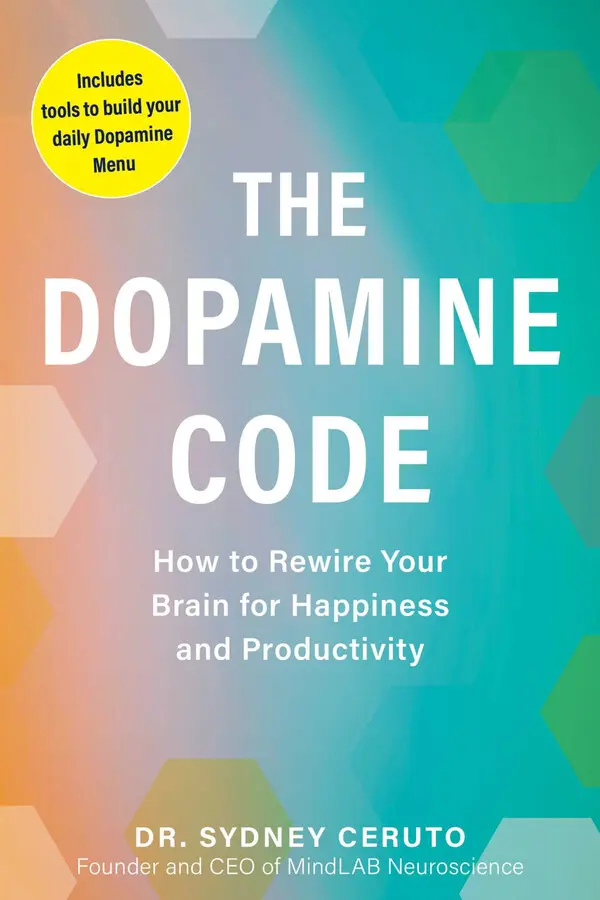
Chapter 5 of my book The Dopamine Code (Simon & Schuster, June 2026) addresses the mechanisms by which modern environments (gambling platforms, retail design, digital gaming systems) have engineered their products specifically to exploit reward prediction circuitry. Chapter 3 examines the pleasure-pain balance and the recalibration that produces tolerance and escalation. Understanding what your brain is actually responding to, and why the environment was designed to produce that response, is the first form of precision this work requires. Learn more about the book.
Restructuring the Loop
The work I do with behavioral addiction patterns targets the consolidation architecture directly: the cue-response chains encoded in the reward system, the anticipatory dopamine signals that maintain the compulsion, and the prefrontal regulation capacity that has been depleted by the effort of living inside the loop. This is not willpower training or habit replacement. It is structural work on the neural systems that the behavior reorganized.

What changes is the brain’s relationship to the cue. The anticipatory signal that once launched the loop (the notification sound, the visual field of the casino floor, the feel of a shopping interface) no longer carries the same predictive weight. The compulsion loses its automated quality. The gap between cue and action reopens, and with it, the capacity for genuine evaluation that the consolidation process had closed down. The behavior does not become impossible. It becomes a choice again, and from that position, the neural architecture can be restructured at whatever depth the pattern requires.
For deeper context, explore how behavioral loops become addictions.