Compulsive Eating & Food Patterns in Lisbon

Lisbon removed the friction that moderated your eating pattern. What's left is the neural architecture that the friction was masking.

Food compulsion is not a willpower problem. It is a reward-circuit problem — and the distinction matters, because willpower operates in the prefrontal cortex while the compulsive eating pattern lives several layers deeper, in the dopamine-driven reward architecture that hyper-palatable foods have learned to exploit with pharmacological precision. The brain does not distinguish meaningfully between the dopamine surge produced by a food engineered to maximize palatability and the surge produced by any other powerful reward. The neural mechanics are identical: anticipation, consumption, relief, tolerance, escalation. What changes is the object. What remains constant is the circuitry running the loop.

At MindLAB Neuroscience, I work at the level where food compulsion actually operates — the reward-sensitization architecture, the cortisol-driven stress-eating loop, the restrict-binge oscillation that encodes as a neural pattern independent of what you eat or how much you know about nutrition. This is not about food. It is about the circuitry that food has learned to activate, and what it takes to restructure that circuitry so the compulsive loop stops running the same program every time stress, boredom, or reward-deficit signals reach the threshold that triggers it.

Book a Strategy Call

Key Points

  1. The cortisol-dopamine mechanism that drives stress eating operates below that level, in systems that are not subordinate to deliberate choice.
  2. What changes food compulsion patterns is not stronger willpower applied to the same circuitry.
  3. The dopamine system is not primarily a pleasure system — it is an anticipation and prediction system.
  4. The brain experiencing dopamine deficit under cortisol load is not going to be reliably redirected by a plan formulated in the prefrontal cortex, because the prefrontal cortex is itself suppressed under conditions of sustained stress.
  5. Hyper-palatable foods — engineered to hit multiple reward pathways simultaneously — produce dopamine surges that ordinary whole foods cannot match and that the brain does not naturally discount after a single exposure.
  6. The nucleus accumbens — the brain's primary reward processing region — responds to hyper-palatable food the way it responds to any powerful reward: with a dopamine release calibrated to the intensity of the stimulus.
  7. Dopamine receptors downregulate — the same number of receptors become available for fewer molecules — which means the same food now produces less satisfaction than it previously did.

How Hyper-Palatable Foods Exploit the Reward System

“The brain experiencing dopamine deficit under cortisol load is not going to be reliably redirected by a plan formulated in the prefrontal cortex, because the prefrontal cortex is itself suppressed under conditions of sustained stress.”

The food industry did not accidentally produce foods that are difficult to stop eating. It systematically reverse-engineered the dopamine reward system — identifying the precise ratios of fat, sugar, and salt that maximize the brain’s dopamine response and minimize the satiety signal that would ordinarily end the feeding behavior. Hyper-palatable foods — engineered to hit multiple reward pathways simultaneously — produce dopamine surges that ordinary whole foods cannot match and that the brain does not naturally discount after a single exposure. They are, in the most neurologically accurate sense of the word, designed to be compulsive.

The nucleus accumbens — the brain’s primary reward processing region — responds to hyper-palatable food the way it responds to any powerful reward: with a dopamine release calibrated to the intensity of the stimulus. When that stimulus is consistently high, the system compensates. Dopamine receptors downregulate — the same number of receptors become available for fewer molecules — which means the same food now produces less satisfaction than it previously did. The brain has built tolerance. The amount required to reach the previous reward level increases. The pattern of escalation that characterizes compulsive behavior in other domains is operating here at the level of receptor density, not at the level of choice.

Anticipation amplifies this architecture in a way that makes the pattern self-reinforcing. The dopamine system is not primarily a pleasure system — it is an anticipation and prediction system. The largest dopamine surge occurs not at consumption but at the cue that predicts consumption: the smell, the sight, the time of day, the emotional state that has been repeatedly paired with eating. Once the association is encoded, the cue itself produces craving — a dopamine-driven motivational state that bypasses deliberate decision-making and generates the behavioral impulse before conscious evaluation has a chance to intervene. The decision to eat was, neurologically speaking, made before you were aware you were making it.

Stress Eating as Cortisol-Driven Dopamine-Seeking

Stress eating is not emotional weakness. It is a neurologically coherent response to a specific brain-state problem: cortisol — the primary stress hormone — suppresses dopamine signaling in the reward system. A brain under sustained stress is a brain in dopamine deficit. Food, specifically high-palatability food, is among the fastest available routes to dopamine restoration. The brain is not seeking comfort in any soft sense. It is executing a physiologically motivated drive to correct a neurochemical imbalance that stress created.

This is why stress eating is so resistant to the interventions typically offered for it — mindfulness, meal planning, behavioral strategies, willpower-based approaches. These interventions operate at the level of conscious decision-making. The cortisol-dopamine mechanism that drives stress eating operates below that level, in systems that are not subordinate to deliberate choice. The brain experiencing dopamine deficit under cortisol load is not going to be reliably redirected by a plan formulated in the prefrontal cortex, because the prefrontal cortex is itself suppressed under conditions of sustained stress. The tool you are using to try to change the pattern is degraded by the same condition that created the pattern.

The stress-eating loop encodes over time as a conditioned response. Cortisol elevation becomes a reliable predictor of dopamine-seeking via food, and the brain — which runs primarily on prediction — encodes the sequence as a program: stress arrives, food follows, relief occurs. Each repetition deepens the encoding. The loop becomes automatic, operating below the threshold of deliberate choice, and what began as a stress response becomes a compulsive architecture that activates independently of whether the original stress is still present.

The Restrict-Binge Cycle as Neural Oscillation

The restrict-binge cycle is widely understood as a behavioral pattern. What is less widely understood is that it is also a neural oscillation — a predictable sequence of reward-system states that the restriction itself produces, making the subsequent binge a physiological inevitability rather than a failure of self-control.

Restriction creates dopamine deficit. When highly rewarding foods are removed from the diet, the reward system — which has been calibrated to the level of stimulation those foods provided — operates in a state of relative deprivation. Dopamine release decreases. The hedonic baseline shifts downward. The subjective experience of ordinary activities becomes flatter, less rewarding, less motivating. This is not psychological difficulty with restriction. It is the neurobiological consequence of removing a powerful reward from a system that has built its baseline around that reward’s availability.

As the deficit deepens, the motivational drive toward the restricted food intensifies — again, not as a failure of resolve, but as a function of the dopamine system’s role in directing behavior toward reward. The prefrontal systems responsible for maintaining the restriction are competing against an escalating subcortical drive signal. At some threshold — determined by stress load, sleep deprivation, social context, accumulated dopamine deficit — the subcortical drive wins. The binge occurs. The dopamine surge temporarily resolves the deficit. Relief follows. And the brain has now encoded a further lesson: restriction produces suffering, and the resolution of that suffering requires the binge. The cycle is not a character flaw. It is a neural program that restriction writes and that the next restriction repeats.

Why Willpower Fails Against Food Compulsion

Willpower — the capacity to inhibit a behavioral impulse in favor of a longer-term goal — is a function of the prefrontal cortex. It is real, it is trainable, and it is finite. It depletes with use. It degrades under sleep deprivation, sustained stress, and high cognitive load. And it is attempting to compete, in the food compulsion context, against a subcortical reward-drive system that operates faster, more automatically, and with more motivational force than any prefrontal inhibitory signal can reliably override.

Antique rosewood desk with crystal brain sculpture and MindLAB journal in warm amber Lisbon afternoon light with historic European wood paneling

The neuroscience of this competition is not ambiguous. When dopamine-driven craving reaches sufficient intensity, prefrontal regulatory circuits are actively suppressed — not weakened, but neurologically inhibited by the same subcortical systems generating the drive. The brain prioritizes reward pursuit over deliberate restraint. The person experiencing this is not failing to try hard enough. They are experiencing a hardware-level outcome of a competition that was never fair. Willpower was never the right tool for this problem. It is a cortical instrument being asked to override a subcortical drive signal, in a system where the cortex loses regulatory authority precisely at the moment the drive is most powerful.

What changes food compulsion patterns is not stronger willpower applied to the same circuitry. It is restructuring the reward architecture itself — resetting the dopamine sensitivity that hyper-palatability eroded, interrupting the conditioned cue-response chains that anticipation encoded, recalibrating the stress-eating loop at the level of the cortisol-dopamine mechanism, and breaking the oscillation of the restrict-binge cycle by addressing the reward deficit that restriction creates rather than simply reinforcing the restriction. This is precise, mechanism-level work. It operates at the level where the pattern lives.

Marker What You Experience What's Happening Neurologically What We Restructure
Hyper-Palatable Foods Exploit the Reward The decision to eat was, neurologically speaking, made before you were aware you were making it. It systematically reverse-engineered the dopamine reward system — identifying the precise ratios of fat, sugar, and salt that maximize the brain's dopamine response and minimize the satiety signal that would ordinarily end the feeding behavior. The food industry did not accidentally produce foods that are difficult to stop eating.
Stress Eating as Cortisol-Driven Dopamine-Seeking The tool you are using to try to change the pattern is degraded by the same condition that created the pattern. It is a neurologically coherent response to a specific brain-state problem: cortisol — the primary stress hormone — suppresses dopamine signaling in the reward system. The tool you are using to try to change the pattern is degraded by the same condition that created the pattern.
Restrict-Binge Cycle as Neural Oscillation The subjective experience of ordinary activities becomes flatter, less rewarding, less motivating. As the deficit deepens, the motivational drive toward the restricted food intensifies — again, not as a failure of resolve, but as a function of the dopamine system's role in directing behavior toward reward. When highly rewarding foods are removed from the diet, the reward system — which has been calibrated to the level of stimulation those foods provided — operates in a state of relative deprivation.
Willpower Fails Against Food Compulsion Willpower — the capacity to inhibit a behavioral impulse in favor of a longer-term goal — is a function of the prefrontal cortex. And it is attempting to compete, in the food compulsion context, against a subcortical reward-drive system that operates faster, more automatically, and with more motivational force than any prefrontal inhibitory signal can reliably override. It is restructuring the reward architecture itself — resetting the dopamine sensitivity that hyper-palatability eroded, interrupting the conditioned cue-response chains that anticipation encoded, recalibrating the stress-eating loop at the level of the cortisol-dopamine mechanism, and.

Why Compulsive Eating & Food Patterns Matters in Lisbon

Compulsive Eating Patterns in Lisbon

Lisbon removes several of the frictions that previously moderated compulsive eating — and does so in ways that are easy to misread as improvements. Exceptionally high-quality food is available at prices that do not register as meaningful deterrents. The Portuguese food culture — generous portions, bread basket at every table, wine as a structural feature of social eating rather than an optional addition — normalizes high-frequency, high-palatability consumption in social contexts where refusal would be conspicuous. The financial friction that previously functioned as an inadvertent brake on consumption is gone. The social friction of eating outside cultural norms is gone. The pattern continues; the moderating forces that masked it have been removed, and what remains is the reward architecture that was always running underneath. This is how Lisbon accelerates patterns rather than creating them: it removes the speed limits and the circuitry does the rest.

The digital nomad population in Lisbon carries a specific variant of this. The person who performs a healthy relationship with food publicly — the Santos brunch post, the Príncipe Real produce market haul, the Time Out Market visit documented as cultural engagement — while running a private compulsive eating pattern at night, alone, after the laptop closes and the social context that provided external inhibition has dissolved. The Mediterranean diet narrative provides cover that is genuinely appealing to accept. The food is different. The neural architecture driving the compulsive pattern is exactly the same as it was before they landed, and the social performance of wellness in a city where food is the primary community-building activity makes the private pattern harder to examine, not easier. Food as tourism, food as community, food as identity — in a context where other identity anchors have been voluntarily removed, the compulsive eating pattern finds more territory, not less.

Pastéis de nata occupy a specific position in this environment that is worth naming directly. They are exceptional, they are at every corner, they are cheap, and they represent the precise fat-sugar-texture engineering that the dopamine anticipation system encodes rapidly and seeks reliably. The pastelaria ritual is a genuine cultural experience and also a cue-response chain that encodes in the reward system within weeks of arrival. The €2 wine at every meal is caloric intake that is socially invisible — normalized by the culture, unremarkable in the social context, and therefore never named as part of the pattern even by people who are carefully monitoring what they consume in other contexts.

Lisbon’s limited social infrastructure for the nomad population means that food functions as the primary available community activity — the primary source of novelty, connection, pleasure, and reward in a context where other dopamine sources are scarce or slow to develop. When food becomes the dominant reward source in someone’s life, the compulsive eating pattern accelerates. The person who measures progress in Lisbon by which restaurants they have discovered, which regional wines they have tried, which Portuguese cultural foods they have incorporated — while the compulsive pattern runs unchanged underneath that narrative of exploration — is not experiencing Portuguese food culture. They are experiencing their compulsive reward-seeking pattern reorganized around Portuguese food as its new object. The neural architecture that was running in a different city is running here with fewer constraints and more raw material. My work with people in Lisbon addresses that specific reward architecture — not the pastéis, not the wine culture, not the nomad social dynamics, but the circuitry that recruited all of those as fuel for a compulsive loop that was running long before they arrived.

Dr. Sydney Ceruto, PhD — Founder, MindLAB Neuroscience

Dr. Sydney Ceruto, PhD — Founder & CEO, MindLAB Neuroscience

Dr. Ceruto holds a PhD in Behavioral & Cognitive Neuroscience from NYU and two Master’s degrees from Yale University. She lectures at the Wharton Executive Development Program at the University of Pennsylvania and has been an Executive Contributor to the Forbes Coaching Council since 2019. Dr. Ceruto is the author of The Dopamine Code (Simon & Schuster, June 2026). She founded MindLAB Neuroscience in 2000 and has spent over 26 years pioneering Real-Time Neuroplasticity™ — a methodology that permanently rewires the neural pathways driving behavior, decisions, and emotional responses.

References

Avena, N. M., Rada, P., & Hoebel, B. G. (2008). Evidence for sugar addiction: Behavioral and neurochemical effects of intermittent, excessive sugar intake. Neuroscience & Biobehavioral Reviews, 32(1), 20–39. https://doi.org/10.1016/j.neubiorev.2007.04.019

Kenny, P. J. (2011). Reward mechanisms in obesity: New insights and future directions. Neuron, 69(4), 664–679. https://doi.org/10.1016/j.neuron.2011.02.016

Epel, E., Lapidus, R., McEwen, B., & Brownell, K. (2001). Stress may add bite to appetite in women: A laboratory study of stress-induced cortisol and eating behavior. Psychoneuroendocrinology, 26(1), 37–49. https://doi.org/10.1016/S0306-4530(00)00035-4

Stice, E., Spoor, S., Bohon, C., Veldhuizen, M. G., & Small, D. M. (2008). Relation of reward from food intake and anticipated food intake to obesity: A functional magnetic resonance imaging study. Journal of Abnormal Psychology, 117(4), 924–935. https://doi.org/10.1037/a0013600

Success Stories

“Willpower, accountability systems, cutting up cards — none of it worked because none of it addressed what was actually driving the behavior. Dr. Ceruto identified the reward prediction error that had been running my purchasing decisions for over a decade. Once the loop was visible, it lost its power. The compulsion didn't fade — it stopped.”

Priya N. — Fashion Executive New York, NY

“My phone was the first thing I touched in the morning and the last thing I put down at night — and every app blocker, digital detox protocol, and willpower-based system I tried lasted less than a week. Dr. Ceruto identified the variable-ratio reinforcement loop that had hijacked my attention circuits and dismantled it at the neurological level. My phone is still in my pocket. The compulsion to reach for it isn't. That's a fundamentally different kind of fix.”

Tomas R. — Architect Lisbon, PT

“I knew the scrolling was a problem, but I didn't understand why I couldn't stop — or why it left me feeling hollow every time. Dr. Ceruto identified the dopamine-comparison loop that had fused my sense of worth to a feed. Years of trying to set boundaries with my phone hadn't worked because the problem was never the phone. Once the loop broke, the compulsion just stopped. My relationships started recovering almost immediately.”

Anika L. — Creative Director Los Angeles, CA

“Ninety-hour weeks felt like discipline — the inability to stop felt like a competitive advantage. Nothing I tried touched it because nothing identified what was actually driving it. Dr. Ceruto mapped the dopamine loop that had fused my sense of identity to output. Once that circuit was visible, she dismantled it. I still work at a high level. I just don't need it to know who I am anymore.”

Jason M. — Private Equity New York, NY

“I struggled with debilitating anxiety for years, trying countless therapies and medications with little success. Finding Dr. Ceruto and her neuroscience-based approach was truly life-changing. From our very first session, her deep knowledge of brain science and how it applies to anxiety gave me real hope. What sets her apart is that perfect blend of expertise and compassion — she genuinely cared about my progress and responded quickly even outside of our scheduled sessions. I can now enjoy social situations and excel at work.”

Brian T. — Architect Chicago, IL

“Dr. Ceruto restructured how I show up in high-stakes conversations. The blind spots I couldn't see for years became visible in our first sessions. I went from an overwhelmed Managing Director to a leader people actually want to follow. The change wasn't cosmetic — it was architectural. The way I process high-pressure interactions is fundamentally different now.”

Matteo R. — Investment Banker London, UK

Frequently Asked Questions About Compulsive Eating & Food Patterns

Is what I'm experiencing actually food addiction, or just bad habits?

The distinction between "food addiction" and "bad habits" is less meaningful than it appears, because the neural mechanism underneath both is the same: a dopamine reward system that has been calibrated around a high-stimulation food source and that generates escalating motivational drive when that source is restricted. Whether you call it addiction, compulsion, or habit, what matters is whether the behavior is operating under voluntary control or whether the drive to eat is producing behavior that bypasses your deliberate decision-making. If you find yourself eating in ways you consciously chose not to, returning to patterns you have resolved to break, or experiencing cravings that arrive faster than conscious thought, the reward circuitry is running the behavior — not the habit. That distinction determines what kind of work can actually change it.

Why do I eat when I'm not hungry, especially when I'm stressed or bored?

Because stress and boredom are both states of dopamine deficit, and food — particularly high-palatability food — is one of the fastest available routes to dopamine restoration. When cortisol is elevated by stress, it suppresses dopamine signaling. The brain experiences a neurochemical imbalance and generates a motivated drive toward the fastest correction. When boredom is present, dopamine is low because stimulation and reward are absent. The brain seeks the most immediately available reward. Neither of these is emotional eating in any soft sense — both are physiologically motivated drives that the reward system generates in response to a genuine neurochemical condition. Understanding that does not make the drive stop. Restructuring the underlying reward architecture does.

I've tried every diet and they always fail. What's actually going wrong?

The diets are working as designed — as restriction protocols. What they are also doing, by design, is creating dopamine deficit. When you restrict high-palatability foods that your reward system has been calibrated around, the reward baseline shifts downward. Ordinary foods become less satisfying. Motivation and mood flatten. The motivational drive toward the restricted food intensifies — not because of weak resolve, but because the dopamine system is doing exactly what it was designed to do when reward is withheld. At some threshold, the subcortical drive overcomes the prefrontal restriction. The diet fails. The failure is not a character problem. It is a predictable output of an approach that treats food compulsion as a behavioral issue and ignores the reward architecture producing the behavior.

Why does restricting feel okay at first but always eventually leads to bingeing?

Because restriction creates a progressive reward deficit that the prefrontal system can hold temporarily but cannot maintain indefinitely against an escalating subcortical drive signal. In the early days of restriction, the prefrontal cortex's inhibitory capacity is fresh, the dopamine deficit is manageable, and the motivational drive has not yet reached the intensity that bypasses deliberate control. As days accumulate, the deficit deepens, the drive intensifies, and the prefrontal regulatory circuits are competing against a subcortical system that is operating with increasing motivational force. The moment the defenses are lowered — by stress, sleep deprivation, social context, or simply accumulated depletion — the drive wins. This is not a personal failure. It is a neural oscillation that restriction reliably produces.

Can you actually change the craving itself, not just how you respond to it?

Yes. Cravings are not fixed features of a person — they are outputs of a reward architecture that has been shaped by experience and can be restructured by the right kind of work. The dopamine anticipation system that generates cravings responds to two things: the conditioning history that has linked specific cues to reward expectations, and the current state of the dopamine baseline. Both are changeable. Resetting the reward system's sensitivity to food cues, interrupting the conditioned associations that produce anticipatory craving before consumption, and rebuilding the dopamine baseline so the brain is not operating in a chronic deficit state — these are specific, mechanism-level changes that alter the craving architecture itself, not just the behavioral response to it.

Why do I know exactly what I'm doing and still can't stop?

Because the knowledge lives in your prefrontal cortex, and the compulsive eating pattern lives in subcortical reward systems that are not subordinate to your prefrontal cortex's authority. These are different neural systems, operating at different speeds, with different levels of access to conscious control. The prefrontal system that holds the knowledge is the same system that loses regulatory authority when the dopamine-driven craving reaches sufficient intensity. The circuits that are running the compulsive pattern are not the circuits that respond to insight, understanding, or the recognition that the behavior is harmful. Knowing what you are doing and being unable to stop is not a paradox. It is an accurate description of what happens when the architecture driving a behavior is operating below the level where knowledge lives.

Is this related to other compulsive patterns I have — like scrolling, drinking, or overworking?

Almost certainly. The reward architecture that food compulsion runs on is the same architecture that drives compulsive scrolling, substance patterns, and behavioral compulsions like overworking. The specific object differs; the neural mechanism is structurally identical — dopamine deficit, anticipatory craving, compulsive consumption, tolerance, escalation, and the failure of willpower-based inhibition at the moment of peak drive. Many people find that their compulsive patterns cluster and shift — one recedes when another intensifies, or multiple patterns run in parallel on the same underlying reward-circuit deficit. Addressing the food pattern in isolation, without understanding its relationship to the full reward architecture, is part of why single-target approaches so often produce only partial or temporary change.

I eat well in public but compulsively in private. What does that tell you?

It tells me the pattern is running in contexts where the social monitoring that activates prefrontal inhibition is absent. The brain has two layers of inhibitory control over compulsive behavior: the internal regulatory capacity of the prefrontal cortex, and the external regulatory function of social observation. When others are present, the social threat system adds an inhibitory signal on top of the internal one — the behavior that would occur privately does not occur publicly. This is not hypocrisy. It is a description of a compulsive pattern whose internal regulatory capacity is insufficient to contain it alone, and that relies on social monitoring to supplement prefrontal inhibition. The work is not about performing better publicly. It is about building the internal regulatory architecture so the pattern does not require external suppression to stay contained.

What does a Strategy Call involve, and is it right for me?

A Strategy Call is a one-hour phone consultation — not a virtual session, not an in-person meeting. I assess your specific reward-circuit patterns, the experiences and environments that shaped them, and whether my methodology is the right fit for your situation. The fee is $250. This does not apply toward any program investment. The call is not a step toward a sales conversation. It is a precision assessment: I evaluate whether my approach is the right fit for your specific neural architecture and circumstances, and I tell you honestly what I find. If the work is right for you, we will have a clear plan by the end of the hour. If it is not, I will tell you that directly rather than proceed with work that is unlikely to produce what you need.

How do I know this is different from everything else I've already tried?

The difference is the level at which the work operates. Most approaches to food compulsion work through behavioral protocols — meal planning, food rules, mindful eating practices, accountability structures. These operate at or above the level of conscious decision-making, and they produce results in proportion to the degree to which the compulsive pattern is driven by deliberate behavior rather than subcortical reward architecture. When the pattern is primarily running below the level of conscious choice — when cravings arrive before thought, when the compulsive sequence executes faster than deliberate control can intervene — behavioral approaches are addressing the wrong layer. My work targets the reward architecture itself: the dopamine sensitivity, the conditioned cue-response chains, the stress-eating circuitry, and the oscillation pattern that restriction produces. That is a different level of intervention, and it produces a different kind of change.

Also available in: Miami · Wall Street · Midtown Manhattan · Beverly Hills

Take the First Step

The Strategy Call is a focused conversation with Dr. Ceruto that maps the specific neural mechanisms driving your concerns and determines the right path forward.

Book a Strategy Call
MindLAB Neuroscience consultation room

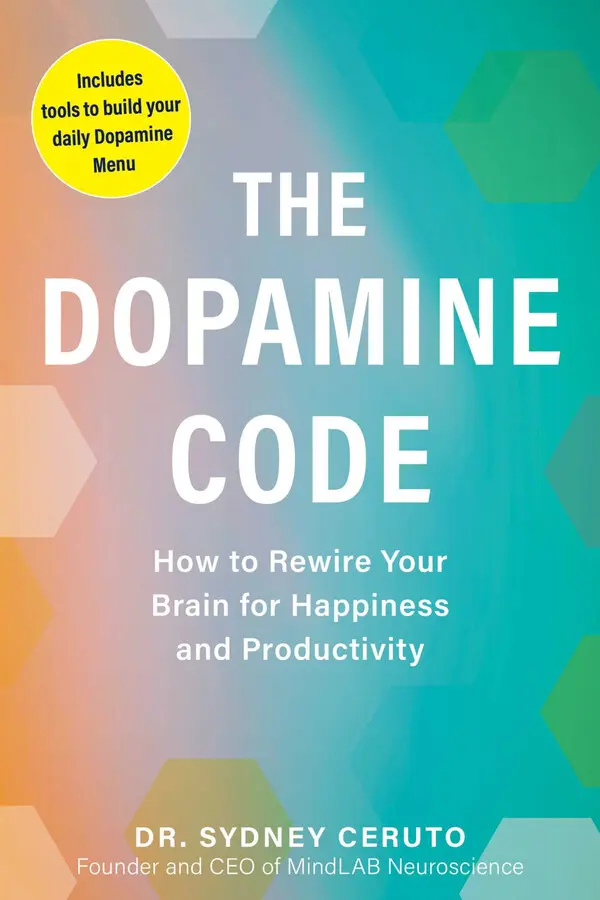
The Dopamine Code

Decode Your Drive

Why Your Brain Rewards the Wrong Things

Your brain's reward system runs every decision, every craving, every crash — and it was never designed for the life you're living. The Dopamine Code is Dr. Ceruto's framework for understanding the architecture behind what drives you, drains you, and keeps you locked in patterns that willpower alone will never fix.

Published by Simon & Schuster, The Dopamine Code is Dr. Ceruto's framework for building your own Dopamine Menu — a personalized system for motivation, focus, and enduring life satisfaction.

Order Now

Ships June 9, 2026

The Dopamine Code by Dr. Sydney Ceruto — Decode Your Drive
Locations

The Intelligence Brief

Neuroscience-backed analysis on how your brain drives what you feel, what you choose, and what you can’t seem to change — direct from Dr. Ceruto.