Achievement Anhedonia in Midtown Manhattan

In New York's creative industries, the launch cycle trains the reward system to value the making over the made — until accomplishments arrive and produce nothing.

The goal is reached. The milestone is hit. The satisfaction does not follow.

Achievement anhedonia is an architecture problem — not a gratitude problem.

Book a Strategy Call

Key Points

  1. The nucleus accumbens — the brain's primary reward-processing hub — plays a central role in achievement anhedonia.
  2. The moment arrives — the one that was supposed to matter — and what the brain produces instead of satisfaction is flatness.
  3. The dopamine system — the brain's primary reward-valuation structure — is not simply a pleasure generator.
  4. This is the treadmill structure of achievement anhedonia: each cycle of pursuit and completion that produces flatness reinforces the system's learned association between arrival and the absence of reward.
  5. The goal is to restore the completion signal: to rebuild the brain's capacity to assign genuine reward weight to arrival, so that the moment of accomplishment produces a response proportionate to what was achieved.
  6. This requires systematic intervention in the learned associations the dopamine system has developed around achievement.
  7. What it involves is precision intervention in the specific learned associations the dopamine system has built around achievement.

When Achievement Stops Landing

“The goal is not to extinguish the anticipatory reward signal — that signal is what drives productive effort and should remain functional.”

There is a particular kind of emptiness that follows accomplishment. The moment arrives — the one that was supposed to matter — and what the brain produces instead of satisfaction is flatness. Sometimes a brief question: Is this it? Then the machinery of the next goal begins before the current one has had time to mean anything.

This is not a character problem. It is not ingratitude. It is not a symptom of clinical depression, though it can look like one from the outside. Achievement anhedonia — the inability to derive reward from accomplishments that, by any external measure, should produce it — is a specific pattern in how the brain’s reward-signaling system has been trained over time. Understanding that pattern is the first step toward changing it.

The Dopamine Architecture of Achievement

The dopamine system — the brain’s primary reward-valuation structure — is not simply a pleasure generator. It is a prediction engine. It does not fire in response to good things happening. It fires in response to good things being anticipated. The signal is strongest during the chase, during the uncertainty, during the moment when outcome is not yet guaranteed.

This is why the architecture works well under conditions of genuine uncertainty. When an outcome is genuinely in doubt, dopamine drives the behavior that pursues it. The signal reinforces effort. The brain codes the anticipatory state — the wanting — as intrinsically rewarding.

The problem develops when a person has spent years in sustained goal-pursuit — reaching targets consistently, moving immediately to the next challenge, rarely pausing at the arrival. Over time, the dopamine system recalibrates. Completion becomes familiar. The brain has learned, from repeated experience, that arrival does not produce anything novel. What the prediction engine codes as worth pursuing is not the achievement itself, but the process of approaching it.

The result is that the moment of accomplishment — the completion of exactly what was worked toward — produces almost nothing. The signal already fired. It fired during the preparation, the effort, the near-miss moments. By the time the goal is reached, the reward system has already spent its response and moved on to evaluating the next target.

Why Effort Feels More Alive Than Arrival

One of the most disorienting features of achievement anhedonia is this asymmetry: the pursuit feels more meaningful than what is being pursued. The period of working toward something. When outcome is uncertain, when effort is active, when the gap between where you are and where you want to be is still real — carries genuine motivational energy. The moment that gap closes, the energy collapses.

This is not a paradox. It is the dopamine system working exactly as it was trained to work. Anticipation has been reinforced so many times that it has become the brain’s default state of reward. Completion has been followed so many times by immediate transition to the next goal that the brain has learned to treat arrival as a threshold to cross, not a place to be.

Research shows that the brain’s reward-valuation circuitry is sensitive to contrast — it responds most strongly to changes in predicted value, not to sustained states of satisfaction. When the pursuit-to-completion cycle has been compressed repeatedly, the system loses the ability to produce a response proportionate to what was actually achieved. The signal habituates. The arrival stops registering.

What Achievement Anhedonia Actually Looks Like

The pattern does not always announce itself as an emotional problem. More often, it presents as a productivity observation: the person notes that they are most alive during the working-toward phase and strangely flat once the goal is reached. They may interpret this as evidence that they need bigger goals. They pursue bigger goals. The flatness follows them there too.

Sometimes the pattern shows up as restlessness immediately after an accomplishment. The achievement lands, and within days — or hours — the person has already mentally moved to what comes next. Not because the next thing is more interesting, but because the brain has learned that the anticipatory state is the only state where reward is available.

In some cases, the person recognizes intellectually that what they accomplished was significant and feels guilty for not feeling it. The gap between what they know they should feel and what they actually feel becomes its own source of distress. They question their own values, their capacity for gratitude, their emotional depth. None of these interpretations are accurate. They are the product of trying to explain a neurological pattern with a psychological vocabulary.

Research shows that reward-system habituation of this kind is not a fixed state. The architecture that produced it is the same architecture that can be recalibrated — but only by intervening at the level where the miscalibration actually lives.

Why the Next Achievement Won’t Fix It

The most common response to the flatness is to set a bigger target. The logic is intuitive: if this level of accomplishment didn’t produce the expected feeling, then a more significant achievement will. The problem is that this response runs directly into the mechanism that produced the flatness in the first place.

The dopamine system is a prediction engine that adjusts its response thresholds based on what it has previously experienced. Each new accomplishment, no matter how significant by external measure, is processed through the same calibrated architecture. The system has already learned, from extensive prior experience, that arrival produces nothing novel. A larger arrival is still an arrival. The prediction machinery adjusts accordingly — and the response, when it comes, is proportionate to what the system has learned to expect, not to what the achievement actually represents.

This is the treadmill structure of achievement anhedonia: each cycle of pursuit and completion that produces flatness reinforces the system’s learned association between arrival and the absence of reward. The person pursues harder, achieves more, and finds the pattern accelerating rather than resolving. The brain is not broken. It is doing exactly what it was trained to do, and the training deepens with each iteration.

The exit from this pattern does not run through the next achievement. It runs through the architecture that determines how achievements register — and that architecture can be changed.

The Anticipation-Arrival Gap

There is a specific neurological reason why the imagined version of an accomplishment is almost always more satisfying than the accomplished fact. The dopamine system fires most strongly on prediction — on the constructed anticipation of a future state that has not yet arrived. The imagined promotion, the imagined recognition, the imagined version of how it will feel to have achieved the target: these are rich with dopamine activity. They are uncertain, because they are future-oriented, because the brain’s prediction circuitry is fully engaged in the gap between wanting and having.

The moment the future becomes the present, the prediction signal collapses. What was anticipation becomes reality. And reality, by definition, has no uncertainty premium. The dopamine system’s strongest signal fires on the probability of reward, not on its delivery. Once the reward is delivered, the probability is one — and a certain outcome generates no prediction response at all.

This is the anticipation-arrival gap: the structural distance between how powerfully an achievement is imagined and how flatly it registers once real. For people who have lived inside sustained achievement cycles, the gap widens over time. The imaginations become more vivid as the arrivals become more muted. The brain compensates for diminished completion responses by generating stronger anticipatory signals — which further raises the threshold that arrival must cross to produce anything meaningful.

Understanding this gap is essential to understanding why achievement anhedonia is self-reinforcing. The very machinery that drives the pursuit — powerful anticipatory reward — is the machinery that makes arrival increasingly disappointing. The system is not malfunctioning. It is running its trained protocol with increasing efficiency.

The Identity Architecture Problem

Achievement anhedonia is not purely a reward-system problem. For many people, the pattern is sustained by a deeper structural issue: the relationship between self-worth and external accomplishment has been built so thoroughly around the achievement cycle that the loss of reward at completion creates something beyond flatness. It creates a question about who they are when the goal is reached and the feeling doesn’t come.

When self-worth has been organized around achieving — when the sense of being someone worth being has been validated primarily through the external confirmation of accomplishment. The absence of reward at completion lands in a particularly destabilizing way. It is not just that the achievement didn’t feel like enough. It is that the achievement was supposed to confirm something about the self, and it did not. The accomplishment is complete. The internal confirmation is absent. And the person is left with a gap between what the achievement was supposed to mean about them and what they actually feel in its aftermath.

This is why some people with achievement anhedonia describe the pattern not just as emotional flatness but as a kind of groundlessness. The goal was reached. The proof is real. The feeling of being the person who was supposed to reach it has not arrived. The self-architecture that was built around external validation requires external validation to feel stable — and the reward system’s failure to produce that validation at completion leaves the architecture unsupported.

Recalibration work at MindLAB Neuroscience addresses both layers of this pattern: the reward-system habituation that produces flatness at arrival. The identity architecture that has organized itself around external achievement as the primary source of self-worth. The second layer is not addressed through insight or narrative reconstruction. It is addressed through the same precision approach to neural architecture that addresses the first.

The Role of the Nucleus Accumbens in Reward Habituation

The nucleus accumbens — the brain’s primary reward-processing hub — plays a central role in achievement anhedonia. Under normal conditions, it receives dopamine signals from reward circuits and converts them into subjective feelings of satisfaction and meaning. The process that determines how strong that signal is, and when it fires, is shaped entirely by learned prediction.

When the nucleus accumbens has been repeatedly primed by anticipatory reward — the dopamine signal that fires during pursuit. And repeatedly denied a completion signal that is novel or meaningful, it adjusts its response thresholds accordingly. It begins to require greater input to produce the same output. Arrival, which was once novel, becomes predictable. Predictable inputs produce attenuated responses. The reward that should register at completion has already been used up in advance.

This is not pathology in the conventional sense. It is the system doing what reward systems do: optimizing for what has reliably produced reward in the past. The problem is that the optimization has drifted away from what the person actually values toward what the system has learned to respond to — which is the state of not yet having arrived.

Recalibrating the Reward Architecture

The path forward is not motivational. Telling a person with achievement anhedonia to be more grateful, to slow down, to appreciate what they have accomplished — none of this addresses the architecture that produced the pattern. The nucleus accumbens does not respond to intentions. It responds to training.

The work at MindLAB Neuroscience operates at the level of that training. The goal is not to extinguish the anticipatory reward signal — that signal is what drives productive effort and should remain functional. The goal is to restore the completion signal: to rebuild the brain’s capacity to assign genuine reward weight to arrival, so that the moment of accomplishment produces a response proportionate to what was achieved.

This requires systematic intervention in the learned associations the dopamine system has developed around achievement. It requires interrupting the automatic transition from completion to next-goal initiation before that transition has suppressed the arrival signal. It requires creating the conditions under which the brain can relearn what completion feels like — not as a milestone to cross, but as a state with its own reward signature.

Walnut credenza with crystal brain sculpture and MindLAB journal in diffused dusk light suggesting high-floor Midtown Manhattan private office

The process is not about slowing down. It is about precision. The same cognitive architecture that learned to devalue arrival can be retrained to register it — but only through approaches that engage the reward system directly, not through insight or reflection alone.

What Recalibration Looks Like

The work of recalibrating the reward architecture is not dramatic in its mechanics, even when the results are significant. It does not involve changing what you pursue, dismantling your relationship to ambition, or restructuring the professional context in which the pattern developed. What it involves is precision intervention in the specific learned associations the dopamine system has built around achievement. Changing what the system codes as rewarding, so that arrival begins to carry the weight it has been trained to dismiss.

In practice, this means working at the level of how completion is processed. Not through reflection on what completion should mean, but through systematic interruption of the automatic transition that has trained the system to move through arrival without registering it. The brain needs evidence, accumulated over time, that completion is worth responding to. That evidence cannot be delivered through insight. It has to be delivered through repeated, structured experience that the reward system is forced to process differently than it has been processing.

The anticipatory signal does not disappear in this process. The drive to pursue, to build, to work toward meaningful targets — these remain. What changes is the distribution of reward across the full cycle. The approach is still rewarding. The arrival becomes rewarding again. The working toward and the getting there stop being opposites on a reward gradient and start carrying proportionate weight. For people who have lived for years inside a pattern where only the pursuit produces anything, this shift is often described not as a subtle change but as a structural one. The difference between going through the motions of achievement and actually arriving.

What Changes When the Architecture Shifts

When the reward system’s calibration shifts, the experience of accomplishment changes in ways that are difficult to anticipate from within the pattern. The most common description from people who have completed this work is not that they became more grateful or more emotionally expressive. It is that accomplishments started to feel like they happened. The flatness that had seemed permanent turned out to be a trained response — and trained responses can be untrained.

The anticipatory motivation does not disappear. The drive to pursue, to build, to work toward meaningful targets — these remain. What changes is the relationship between pursuit and arrival. They stop being opposites on a reward gradient. The brain begins to assign value to both — to the working toward and the getting there. For people who have lived for years inside the flatness, this shift tends to be significant.

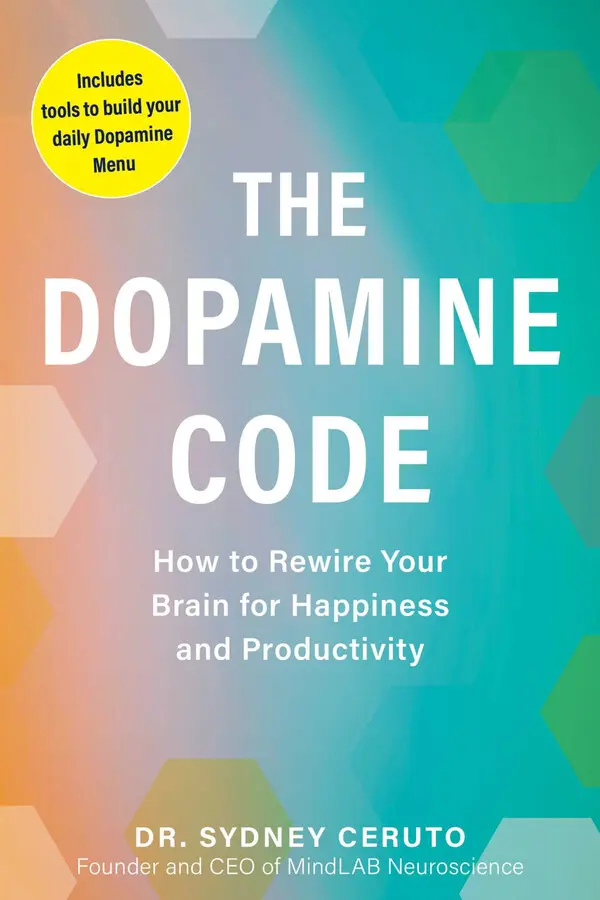
For a complete framework on the paradox of achievement and diminishing reward, I cover the full science in my forthcoming book The Dopamine Code (Simon & Schuster, June 2026).

Beginning the Work

Achievement anhedonia is not a condition that resolves through willpower, through insight, or through the addition of more achievement. The pattern lives in the reward system’s learned associations, and it responds to interventions designed at that level.

If the pattern I’ve described is familiar. If you recognize the flatness at arrival, the restlessness after accomplishment, the persistent sense that the next goal will be the one that finally feels like enough — the first step is a conversation. The Strategy Call at MindLAB Neuroscience is a one-hour precision assessment, conducted by phone, to evaluate the specific architecture of the pattern and determine whether my methodology is the right match for your situation. It is not a sales conversation. It is a clinical assessment designed to produce clarity about what is actually happening and what can be done about it.

Marker What You Experience What's Happening Neurologically What We Restructure
Achievement Stops Landing The moment arrives — the one that was supposed to matter — and what the brain produces instead of satisfaction is flatness. Achievement anhedonia — the inability to derive reward from accomplishments that, by any external measure, should produce it — is a specific pattern in how the brain's reward-signaling system has been trained over time. The moment arrives — the one that was supposed to matter — and what the brain produces instead of satisfaction is flatness.
Dopamine Architecture of Achievement The brain has learned, from repeated experience, that arrival does not produce anything novel. The dopamine system — the brain's primary reward-valuation structure — is not simply a pleasure generator. By the time the goal is reached, the reward system has already spent its response and moved on to evaluating the next target.
Effort Feels More Alive Than When outcome is uncertain, when effort is active, when the gap between where you are and where you want to be is still real — carries genuine motivational energy. Research shows that the brain's reward-valuation circuitry is sensitive to contrast — it responds most strongly to changes in predicted value, not to sustained states of satisfaction. Research shows that the brain's reward-valuation circuitry is sensitive to contrast — it responds most strongly to changes in predicted value, not to sustained states of satisfaction.
Achievement Anhedonia Actually Looks Like In some cases, the person recognizes intellectually that what they accomplished was significant and feels guilty for not feeling it. Not because the next thing is more interesting, but because the brain has learned that the anticipatory state is the only state where reward is available. More often, it presents as a productivity observation: the person notes that they are most alive during the working-toward phase and strangely flat once the goal is reached.
the Next Achievement Won't Fix The logic is intuitive: if this level of accomplishment didn't produce the expected feeling, then a more significant achievement will. The dopamine system is a prediction engine that adjusts its response thresholds based on what it has previously experienced. It runs through the architecture that determines how achievements register — and that architecture can be changed.
Anticipation-Arrival Gap The imagined promotion, the imagined recognition, the imagined version of how it will feel to have achieved the target: these are rich with dopamine activity. The dopamine system's strongest signal fires on the probability of reward, not on its delivery. There is a specific neurological reason why the imagined version of an accomplishment is almost always more satisfying than the accomplished fact.

Why Achievement Anhedonia Matters in Midtown Manhattan

Achievement Anhedonia in Midtown Manhattan

Midtown Manhattan runs on creative output — publishing, media, advertising, production, design, performance. The achievement cycles here are not annual. They are project-by-project, launch-by-launch, issue-by-issue. And the rhythm of those cycles creates a specific version of the pattern: the work ships, the recognition arrives, and the feeling is not what it was supposed to be.

The book publishes. The campaign goes live. The feature runs. The show opens. The award is announced. For people who have built careers in the creative industries of this city. The gap between what an accomplishment is supposed to mean and what it actually produces is one of the most disorienting features of professional life. And one of the least discussed, because the creative industries reward the appearance of passion and punish the admission of flatness.

The launch cycle is a particularly efficient generator of achievement anhedonia. The months of preparation build anticipatory energy — the work is not yet out, the response is not yet known, the outcome is genuinely uncertain. The dopamine system fires reliably during this phase. The launch date arrives, the response lands (positive, mixed, or indifferent), and what the brain produces is rarely proportionate to what the work required. Sometimes the response is excellent and the flatness still comes. That is when the pattern becomes undeniable.

Publication cycles compress this further: the writer who has shipped five books, the editor who has launched dozens of issues, the creative director whose campaigns have won consistently. Each cycle has trained the reward system to locate the reward in the making, not the made. Completion has become a transition point, not a destination.

Research shows that creative professionals in high-output environments are particularly vulnerable to reward-system habituation. Not because creativity depletes the system, but because the production cycle structure consistently reinforces the anticipatory state while shortening the window in which completion can register as meaningful.

The recognition economy of Midtown’s media and publishing industries adds another layer. When professional identity is built partly around external validation — the review, the placement, the award shortlist, the audience response. The brain begins to process recognition as a metric to be tracked rather than a signal to be felt. The number goes up. The response is positive. And the system that was supposed to convert that into something meaningful has already learned to treat recognition as data, not reward. The metric registers. The feeling does not follow.

There is also the specific flatness that follows recognition from peers — the award from people whose opinion matters, the acknowledgment from the room that knows how hard the work was. This version of recognition was supposed to carry more weight than external audience response, because it came from people who understood the work from the inside. And for many people, it does not carry more weight at all. The system processes peer recognition through the same habituated architecture. The signal registers. The meaning does not. That moment — when even the recognition that was supposed to matter most fails to land — is often the point at which the pattern can no longer be explained away.

The work I do with people in this city’s creative fields operates at the level of that habituation. What the system learned to devalue, it can learn to register again. The goal is not to slow the output. It is to restore what the output is supposed to produce.

Dr. Sydney Ceruto, PhD — Founder, MindLAB Neuroscience

Dr. Sydney Ceruto, PhD — Founder & CEO, MindLAB Neuroscience

Dr. Ceruto holds a PhD in Behavioral & Cognitive Neuroscience from NYU and two Master’s degrees from Yale University. She lectures at the Wharton Executive Development Program at the University of Pennsylvania and has been an Executive Contributor to the Forbes Coaching Council since 2019. Dr. Ceruto is the author of The Dopamine Code (Simon & Schuster, June 2026). She founded MindLAB Neuroscience in 2000 and has spent over 26 years pioneering Real-Time Neuroplasticity™ — a methodology that permanently rewires the neural pathways driving behavior, decisions, and emotional responses.

References

Berridge, K. C., & Robinson, T. E. (1998). What is the role of dopamine in reward: Hedonic impact, reward learning, or incentive salience? Brain Research Reviews, 28(3), 309–369. https://doi.org/10.1016/S0165-0173(98)00019-8

Schultz, W. (2016). Dopamine reward prediction-error signalling: A two-component response. Nature Reviews Neuroscience, 17(3), 183–195. https://doi.org/10.1038/nrn.2015.26

Salamone, J. D., & Correa, M. (2012). The mysterious motivational functions of mesolimbic dopamine. Neuron, 76(3), 470–485. https://doi.org/10.1016/j.neuron.2012.10.021

Treadway, M. T., & Zald, D. H. (2011). Reconsidering anhedonia in depression: Lessons from translational neuroscience. Neuroscience & Biobehavioral Reviews, 35(3), 537–555. https://doi.org/10.1016/j.neubiorev.2010.06.006

Success Stories

“What I appreciate about Dr. Ceruto is her candid, direct approach — truly from a place of warmth and support. Every week delivered concrete value, and I never felt like I was wasting time the way I had with traditional methods. She draws from her clinical and academic expertise to dig deeper into the roots of issues. She helped me make enormous progress after a year of personal loss, including getting my faltering career back on track. She follows up after every session with additional materials.”

Eric F. — Surgeon Coral Gables, FL

“The divorce wasn't destroying me emotionally — it was destroying me neurologically. My amygdala was treating every interaction with my ex, every legal update, every quiet evening as a survival-level threat. Years of talk-based approaches hadn't touched it. Dr. Ceruto identified the attachment disruption driving the response and restructured it at the root. The threat response stopped. Not because I learned to tolerate it — because the pattern was no longer running.”

Daniela M. — Attorney North Miami Beach, FL

“Color-coded calendars, alarms, accountability partners — I'd built an entire scaffolding system just to stay functional, and none of it addressed why my brain couldn't sequence and prioritize on its own. Dr. Ceruto identified the specific prefrontal pattern that was misfiring and restructured it. I don't need the scaffolding anymore. My brain actually does what I need it to do.”

Jordan K. — Venture Capitalist San Francisco, CA

“When I started working with Dr. Ceruto, I was feeling stuck, not happy whatsoever, detached from family and friends, and definitely not confident. I’d never tried a neuroscience-based approach before, so I wasn’t sure what to expect — but I figured I had nothing to lose. My life has completely changed for the better. I don’t feel comfortable discussing publicly why I sought help, but I was made to feel safe, secure, and consistently supported. Just knowing I could reach her day or night was a relief.”

Algo R. — Fund Manager Dubai, UAE

“When my youngest left for college, I didn't just feel sad — I felt erased. My entire sense of self had been wired to caregiving for two decades, and I didn't know who I was without it. Years of talk-based approaches hadn't touched it. Dr. Ceruto mapped the identity circuitry that had fused with the role and restructured it. I didn't find a new purpose — I found the one that had been underneath the whole time.”

Diane L. — Nonprofit Director Chicago, IL

“When I first started with Dr. Ceruto, I’d felt at a standstill for two years. Over several months, we worked through my cognitive distortions and I ultimately landed my dream job after years of rejections. She is both gentle and assertive — she tells it like it is, and you’re never second-guessing what she means. Most importantly, she takes a personal interest in my mental, emotional, and physical wellbeing. I have no doubt I’ll be in touch with Dr. Ceruto for years to come.”

Chelsea A. — Publicist Dublin, IE

Frequently Asked Questions About Achievement Anhedonia

What is achievement anhedonia and how is it different from depression?

Achievement anhedonia is a specific pattern in the brain's reward architecture — the inability to derive satisfaction from accomplishments that, by any external measure, should produce it. It is distinct from depression in that the flatness is selective: it is tied specifically to moments of completion and arrival, not to a generalized suppression of positive emotion. A person with achievement anhedonia may feel fully engaged, motivated, and alive during the pursuit of a goal — and then experience a conspicuous absence of satisfaction at the moment the goal is reached. Depression typically produces a broader reduction in responsiveness. Achievement anhedonia is more targeted: the reward system has been trained to assign reward value to anticipation rather than completion. The pattern is neurological, not psychological, and it does not respond the way depression responds to the interventions typically used for depression.

Why do I feel more alive during the pursuit of something than when I actually achieve it?

This asymmetry — pursuit feeling more meaningful than arrival — is the dopamine system working exactly as it was trained to work. The dopamine system is not a pleasure generator. It is a prediction engine that fires most strongly in response to anticipated reward, particularly under conditions of uncertainty. When you have spent years in sustained goal-pursuit — reaching targets consistently and moving immediately to the next challenge — the system learns, through repetition, that anticipation is where the reward lives. Arrival becomes familiar, and familiar inputs produce attenuated responses. The reward signal has been primed and spent during the approach. By the time you arrive, the system has already moved on to evaluating the next target. This is not a motivational failure. It is a trained pattern in a trainable system.

Is achievement anhedonia a permanent condition?

No. Achievement anhedonia is a learned calibration in the dopamine system's reward-valuation architecture — and learned calibrations can be recalibrated. The neural circuits that produce the flatness at completion are the same circuits that respond to precise, targeted intervention. The pattern did not develop overnight, and it does not resolve overnight. But it is not a fixed state, and it is not a character trait. The people I work with who have completed the full program consistently report that the shift is not subtle — that accomplishments begin to register in a way that had been absent for years, sometimes decades. The architecture that learned to devalue arrival can learn to register it again.

I've tried therapy and it hasn't helped with this. Why would your approach be different?

Conventional therapy works primarily through insight, reflection, and narrative — approaches that engage the prefrontal cortex's interpretive functions. Achievement anhedonia lives in the dopamine system's learned prediction associations, which operate below the threshold of conscious reasoning. Understanding why you feel flat after accomplishment does not change the reward circuits that produce the flatness. My methodology intervenes at the level of those circuits directly — not through interpretation of the pattern, but through systematic recalibration of the trained associations that sustain it. This is why people with significant insight into their own patterns — people who have done years of therapy and understand themselves well — often find that the pattern has not shifted despite the understanding. The system that needs work is not the one that therapy typically addresses.

How do I know if what I'm experiencing is achievement anhedonia versus simply needing bigger goals?

The clearest diagnostic question is this: have you pursued bigger goals, reached them, and found the flatness followed you there? If the pattern has traveled across multiple levels of achievement — if each new accomplishment produced the same absence of the expected satisfaction — then the issue is not the size of the goals. It is the reward system's calibration. The common interpretation — that the current accomplishments are not meaningful enough, that what is needed is a more significant target — is the brain's own rationalization of the pattern. The person pursues the bigger goal, reaches it, and the architecture produces the same result. At some point the accumulation of evidence makes the real pattern undeniable: the flatness is not about the goals. It is about the system doing the rewarding.

Can I address this while maintaining my current pace of work and life?

Yes. The work does not require dismantling the career, slowing the output, or restructuring how you operate professionally. Achievement anhedonia is a calibration problem in the reward system's architecture, and addressing it does not require removing the conditions that produced it. What changes is the reward system's relationship to completion — not the pace of goal-pursuit, not the ambition, not the professional identity. The people I work with who are most deeply embedded in high-output environments do not leave those environments to do this work. They do the work while remaining in them. What they report afterward is not that they slowed down, but that the work started to land differently — that what they were building began to feel like it was being built.

What does The Dopamine Code cover, and is it relevant to achievement anhedonia?

My forthcoming book, The Dopamine Code (Simon & Schuster, June 2026), covers the full science of the dopamine system's role in reward, motivation, and the paradoxes of achievement — including the specific architecture of achievement anhedonia and the conditions under which the pursuit-reward cycle breaks down. It is the most complete public treatment of this subject I have written, and it provides the scientific framework behind the methodology I use in clinical practice. If you want to understand the mechanism before beginning the work — or if you want a companion resource during it — the book is the right place to start.

What is the Strategy Call and how does it work?

The Strategy Call is a one-hour precision assessment conducted entirely by phone — no video, no intake forms to fill out before we speak. It is designed to evaluate the specific architecture of your pattern: how the achievement anhedonia developed, what conditions sustain it, and whether my methodology is the right match for your situation. The call costs $250. It is not applied toward any program. It is not a sales conversation — it is a clinical assessment designed to produce clarity. At the end of the hour, you will have a clear understanding of what is happening neurologically and what the path forward looks like, whether that path is with me or elsewhere. To schedule, visit the Strategy Call page or call the office directly.

How long does the work typically take?

The timeline depends on the depth and duration of the pattern, the specific calibration of the individual's reward architecture, and how embedded the pursuit-devaluation cycle has become. Some people see meaningful shifts within weeks of beginning the intensive work. Others require a longer recalibration period. I do not offer standardized program lengths because achievement anhedonia does not resolve on a standardized schedule — it resolves when the neural architecture has shifted, and that timeline is individual. The Strategy Call is the appropriate place to assess what a realistic timeline looks like for your specific situation. I will not tell you what you want to hear about speed. I will tell you what the evidence from your history suggests about how long this pattern has been in place and what that implies for the work ahead.

Is this work done in person or remotely?

The work is conducted by phone. All sessions — including the initial Strategy Call and all subsequent program sessions — are phone-only. This is not a limitation of the methodology; it is a design choice. The precision work I do does not require visual cues or in-person presence. What it requires is focused, uninterrupted conversation in an environment where you can speak without distraction. Phone removes the variables that video introduces and creates the conditions in which the most precise work can happen. I work with people across all five cities I serve — Miami, Wall Street, Midtown Manhattan, Beverly Hills, and Lisbon — without geographic constraint.

Also available in: Miami · Wall Street · Beverly Hills · Lisbon

Take the First Step

The Strategy Call is a focused conversation with Dr. Ceruto that maps the specific neural mechanisms driving your concerns and determines the right path forward.

Book a Strategy Call
MindLAB Neuroscience consultation room
Locations

The Intelligence Brief

Neuroscience-backed analysis on how your brain drives what you feel, what you choose, and what you can’t seem to change — direct from Dr. Ceruto.