When the Reward System Stops Responding
“The sense that things are worth looking forward to (not as a cognitive exercise, not as something you tell yourself, but as a genuine neural signal) re-emerges.”
The brain’s reward system is not a fixed structure. It is a dynamic, adaptive architecture: one that calibrates its sensitivity in direct response to the inputs it receives. When those inputs are consistently intense, frequent, or novel, the system compensates by raising its threshold. More input is required to produce the same signal. The baseline shifts upward. And what was once pleasurable becomes ordinary, then flat, then nothing at all.
This is not depression. It is not a character flaw. It is not a failure of willpower or gratitude or perspective. It is a specific recalibration of the reward architecture: a process that is well understood at the neural level and that responds to targeted intervention when the right systems are addressed precisely.
The nucleus accumbens, the brain’s primary reward-valuation center, encodes the difference between predicted and actual reward. When that difference shrinks to zero, when nothing surprises the system in a positive direction, the experience of reward disappears. The circuit is still intact. The architecture still functions. But it has learned, through repeated exposure, that high-amplitude input is the new normal, and everything below that threshold registers as neutral at best, and as absence at worst.
This is the pattern I work with. Not the absence of reward capacity, but the displacement of the threshold that determines when reward registers at all. The capacity is intact. The baseline has moved. And baseline is something that can be reset.
What Hedonic Recalibration Actually Looks Like
The pattern tends to arrive gradually. There is rarely a single moment when pleasure stops. Instead, there is a slow dimming: activities that once produced satisfaction begin to feel effortful. Things you looked forward to start to feel like obligations. Weekends that should feel restorative feel empty instead. The list of things that genuinely interest you quietly shortens over months, and you may not notice it happening until the list is very short indeed.
People describe the experience in different ways. Some say they feel numb. Some say they feel bored in situations where boredom does not make sense: sitting in a place they chose, doing something that used to matter, feeling nothing in particular. Some notice they are pursuing increasingly intense experiences, not because those experiences are more meaningful, but because only the intense ones cut through the threshold at all. The system is signaling its recalibration. The signal is the flatness.
What makes this pattern particularly resistant is that it does not respond to more effort. Working harder, achieving more, consuming more, traveling further: all of these feed the same system that produced the recalibration in the first place. The more intensity you pursue in order to feel something, the further the threshold shifts upward. The gap widens. The flatness deepens. Each cycle of pursuit and temporary relief ends with the baseline slightly higher than it started.
The path forward is not through the same inputs at higher volume. It requires working at the level of the system that is doing the calibrating: the prediction architecture, the threshold itself, the neural machinery that determines what counts as reward.
The Neural Mechanism: Why the Threshold Shifts
The dopamine system does not simply release dopamine in response to pleasure. It encodes prediction error: the difference between what was expected and what actually occurred. When something better than expected happens, dopamine fires. When something exactly as expected happens, dopamine does not fire. When something worse than expected happens, dopamine activity drops below baseline. The system is a precision comparator, not a pleasure meter.
Chronic overstimulation teaches the system to expect more. The predicted reward level rises incrementally. Ordinary experiences (a meal, a conversation, a moment of rest, a quiet evening) no longer beat the prediction. They meet it at best, and meeting a prediction produces no dopamine signal. No signal means no experience of reward. The experience is identical to absence, even though the capacity for reward remains completely intact.
The ventral striatum, a structure central to reward processing and motivation, encodes not just whether something is rewarding, but whether it is more rewarding than anticipated. When anticipation has been raised by repeated high-intensity input, ordinary life falls below the bar. The architecture is functioning exactly as it was designed to function. It has simply recalibrated to a baseline that makes ordinary experience invisible as a reward signal.
Research shows that the brain’s reward system is among the most neuroplastic structures in the neural architecture, capable of significant recalibration in both directions. The same mechanism that raised the threshold can lower it. The same plasticity that produced the problem is the mechanism through which it resolves. This is not a permanent state. It is a learned calibration, and learned calibrations can be reset.
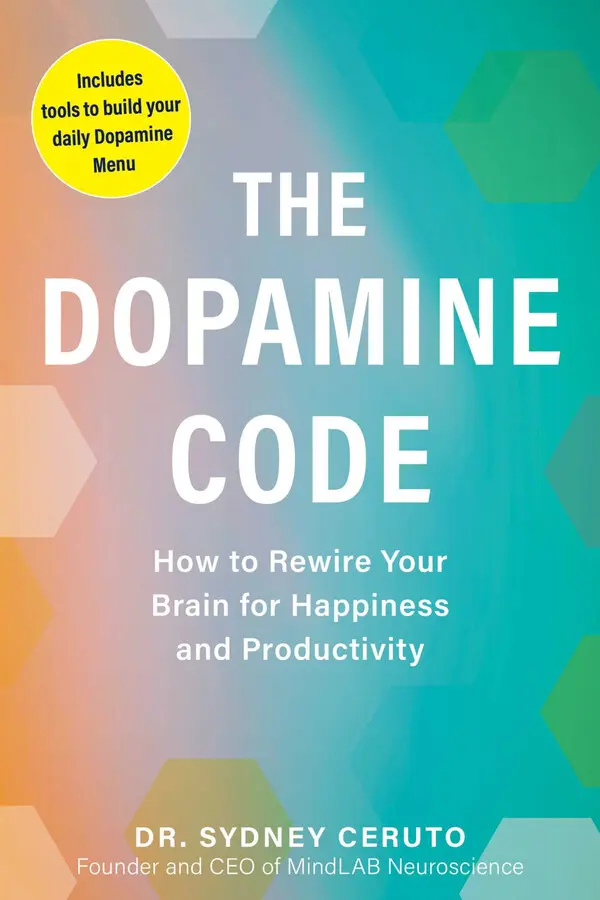
For a complete framework on resetting your brain’s pleasure-pain balance, I cover the full science in my book The Dopamine Code (Simon & Schuster, June 2026).
How I Work With Reward System Recalibration
My methodology at MindLAB Neuroscience addresses reward system recalibration through a structured, neural-level approach. The work has three phases, and each phase is necessary for the reset to hold over time rather than producing a temporary shift that reverses when circumstances change.
The first phase is reward mapping. Before any intervention, I need to understand the specific architecture of the recalibration. Which inputs drove the threshold shift, what the current baseline looks like, and what a person’s existing relationship with effort and reward reveals about the neural patterns at play. This is not a questionnaire or a checklist. It is a precision conversation designed to map the reward architecture as it currently exists, rather than working from assumptions about what usually drives recalibration in general.
The second phase is threshold reduction. This involves strategic reduction of high-dopamine inputs, not deprivation, but structured absence. The purpose is to allow the prediction system to recalibrate its expectation downward. When the anticipated reward level drops, ordinary experiences begin to register above the threshold again. Small things start to produce signal. This phase requires precision because the goal is not to create discomfort. It is to create the conditions under which the system can recalibrate on its own terms, without the constant intrusion of the high-amplitude inputs that have been maintaining the elevated baseline.
The third phase is baseline anchoring. Once the threshold has shifted downward, the work becomes about building new reward associations with low-intensity, high-meaning inputs. The prefrontal cortex, the brain’s planning and value-assignment system, plays a central role in this phase. Rewiring the value assigned to ordinary experience requires deliberate, repeated engagement with those experiences in a context where their meaning is made explicit to the system, not just understood cognitively. This is where the architecture of motivation rebuilds itself from the reset baseline and begins to sustain engagement without requiring constant escalation.
What Makes This Different From Willpower-Based Approaches
The three-phase structure matters because skipping any phase produces predictable failure. Starting with baseline anchoring before the threshold has shifted produces frustration: the person tries to value low-intensity inputs, genuinely wants to, and cannot, because the architecture is still calibrated to expect more. Starting with threshold reduction without reward mapping produces an unstructured deprivation that the brain interprets as punishment rather than as reset conditions. The sequence is not arbitrary. It maps the biology of how the reward system actually learns and recalibrates, in the order that the neural architecture requires.
Most approaches to reward system recalibration focus on discipline: on resisting high-intensity inputs through force of will, or on reframing thoughts about what should feel good. This misunderstands the architecture at a fundamental level. Willpower is a prefrontal cortex function. The prefrontal system can suppress behavior. It can override impulses in the short term. But it cannot directly reset the reward threshold, because the threshold is determined by subcortical structures that do not receive conscious instruction.
Telling a person to simply want less, or to find gratitude for ordinary things, or to appreciate what they have, does not change the prediction baseline. It adds a layer of cognitive effort on top of a system that is still calibrated to expect more than ordinary life is delivering. The effort is exhausting and the results are temporary, because the underlying architecture has not changed. The baseline remains where it is. The cognitive overlay provides no sustained relief.
Research shows that changes in reward sensitivity require changes at the level of the systems that encode prediction and valuation, not changes in conscious attitude. Attitude change can follow genuine recalibration. It cannot produce it. This is one of the most important distinctions in the work I do. It is one that most approaches to this problem ignore entirely because working with the architecture directly is more demanding than working with conscious thought.
What changes the architecture is a different kind of input, sustained over time, in the right sequence, with the right precision. The system is plastic: it learned to expect more, and it can learn to expect less. But that learning requires engagement with the structure of reward processing itself, not with the behavior or the thought patterns that sit on top of it.
The Timeline of a Reset
Reward system recalibration is not instantaneous. The threshold shifted gradually over months or years, and the reset follows a similar trajectory, though the deliberate, structured approach compresses that timeline significantly compared to an unguided process, because the conditions for recalibration are created deliberately rather than waited for.
In the early phase of the work, most people report an increase in noticing: a return of small observations, small moments of interest, small pleasures that had gone invisible beneath the threshold. A meal that tastes good rather than just adequate. A conversation that produces genuine curiosity rather than performed engagement. A morning that feels like a beginning rather than a continuation of flatness. These are early signals of the system recalibrating its sensitivity downward, and they are among the clearest indicators that the work is moving in the right direction.
In the middle phase, the capacity for anticipation returns. The sense that things are worth looking forward to (not as a cognitive exercise, not as something you tell yourself, but as a genuine neural signal) re-emerges. This is the prediction system beginning to fire again in response to everyday inputs. The dopamine signal of anticipation is one of the most motivating experiences available to the brain. Its return is not subtle. People notice it.
In the later phase, sustained engagement with meaningful activity becomes possible without the effortful push that characterized the flat period. The architecture is supporting the motivation now, rather than working against it. The reset is consolidating rather than complete at this point. But the system is rebuilding, the trajectory is clear, and the effort required to maintain engagement is qualitatively different from the effort that was required at the start of the work.

The Relationship Between Reward Recalibration and Meaning
One of the most consistent patterns I observe is this: people in the middle of a severe reward recalibration often describe what sounds like a meaning crisis. Everything feels hollow. Nothing seems worth doing. The future looks flat rather than inviting. They often interpret this as a philosophical problem: a question about purpose, direction, or identity.
It is rarely a philosophical problem. It is almost always a neural one. The feeling of meaning is not an abstract quality that some experiences have and others lack. It is a property of the reward signal: the sense that something matters is produced by the same system that produces the sense that something is pleasant. When the reward threshold has shifted upward, both the experience of pleasure and the experience of meaning diminish together, because they are generated by overlapping neural systems. The apparent meaning crisis is a symptom of the recalibration, not the cause of the flatness.
This is important because it changes the approach entirely. A meaning crisis calls for philosophical inquiry, narrative reconstruction, value clarification. A reward recalibration calls for neural reset work. Applying the wrong approach is not just ineffective. It can compound the problem, adding cognitive exhaustion to neural flatness and deepening the sense that something is fundamentally wrong at the level of identity rather than architecture.
When the architecture resets, meaning returns without being sought. The world begins to register as interesting again. Effort begins to produce satisfaction again. The philosophical questions that felt urgent and unresolvable often dissolve on their own. Not because they were answered, but because the neural substrate that was generating the urgency has recalibrated, and from the new baseline, the questions no longer feel pressing in the same way.
Who This Work Is For
This work is for anyone who recognizes the pattern: the flatness that persists despite changed circumstances, the diminishing return on experiences that should feel good, the increasing reach for intensity as a way of feeling anything at all. It is for people who have tried to address the flatness through achievement, consumption, travel, novelty, or a change of environment, and found that each cycle leaves the baseline a little higher and the flatness a little more persistent.
It is for people who sense, correctly, that the problem is not a character flaw and not a lack of effort or appreciation. The reward system recalibrated in response to what it was given. That is what it was designed to do. Resetting it requires giving it something different, and giving it in a way that the architecture can use to rebuild its own sensitivity, rather than a way that simply adds more volume to the same pattern.
It is also for people who are not sure what is happening, who can articulate the flatness but cannot explain it, who know that the usual answers are not working but have not found a more accurate framework. The clarity that comes from understanding the neural mechanism is itself part of the work. When the pattern is named accurately, the path forward becomes visible in a way it was not before. This is not a small thing. Most people navigating reward recalibration have been working against the grain of the architecture for years, because no one gave them an accurate map of the terrain.
If you recognize this pattern in your own experience, the first step is a Strategy Call. That conversation, which I conduct by phone, is designed to assess whether the work I do is the right fit for what you are navigating. It is not a sales conversation. It is a strategy conversation, and it costs. What you will leave with is clarity: about what the pattern is, whether it responds to the work I do, and what the path forward actually looks like.
For deeper context, explore resetting your reward system after burnout.