Depression & Low Mood in Beverly Hills

Depression is not a character flaw or a failure of effort. It is the brain's reward, motivation, and energy systems operating in a suppressed state. The architecture maintaining the pattern can be identified and recalibrated at the neural level.

Depression is not a mood problem — it is a systems-level downregulation where the brain's reward, motivation, and energy-regulation circuits have shifted to a low-output state that no longer reflects what the current environment actually requires. The architecture maintaining the pattern operates below the level of conscious reasoning, which is why understanding the depression does not resolve it. Dr. Ceruto's methodology identifies the specific circuits maintaining the suppressed state and intervenes at the structural level — restoring the brain's capacity to generate reward signals, sustain energy, and process experience as something worth engaging with.

Book a Strategy Call

Depression Coaching

The brain’s reward, motivation, and energy circuits have shifted to a low-output state that persists regardless of circumstances. Dr. Ceruto identifies the specific architecture maintaining the suppressed state and works at the level where the pattern lives.

Learn more about Depression Coaching in Beverly Hills →

Low Motivation & Drive

The dopamine-driven anticipatory signal that makes effort feel worthwhile has been suppressed by the broader depressive state. The person knows what they want to do — the neural systems that translate knowledge into action are offline.

Learn more about Low Motivation & Drive in Beverly Hills →

Grief & Loss

The brain’s attempt to update its internal model after a significant attachment has been severed. When grief stalls, the system remains in perpetual prediction error — expecting what is no longer there.

Learn more about Grief & Loss in Beverly Hills →

Seasonal Mood Changes

The brain’s sensitivity to photoperiod shifts mood, energy, and motivation circuits toward a low-output state as light exposure changes. This is not weakness — it is the brain responding to environmental signals with architecture built for a different era.

Learn more about Seasonal Mood Changes in Beverly Hills →

Hopelessness & Emotional Recovery

The brain’s predictive system has locked into a model where improvement is not expected. Hopelessness is not a conclusion about reality — it is a prediction error that feels absolutely certain because the prediction circuitry has been calibrated by repeated negative outcomes.

Learn more about Hopelessness & Emotional Recovery in Beverly Hills →

Why Depression Takes a Specific Shape in Beverly Hills

Beverly Hills produces a depression architecture that its cultural context makes almost impossible to name accurately. The city’s social language does not have room for the person who has the life that was supposed to be enough and still wakes every morning in a state of persistent low mood. The visible markers of success are in place. The internal experience does not match them. And the gap between the two — between the curated exterior and the suppressed interior — becomes its own source of exhaustion.

The entertainment industry’s rejection and uncertainty cycles create specific conditions for depression architecture. The person whose professional life is organized around outcomes that are structurally unpredictable — pilot seasons, development deals, projects that live or die on decisions made by people who cannot be influenced — has a nervous system that has been trained by years of high-stakes uncertainty. When the uncertainty resolves badly often enough, the brain’s predictive system shifts toward a model where negative outcomes are expected. That predictive shift is the foundation of the depressive architecture. The system is not broken. It has learned from its experience, and what it learned is generating the suppressed state.

Beverly Hills’s wellness culture creates a paradox for the person navigating depression. The density of optimization offerings — the protocols, the practitioners, the modalities marketed as solutions — means that the person who has tried everything and still feels the same carries an additional layer of failure narrative. The depressive architecture is running, and the cultural context is saying that the solution is available everywhere, which makes the persistence of the problem feel like evidence of personal inadequacy rather than what it actually is: a neural pattern operating at a level that the available interventions are not reaching.

The image maintenance requirement compounds the depression architecture in a way specific to this geography. Beverly Hills demands the performance of a life that is working. The social cost of visible depression — the career implications in industries where perceived vitality affects professional opportunity — creates conditions where the masking effort becomes a significant energy drain on an already-depleted system. The person is spending limited neural resources on maintaining the exterior while the interior continues to run at suppressed output.

Post-substance recovery creates another entry point. The person whose reward system was calibrated to chemical-level input and who is now navigating sobriety in a city where social life is organized around consumption is contending with a depression architecture that has multiple drivers — the reward system recalibration, the identity disruption, and the environmental pressures that do not accommodate the process of rebuilding.

The work in Beverly Hills addresses the specific architecture this environment produces. A Strategy Call — one hour, by phone — is where the assessment begins.

Dr. Sydney Ceruto, PhD — Founder, MindLAB Neuroscience

Dr. Sydney Ceruto, PhD — Founder & CEO, MindLAB Neuroscience

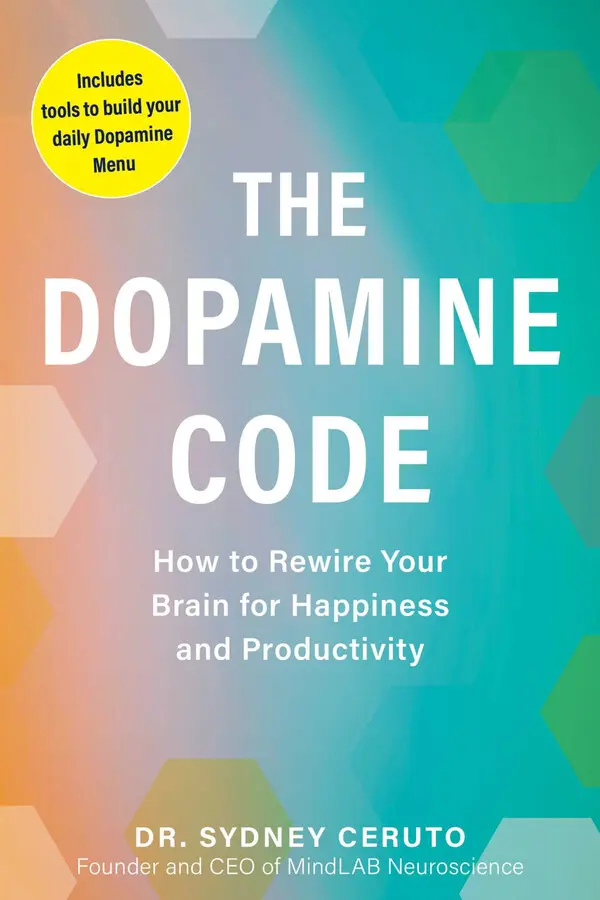
Dr. Ceruto holds a PhD in Behavioral & Cognitive Neuroscience from NYU and two Master’s degrees from Yale University. She lectures at the Wharton Executive Development Program at the University of Pennsylvania and has been an Executive Contributor to the Forbes Coaching Council since 2019. Dr. Ceruto is the author of The Dopamine Code (Simon & Schuster, June 2026). She founded MindLAB Neuroscience in 2000 and has spent over 26 years pioneering Real-Time Neuroplasticity™ — a methodology that permanently rewires the neural pathways driving behavior, decisions, and emotional responses.

References

Drevets, W. C., Price, J. L., & Furey, M. L. (2008). Brain structural and functional abnormalities in mood disorders: Implications for neurocircuitry models of depression. Brain Structure and Function, 213(1-2), 93–118. https://doi.org/10.1007/s00429-008-0189-x

Kaiser, R. H., Andrews-Hanna, J. R., Wager, T. D., & Pizzagalli, D. A. (2015). Large-scale network dysfunction in major depressive disorder. JAMA Psychiatry, 72(6), 603–611. https://doi.org/10.1001/jamapsychiatry.2015.0071

Treadway, M. T., & Zald, D. H. (2011). Reconsidering anhedonia in depression: Lessons from translational neuroscience. Neuroscience & Biobehavioral Reviews, 35(3), 537–555. https://doi.org/10.1016/j.neubiorev.2010.06.006

Pizzagalli, D. A. (2014). Depression, stress, and anhedonia: Toward a synthesis and integrated model. Annual Review of Clinical Psychology, 10, 393–423. https://doi.org/10.1146/annurev-clinpsy-050212-185606

Success Stories

“Every metric was green and I felt nothing. Conventional approaches told me I was 'burned out' or needed gratitude practices — none of it touched the actual problem. Dr. Ceruto identified that my dopamine baseline had shifted so high from constant reward-chasing that normal achievement couldn't register anymore. She recalibrated the reward system itself. I didn't need more success. I needed my brain to actually experience the success I already had.”

Rafael G. — Screenwriter New York, NY

“Outperforming every metric for years and feeling absolutely nothing — no satisfaction, no drive, just a compulsive need to keep going. Executive retreats, meditation protocols, none of it made a difference. Dr. Ceruto identified the dopamine downregulation that was driving the entire pattern. My reward system had essentially gone offline from overstimulation. She didn't teach me to reframe success — she restored the neurochemistry that lets me actually experience it.”

Mikhail D. — Family Office Principal Washington, DC

“Anxiety and depression had been running my life for years. Dr. Ceruto helped me see them not as permanent conditions but as neural patterns with identifiable roots. Once I understood the architecture, everything changed.”

Emily M. — Physician Portland, OR

“Every system, every supplement, every productivity method I tried collapsed within weeks — and nothing held because nothing addressed why my attention kept fragmenting. Dr. Ceruto identified the dopamine regulation pattern that was hijacking my prefrontal cortex every time I needed sustained focus. She didn't give me another workaround. She restructured the architecture underneath. My brain holds now. That's not something I ever thought I'd be able to say.”

Derek S. — Film Producer Beverly Hills, CA

“What I appreciate about Dr. Ceruto is her candid, direct approach — truly from a place of warmth and support. Every week delivered concrete value, and I never felt like I was wasting time the way I had with traditional methods. She draws from her clinical and academic expertise to dig deeper into the roots of issues. She helped me make enormous progress after a year of personal loss, including getting my faltering career back on track. She follows up after every session with additional materials.”

Eric F. — Surgeon Coral Gables, FL

“Every few months I'd blow up my life in a different way — new venture, new relationship, new fixation — and call it ambition. Dr. Ceruto identified the reward prediction error that was running the cycle. My brain had learned to chase escalation because it was the only thing that overrode what I was actually avoiding. Once she restructured the dopamine loop at the root, the compulsion to escalate just stopped. I didn't lose my drive — I lost the desperation underneath it.”

Kofi A. — Brand Strategist London, UK

Frequently Asked Questions About Depression & Low Mood

What is the neuroscience behind depression?

Depression is maintained by a systems-level downregulation — the brain's reward circuitry, motivation architecture, and energy-regulation systems have shifted to a low-output state. This involves multiple neurotransmitter systems: dopamine (reward and motivation signaling), serotonin (mood regulation and emotional stability), and norepinephrine (energy and alertness). The default-mode network — the brain's self-referential processing system — becomes overactive, generating repetitive negative self-assessment that the prefrontal regulatory system cannot override. This is measurable neural architecture, not a character flaw, and it requires intervention at the circuit level to change.

Is this therapy?

No. This is neuroscience advisory — a fundamentally different approach. Therapy typically works at the level of narrative, insight, and behavioral strategy: understanding the story, reframing the interpretation, developing coping mechanisms. My methodology works at the level of the neural architecture that is maintaining the depressive pattern. The distinction matters because the circuits generating the suppressed state operate below the threshold of conscious reasoning — which is why insight, however accurate, does not resolve the pattern. Both approaches have value. They operate at different levels of the system. My work targets the architecture directly.

How long does it take to see changes?

The timeline depends on the specific architecture maintaining the pattern — how long the depressive state has been established, how many systems are involved, and whether the pattern was triggered by a specific event or developed gradually. Some people experience measurable shifts in energy and reward-system responsiveness within weeks of beginning the work. Deeper architectural patterns — particularly those that have been running for years or decades — require more sustained intervention. During the Strategy Call, I assess your specific pattern and provide a realistic timeline based on what the architecture actually requires, not a generic estimate.

What happens during a Strategy Call?

The Strategy Call is a one-hour phone consultation at a fee of $250. Before the call, I review what you share about your situation to ensure I can offer something specifically useful. During the hour, I assess the specific neural patterns maintaining your experience, the architecture behind them, and whether my methodology is the right fit. If it is, you leave with a clear picture of what the work involves and what outcomes are realistic. If my approach is not the right fit for your situation, I will tell you directly. The fee does not apply toward any program investment.

Can depression that has lasted for years actually change?

Yes. Neuroplasticity — the brain's capacity to reorganize its own architecture — does not have an expiration date. Depression patterns that have been running for years or decades are often more deeply embedded in the brain's self-organizing structure, which means the recalibration work is more foundational. But duration does not determine whether change is possible. What determines the outcome is whether the work targets the level where the pattern actually lives — the reward circuitry, the energy-regulation system, the default-mode network's self-referential processing — rather than operating above it at the level of narrative and coping strategy.

How is this different from medication?

Medication — particularly SSRIs — targets serotonin availability system-wide. This can be genuinely useful for creating enough stability to begin deeper work, and I am not opposed to it. The limitation is specificity: medication adjusts neurotransmitter availability broadly rather than targeting the specific circuits maintaining the pattern. My methodology identifies which components of the architecture are driving the suppressed state — is it the reward system, the energy-regulation circuitry, the default-mode network, the prediction system, or a combination — and works at the level of the specific circuits involved. The approaches are not mutually exclusive.

What if I have tried everything and nothing has worked?

The experience of having tried multiple approaches without resolution is common among the people I work with, and it does not mean the pattern is permanent. It usually means the interventions were operating at a level above the architecture that is maintaining the pattern. Talk-based approaches work at the level of narrative and insight. Behavioral approaches work at the level of action and habit. If the maintaining architecture is at the circuit level — the reward system's output, the energy-regulation baseline, the default-mode network's self-referential loop — approaches that operate above that level will produce limited results regardless of how well they are executed. That is not a failure of effort. It is a mismatch between the level of the intervention and the level of the problem.

Do you work with people who are also seeing a therapist or taking medication?

Yes. My work operates at a different level of the system than therapy or medication, and the approaches are complementary rather than competing. If therapy is helping you process narrative and develop behavioral strategies, that work continues to be valuable. If medication is providing neurochemical stability, that stability supports the deeper architectural work. I coordinate with other practitioners when appropriate and will be direct about whether my methodology adds something your current approach is not addressing.

How does dopamine relate to depression?

Depression has historically been framed as a serotonin problem, but the dopamine system plays an equally central role. Dopamine drives reward signaling — the brain's capacity to register that something is worth pursuing or engaging with — and motivation signaling — the anticipatory signal that makes effort feel justified. When the dopamine system is in a suppressed state, the person loses both the capacity to enjoy and the drive to pursue. This is the architecture behind anhedonia, low motivation, and the experience of knowing what you want to do but being unable to generate the internal signal that would make starting possible. For a complete framework on how the dopamine system shapes reward and motivation, I cover the full science in my forthcoming book The Dopamine Code (Simon & Schuster, June 2026).

How do I take the first step?

The entry point is a one-hour Strategy Call by phone, at a fee of $250. I review what you share before the call to confirm I can offer something specifically useful for your pattern. During the hour, I assess the specific neural architecture behind your experience and whether my methodology is the right fit. I do not take every inquiry — the call is a genuine assessment, not a formality. If my approach is not the right fit, I will say so directly rather than proceed with work that is unlikely to produce what you need.

Take the First Step

The Strategy Call is a focused conversation with Dr. Ceruto that maps the specific neural mechanisms driving your concerns and determines the right path forward.

Book a Strategy Call
MindLAB Neuroscience consultation room
Locations

The Intelligence Brief

Neuroscience-backed analysis on how your brain drives what you feel, what you choose, and what you can’t seem to change — direct from Dr. Ceruto.