





Grief & Loss in Midtown Manhattan

Manhattan does not slow down for loss. The city's relentlessness compounds the grief signal — an environment that continues at full volume while the brain tries to process what has changed.

The absence reorganizes everything. The brain keeps expecting what is no longer there.

Grief is a model update the brain has not completed.

Book a Strategy Call

Key Points

  1. The brain's model update, when it proceeds, does not erase the love, the loss, or the significance of what was lost.
  2. The anterior cingulate cortex — involved in detecting when experience does not match expectation — registers the continuous mismatch between what the brain predicted and what reality is delivering.
  3. When the loss is disenfranchised — a relationship the surrounding culture does not formally recognize as a loss, a grief for something that was not a person, a mourning that others do not acknowledge.
  4. The work that produces real change operates at the level of the nervous system's pain and prediction architecture.
  5. The neural model update that grief requires is not a single event.
  6. The stress hormone cascade that accompanies loss disrupts sleep architecture, suppresses immune function, and alters the regulation of the autonomic nervous system.
  7. It is the metabolic cost of a system sustaining both the pain of continuous prediction error and the disrupted regulation that loss produces in the nervous system's baseline functioning.

What the Brain Is Actually Doing When You Grieve

“What you experience as grief — the wave of missing that arrives without warning, the moment you reach for the phone before remembering, the way a song or a smell collapses time.”

The brain is a prediction machine. It maintains detailed internal models of the world — who will be present, how relationships will unfold, what tomorrow will look like — and continuously updates those models as experience accumulates. The person you have lost was embedded deeply in those predictive models: in the neural patterns that anticipated their voice, their presence, their response, their place in the daily architecture of your life. When loss occurs, those predictions do not stop firing. The model update required is enormous, and it does not happen instantaneously.

What you experience as grief — the wave of missing that arrives without warning, the moment you reach for the phone before remembering, the way a song or a smell collapses time. Is the brain’s prediction system firing into a void. The nucleus accumbens continues generating wanting signals for the person or thing that is no longer available. The anterior cingulate cortex — involved in detecting when experience does not match expectation — registers the continuous mismatch between what the brain predicted and what reality is delivering. The pain is not metaphorical. Social and attachment loss activates the same neural pain circuitry that physical injury activates. When people say grief feels like being wounded, they are describing something neurologically accurate.

This is why grief follows no clean sequence and refuses any timeline the mind imposes on it. The neural model update that grief requires is not a single event. It is a gradual restructuring of thousands of embedded predictions, each one needing to be encountered, registered, and revised before the brain can release the wanting signal attached to it. Some predictions update quickly. Others are so deeply embedded — the ones attached to long relationships, to identity-defining roles, to the person who was the primary container of your sense of self. That the update takes far longer than anyone around you expects, and far longer than you believe it should.

When Grief Stalls — and Why

Grief stalls when the brain cannot complete the model update. The prediction system remains in a state of perpetual error detection — registering the mismatch between expectation and reality on an ongoing loop, without the neural reorganization that would allow the model to be revised. The wanting signals continue. The anterior cingulate’s error signal continues. The pain continues. And the grief that was supposed to move does not move, because something in the system’s capacity for reorganization has been disrupted.

Several conditions produce this stalling. When the loss was sudden or traumatic — when the brain had no time to begin preparing the model for revision — the prediction system encounters an absolute discontinuity it has no framework to process. When the relationship was ambivalent or complicated — when love and anger, attachment and resentment were intertwined. The brain cannot simply update the model of what was lost, because what was lost was itself not singular. When the loss is disenfranchised — a relationship the surrounding culture does not formally recognize as a loss, a grief for something that was not a person, a mourning that others do not acknowledge. The external validation that supports neural reorganization is absent, and the brain processes the mismatch without the social scaffolding that ordinarily assists it.

The body plays a central role in grief that is rarely addressed directly. The stress hormone cascade that accompanies loss disrupts sleep architecture, suppresses immune function, and alters the regulation of the autonomic nervous system. A body running in grief-related stress activation is a body whose capacity for neural reorganization is physiologically constrained. The fatigue of grief is not weakness. It is the metabolic cost of a system sustaining both the pain of continuous prediction error and the disrupted regulation that loss produces in the nervous system’s baseline functioning.

The Difference Between Grief Moving and Grief Stuck

Grief moving does not mean grief absent. The brain’s model update, when it proceeds, does not erase the love, the loss, or the significance of what was lost. What changes is the relationship between the prediction system and the reality. The brain gradually revises its models to incorporate the loss, and the acute mismatch signal from the anterior cingulate begins to quiet as the model updates. The wanting signals from the nucleus accumbens shift from a frantic reaching into a void toward something more like the stable ache of memory. The loss does not become smaller. The brain becomes capable of carrying it differently.

Grief stuck feels different in every dimension. The acute pain does not quiet — it recurs with the same intensity as the earliest days, sometimes months or years later. The prediction errors keep firing rather than diminishing as the model updates. Sleep, appetite, and energy remain persistently disrupted because the nervous system’s stress activation is maintaining its baseline rather than gradually resolving. The person experiencing stuck grief often carries a secondary layer of distress about the grief itself. The sense that there is something wrong with them for still feeling this, for not having moved forward, for the grief’s refusal to follow any arc the mind or the people around them expect.

That secondary layer — the judgment about the grief, the shame about its duration, the worry that the inability to move forward reflects something fundamentally broken — is not a minor addition. It is neurologically significant. The anterior cingulate’s error-detection function is active on two fronts simultaneously: registering the mismatch between the lost person’s predicted presence and their actual absence. Registering the mismatch between how grief is supposed to proceed and how it is actually proceeding. That doubled error signal compounds the load. Working with grief that has stalled requires addressing both layers — the original loss and the accumulated weight of having grieved it without resolution.

Grief and Identity — When the Loss Reorganizes the Self

Some losses do not only remove a person or a relationship or a role from the world. They reorganize who you understand yourself to be. A marriage that defined your social identity, a career that was the primary architecture of your self-concept. A parent whose presence structured your understanding of safety in the world, a child whose existence gave the future its meaning. These losses do not leave the rest of the self intact. They require not only a model update about the external world but a revision of the internal model of the self.

The brain maintains coherent self-representation through interconnected networks that organize autobiographical memory, future projection, and identity continuity. When a loss disrupts the foundations of those networks, the self-model becomes destabilized in ways that feel disorienting at a level beneath conscious reasoning. This is not the same as depression, though it shares some features. It is the experience of an identity architecture that is being rebuilt from below — in real time, without a blueprint, without the certainty that what rebuilds will feel coherent or recognizable.

This kind of grief does not respond to standard frameworks of emotional support because the intervention that matters is not at the emotional surface. The work is at the level of the neural networks responsible for self-representation and meaning-making. Helping those systems tolerate the instability of the transitional state, develop new architecture for identity that incorporates rather than erases the loss, and rebuild the forward-projection capacity that enables the future to feel real again. I approach this with precision and without rushing the timeline that reconstruction requires.

The Neural Physiology of Loss — Why the Pain Is Physical

Pain is processed through the anterior cingulate cortex and the insula — regions involved in both physical pain sensation and in processing social exclusion, attachment disruption, and loss. This is not metaphor and it is not coincidence. The attachment system evolved in part because social bonds were survival-relevant, and the pain signal that enforces bond maintenance. The distress of separation — recruits the same circuitry that registers physical injury precisely because it required the same urgency of response.

When someone describes grief as feeling like a physical wound, when they press their chest and locate the pain as though it has a site in the body. When they describe acute loss as something that causes nausea or physical collapse. They are reporting the accurate experience of a system that does not distinguish between the threat of physical damage and the threat of attachment rupture. The brain generates the pain as though the body has been injured because, from the perspective of the neural architecture responsible for threat and pain response, something essential has been lost.

This physiological reality matters for how I approach the work. Grief is not primarily a cognitive event that can be resolved by thinking about it differently, by reframing the narrative, or by finding the silver lining. Those approaches address the surface while leaving the neural physiology intact. The work that produces real change operates at the level of the nervous system’s pain and prediction architecture. Enabling the reorganization that the brain requires to process the loss rather than substituting a cognitive overlay for the processing the system needs to complete.

When Grief Becomes Something Else

Grief and depression share overlapping territory but are not the same neural event. Grief is a response to a specific loss — a system attempting to update its model of the world in response to a real discontinuity. Depression is a broader state of neural downregulation — a collapse in motivation architecture, in reward sensitivity, in the dopamine system’s capacity to generate forward momentum. That can exist independently of loss and can also be triggered or deepened by loss when the grief stalls and the sustained activation of the stress response begins to suppress the systems responsible for motivation and engagement.

For some people, grief becomes the entry point into a depressive state that outlasts and extends beyond the grief itself. The sustained cortisol load, the chronic sleep disruption, the depletion of the neural resources that ordinarily maintain baseline regulation. Over time, these create the conditions in which the brain’s motivation and reward systems begin to downregulate in ways that feel qualitatively different from the acute pain of loss. The world no longer feels like a place where things can matter, not because of the specific absence of what was lost, but because the brain’s capacity to anticipate reward has been suppressed.

I am precise about this distinction because it determines the work. Grief that is moving — painful, disruptive, and consuming, but moving — requires a different approach than grief that has become the foundation for a broader depressive architecture. Both require working at the level of the neural systems involved. Neither responds adequately to the passage of time alone. And neither benefits from approaches that treat the emotional pain as the primary target when the neural architecture is what needs to change.

Walnut credenza with crystal brain sculpture and MindLAB journal in diffused dusk light suggesting high-floor Midtown Manhattan private office

How Grief Is Carried in the Body

Grief is not only a psychological experience. It is a full-body physiological event. The stress hormone cascade that accompanies loss — elevated cortisol, disrupted autonomic regulation, suppressed immune function — is not a side effect of grief. It is grief, expressed through the body’s systems. The ache in the chest, the heaviness in the limbs, the fatigue that makes routine tasks require disproportionate effort — these are the body’s physiological expression of a nervous system running grief’s biological program. Sleep is disrupted because the autonomic nervous system, which regulates the transition between waking and sleep states, cannot complete that transition cleanly when it is in an elevated activation state. Appetite changes because the stress hormone system affects the gut directly. The body’s systems are not separate from the grief — they are participating in it.

For people whose grief has stalled, this physiological activation has often been running for extended periods. A nervous system that has been in grief-related stress activation for months or years is a nervous system that has adapted its baseline upward. Registering the elevated activation as the new normal, which makes the return to ordinary regulation feel remote and unfamiliar. This physiological dimension of stalled grief is frequently underestimated and underaddressed, because the conventional frameworks for grief work focus primarily on the emotional and cognitive dimensions. The body’s participation in the stalling is real, and it is a necessary part of what the work addresses.

The relationship between sleep disruption and grief’s duration is bidirectional in ways that matter for recovery. Disrupted sleep impairs the brain’s capacity for emotional processing and memory consolidation — the very functions required for the neural model update that grief depends on completing. A brain running on fragmented sleep has reduced capacity to process and integrate emotionally charged material. Grief that might otherwise move is partially held in place by the sleep disruption that accompanies it. Addressing the physiological activation that prevents restorative sleep is not ancillary to the grief work. It is part of the grief work, because the neural reorganization that loss requires depends on the brain having the physiological conditions in which reorganization can occur.

My Methodology with Grief

I work with grief as the neural event it is. The methodology I use does not pathologize the grief, does not attempt to accelerate a process that has its own biological requirements. Does not substitute insight for the deeper neural work the brain requires to complete its model update. What precision neuroscience-informed work enables is removing the obstacles to that update. The accumulated secondary layers, the somatic activation that prevents reorganization, the identity destabilization that compounds the original loss. The neural patterns that have locked the prediction system in perpetual error rather than allowing it to move through revision toward integration.

The work is built around precision: understanding the specific architecture of the grief this person is carrying, identifying exactly where and why the model update has stalled, and working at the level of the systems. The prediction circuitry, the attachment circuitry, the pain processing architecture, the self-representation networks — that determine whether grief moves or remains frozen. This is not therapy. It is not grief counseling in the conventional sense. It is work at the structural level of the neural architecture that grief recruits, with the goal of enabling the brain to complete the reorganization that loss requires. The brain that has been running prediction errors for months or years has not failed at grief. It has stalled at a specific point in the model-update process. Identifying where the stall occurred is the first step toward completing it.

The people I work with are often carrying grief that others have stopped acknowledging, grief that they themselves believe should be over by now. Grief that arrived on top of an already complicated history of loss. None of those conditions disqualify the work — they specify it. The longer grief has stalled, the more precisely the intervention needs to be targeted. What the work requires is not courage, not readiness, and not a particular stage of grief. What it requires is a willingness to understand the neural pattern precisely enough to work with it. That precision — and only that — is what I offer.

Marker What You Experience What's Happening Neurologically What We Restructure
the Brain Is Actually Doing What you experience as grief — the wave of missing that arrives without warning, the moment you reach for the phone before remembering, the way a song or a smell collapses time. The nucleus accumbens continues generating wanting signals for the person or thing that is no longer available. It maintains detailed internal models of the world — who will be present, how relationships will unfold, what tomorrow will look like — and continuously updates those models as experience accumulates.
Grief Stalls — and Why And the grief that was supposed to move does not move, because something in the system's capacity for reorganization has been disrupted. The external validation that supports neural reorganization is absent, and the brain processes the mismatch without the social scaffolding that ordinarily assists it. The brain cannot simply update the model of what was lost, because what was lost was itself not singular.
Difference Between Grief Moving and The brain's model update, when it proceeds, does not erase the love, the loss, or the significance of what was lost. The brain gradually revises its models to incorporate the loss, and the acute mismatch signal from the anterior cingulate begins to quiet as the model updates. Working with grief that has stalled requires addressing both layers — the original loss and the accumulated weight of having grieved it without resolution.
Grief and Identity — When A marriage that defined your social identity, a career that was the primary architecture of your self-concept. The brain maintains coherent self-representation through interconnected networks that organize autobiographical memory, future projection, and identity continuity. They require not only a model update about the external world but a revision of the internal model of the self.
Neural Physiology of Loss When someone describes grief as feeling like a physical wound, when they press their chest and locate the pain as though it has a site in the body. The brain generates the pain as though the body has been injured because, from the perspective of the neural architecture responsible for threat and pain response, something essential has been lost. The work that produces real change operates at the level of the nervous system's pain and prediction architecture.
Grief Becomes Something Else Over time, these create the conditions in which the brain's motivation and reward systems begin to downregulate in ways that feel qualitatively different from the acute pain of loss. Depression is a broader state of neural downregulation — a collapse in motivation architecture, in reward sensitivity, in the dopamine system's capacity to generate forward momentum. Grief is a response to a specific loss — a system attempting to update its model of the world in response to a real discontinuity.

Why Grief & Loss Matters in Midtown Manhattan

Grief & Loss in Midtown Manhattan

Manhattan does not slow down. The city’s pace is not incidental. It is structural, built into the density of the streets, the volume of the subways, the rhythm of every block that moves regardless of what any individual person is carrying. For someone in grief, that relentlessness has a specific quality. The world’s continuation — its loudness, its indifference, its refusal to register what has happened — can feel like an accusation. The anterior cingulate’s error-detection signal, already running at full activation on the gap between the lost person’s predicted presence and their actual absence, encounters an environment that compounds the mismatch rather than absorbing it.

Small apartments contain grief differently than spaces with room to move. When the loss is of someone who shared the apartment — who slept beside you, whose habits reorganized the kitchen. Whose presence filled the square footage in ways you only fully register after it is gone. The apartment becomes a grief container with no exit. Every square foot is a prediction firing into absence. The nucleus accumbens generates wanting for a presence that was embedded in every corner of a space you cannot leave because leaving costs money this city does not forgive you for not having. The physics of Manhattan grief are specific: the grief is everywhere you are, and you cannot afford to be anywhere else.

Creative industries — media, publishing, music, film — generate losses that the surrounding culture often does not recognize as losses. The mentor who shaped the way you understood your craft, and who died or moved away or simply became unreachable. The creative community that dispersed in an industry contraction. The version of yourself that existed before you understood how the industry actually worked. These losses do not come with rituals or acknowledgment. The cultural framework for grief requires a clear absence — a person, a relationship — and has little capacity to honor the grief for a world that no longer exists. Disenfranchised grief stalls differently than recognized grief, because the brain attempts the model update without the social scaffolding that normally supports it.

Seasonal grief amplification is real and underestimated in New York. The compression of winter — short days, the physical withdrawal into small apartments, the enforced proximity to whatever you are trying not to feel — intensifies grief that might otherwise have more room to move. Loss that arrived in autumn can become substantially heavier by February in a way that feels like something new has gone wrong. When what has happened is that the seasonal and environmental conditions have removed the movement and distraction that were providing a partial buffer. My work addresses grief in Midtown as the specific experience it is — dense, spatially contained, seasonally variable, and embedded in creative and professional communities whose losses often go unnamed and unwitnessed. The city’s pace does not wait for the grief to complete. The precision I bring is in working with the grief that the pace requires you to manage, and enabling the neural reorganization that management alone cannot accomplish.

Dr. Sydney Ceruto, PhD — Founder, MindLAB Neuroscience

Dr. Sydney Ceruto, PhD — Founder & CEO, MindLAB Neuroscience

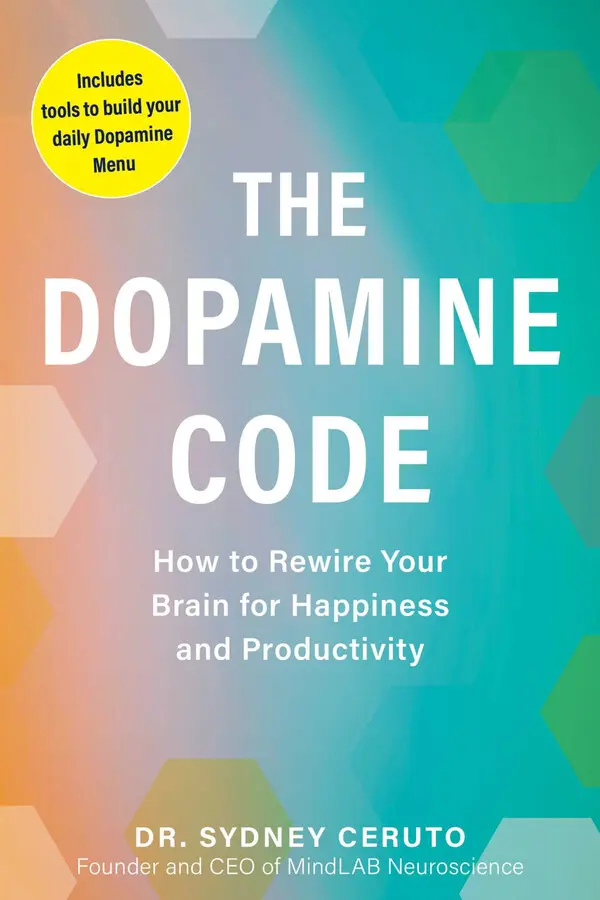
Dr. Ceruto holds a PhD in Behavioral & Cognitive Neuroscience from NYU and two Master’s degrees from Yale University. She lectures at the Wharton Executive Development Program at the University of Pennsylvania and has been an Executive Contributor to the Forbes Coaching Council since 2019. Dr. Ceruto is the author of The Dopamine Code (Simon & Schuster, June 2026). She founded MindLAB Neuroscience in 2000 and has spent over 26 years pioneering Real-Time Neuroplasticity™ — a methodology that permanently rewires the neural pathways driving behavior, decisions, and emotional responses.

References

O’Connor, M. F. (2019). Grief: A brief history of research on how body, mind, and brain adapt. Psychosomatic Medicine, 81(8), 731–738. https://doi.org/10.1097/PSY.0000000000000717

Shear, M. K. (2015). Complicated grief. New England Journal of Medicine, 372(2), 153–160. https://doi.org/10.1056/NEJMcp1315618

Eisenberger, N. I. (2012). The pain of social disconnection: Examining the shared neural underpinnings of physical and social pain. Nature Reviews Neuroscience, 13(6), 421–434. https://doi.org/10.1038/nrn3231

Bonanno, G. A. (2004). Loss, trauma, and human resilience: Have we underestimated the human capacity to thrive after extremely aversive events? American Psychologist, 59(1), 20–28. https://doi.org/10.1037/0003-066X.59.1.20

Success Stories

“Every metric was green and I felt nothing. Conventional approaches told me I was 'burned out' or needed gratitude practices — none of it touched the actual problem. Dr. Ceruto identified that my dopamine baseline had shifted so high from constant reward-chasing that normal achievement couldn't register anymore. She recalibrated the reward system itself. I didn't need more success. I needed my brain to actually experience the success I already had.”

Rafael G. — Screenwriter New York, NY

“Outperforming every metric for years and feeling absolutely nothing — no satisfaction, no drive, just a compulsive need to keep going. Executive retreats, meditation protocols, none of it made a difference. Dr. Ceruto identified the dopamine downregulation that was driving the entire pattern. My reward system had essentially gone offline from overstimulation. She didn't teach me to reframe success — she restored the neurochemistry that lets me actually experience it.”

Mikhail D. — Family Office Principal Washington, DC

“Anxiety and depression had been running my life for years. Dr. Ceruto helped me see them not as permanent conditions but as neural patterns with identifiable roots. Once I understood the architecture, everything changed.”

Emily M. — Physician Portland, OR

“I came to Dr. Ceruto thinking I needed help with my career, but she quickly recognized that the real roadblocks were the relationships I was choosing and how I dealt with conflict. With her support, I finally left unhealthy situations I’d struggled to end for years. She helped me identify deep-seated patterns I didn’t realize were holding me back. I never feel rushed, and she follows up with detailed written insights I reflect on for weeks. She uncovered major blockers I would never have spotted alone.”

Rachel L. — Brand Strategist Montecito, CA

“I attended a lecture Dr. Ceruto was giving at my graduate school in New York and was blown away by how much I could relate to. Everything about the mind and brain made sense in a way it never had before. I booked a consultation that same day. I was confused, anxious, and unable to commit to any decision — my career and personal life were at a standstill. Dr. Ceruto changed my entire perspective. She utilizes cognitive neuroscience so practically that results come almost immediately.”

Patti W. — Graduate Student Manhattan, NY

“My communication was damaging every relationship in my professional life and I couldn't see it. Dr. Ceruto's neuroscience-based approach didn't just improve how I communicate — it rewired the stress response that was driving the pattern in the first place. The people around me noticed the change before I fully understood what had happened. That tells you everything.”

Bob H. — Managing Partner London, UK

Frequently Asked Questions About Grief & Loss

Is this grief counseling or therapy?

Neither. What I do at MindLAB Neuroscience is not therapy, not grief counseling, and not a clinical treatment model. It is precision work at the level of the neural architecture that grief recruits — the prediction system, the attachment circuitry, the pain processing architecture, the self-representation networks. The goal is not to help you feel better about the loss or to provide emotional support, though the work often has those effects. The goal is to enable the neural model update that grief requires to complete — removing the obstacles that have caused it to stall, and working at the structural level where the stalling originates.

How long should grief last? Is there a point at which it becomes a problem?

There is no accurate timeline for grief, and there is no point at which grief's duration alone constitutes a problem. What matters is whether the grief is moving — gradually, nonlinearly, but moving — or whether it has stalled. Moving grief is painful, disruptive, and consuming, but the acute intensity changes over time, even if the change is slow and the grief itself does not disappear. Stalled grief maintains the same intensity over time, recurs with the same acuteness months or years later, and produces a sense that there is no arc — that the pain will simply continue without change. If your grief feels stalled rather than moving, that is the relevant signal. Duration alone is not the measure.

Why does grief come in waves — why is it not steady and predictable?

Because grief is organized by the brain's prediction system, not by a linear emotional process. The prediction errors — the moments where the brain generates a wanting signal for someone who is no longer present — are triggered by the stimuli that were associated with that person during their presence. A song, a smell, a time of day, a location, a particular quality of light. These stimuli activate the embedded predictions and produce the acute experience of missing. The brain cannot make these associations disappear on command; they are encoded in neural networks that persist. Over time, as the model update proceeds, the stimuli lose their power to produce the full acute response. But until the update completes, the waves are not random — they are the prediction system encountering the inputs that are connected to what was lost.

Can I start the strategy call while I am in acute grief — is that too soon?

The strategy call is a one-hour phone conversation — not in-person, and not a session. It is a precision conversation to understand the specific architecture of what you are carrying and to determine whether what I do is the right fit. If you are in acute grief, the call is not too soon. Understanding the pattern is the first step in working with it. There is no state of grief that is too raw or too recent to begin the process of understanding what the brain is doing and what would help it move. The call costs $250, is not applied toward any program, and will result in a clear recommendation — not a sales process.

What is the difference between grief and depression — they feel similar?

They share overlapping features but originate in different neural events. Grief is the brain's response to a specific loss — the prediction system encountering the mismatch between the model it has built and the reality it must update. Depression is a broader state of neural downregulation — a collapse in motivation architecture, in reward sensitivity, in the brain's capacity to generate anticipation of meaning. Grief can become the entry point into depression when it stalls, when the sustained stress activation of prolonged grief begins to suppress the dopamine system and the motivation architecture. When that happens, what began as grief has produced something additional that requires its own precision. Distinguishing between them accurately is part of what the initial conversation is designed to establish.

I am grieving something that other people do not recognize as a real loss. Does that disqualify it?

No. Disenfranchised grief — loss that the surrounding culture does not formally recognize, acknowledge, or provide ritual for — is neurologically identical to recognized loss. The anterior cingulate's error-detection signal does not require social validation to fire. The nucleus accumbens does not require the loss to be publicly acknowledged to generate wanting for what is absent. The grief for a relationship the culture did not sanction, for a role that was not recognized as defining, for a version of yourself that no longer exists, for a place or community or way of life — these are losses, they produce real grief, and they stall more often than recognized losses because the social scaffolding that supports the model update is absent. The absence of cultural recognition makes the work more specific, not less valid.

I have been in therapy for grief before and it did not help. Why would this be different?

Because the intervention targets a different level. Conventional therapeutic approaches to grief often work at the level of processing the emotional experience — creating space for the feelings, reframing the narrative, building coping strategies that help manage the pain. These are not worthless, and for grief that is moving, they can support the process. For grief that has stalled, they address the surface while leaving the neural architecture intact. The prediction errors continue. The wanting signals continue. The anterior cingulate's error detection continues. My methodology works at the structural level of those systems — not providing an emotional container for the grief, but enabling the neural reorganization that grief requires to complete. That is a different kind of work, with a different target.

Does grief ever fully resolve, or does it stay with you forever?

Both things are true, and they are not contradictory. The loss does not disappear — the neural networks encoding the relationship, the memory, the significance of what was lost remain. The model the brain built around that person or relationship does not get erased; it gets updated. What changes when grief moves is the relationship between those encoded predictions and present reality — the acute mismatch signal quiets as the model updates, the wanting shifts from a frantic reaching into void toward the stable ache of memory, and the person becomes integrated into the model of the world as someone who was present and is now gone rather than someone who was expected and has not yet arrived. The love remains. The loss remains. The acute prediction-error pain that characterizes stuck grief does not have to remain with it.

How does the strategy call work, and what happens after it?

The strategy call is a one-hour conversation by phone. You will not be asked to perform or to present your grief in any particular way. The conversation is designed to establish the specific architecture of what you are carrying — the nature of the loss, the ways the grief has manifested, the points where it appears to have stalled, the history that contextualizes it. At the end of the call, I give a clear assessment of what the neural pattern appears to be and whether my methodology is the appropriate fit. If it is, we discuss next steps. The call costs $250 and is not credited toward any program investment. It is a standalone hour of precision — not a sales conversation, not a free consultation.

Is grief work appropriate if the loss happened years ago?

Yes. The neural architecture does not have a statute of limitations. Grief that has been stalled for two years or twenty years is still grief — the prediction system is still generating error signals, the model update is still incomplete, the wanting signals are still firing into the same void. In some ways, long-stalled grief is more precisely targetable because the pattern has had time to consolidate and the specific obstacles to reorganization are often clearer. The duration of the stalling does not diminish the possibility of the model update completing; it specifies where the intervention needs to be targeted. The length of time the grief has been present is not a reason to leave it untreated.

Also available in: Miami · Wall Street · Beverly Hills · Lisbon

Take the First Step

The Strategy Call is a focused conversation with Dr. Ceruto that maps the specific neural mechanisms driving your concerns and determines the right path forward.

Book a Strategy Call
MindLAB Neuroscience consultation room
Locations

The Intelligence Brief

Neuroscience-backed analysis on how your brain drives what you feel, what you choose, and what you can’t seem to change — direct from Dr. Ceruto.