Attention Regulation in Wall Street

Multi-screen trading floors are designed to keep attention reactive. When your regulation architecture is already compromised, the environment doesn't give the prefrontal system a chance.

Attention that goes where it wants, not where you need it — that is not a willpower problem. It is a regulation problem.

At MindLAB Neuroscience, I work at the neural architecture where attention control actually operates.

Book a Strategy Call

Key Points

  1. The salience assignment is not a conscious decision — it is a neural calculation performed below the level of awareness and delivered to the attention system as a fait accompli.
  2. The dopamine system's salience assignment does not disappear — novelty will always carry some priority advantage in the brain's attention architecture.
  3. The metabolic cost of sustained top-down override without dopamine support is the specific fatigue profile most people with attention regulation difficulty know as executive exhaustion: the feeling of having worked hard while accomplishing almost nothing.
  4. The dopamine system does not only govern reward and motivation — it governs the salience of inputs: which signals receive priority processing.
  5. The distinction between top-down and bottom-up attention is not a conceptual nicety — it is the architectural fact on which all attention regulation problems depend.
  6. The prefrontal cortex — the brain's primary system for top-down, goal-directed attention control — competes continuously with bottom-up attention systems that respond to external salience: novelty, movement, emotional relevance, social signals.
  7. Stimulus-driven attention wins by default, not because the goal matters less, but because the override circuitry is not functioning with adequate reliability.

What Attention Regulation Actually Is

“The salience assignment is not a conscious decision — it is a neural calculation performed below the level of awareness and delivered to the attention system as a fait accompli.”

Attention is not a single thing. It is a system of competing and cooperating processes. The capacity to direct focus toward a chosen target, to sustain that direction over time, to filter irrelevant inputs while keeping the target active, and to shift deliberately when context demands it. Each of these is a separable function with its own neural substrate, and each can fail independently of the others.

When people describe an attention problem, they typically mean some combination of all four: the intention to focus on something, the inability to sustain it, the constant capture by irrelevant inputs. The difficulty returning once pulled away. The experience is that attention does not follow instruction — it follows whatever is loudest, most novel, most emotionally charged, or most immediately rewarding. The goal-directed system loses to the stimulus-driven system, repeatedly and without apparent recourse.

The reason this happens is not motivational. It is architectural. The prefrontal cortex — the brain’s primary system for top-down, goal-directed attention control — competes continuously with bottom-up attention systems that respond to external salience: novelty, movement, emotional relevance, social signals. In a well-regulated system, the prefrontal system wins when the goal is important enough to justify the override cost. When prefrontal regulatory capacity is compromised, the competition is not evenly weighted. Stimulus-driven attention wins by default, not because the goal matters less, but because the override circuitry is not functioning with adequate reliability.

The Dopamine Variable

Dopamine is central to attention regulation in a way that is rarely explained clearly. The dopamine system does not only govern reward and motivation — it governs the salience of inputs: which signals receive priority processing. Are filtered, and how urgently the brain orients toward new versus ongoing information.

When dopamine signaling is dysregulated, the salience system misfires. High-novelty, high-reward inputs receive exaggerated priority regardless of their relevance to current goals. Low-novelty inputs — including tasks that are important but not immediately stimulating — fail to generate adequate dopamine signal to sustain the prefrontal engagement needed to maintain focus. The result is the familiar pattern: impossible to start the thing that matters, impossible to stop doing the thing that doesn’t. Both reflect the same underlying regulation failure — the brain’s salience system is assigning priority based on dopamine-driven excitement rather than on chosen importance.

This is why the regulation problem is not uniform. Some tasks generate sufficient dopamine signal to produce locked, sustained attention — what many people with attention dysregulation know as hyperfocus. Others generate almost none and cannot be initiated or sustained regardless of genuine intention, genuine importance, or genuine effort. The inconsistency is not laziness. It is a direct readout of the dopamine system’s salience-assignment architecture.

Stimulus-Driven Versus Goal-Directed Attention

The distinction between stimulus-driven and goal-directed attention is the structural core of regulation failure. In a well-calibrated system, these two modes operate in dynamic balance: the bottom-up system alerts to genuinely important environmental changes, the top-down system evaluates whether reorientation is warranted, and attention shifts or holds accordingly. The system is responsive without being reactive, focused without being rigid.

When top-down control is compromised, attention becomes primarily reactive. Every notification is processed as a potential priority shift. Every ambient sound triggers brief reorientation. Every emotionally relevant thought that arises during a task becomes a potential exit point. The cognitive cost of this continuous reactivity is substantial — each interruption requires not just the time to process the intrusion. The additional cost of reorienting back to the original task, which itself requires re-establishing the context, the working memory state, and the prefrontal engagement that existed before the interruption. Research on task-switching indicates that re-engagement after interruption takes longer than the interruption itself.

For people with attention regulation difficulties, the cumulative cost of this reactive pattern is exhaustion — not from working too hard at any single task, but from the continuous overhead of reorientation. The end of the day has not produced proportionate output relative to the time and intention invested. A significant fraction of the cognitive resource was consumed by the regulation overhead rather than by the work itself.

Top-Down Versus Bottom-Up Attention

The distinction between top-down and bottom-up attention is not a conceptual nicety — it is the architectural fact on which all attention regulation problems depend. Understanding it changes how the problem is framed and what solving it actually means.

Bottom-up attention is involuntary, stimulus-driven, and fast. It is the system that orients the head toward a sudden loud sound before any deliberate decision has been made, that pulls the eyes toward movement at the periphery of vision, that flags an emotionally salient word in a conversation you were not intending to listen to. This system evolved to keep organisms alive in environments where unexpected inputs are often threats. It is fast, automatic, and not under voluntary control by design. You do not decide to notice the fly crossing your visual field. The bottom-up system decides for you.

Top-down attention is deliberate, goal-directed, and slow. It is the system that selects a target — a document, a task, a conversation. Allocates processing resources to it, suppresses competing inputs, and sustains that allocation against the continuous background pressure of bottom-up capture events. This system is metabolically expensive. It draws on prefrontal capacity. It fatigues. And in a well-regulated brain, it wins most of the competition with the bottom-up system when the task warrants the override. But only when the prefrontal system is functioning with sufficient reliability to sustain the override cost.

When top-down control is compromised, the competition’s outcome shifts. The bottom-up system does not become stronger — it simply wins more often because the opponent has weakened. Every notification, every ambient sound, every emotionally charged thought that arises mid-task is a bottom-up capture event that the weakened prefrontal system cannot reliably suppress. The task is not abandoned voluntarily. It is captured involuntarily, repeatedly, by a system operating exactly as designed — in an environment that was never designed to be managed by top-down control alone.

This framing matters for one practical reason: if the problem is a weakened top-down system, the solution is not reducing the number of bottom-up events, though that has marginal value. The solution is rebuilding the top-down system’s capacity to sustain its override function. That is an architectural intervention, not a behavioral one. It addresses the competitor that has lost its strength, not merely the opponent it is losing to.

Why the Modern Environment Overwhelms Attention Regulation

The human attention system evolved over hundreds of thousands of years in an environment whose sensory density, informational bandwidth, and interruption frequency were categorically different from the current one. The bottom-up attention system is calibrated for that prior environment: it treats novelty, movement, and social signals as high-priority inputs because in the ancestral context, those were the inputs most likely to carry survival-relevant information. The system is not miscalibrated for the ancestral environment. It is precisely calibrated for it. The problem is the environment changed faster than the architecture could adapt.

The modern information environment is not merely busier than the ancestral one. It has been deliberately engineered to exploit the attention architecture’s evolved properties. Social media platforms employ teams of engineers whose explicit mandate is to maximize the frequency and intensity of bottom-up capture events. Variable reward schedules — the unpredictable delivery of social validation, novel content, or surprising information — are engineered into platform mechanics because variable reinforcement generates the most reliable and the most compulsive orientation response. Notification systems are designed to interrupt rather than to wait because the interruption is the product. Infinite scroll eliminates the natural stopping cues that allowed disengagement before the next capture event. Every structural feature of the major digital platforms is an attack on the top-down attention system using tools calibrated to the bottom-up system’s specific vulnerabilities.

The open-plan office represents a parallel development in professional environments. Open plans were sold as collaboration infrastructure. They function, from an attention regulation perspective, as high-density bottom-up capture environments: variable auditory inputs from ambient conversations, visual activity across the full field of view, social monitoring overhead from operating in an evaluation-visible space. The peer interruption culture that open plans normalize. The acoustic and visual field of an open-plan office produces a continuous orientation-response load that the top-down system must continuously manage. For a well-regulated system, this is demanding but manageable. For a regulation-compromised system, it is an environment that defeats sustained focus structurally, regardless of intention or effort.

The meeting culture of most professional organizations adds a third dimension. Calendar fragmentation — the pattern in which no two-hour block of uninterrupted focus time is available because the day is divided into meeting-defined segments. Is not merely an inconvenience for people who prefer deep work. It is an architectural incompatibility with the way top-down sustained attention actually functions. Re-engagement after interruption carries a cognitive cost — the time required to reload working memory context, re-establish prefrontal engagement, and return to the depth of processing available before the interruption. When interruptions occur every 45 minutes, the available sustained-focus window never reaches the depth where complex work becomes possible. The problem is not that people are bad at managing their calendars. The problem is that the calendar structure has been organized around meeting-driven availability without accounting for the cognitive cost of the interruption model it imposes.

The Dopamine System and Attention Priority

Dopamine’s role in attention regulation is more precise — and more central — than most accounts suggest. The conventional summary is that dopamine governs motivation and reward. This is accurate as far as it goes. What it misses is the specific mechanism by which dopamine shapes attention: through salience-weighting of incoming information at the level of the striatum and prefrontal inputs before the information reaches conscious processing.

The dopamine system functions as a priority filter. When a novel, high-reward, or emotionally significant input arrives, dopamine release signals to the attentional architecture that this input warrants elevated processing priority. The prefrontal system is recruited to orient toward it. Competing inputs are suppressed. The salience assignment is not a conscious decision — it is a neural calculation performed below the level of awareness and delivered to the attention system as a fait accompli. By the time you notice that your attention has shifted to the notification sound, the dopamine-mediated salience calculation has already been made and the orientation is already underway.

For attention regulation, the critical implication is that the availability of top-down focus is not primarily a function of willpower or intention. It is a function of the dopamine system’s current salience-assignment output for the task at hand. A task that generates strong dopamine signal — because it is novel, because it carries real stakes. It is socially embedded, because it is immediately rewarding — receives the salience weighting that sustains prefrontal engagement. A task that generates weak dopamine signal — because it is familiar, because its reward is deferred. It lacks immediacy — does not receive the salience weighting that the top-down system needs to maintain focus. The prefrontal system cannot override this indefinitely through effort alone. The metabolic cost of sustained top-down override without dopamine support is the specific fatigue profile most people with attention regulation difficulty know as executive exhaustion: the feeling of having worked hard while accomplishing almost nothing.

The hyperfocus paradox is the clearest demonstration of this mechanism. A person who cannot sustain thirty minutes of focus on a report that needs to be done can sustain six uninterrupted hours on a problem that has captured the dopamine system’s interest. The attention resource is not absent — the salience assignment is the difference. This is why the problem cannot be solved by trying harder. Effort is a top-down input. Dopamine salience is the prerequisite that determines whether the top-down system has the neurochemical support to operate. Trying harder to focus on a task the dopamine system has rated low-priority is like trying harder to feel hungry for food you do not want. The effort is real, but it is competing against a system that does not respond to effort commands.

Attention Fatigue Is Real

Attention fatigue is not a motivational state. It is a physiological condition with identifiable neural underpinnings, and conflating it with tiredness, laziness, or lack of commitment produces the wrong response — which typically makes the condition worse.

The prefrontal system’s regulatory function is metabolically expensive. Sustained top-down attention requires continuous glucose supply, continuous neurotransmitter cycling, and the ongoing suppression of bottom-up inputs that would otherwise capture attention. This is active work at the cellular level. Like any biological system doing active work, it depletes with sustained use and requires recovery time to restore capacity. The depletion is not linear — the rate at which prefrontal capacity degrades under load depends on the intensity of the regulatory demand, the baseline health of the system, the presence of compounding loads (emotional regulation, working memory, decision-making all draw from overlapping prefrontal resources). The recovery conditions between demands.

For people with compromised attention regulation architecture, the prefrontal system begins each bout of top-down focus at a lower effective capacity than a well-regulated system. And depletes faster, because the regulation overhead for each interruption is higher. The reactive attention pattern described earlier is not merely frustrating. It is metabolically expensive in a way that a smoother regulation cycle is not. Each time a bottom-up capture event pulls attention away from the target and the top-down system must re-engage, the re-engagement costs prefrontal resources that were already limited. The cumulative cost of a day organized around continuous small interruptions — which is the standard experience in most modern professional environments. Is a level of prefrontal depletion that produces the cognitive shutdown most people describe as a late-afternoon attention cliff.

Mahogany desk with crystal brain sculpture and MindLAB journal in warm lamp light surrounded by leather-bound volumes in institutional Wall Street study

The attention cliff is not laziness. It is not low motivation. It is a depleted regulatory system that has spent its available resources managing an interruption-dense environment and has nothing remaining for the demands of the remaining hours. The response that most people apply — caffeine, forcing through, self-criticism, attempting to work harder — addresses none of the actual mechanisms. Caffeine temporarily increases arousal without restoring prefrontal regulatory capacity. Forcing through draws on a depleted resource and deepens the depletion. Self-criticism adds an emotional regulation load on the same prefrontal system that is already depleted. The day ends worse than it would have if the depletion had been recognized for what it is and managed accordingly.

Rebuilding the regulation architecture does not eliminate attention fatigue. The prefrontal system will always have a capacity limit. What changes is the starting capacity, the depletion rate, and the efficiency of the recovery cycle. A recalibrated regulation system handles the same interruption-dense environment with lower per-interruption overhead — meaning more capacity remains available throughout the day, and the depletion cliff, when it arrives, arrives later and is less severe.

Why Standard Productivity Approaches Fail

Most productivity approaches address attention at the level of behavior: time-blocking, distraction elimination, accountability systems, pomodoro timers, task managers. These are structural compensations for a regulation deficit — they reduce the demands on the compromised system rather than rebuilding the system’s capacity. They can produce real improvements in output, particularly in controlled environments. They do not change the underlying regulation architecture.

The limitation becomes visible under conditions of stress, novelty, or environmental disruption — precisely the conditions in which the productivity structure collapses. A person with robust attention regulation can adapt when the structure fails because their regulation capacity can absorb the demand. A person managing a regulation deficit through structural compensation loses the structure and the underlying deficit is immediately exposed. The approach was never addressing the root problem; it was managing around it.

Stimulant medications operate differently — they act directly on the dopamine and norepinephrine systems to increase the signal-to-noise ratio of prefrontal processing. They address the architectural level. Their limitations are also architectural: they work while present and stop working when absent, they are not precision interventions and affect the entire system rather than the specific regulatory circuits that need recalibration. They carry the cognitive and physiological costs of systemic stimulation. They are the most effective pharmacological tool currently available for the attention regulation problem. They are not the same thing as rebuilding the regulation architecture through targeted neural work.

What Changes When Regulation Is Rebuilt

When the prefrontal system’s capacity to sustain goal-directed attention is rebuilt, the experience of attention changes qualitatively — not only in output, but in the phenomenological texture of daily cognitive life. Tasks can be initiated without the ritual of avoidance, negotiation, and forced start. Sustained engagement is available for work that is important rather than only for work that is immediately stimulating. Interruptions occur and attention returns without the full overhead of a major reorientation event.

The dopamine system’s salience assignment does not disappear — novelty will always carry some priority advantage in the brain’s attention architecture. But the ratio shifts. The goal-directed system regains the capacity to override stimulus-driven capture when the task warrants it, and the override does not require extraordinary effort. The cognitive resource that was previously consumed by regulation overhead becomes available for actual work.

What this produces is not a version of attention that never wanders. The goal is not robotic focus. It is attention that responds to direction — that goes where you intend it to go, holds as long as you need it to hold. Returns when it strays without requiring a full re-engagement ritual each time. Attention that you can trust to function as a tool rather than experiencing as an adversary you are continuously trying to outmaneuver.

Marker What You Experience What's Happening Neurologically What We Restructure
Attention Regulation Actually Is The experience is that attention does not follow instruction — it follows whatever is loudest, most novel, most emotionally charged, or most immediately rewarding. The prefrontal cortex — the brain's primary system for top-down, goal-directed attention control — competes continuously with bottom-up attention systems that respond to external salience: novelty, movement, emotional relevance, social signals. The goal-directed system loses to the stimulus-driven system, repeatedly and without apparent recourse.
Dopamine Variable The result is the familiar pattern: impossible to start the thing that matters, impossible to stop doing the thing that doesn't. The dopamine system does not only govern reward and motivation — it governs the salience of inputs: which signals receive priority processing. Dopamine is central to attention regulation in a way that is rarely explained clearly.
Stimulus-Driven Versus Goal-Directed Attention The distinction between stimulus-driven and goal-directed attention is the structural core of regulation failure. The additional cost of reorienting back to the original task, which itself requires re-establishing the context, the working memory state, and the prefrontal engagement that existed before the interruption. In a well-calibrated system, these two modes operate in dynamic balance: the bottom-up system alerts to genuinely important environmental changes, the top-down system evaluates whether reorientation is warranted, and attention shifts or holds accordingly.
Top-Down Versus Bottom-Up Attention You do not decide to notice the fly crossing your visual field. This system evolved to keep organisms alive in environments where unexpected inputs are often threats. Understanding it changes how the problem is framed and what solving it actually means.
the Modern Environment Overwhelms Attention The human attention system evolved over hundreds of thousands of years in an environment whose sensory density, informational bandwidth, and interruption frequency were categorically different from the current one. The bottom-up attention system is calibrated for that prior environment: it treats novelty, movement, and social signals as high-priority inputs because in the ancestral context, those were the inputs most likely to carry survival-relevant information. The problem is the environment changed faster than the architecture could adapt.
Dopamine System and Attention Priority By the time you notice that your attention has shifted to the notification sound, the dopamine-mediated salience calculation has already been made and the orientation is already underway. When a novel, high-reward, or emotionally significant input arrives, dopamine release signals to the attentional architecture that this input warrants elevated processing priority. Dopamine's role in attention regulation is more precise — and more central — than most accounts suggest.

Why Attention Regulation Matters in Wall Street

Attention Regulation on Wall Street

The Wall Street attention environment is structurally paradoxical: it demands extraordinary sustained focus on specific information streams while simultaneously generating a sensory and informational load that defeats sustained focus by design. Multi-monitor setups displaying simultaneous price action across instruments, terminal alerts for conditions that may require immediate response, Bloomberg chat traffic, voice communication from across the floor. The constant peripheral awareness that any of the incoming streams could represent something that requires immediate attention allocation. This is an environment that has deliberately organized itself to keep attention in a state of prepared reactivity rather than settled focus.

For people with compromised attention regulation architecture, this environment is not merely demanding. It is an environment that has been engineered to exploit the same regulatory failure they are already managing. The bottom-up attention system — the stimulus-driven system that reacts to novelty, urgency, and salience — is continuously being activated by an environment that has been optimized to activate it. The prefrontal system’s goal-directed override, already compromised, is being asked to sustain directed attention against a continuous flood of high-quality competing inputs. The cognitive overhead is compounded by the performance stakes: missed information carries financial and professional consequences that themselves become attention loads.

Stimulant use among finance professionals on Wall Street is neither secret nor surprising. Prescription stimulant misuse — Adderall and modafinil are the most commonly cited. Is documented across the finance sector as an attention management strategy in a population for whom the performance demands of sustained multi-stream monitoring are genuine and the consequences of attention failure are immediate and visible. The stimulant addresses the dopamine signaling deficit temporarily: it raises the prefrontal system’s capacity to maintain goal-directed attention against competing inputs. It does not recalibrate the regulation architecture. When it wears off, the underlying deficit remains. And in environments where stimulant use has been sustained over years, there is evidence of downstream dopamine system adaptation that can deepen the regulation problem rather than resolve it.

The post-trade exhaustion pattern is recognizable to most finance professionals but rarely connected to attention regulation explicitly. The end of a trading session that required sustained multi-stream monitoring produces a specific cognitive fatigue. Not the fatigue of physical exertion, but the fatigue of a system that has been running regulation overhead at high intensity for hours. Reorientation costs multiply; each interruption required the full re-engagement cycle; the filtering system has been continuously suppressing irrelevant inputs. And the emotional regulation demands of a high-stakes, evaluation-visible environment added their own load on the same prefrontal resources that attention regulation draws from. The depletion is real, neural, and not resolved by caffeine.

JPMorgan’s five-day return-to-office policy, enforced from March 2025. The broader industry reversion to floor-presence culture has produced a specific attention regulation challenge for people who had adapted to remote work environments during the 2020–2022 period. Remote work, for many, represented the only attention environment they had ever occupied that they could actually regulate: noise-canceling headphones, controlled visual field, no ambient floor conversation, no performance visibility of attention behavior. The return to the floor did not merely change a preference. It removed the accommodations that had been making attention regulation workable and replaced them with an environment that the regulation deficit has no natural tools to manage.

The trading floor interruption culture — where pulling a colleague’s attention for a quick question is normalized, where markets don’t recognize personal focus states, where the hierarchy of urgency is determined by whoever is loudest in the moment. Is a continuous attack on whatever sustained attention the prefrontal system is attempting to maintain. My work with people in the Wall Street environment addresses the regulation architecture that this environment is continuously testing — not the habits and structures above it, but the neural substrate where regulation actually operates.

Dr. Sydney Ceruto, PhD — Founder, MindLAB Neuroscience

Dr. Sydney Ceruto, PhD — Founder & CEO, MindLAB Neuroscience

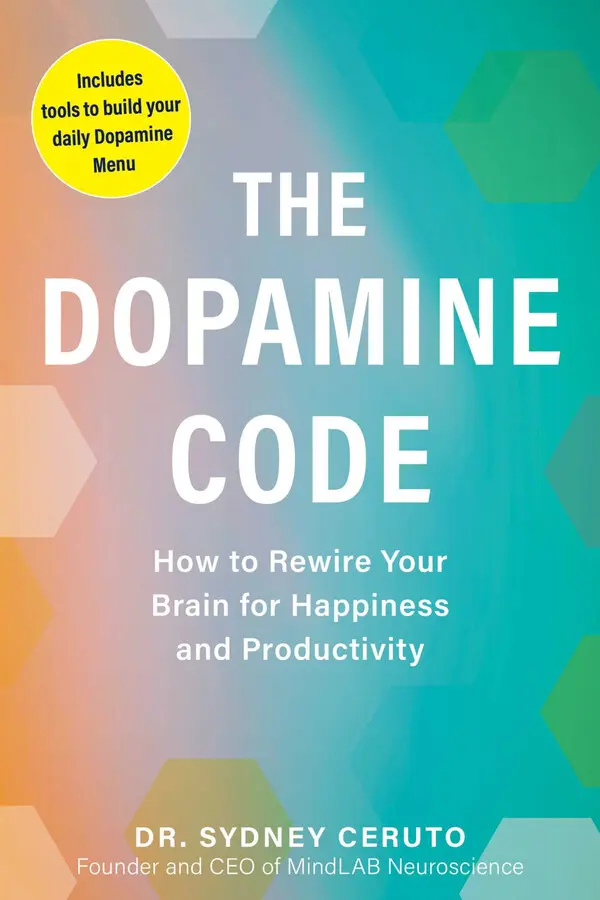
Dr. Ceruto holds a PhD in Behavioral & Cognitive Neuroscience from NYU and two Master’s degrees from Yale University. She lectures at the Wharton Executive Development Program at the University of Pennsylvania and has been an Executive Contributor to the Forbes Coaching Council since 2019. Dr. Ceruto is the author of The Dopamine Code (Simon & Schuster, June 2026). She founded MindLAB Neuroscience in 2000 and has spent over 26 years pioneering Real-Time Neuroplasticity™ — a methodology that permanently rewires the neural pathways driving behavior, decisions, and emotional responses.

References

Posner, M. I., & Petersen, S. E. (1990). The attention system of the human brain. Annual Review of Neuroscience, 13, 25–42. https://doi.org/10.1146/annurev.ne.13.030190.000325

Arnsten, A. F. T. (1998). Catecholamine modulation of prefrontal cortical cognitive function. Trends in Cognitive Sciences, 2(11), 436–447. https://doi.org/10.1016/S1364-6613(98)01240-6

Barkley, R. A. (1997). Behavioral inhibition, sustained attention, and executive functions: Constructing a unifying theory of ADHD. Psychological Bulletin, 121(1), 65–94. https://doi.org/10.1037/0033-2909.121.1.65

Schultz, W. (2007). Multiple dopamine functions at different time courses. Annual Review of Neuroscience, 30, 259–288. https://doi.org/10.1146/annurev.neuro.28.061604.135722

Success Stories

“The moment two priorities competed for bandwidth, my attention collapsed — and I'd convinced myself my brain was fundamentally broken. Dr. Ceruto identified the specific attentional pattern that was causing the collapse and restructured it. My prefrontal cortex wasn't broken. It was misfiring under competing demands. Once that pattern changed, everything I was trying to hold together stopped requiring so much effort.”

Rachel M. — Clinical Researcher Boston, MA

“Color-coded calendars, alarms, accountability partners — I'd built an entire scaffolding system just to stay functional, and none of it addressed why my brain couldn't sequence and prioritize on its own. Dr. Ceruto identified the specific prefrontal pattern that was misfiring and restructured it. I don't need the scaffolding anymore. My brain actually does what I need it to do.”

Jordan K. — Venture Capitalist San Francisco, CA

“Every system, every supplement, every productivity method I tried collapsed within weeks — and nothing held because nothing addressed why my attention kept fragmenting. Dr. Ceruto identified the dopamine regulation pattern that was hijacking my prefrontal cortex every time I needed sustained focus. She didn't give me another workaround. She restructured the architecture underneath. My brain holds now. That's not something I ever thought I'd be able to say.”

Derek S. — Film Producer Beverly Hills, CA

“Everyone around me had decided I was just 'wired differently' — creative but unreliable, brilliant but scattered. Years of trying to build systems around the chaos never worked because nobody identified what was actually driving it. Dr. Ceruto mapped the default mode network pattern that was hijacking my focus and recalibrated it at the source. The ideas still come fast — but now my prefrontal cortex decides what to do with them, not the noise.”

Jonah T. — Serial Entrepreneur New York, NY

“The numbness crept in so gradually I didn't notice until I couldn't feel anything — not stress, not connection, not even relief when things went well. Dr. Ceruto identified it as a dorsal vagal shutdown — my nervous system had flatlined as a survival strategy. Nothing I'd tried before had even named the problem. Within ninety days, the signal came back. I feel things again, clearly and without overwhelm.”

Marcus H. — Fund Manager Dallas, TX

“I struggled with debilitating anxiety for years, trying countless therapies and medications with little success. Finding Dr. Ceruto and her neuroscience-based approach was truly life-changing. From our very first session, her deep knowledge of brain science and how it applies to anxiety gave me real hope. What sets her apart is that perfect blend of expertise and compassion — she genuinely cared about my progress and responded quickly even outside of our scheduled sessions. I can now enjoy social situations and excel at work.”

Brian T. — Architect Chicago, IL

Frequently Asked Questions About Attention Regulation

What is the difference between attention regulation and attention deficit?

Attention deficit framing suggests a quantity problem — not enough attention to go around. Attention regulation is a more accurate description of what is actually happening: the brain's capacity to direct, sustain, and shift attention intentionally is compromised, but the attentional resource itself is not absent. People with regulation difficulties can often sustain extraordinary focus on certain inputs — ones that generate sufficient dopamine-driven salience — while being unable to maintain focus on others despite genuine effort and importance. The inconsistency is the hallmark of a regulation problem, not a deficit. A deficit would be uniform. Regulation failure is selective, driven by the brain's salience-assignment architecture rather than by the quantity of available attention.

Why can I focus intensely on some things but not on others?

Because focus availability is not primarily determined by importance or intention — it is determined by the dopamine system's salience assignment. The dopamine system modulates which inputs receive priority processing in the attention architecture, and when that system is dysregulated, high-novelty and high-reward inputs generate the neurochemical signal needed to sustain prefrontal engagement while important-but-low-stimulation tasks do not. The result is the experience most people with attention regulation difficulty know well: locked-in focus on something that has captured the dopamine system's interest, and inability to initiate or sustain focus on something that matters but does not generate the same signal. This is not motivational. It is the direct readout of the dopamine system's current salience-assignment function.

How does constant digital stimulation affect attention regulation?

Digital platforms — particularly social media, messaging, and notification-driven applications — are architecturally designed to exploit the dopamine system's novelty-salience bias. Variable reward schedules, social comparison triggers, and infinite scroll interfaces generate dopamine-driven attention capture by repeatedly activating the brain's orientation response. For a regulation-compromised system, this represents a continuous attack on the prefrontal system's capacity to maintain goal-directed attention. Each notification is not merely a distraction — it is a dopamine-mediated salience event that reorients the bottom-up attention system toward the notification and away from whatever the top-down system was attempting to maintain. The cumulative effect of sustained digital stimulation at this frequency is a habituated expectation of rapid input change that makes sustained single-task focus increasingly difficult to access.

What role does the prefrontal cortex play in attention regulation?

The prefrontal cortex is the primary system for top-down, goal-directed attention control — the brain's mechanism for sustaining focus on a chosen target, filtering irrelevant inputs, and overriding the stimulus-driven bottom-up attention system when the goal warrants it. When prefrontal regulatory capacity is compromised, the competition between goal-directed and stimulus-driven attention is not evenly weighted: bottom-up capture wins by default, not because the goal is unimportant, but because the override circuitry is not operating with sufficient reliability. Rebuilding prefrontal regulatory capacity is central to what changes when attention regulation is addressed at the architectural level rather than managed through behavioral compensation.

Is this therapy?

No. My work is not therapy, and I am not a therapist. I do not diagnose, treat mental health conditions, or provide clinical services. What I do is work at the level of the brain's attention regulation architecture — the prefrontal and dopamine systems that govern where attention goes, how long it holds, and whether it can be redirected without a fight. This is precision neural work targeting the regulation system itself, not a therapeutic relationship organized around processing history or developing coping strategies. The distinction matters because the approach, the methodology, and the outcomes are different. If you need clinical services, I will tell you that directly. If the regulation architecture is what needs work, that is where I operate.

Why don't productivity systems solve the attention regulation problem?

Productivity systems — time-blocking, distraction elimination, accountability structures, task managers — operate above the regulation architecture. They reduce the demands on the compromised system by modifying the environment and adding external structure. They can produce real improvements in output under controlled conditions. What they cannot do is rebuild the prefrontal system's capacity to sustain goal-directed attention, recalibrate the dopamine system's salience assignment, or change the neural ratio between stimulus-driven and goal-directed attention. When the structure fails — under stress, in novel environments, or simply when the scaffolding isn't available — the underlying deficit is immediately exposed. The approach was managing around a problem that hadn't been addressed. My work addresses the architecture the productivity system was compensating for.

How does attention regulation interact with stress and sleep?

Significantly and in both directions. Prefrontal function — which is central to attention regulation — is acutely sensitive to sleep quality and sleep duration. A single night of poor sleep produces measurable degradation in prefrontal capacity, which means the regulation system is operating with reduced reliability the following day. Chronic sleep disruption produces sustained prefrontal impairment that compounds the underlying regulation deficit. Stress operates through a different mechanism: the cortisol response shifts neural resource allocation away from prefrontal processing toward threat-detection systems, which means that a stressed attention regulation system is a doubly compromised one — the regulation architecture is under-resourced at the same time that the threat-detection system is competing for attentional priority. Addressing the regulation architecture in isolation from sleep and stress physiology produces incomplete results.

Can attention regulation actually change in adults, or is this fixed?

It can change. Neuroplasticity — the brain's capacity to reorganize its architecture in response to new experience and targeted intervention — is not age-limited in any way that forecloses the work we are discussing. The prefrontal system retains significant capacity for structural change throughout adulthood. The dopamine system's salience-assignment function can be recalibrated. Patterns that have been running for decades are more embedded and require more foundational work — but duration does not determine whether change is possible. What determines the outcome is whether the work targets the regulation architecture at the level where the pattern operates rather than applying behavioral strategies above it. Compensation strategies applied above a stable deficit produce stable compensation. Targeted work at the architecture level produces genuine change in how the regulation system functions.

What is the Strategy Call and what happens during it?

The Strategy Call is a one-hour phone consultation, at a fee of $250, which does not apply toward any program investment. It is a precision assessment — I evaluate your specific attention regulation pattern, the neural architecture behind it, and whether my methodology is the right fit for your situation. Before the call, I review what you share to confirm I can offer something specifically useful for your pattern. I do not take every inquiry; the call is a genuine assessment, not a formality. During the hour, I assess the architecture of your regulation difficulty, the history and context that shaped it, and what the work would actually involve. If my approach is the right fit, you will leave with a clear picture of the path forward. If it is not, I will tell you that directly rather than proceed with work unlikely to produce what you need.

How do I take the first step?

The entry point is the Strategy Call — one hour by phone, $250, which does not apply toward any program investment. Before the call takes place, I review what you share about your attention regulation experience to confirm that I have something specifically useful to offer. The call is a genuine assessment of fit, not a preliminary step toward a sales conversation. You will come away with a clear understanding of whether my methodology addresses your specific regulation architecture, and if it does, what the work involves and what realistic outcomes look like. If it is not the right fit, I will tell you so and, where possible, point you toward what would be.

Also available in: Miami · Midtown Manhattan · Beverly Hills · Lisbon

Take the First Step

The Strategy Call is a focused conversation with Dr. Ceruto that maps the specific neural mechanisms driving your concerns and determines the right path forward.

Book a Strategy Call
MindLAB Neuroscience consultation room
Locations

The Intelligence Brief

Neuroscience-backed analysis on how your brain drives what you feel, what you choose, and what you can’t seem to change — direct from Dr. Ceruto.