Relationships & Dating in Midtown Manhattan

<p>The pattern keeps repeating. Different person, same outcome.</p><p>Relationship architecture is encoded in the brain. It can be recalibrated.</p>

Relationship patterns are not personality — they are the output of attachment architecture encoded in early experience and maintained by the brain's prediction, reward, and threat-detection systems. The brain builds models of how relationships work based on its earliest attachment experiences, then uses those models to predict and respond to every subsequent connection. Dr. Ceruto's methodology identifies the specific neural architecture maintaining the pattern and intervenes at the structural level — recalibrating the systems that determine how you connect, communicate, and respond to closeness.

Schedule a Strategy Call

Relationship Coaching

The brain builds models of how relationships work from earliest experience, then runs those models in every subsequent partnership. When the model was built on inconsistency or threat, the predictions it generates create the very patterns the person is trying to escape.

Learn more about Relationship Coaching in Midtown Manhattan →

Dating Confidence

Dating confidence is not a mindset — it is the output of how the brain’s threat-detection, reward, and self-evaluation systems interact under romantic pursuit. When any of these systems is miscalibrated, dating produces anxiety and self-sabotage rather than authentic engagement.

Learn more about Dating Confidence in Midtown Manhattan →

Attachment Patterns

Encoded in the brain’s prediction and threat-detection systems during the earliest years — the operating system for every subsequent relationship. These are not personality types. They are neural architectures that were adaptive responses to the environment that built them.

Learn more about Attachment Patterns in Midtown Manhattan →

Communication Breakdown

Not a skills deficit — a threat-response pattern. When the amygdala codes the partner’s tone or topic as a threat, the prefrontal cortex’s capacity for measured response is hijacked. The nervous system has moved from connection mode to protection mode.

Learn more about Communication Breakdown in Midtown Manhattan →

Codependency & Enmeshment

An attachment architecture where the brain’s self-regulation and identity systems have organized around another person. The reward system generates its primary signal from the other person’s approval. This is not excessive caring — it is architecture built in an environment where safety depended on managing another person’s state.

Learn more about Codependency & Enmeshment in Midtown Manhattan →

Trust Rebuilding

Trust is a prediction — the brain’s assessment that another person will behave safely and consistently. When trust is violated, the prediction model updates to code the person as unreliable. Rebuilding requires providing the prediction system with enough corrective experience to update the model.

Learn more about Trust Rebuilding in Midtown Manhattan →

Intimacy Avoidance

The brain’s threat-detection system has learned to code closeness as danger. The withdrawal is not a commitment issue — it is a protective response generated by architecture that learned to treat vulnerability as a precursor to harm. The person wants connection. The nervous system blocks it.

Learn more about Intimacy Avoidance in Midtown Manhattan →

Relationships & Dating in Midtown Manhattan

Midtown Manhattan is the dating app fatigue capital of the United States. The density of the dating market creates a paradox of choice that the brain’s decision-making architecture is not equipped to handle. When options are functionally unlimited, the reward system’s capacity to commit to any single option degrades — because the prediction of a potentially better option is always available. The person who cycles through dates without forming connections is not unable to connect. Their reward system is operating in an environment that continuously signals that something better might be next.

The work-life imbalance that defines Midtown professional culture destroys relationships through a mechanism that is more specific than time pressure. The brain has limited regulatory capacity, and the professional demands of Midtown careers consume that capacity before the person arrives home. The partner who receives what is left after a twelve-hour day in media, advertising, or corporate consulting is not receiving a tired version of their partner. They are receiving a person whose prefrontal regulatory system has been depleted — whose capacity for patience, emotional attunement, and flexible communication has been consumed by the workday.

The roommate-era pattern that Midtown’s cost of living produces extends the developmental period in which young adults are not yet building primary attachment partnerships. The person in their early thirties sharing a three-bedroom apartment is navigating a social environment where relational development is delayed by economic constraints — the relationship milestones that previous generations hit in their twenties are pushed to their mid-thirties, compressing the attachment development timeline and creating pressure that the brain’s relational architecture may not be ready to sustain.

Therapy-language saturation in Manhattan’s dating and relationship culture has created an environment where attachment styles, love languages, and boundary-setting are conversational vocabulary — but the underlying architecture has not changed. The person who can fluently describe their anxious attachment pattern is operating the same architecture they could before they learned the terminology. Language provides a map. It does not recalibrate the territory. The gap between relational vocabulary and relational architecture is particularly visible in Midtown’s psychologically literate population.

Creative industry relationships in Midtown face a specific communication challenge: the emotional labor that creative work requires competes with the emotional labor that relationships require. The writer, editor, or creative director who spends the workday in emotional processing arrives at the relationship emotionally depleted. The partner experiences this as withdrawal or disconnection. What is actually occurring is resource competition — the same neural systems that sustain creative empathy and emotional attunement at work are unavailable for the relationship at the end of the day.


Dr. Sydney Ceruto, PhD — Founder, MindLAB Neuroscience

Dr. Sydney Ceruto, PhD — Founder & CEO, MindLAB Neuroscience

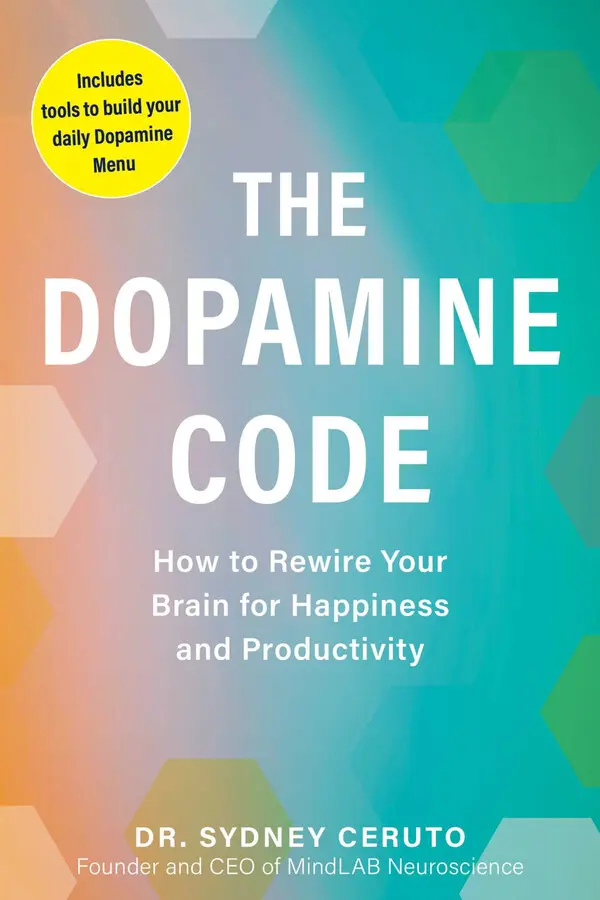
Dr. Ceruto holds a PhD in Behavioral & Cognitive Neuroscience from NYU and two Master’s degrees from Yale University. She lectures at the Wharton Executive Development Program at the University of Pennsylvania and has been an Executive Contributor to the Forbes Coaching Council since 2019. Dr. Ceruto is the author of The Dopamine Code (Simon & Schuster, June 2026). She founded MindLAB Neuroscience in 2000 and has spent over 26 years pioneering Real-Time Neuroplasticity™ — a methodology that permanently rewires the neural pathways driving behavior, decisions, and emotional responses.

References

Bowlby, J. (1969). Attachment and loss: Vol. 1. Attachment. Basic Books.

Coan, J. A., Schaefer, H. S., & Davidson, R. J. (2006). Lending a hand: Social regulation of the neural response to threat. Psychological Science, 17(12), 1032–1039. https://doi.org/10.1111/j.1467-9280.2006.01832.x

Feldman, R. (2017). The neurobiology of human attachments. Trends in Cognitive Sciences, 21(2), 80–99. https://doi.org/10.1016/j.tics.2016.11.007

Tottenham, N., & Galván, A. (2016). Stress and the adolescent brain. Neuroscience & Biobehavioral Reviews, 70, 217–227. https://doi.org/10.1016/j.neubiorev.2016.07.030

Relationships & Dating FAQ — Midtown Manhattan

What is the neuroscience behind relationship patterns?

Relationship patterns are maintained by attachment architecture — neural models built during early development that predict how relationships will unfold. The amygdala assesses whether connection is safe or threatening. The dopamine system generates or fails to generate approach motivation. The prefrontal cortex manages emotional regulation within the relationship. When these systems were calibrated by inconsistent, unavailable, or threatening early environments, they produce predictable patterns: hypervigilance, withdrawal, escalation, or shutdown. These are not personality traits. They are neural architectures running predictions based on the experience that built them.

Is this therapy?

No. This is neuroscience advisory. Therapy typically works at the level of narrative, insight, and communication skills — understanding the pattern, naming the dynamic, developing strategies for managing it. My methodology works at the level of the neural architecture maintaining the pattern. The distinction matters because the systems generating relationship difficulties operate below conscious reasoning. Understanding why you withdraw, escalate, or shut down does not change the architecture that produces the response. Both approaches have value. They operate at different levels.

Do both partners need to participate?

No. I work with individuals on their own relational architecture. The patterns you bring into relationships — the attachment architecture, the threat-detection calibration, the communication defaults — are yours, and they can be addressed regardless of whether the partner participates. When one person's architecture shifts, the relational dynamic changes because the other person is no longer interacting with the same pattern. That said, the work is about your neural architecture, not about fixing the relationship or the other person.

Can relationship patterns that have repeated for decades actually change?

Yes. Neuroplasticity applies to attachment architecture throughout life. Patterns that have repeated across multiple relationships over decades are often deeply embedded in the brain's prediction system, which means the recalibration work is more foundational. But duration and repetition do not determine whether change is possible. What determines the outcome is whether the work targets the level where the pattern lives — the attachment architecture, the threat-detection calibration, the reward system's encoding of what relationships mean.

What happens during a Strategy Call?

The Strategy Call is a one-hour phone consultation at a fee of $250. Before the call, I review what you share about your situation. During the hour, I assess the specific neural patterns maintaining your relational difficulties, the architecture behind them, and whether my methodology is the right fit. If it is, you leave with a clear picture of what the work involves. If my approach is not the right fit, I will tell you directly. The fee does not apply toward any program investment.

How is this different from couples counseling?

Couples counseling works on the relationship — the dynamic between two people, the communication patterns, the conflict management. My work is on the individual neural architecture that each person brings into the relationship. The hypervigilance, the withdrawal reflex, the threat response that turns conversations into conflicts — these are architectural patterns in the individual brain, not relationship dynamics that emerge from the couple. Addressing the architecture in one person changes what that person brings to every relationship, not just the current one.

What if my relationship issues stem from a specific event like infidelity?

Specific events like infidelity create their own neural encoding — the brain updates its prediction model to flag the partner, and sometimes all partners, as untrustworthy. The amygdala's threat-detection threshold lowers for the specific patterns associated with the betrayal. This encoding can be addressed at the architectural level. However, in many cases, the event activated or deepened a pre-existing attachment pattern. The infidelity may have confirmed a prediction the brain was already running — that connection is dangerous, that trust will be violated. The work addresses both the event encoding and the architecture it activated.

How long does it take to see changes in relationship patterns?

The timeline depends on the specific architecture involved. Surface-level patterns — communication reactivity, conflict escalation — often shift relatively quickly because the prefrontal regulatory system can be recalibrated efficiently. Deeper attachment architecture that has been running since early development requires more sustained work because it is more foundational to the brain's self-organizing structure. During the Strategy Call, I assess the specific pattern and provide a realistic timeline.

How do I take the first step?

The entry point is a one-hour Strategy Call by phone, at a fee of $250. I review what you share before the call to confirm I can offer something specifically useful for your pattern. During the hour, I assess the neural architecture behind your relational experience and whether my methodology is the right fit. If it is not, I will say so directly.

Ready to Address What Is Actually Happening

A single phone call with Dr. Ceruto will clarify whether the neural architecture driving your relationship patterns can be recalibrated — and what the path forward looks like.

Schedule a Strategy Call
MindLAB Neuroscience consultation room
Locations

The Intelligence Brief

Neuroscience-backed analysis on how your brain drives what you feel, what you choose, and what you can’t seem to change — direct from Dr. Ceruto.