Communication Breakdown in Wall Street

Finance trains transactional communication all day. The intimate relationship at home requires the opposite. The architecture that runs one cannot run the other without recalibration.

Communication breakdown is not a skills problem. It is a threat-response problem.

I work at the level of neural architecture — the encoded patterns that skills training cannot reach.

Book a Strategy Call

Why Communication Skills Training Doesn’t Fix the Real Problem

The conversation starts fine. Then something shifts — a tone, a look, a particular word — and within seconds the interaction is no longer a conversation. One person is escalating. The other has gone silent. Or both are saying things that neither actually means, in voices that sound like weapons. The words that come out — or fail to — are not failures of communication skill. They are the output of a nervous system that has moved into threat response.

The amygdala — the brain’s threat-detection structure — does not wait for the full sentence to be completed before making its assessment. It is pattern-matching against prior experience at a speed that conscious reasoning cannot match. When a partner’s tone, expression, or topic matches the encoded signature of prior threat, the brain initiates the full protection sequence before the conscious mind has registered what triggered it. Fight: escalation, criticism, contempt, the words chosen for their ability to land damage. Flight: withdrawal, stonewalling, leaving the room. Freeze: shutdown, inability to speak, going blank, the sentences that do not come because the system has taken language offline.

Communication skills training works above this architecture. The listening techniques, the “I” statements, the de-escalation protocols — they all require prefrontal access to deploy. The prefrontal system is the brain’s capacity for measured, flexible, deliberate response. It is also precisely what the threat response hijacks. When the amygdala initiates protection mode, the prefrontal system’s regulatory capacity is the first resource to go offline. The skills that were available in calm conversations are no longer available in the conversations that actually require them. This is not a failure of willingness to use the skills. It is a feature of the neural architecture governing the entire sequence.

How the Threat Response Learns the Partner

The protection response activated during relationship conflict is rarely born in the current relationship. It is an older pattern, encoded in earlier relational environments, that the current relationship has activated. The nervous system learned its model of intimate connection from the earliest relationships where connection was first experienced. That early learning is not stored as a narrative. It is stored as a pattern of neural activation — a set of conditions that, when they appear, initiate the corresponding response.

When a current partner raises their voice, goes quiet, expresses disappointment, or initiates a particular kind of conversation, the response that fires is not simply a reaction to this person in this moment. It is the activation of the archived pattern, running the old program in the current context. The protective response was functional in the environment where it was encoded. It is now running in a relationship where the actual threat level is far lower. But the nervous system cannot make that distinction without explicit recalibration.

This is why couples who have done extensive communication work — who understand their patterns, can name their triggers, have read the books — still find themselves in the same arguments. The understanding is accurate. The insight is real. But insight operates in the prefrontal system. The pattern being run is pre-prefrontal. It activates before the insight can function as a brake. The argument is running on old architecture. The new understanding is watching from the outside.

The Escalation-Withdrawal Loop and Its Neural Mechanics

The most common pattern in communication breakdown is structured, not random. One partner moves toward conflict — escalates, pursues, demands engagement. The other moves away — withdraws, shuts down, becomes unavailable. The pursuing partner experiences the withdrawal as abandonment and escalates further. The withdrawing partner experiences the escalation as assault and withdraws further. The loop self-reinforces because each person’s protective response confirms the other person’s threat model.

What the loop looks like from the outside is two people refusing to communicate. From inside each nervous system, it is two people doing exactly what their threat-detection architecture learned to do in the presence of relational threat. The pursuer’s nervous system learned that engagement — even escalated, even hostile — was safer than the void of disconnection. The withdrawer’s nervous system learned that disappearing was safer than remaining in the activation field. Neither response is irrational given the architecture that encoded it. Both responses are catastrophic for the relationship.

The withdrawal itself is often misread as indifference or choice. It is frequently neither. The freeze response in relational conflict is a physiological state — a shutdown of the systems responsible for language production and social engagement. The person who cannot speak during an intense argument has not chosen silence as a tactic. They have lost access to speech because the nervous system has taken language offline as part of the protection sequence. Demanding verbal engagement from someone in this physiological state is the equivalent of demanding someone run on a broken leg. The inability is structural.

Why Contempt Encodes Differently Than Other Communication Patterns

Contempt is the most corrosive communication pattern in relationships — more damaging than criticism, more predictive of relational collapse than conflict frequency. The neural reason is precise. Contempt does not merely register as a painful interaction. It is processed as a social-threat signal of the highest order. It signals that the person who is supposed to be the source of safety considers you fundamentally inferior, unworthy, or dismissible.

The amygdala processes social exclusion and social humiliation through the same threat architecture it uses for physical danger. Contempt delivers both in a single signal. When contempt is a repeated feature of relational communication — even occasional contempt, even contempt that is later apologized for — the nervous system encodes the partner as a source of social threat. The attachment architecture that should make intimate communication feel safe has been trained to treat it as a threat vector.

Once that encoding is in place, communication breakdown is no longer situational. It is structural. Conversations that carry no objective threat activate the protection response preemptively. The threat-detection system has learned that this partner — in this intimate space — has delivered the social-threat signal before. The nervous system is not overreacting. It is doing precisely what a well-functioning threat-detection system should do: protecting against a known threat source. The problem is that the encoding is outdated. The current partner may not be delivering that signal. But the protection response is foreclosing the possibility of genuine connection.

What Changes When the Architecture Is Recalibrated

The goal is not conflict-free communication. That is not what healthy relational communication looks like. Pursuing it produces its own dysfunction — the relationship that cannot hold disagreement because both people have learned that disagreement is too dangerous to risk. The goal is communication that can hold disagreement, hold rupture, and hold repair — a relational system that does not require the protection response to activate just because a difficult conversation is beginning.

When the threat-detection architecture recalibrates, the partner’s tone of voice is processed by a nervous system whose threshold for alarm is no longer set at hair-trigger sensitivity. The prefrontal system retains access during conversations that previously hijacked it. The amygdala’s activation is proportionate rather than preemptive. The words that come out are chosen by a mind that is still present, rather than by a protection sequence that has taken the verbal system over. The silence, when it comes, is a choice rather than a shutdown.

Mahogany desk with crystal brain sculpture and MindLAB journal in warm lamp light surrounded by leather-bound volumes in institutional Wall Street study

This is not about learning to communicate better in the abstract. It is about rebuilding the neural conditions under which genuine communication becomes possible. No amount of technique training can produce those conditions while the threat-detection architecture remains uncalibrated. That architecture is where this work starts.

Why Communication Breakdown Matters in Wall Street

Communication Breakdown on Wall Street

Finance communication is designed to be transactional, efficient, and emotionally stripped. The information hierarchy is clear: state the position, quantify the risk, identify the action. Emotional content that cannot be placed on that framework is not merely uncomfortable — it is structurally excluded by the culture’s logic. The professional who spends twelve hours a day communicating in this register does not leave it at the elevator. The nervous system does not have a switch that converts transactional communication processing back into intimate communication processing on the commute home. What gets activated in the partner conversation that evening is the same architecture that has been running all day — bottom-line oriented, intolerant of ambiguity, organized around position-taking rather than co-regulation.

The partner who receives this communication style experiences it as dismissiveness, emotional unavailability, or absence of genuine engagement. They are not wrong. The finance professional is not being strategically cold. They are deploying the only communication architecture that has been reinforced and rewarded for the preceding twelve hours. The gap between what the intimate relationship requires and what the professional environment has been training is not a character deficit. It is a training problem. And training problems live in the neural architecture.

Work-hour barriers produce a specific communication failure that compounds silently over months and years. The 6 AM start and the 9 PM return leave a narrow window for intimate conversation. That window is also when the finance professional’s prefrontal system is most depleted. Prefrontal depletion — the reduction in regulatory capacity that accumulates over a day of high-demand cognitive labor — does not simply make people tired. It specifically impairs the capacity for the measured, emotionally regulated response that intimate communication requires. The couple who find that every evening conversation turns into an argument are not dealing with a conflict about the surface content. They are dealing with a depleted nervous system being asked to perform the function it can no longer adequately perform at that hour.

Email and text communication has replaced conversation in many finance-household relationships. Not because professionals prefer it — because asynchronous written communication is more compatible with the schedule and the communication style of the professional environment. The result is a relationship that increasingly communicates via message threads. Message threads cannot carry the tonal, prosodic, and relational information that nervous-system co-regulation requires. A text message cannot regulate a nervous system. A read receipt does not confirm emotional presence. The couple who have learned to route difficult topics through text have found a way to avoid the activation — and are simultaneously eliminating the relational engagement their nervous systems require to maintain genuine connection.

Compensation transparency creates a specific stress architecture in finance-household relationships. The bonus conversation that cannot be had — because the result is humiliating, or because disclosing the number changes the relational dynamic — is communication that goes underground. Withheld communication does not dissolve. It accumulates and reorganizes itself as distance, withdrawal, or unexplained irritability that the partner cannot place but cannot escape.

My work with people in finance relationships addresses the specific neural patterns the finance environment produces — the transactional communication training, the prefrontal depletion window, the asynchronous drift, the compensation-adjacent silence. The communication that works in the dealing room cannot work in the bedroom. The architecture needs recalibrating, not managing. That is where this work starts.

Dr. Sydney Ceruto, PhD — Founder, MindLAB Neuroscience

Dr. Sydney Ceruto, PhD — Founder & CEO, MindLAB Neuroscience

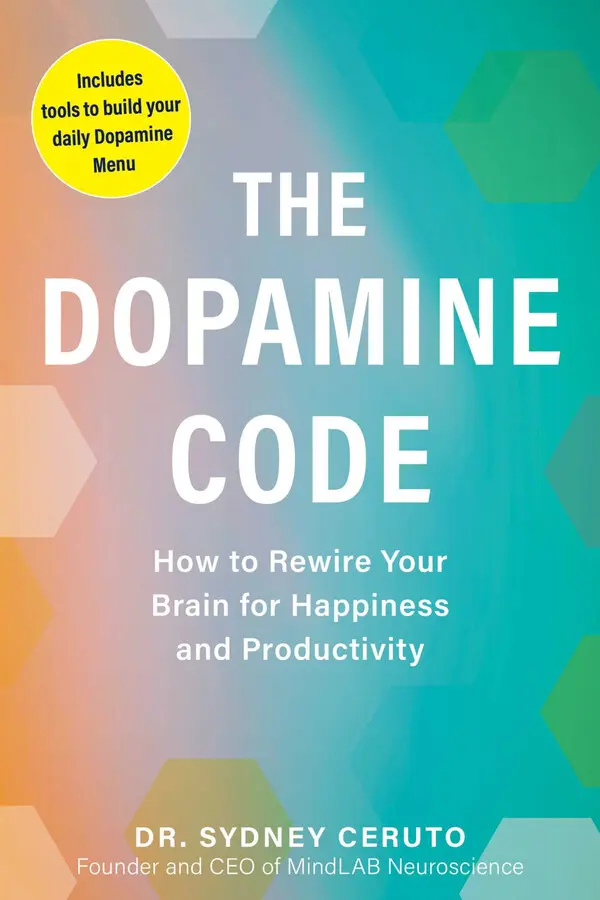
Dr. Ceruto holds a PhD in Behavioral & Cognitive Neuroscience from NYU and two Master’s degrees from Yale University. She lectures at the Wharton Executive Development Program at the University of Pennsylvania and has been an Executive Contributor to the Forbes Coaching Council since 2019. Dr. Ceruto is the author of The Dopamine Code (Simon & Schuster, June 2026). She founded MindLAB Neuroscience in 2000 and has spent over 26 years pioneering Real-Time Neuroplasticity™ — a methodology that permanently rewires the neural pathways driving behavior, decisions, and emotional responses.

References

Gottman, J. M., & Levenson, R. W. (1992). Marital processes predictive of later dissolution: Behavior, physiology, and health. Journal of Personality and Social Psychology, 63(2), 221–233. https://doi.org/10.1037/0022-3514.63.2.221

Porges, S. W. (2007). The polyvagal perspective. Biological Psychology, 74(2), 116–143. https://doi.org/10.1016/j.biopsycho.2006.06.009

LeDoux, J. E., & Brown, R. (2017). A higher-order theory of emotional consciousness. Proceedings of the National Academy of Sciences, 114(10), E2016–E2025. https://doi.org/10.1073/pnas.1619316114

Eisenberger, N. I., Lieberman, M. D., & Williams, K. D. (2003). Does rejection hurt? An fMRI study of social exclusion. Science, 302(5643), 290–292. https://doi.org/10.1126/science.1089134

Success Stories

“Dr. Ceruto restructured how I show up in high-stakes conversations. The blind spots I couldn't see for years became visible in our first sessions. I went from an overwhelmed Managing Director to a leader people actually want to follow. The change wasn't cosmetic — it was architectural. The way I process high-pressure interactions is fundamentally different now.”

Matteo R. — Investment Banker London, UK

“Every close relationship I had eventually hit the same wall — I'd flood emotionally and shut down or explode, and nothing I'd tried gave me real control over it. Dr. Ceruto identified that my autonomic nervous system was defaulting to fight-or-flight the moment real intimacy was on the line. She didn't give me coping tools. She restructured the default. The flooding stopped because the trigger architecture changed.”

Simone V. — Publicist New York, NY

“The same relational patterns my mother and grandmother lived through kept repeating in my own life — the hypervigilance, the emotional shutdown, the inability to feel safe even when nothing was wrong. Talking through it changed nothing. Dr. Ceruto identified the epigenetic stress signatures driving the pattern and restructured them at the neurological level. The cycle that ran through three generations stopped with me.”

Gabriela W. — Real Estate Developer Miami, FL

“I could perform at the highest level professionally and still feel hijacked emotionally in my closest relationships — and no conventional approach had ever explained why those two realities coexisted. Dr. Ceruto identified the limbic imprint — an amygdala encoding from childhood that was running every intimate interaction I had. She didn't help me understand it better. She dismantled it. The reactivity isn't something I regulate anymore. The pattern that generated it is gone.”

Natasha K. — Art Advisor Beverly Hills, CA

“Dr. Ceruto's methodology sharpened my negotiation instincts and built a level of mental resilience I didn't know I was missing. The difference showed up in how my team responds to me — trust, respect, and a willingness to follow that I'd been trying to manufacture for years. I stopped trying to project authority and started operating from it. That's the difference.”

Victoria W. — Trial Attorney New York, NY

“Endocrinologists, sleep clinics, functional medicine — every specialist cleared me, and no one could tell me why I was exhausted every single day. Dr. Ceruto identified that my HPA axis was locked in a low-grade stress activation I couldn't feel consciously. Once that pattern was disrupted at the neurological level, my energy came back in a way that felt completely foreign. I'd forgotten what it was like to not be tired.”

Danielle K. — Luxury Hospitality Beverly Hills, CA

Frequently Asked Questions About Communication Breakdown

Why do we keep having the same argument no matter what we try?

Because the argument is not primarily about its content. It is about a pattern of neural activation — a threat-response sequence encoded in each person's nervous system that a particular kind of relational friction triggers. The words change. The topic changes. The surface detail changes. The underlying pattern does not, because the pattern is not stored in the content of the disagreement. It is stored in the nervous system's encoded model of what happens when connection is threatened. Until the architecture of that threat response is recalibrated, the same pattern will run through whatever content is available. Understanding the pattern does not resolve it. The pattern is pre-understanding — it activates faster than insight can function as a brake.

Is communication breakdown work the same as couples therapy?

No. I am a neuroscientist, not a therapist, and this is not therapy. Therapeutic work operates at the level of insight, narrative, and interpersonal process. My work operates at the level of the neural architecture responsible for these patterns — the threat-detection system, the prefrontal regulatory capacity, the encoded relational models that determine how the partner is processed. These are different domains. There is no diagnosis here, no treatment plan in the clinical sense. The focus is precision work at the level of the brain systems governing the communication failure — because that is where the pattern actually lives.

Why do I shut down and go blank during arguments, even when I want to engage?

What you are describing is the freeze component of the threat response — a physiological shutdown of the systems responsible for language production and social engagement. When the amygdala's threat-detection system initiates protection mode at sufficient intensity, the nervous system takes certain capacities offline as part of the protection sequence. Language is one of them. The inability to speak during an intense relational conflict is not a choice, not a strategy, and not evidence of not caring. It is a structural feature of a nervous system in protection mode. Demanding verbal engagement from someone in this physiological state is not possible to comply with regardless of willingness. The shutdown is the nervous system doing its job — the problem is that the job it is doing is not appropriate to the current threat level.

My partner says I am emotionally unavailable. Is that a communication problem?

Emotional unavailability is often the result of a nervous system that has learned to manage threat by limiting exposure. If early relational environments encoded emotional vulnerability as dangerous — if openness led to consequences that the nervous system learned to protect against — the protection strategy is to reduce exposure. The result, observed from outside, is unavailability. But the mechanism is not indifference or incapacity. It is a threat-detection system running a protection program that was built in a different relational environment and has not been updated for the current one. The partner is not experiencing a character trait. They are experiencing the output of an architecture. Recalibrating that architecture changes the output — which changes the relational experience the partner is describing.

We communicate fine about logistics but fall apart when things get emotional. Why?

Logistical communication operates in the prefrontal system — the brain's capacity for deliberate, structured, flexible thinking. So does emotional communication, when it is working well. The difference is that emotional communication carries an additional load of relational threat-detection. When a conversation topic signals relationship risk — disappointment, disconnection, conflict, doubt about the bond — the amygdala initiates a threat response that degrades the prefrontal capacity the conversation requires. Logistics carry no such signal. The prefrontal system remains available. Emotional content crosses the threat threshold, the prefrontal system is partially hijacked, and the conversation fails in ways that neither person intended and both find baffling.

Can communication patterns that have been running for years actually change?

Yes. The patterns are encoded in neural architecture, and neural architecture is changeable. The brain's capacity to reorganize in response to new experience — neuroplasticity — does not expire. Patterns that have been running for a long time are more deeply embedded in the organizing architecture of both people's nervous systems. This means the recalibration work is more foundational and requires greater precision. But duration does not determine outcome. What determines outcome is whether the work targets the level where the pattern lives — the threat-detection system and encoded relational models — rather than behavioral technique applied above that architecture. Technique on top of uncalibrated architecture does not produce lasting change. Architecture recalibration does.

Does this work require both partners to participate?

Not necessarily. The neural architecture driving communication breakdown is individual — each person's threat-detection system, prefrontal regulatory capacity, and encoded relational models are their own. Each can be recalibrated independently of the other person's participation. When one person's threat-activation threshold shifts and their prefrontal access increases, the dynamic between partners changes — because the loop that the previous pattern was sustaining no longer has both legs running. When both people are working at the architectural level, the change is typically faster and more comprehensive. The question of whether to work individually or together is addressed directly in the Strategy Call based on your specific situation.

What is a Strategy Call, and is it conducted in person?

The Strategy Call is a one-hour phone consultation — not a virtual session, not an in-person meeting. It is conducted by phone only. The fee is $250. This does not apply toward any program investment. Before the call, I review what you share about your communication patterns and relational situation to confirm that I can offer something specifically useful for what you are dealing with. The call is a genuine assessment of fit — I evaluate the specific architecture behind your communication breakdown, what the work would involve, and whether my methodology is the right approach for your situation. If it is not the right fit, I will tell you directly. I do not take every inquiry.

How is communication breakdown different from simply having poor communication skills?

Skills training assumes the problem is above the skill gap — that with the right techniques, applied with willingness and consistency, the communication will improve. That assumption is accurate when the nervous system's threat-detection architecture is not the governing variable. When threat response is the governing variable, skills are not the bottleneck. The bottleneck is prefrontal access during activation. No amount of skill training produces prefrontal access in a nervous system running protection mode. The people who have done the most communication skills work and still find themselves in the same arguments are not failing to apply the skills. They are encountering the structural limit of skills-based approaches — the skills cannot run when the system that runs them has been hijacked by threat response.

How do I take the next step?

The entry point is a one-hour Strategy Call by phone, at a fee of $250. I review what you share about your situation before the call to confirm I can offer something specifically useful. The call is not a preliminary step toward a sales process — it is a direct assessment of fit. I will tell you honestly whether my work addresses what you are dealing with. If the architecture behind your communication breakdown is something my methodology is suited for, you will leave with a clear understanding of what the work involves and what is realistic to expect. If another approach is better suited, I will say so directly rather than proceed with work that is not the right fit.

Also available in: Miami · Midtown Manhattan · Beverly Hills · Lisbon

Take the First Step

The Strategy Call is a focused conversation with Dr. Ceruto that maps the specific neural mechanisms driving your concerns and determines the right path forward.

Book a Strategy Call
MindLAB Neuroscience consultation room
Locations

The Intelligence Brief

Neuroscience-backed analysis on how your brain drives what you feel, what you choose, and what you can’t seem to change — direct from Dr. Ceruto.