Intimacy Avoidance in Wall Street

Finance culture rewards the behaviors that constitute intimacy avoidance — work hours, analytical detachment, professional excellence. The career is a compelling cover. The architecture underneath it requires different work.

You want connection. Something in you blocks it every time it gets close.

Intimacy avoidance is architecture — not a commitment problem.

Book a Strategy Call

Why Getting Closer Triggers the Alarm

The withdrawal that intimacy avoidance produces is not a decision. It is a protective response generated by architecture that learned, during development, to treat closeness as a precursor to harm. The amygdala — the brain’s primary threat-detection structure — does not require a current-moment threat to activate its alarm. It requires a pattern match: an input that sufficiently resembles the conditions under which harm previously occurred.

For the person whose developmental environment associated closeness with engulfment, loss of autonomy, unpredictable emotional pain, or abandonment, the amygdala encoded that association with precision. Closeness became a threat cue. As a relationship deepens — as emotional exposure increases, as another person gains genuine knowledge of the self — the amygdala generates the same alarm signal it would produce in response to actual danger. The withdrawal that follows is not a choice about commitment. It is a nervous system executing the protective program it was trained to execute.

The person experiencing this pattern knows it makes no sense. They can see that the person in front of them is safe. They can identify the distortion, name the pattern, want something different. The insight is real and changes nothing about the alarm — because the threat-detection system does not receive inputs from the reasoning mind and revise its assessment accordingly. It operates on encoded pattern-matching, and the pattern it encoded is: closeness equals danger. That encoding does not update through understanding. It requires recalibration at the level of the architecture itself.

The Approach-Withdrawal Pattern

Intimacy avoidance rarely presents as simple refusal of closeness. The architecture is more complex than that, and its complexity is what makes the pattern so disorienting to the person living it and to the people who love them. The avoidant person often feels genuine desire for connection — and the desire is real. The nervous system does not suppress attraction or the impulse toward closeness. It generates the withdrawal response as closeness deepens, not before it begins.

This produces the approach-withdrawal cycle that characterizes the pattern. Initial contact is accessible — sometimes highly so. The early phase of connection does not activate the threat-detection system with full intensity, because the depth of exposure is still manageable. As intimacy increases — as the other person begins to see past the surface, as relational expectations deepen, as vulnerability becomes structurally required rather than optional — the alarm intensifies. The withdrawal follows. Distance is created, the threat signal reduces, and the cycle is available to begin again with the next person, or with the same person at the next opportunity for deepening.

The partner in this dynamic experiences the withdrawal as rejection. The avoidant person experiences it as relief — and often as a complex mix of relief and grief, because the connection that activated the alarm was also something they genuinely wanted. The pattern does not produce indifference. It produces a person who wants closeness and is systematically prevented from having it by the architecture that was built to protect them from what closeness historically produced.

What makes the approach-withdrawal pattern particularly difficult to interrupt is that it is self-reinforcing at multiple levels. The withdrawal reduces the alarm — which means withdrawal works as a regulation strategy. Each time it works, the nervous system files that data: distance equals safety, closeness equals threat. The pattern does not weaken through repetition. It strengthens. The exits that feel like failures are simultaneously training runs, conditioning the threat-detection system to respond faster and more decisively to the next approach. This is why the pattern tends to accelerate across a person’s relational history rather than resolve on its own. The architecture learns from the cycles it runs.

The grief that often accompanies the withdrawal is not incidental. It is data about what the pattern costs — and it is frequently the first signal that the person is paying more than the protection is worth. The person who sees the same structure running across relationships, who feels the accumulating loss of connections that never reached their depth — that person is not failing at relationships. They are running a program that is running correctly, and the grief is the recognition that correct and right are not the same thing.

Why the Desire for Connection and the Fear of It Coexist

One of the most disorienting features of intimacy avoidance is that the desire for connection is genuine. This is not a pattern organized around the absence of the impulse toward closeness. The avoidant person is not cold, not indifferent, not incapable of warmth. They experience attraction. They feel the pull toward people. They recognize the value of what relationships can provide. And they often have a precise, felt understanding of what they are missing, because they have wanted it consistently and been prevented from having it by the same architecture every time.

The coexistence of desire and fear in this pattern is not a contradiction. It is a function of the fact that the desire and the fear are processed by different systems. The desire for connection is a mammalian biological imperative — it operates in structures organized around affiliation, reward, and social belonging. The fear is an amygdala response, encoded by the specific relational history that taught the threat-detection system to treat closeness as danger. These two systems are not in dialogue with each other. They do not negotiate a resolution. They run simultaneously, generating simultaneous impulses — toward and away — that the person experiences as internal conflict, ambivalence, or the particular torment of wanting something they cannot allow themselves to have.

This is why the approach-withdrawal pattern looks, from the outside, like mixed signals. The avoidant person is sending mixed signals — but not because they are being deliberately confusing or playing relational games. They are expressing two genuine simultaneous states that their nervous system has not resolved. The warmth is real. The withdrawal is real. Both are being generated by the same person at the same time by different neural systems running different programs. The person caught in the middle of this is not duplicitous. They are architecturally divided.

The cost of that division accumulates differently than the cost of a single loss. The person who loses one relationship to this pattern loses that relationship. The person who loses fifteen relationships to the same pattern — who can trace the same threshold, the same alarm, the same withdrawal across years of relational history. That person carries something heavier: the evidence that what they want is consistently available until they get close enough to want it fully, at which point the pattern makes it unavailable from the inside. That pattern does not feel like bad luck. It feels like evidence of something unrepairable. It is not. It is evidence of a specific neural architecture that has a specific location and a specific mechanism — and that recalibrates when the work reaches it.

What the Developing Brain Encoded

The threat-detection architecture underlying intimacy avoidance was not built by accident. It was built by a relational environment that taught the developing nervous system what closeness meant and what it reliably produced. Several developmental contexts are particularly effective at producing this encoding.

Enmeshment — where closeness was coupled with loss of self and an inner world that differed from the family was not safe — teaches the nervous system that closeness requires disappearance. The threat detected as intimacy deepens is not abandonment. It is engulfment: the return of the condition in which being known meant being consumed.

Inconsistent attachment — the parent who was warm and present in some conditions and unpredictable or unavailable in others — teaches the nervous system that closeness is inherently unstable. Proximity to an important person is associated with the possibility of sudden withdrawal, criticism, or disappearance. The protective move is to manage the exposure: stay close enough to maintain connection, but maintain enough distance to absorb the withdrawal when it comes without being devastated by it.

Abandonment — the parent who left, the caregiver who was chronically absent, the attachment figure who was present physically but emotionally unavailable — teaches the nervous system that deep connection is preparation for loss. The deeper the investment, the greater the eventual pain. The threat-detection system learns to prevent that depth before the loss can occur.

These developmental encodings are not memories in the conventional sense. They are operating instructions — programs that run below the threshold of conscious reasoning, generating the protective withdrawal in any context that activates the pattern. The insight that the current relationship is not the original relationship does not override the encoding. It coexists with it, in a different brain system, while the alarm continues to run.

Intimacy Avoidance in Long-Term Relationships

Intimacy avoidance is commonly understood as a pattern that prevents relationships from forming. The more precise picture is that it prevents relationships from deepening. And that distinction matters enormously, because it means the pattern operates inside long-term committed relationships as reliably as it operates in the dating phase.

The person who is avoidant of intimacy in a long-term relationship has often found structural solutions to the depth problem. Physical presence substitutes for emotional presence. Shared activities substitute for shared inner worlds. The relationship has a functioning surface — the household runs, the obligations are met, the social presentation is intact — while the interior is systematically maintained at a depth the nervous system can tolerate. The partner experiences this as a persistent sense that they do not actually know the person they live with, despite years of proximity. The avoidant person often experiences it as functioning well in the relationship — because the relationship’s surface is, in fact, working.

The threshold at which the long-term avoidant person experiences the alarm is different from the dating-phase threshold. In established relationships, the trigger is often specific to moments of increased emotional exposure: a conversation that moves toward vulnerability, a conflict that requires genuine self-disclosure, a life event that forces interior states into visibility. An anniversary or milestone that prompts the partner to push for depth becomes its own kind of alarm — the nervous system signals danger precisely when the relationship demands presence. Outside of those moments, the relationship can appear close and functional. Inside them, the full avoidance architecture activates — the deflection, the subject change, the humor that dissolves tension before it can produce intimacy, the sudden need to be somewhere else.

Partners in this dynamic often report a specific confusion: the relationship is good, in a certain sense, but they feel perpetually on the outside of the person they are with. The avoidant person often agrees the relationship is good. What they cannot explain is why it has always felt safer to be known partially. The partial knowing is not a conscious decision. It is the architecture’s calibration — the depth setting at which the threat-detection system does not generate the alarm, and below which the person can remain present without the nervous system requiring them to withdraw.

Long-term intimacy avoidance is often more difficult to address than the dating-phase pattern. Not because the architecture is different — but because the structural solutions the person has built are more elaborate, more practiced, and more genuinely functional. The relationship has adapted around the pattern. Both people have adjusted. The adjustments have become the relationship’s normal. Recalibrating the architecture in this context requires not only the neural work but a willingness to disrupt arrangements that have, in a certain sense, been working. At the cost of the depth that both people may have privately accepted as unavailable.

Avoidance as a Functional Architecture

Intimacy avoidance is often accompanied by a genuinely functional life. The person avoiding depth in their relationships may be highly effective professionally, socially adept at the level of surface connection, capable of warmth and care within the structural boundaries that the pattern maintains. This functionality is part of what makes the pattern difficult to address: it does not look like a problem from the outside. It often does not feel like a problem to the person experiencing it until they want something the pattern is blocking.

The architecture also provides real protection — not from imagined threats, but from the genuine risks of vulnerability. Someone who does not allow depth is not devastated when relationships end. Someone who maintains emotional distance does not experience the specific pain of being fully known and then left. The protection is functional. The cost is paid in the connections that cannot form, the relationship potential that repeatedly reaches a ceiling, the accumulated loneliness of a person surrounded by people none of whom actually know them.

This is the distinction that matters clinically and architecturally: the pattern was a solution before it was a problem. The withdrawal response that now prevents connection was built to prevent a specific kind of harm. Recalibrating the architecture does not mean dismantling the protective capacity. It means resetting the threat threshold so that closeness is no longer processed as the precursor to harm. So that the amygdala can receive the data of a safe relationship without generating the alarm that produces the withdrawal.

Mahogany desk with crystal brain sculpture and MindLAB journal in warm lamp light surrounded by leather-bound volumes in institutional Wall Street study

What Changes When the Threat Architecture Recalibrates

The goal is not the elimination of the self-protective capacity. A nervous system with no capacity for withdrawal from genuinely unsafe connection would be dangerous in a different way. The goal is proportionality: a threat-detection system that activates at genuine threat rather than at the pattern-match signal of closeness itself.

When the amygdala’s encoding is recalibrated, the deepening of a relationship no longer automatically triggers the alarm. Vulnerability — the exposure of the inner world to another person — becomes available without the nervous system interpreting that availability as an emergency. The person who has spent their relational life approaching and then withdrawing discovers that they can stay. Not because they decided to. Because the architecture no longer generates the signal that made leaving feel necessary.

The specific changes that become available when the threat architecture recalibrates are not dramatic in the ways people expect. The person does not become someone who craves constant emotional proximity or who experiences closeness as uncomplicated. What changes is the threshold. The alarm no longer activates at the pattern-match of increasing intimacy. The nervous system begins to process the actual data of the current relationship. The specific person, the specific safety or lack of it, the specific conditions — rather than the historical pattern that the depth of exposure previously triggered.

This means that genuine discernment becomes possible for the first time. Before recalibration, the withdrawal is indiscriminate — it activates not because the relationship is unsafe but because it is deepening. After recalibration, the nervous system can act on what the reasoning mind always knew. This person is safe. This relationship is worth staying in. The exposure required here is not the same as the exposure that caused harm when the original encoding was written.

The approach-withdrawal cycle stops running not through discipline or commitment or insight, but because the threat-detection system has been recalibrated to process closeness accurately. As something that carries risk, yes, as every genuine connection does, but not as danger. The difference between risk and danger is the difference between a person who can be present in intimacy and a person who cannot. That distinction lives in the amygdala’s encoding, and that is precisely where this work operates.

Why Intimacy Avoidance Matters in Wall Street

Intimacy Avoidance on Wall Street

Finance culture does not name intimacy avoidance. It names the behaviors that constitute it — workload, dedication, ambition, professional excellence — and then rewards them structurally. The person on a trading desk who is routinely working seventy-hour weeks has a genuinely compelling explanation for why relational depth is not available right now. The explanation is also, for the avoidant nervous system, the most sophisticated protection mechanism the culture provides: the career as the legitimate reason that closeness is impossible.

This is the architecture of career-as-avoidance, and it is specific to finance in the way it is specific to very few other industries. The hours are real. The demands are real. The professional consequences of underperformance are real. None of that makes the pattern less functional as avoidance. The fact that the reason is true is precisely what makes it so effective at preventing the person — or their partner — from identifying what is actually being avoided.

Wall Street’s culture normalizes emotional unavailability at the level of institutional design. The vocabulary of finance is not a vocabulary of interior life: it is a vocabulary of performance, position, exposure, hedge, risk. Conversations organized around these frames are conversations that systematically exclude the kind of self-disclosure that intimacy requires. Professionals who have spent a decade becoming fluent in this vocabulary have, simultaneously, been developing the professional identity — competent, analytical, in control — that intimacy requires setting aside. Vulnerability is structurally inconsistent with the identity the culture rewards.

The delayed intimacy development pattern is particularly prevalent in finance. The early career years — analyst, associate, early VP — are organized around a pace that genuinely does not accommodate relational depth. The professional who emerges from those years with significant institutional standing and income has often emerged without developing the relational architecture that peers in less consuming careers had time to build. The avoidance was not conscious. It was circumstantial. But by the time the professional circumstances ease, the nervous system has not necessarily preserved the capacity for closeness. It may have learned, through years of absence from relational risk, to treat vulnerability as simply unavailable — a protected limitation rather than a pattern with a specific neural architecture.

Partners of finance professionals in FiDi and the broader New York financial corridor articulate a specific experience of this dynamic: the person who is present physically but absent relationally. The apartment is shared. The schedule is shared. The emotional world is not. The avoidant person in this context has not constructed a wall consciously. The wall is the nervous system’s architecture — built, in many cases, before the relationship began and before finance became the cover for maintaining it.

The transition point is particularly revealing. When the finance professional reaches a level of institutional security where the career demands ease. When the hours reduce, when the financial pressure lifts, when the professional justification for relational unavailability genuinely diminishes — the avoidance does not resolve automatically. It migrates. The person who was previously busy finds new reasons for the same unavailability: travel, side projects, the social obligations that accompany seniority. The career was always carrying the avoidance. When the career stops requiring the hours, the avoidance architecture requires something else to fill the function. Identifying what the career was protecting — what depth the workload was making structurally unavailable — is the work that the busyness itself was preventing.

My work with people in this environment addresses the specific intersection of career structure and intimacy avoidance architecture. The work is not about recommending different work hours or different professional choices. It is about identifying what the career is protecting, and recalibrating the threat-detection system so that the protection is no longer necessary to maintain.

Dr. Sydney Ceruto, PhD — Founder, MindLAB Neuroscience

Dr. Sydney Ceruto, PhD — Founder & CEO, MindLAB Neuroscience

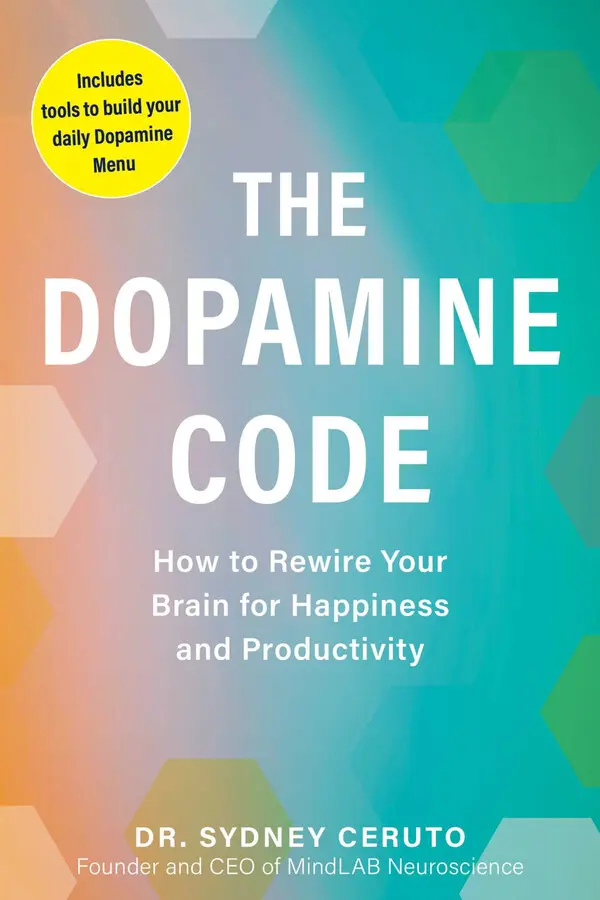
Dr. Ceruto holds a PhD in Behavioral & Cognitive Neuroscience from NYU and two Master’s degrees from Yale University. She lectures at the Wharton Executive Development Program at the University of Pennsylvania and has been an Executive Contributor to the Forbes Coaching Council since 2019. Dr. Ceruto is the author of The Dopamine Code (Simon & Schuster, June 2026). She founded MindLAB Neuroscience in 2000 and has spent over 26 years pioneering Real-Time Neuroplasticity™ — a methodology that permanently rewires the neural pathways driving behavior, decisions, and emotional responses.

References

Mikulincer, M., & Shaver, P. R. (2007). Attachment in adulthood: Structure, dynamics, and change. Guilford Press. https://doi.org/10.1521/9781462525546

Hazan, C., & Shaver, P. (1987). Romantic love conceptualized as an attachment process. Journal of Personality and Social Psychology, 52(3), 511–524. https://doi.org/10.1037/0022-3514.52.3.511

Feldman, R. (2017). The neurobiology of human attachments. Trends in Cognitive Sciences, 21(2), 80–99. https://doi.org/10.1016/j.tics.2016.11.007

Lieberman, M. D. (2013). Social: Why our brains are wired to connect. Crown Publishers. https://doi.org/10.1371/journal.pone.0129028

Success Stories

“Every close relationship I had eventually hit the same wall — I'd flood emotionally and shut down or explode, and nothing I'd tried gave me real control over it. Dr. Ceruto identified that my autonomic nervous system was defaulting to fight-or-flight the moment real intimacy was on the line. She didn't give me coping tools. She restructured the default. The flooding stopped because the trigger architecture changed.”

Simone V. — Publicist New York, NY

“Dr. Ceruto restructured how I show up in high-stakes conversations. The blind spots I couldn't see for years became visible in our first sessions. I went from an overwhelmed Managing Director to a leader people actually want to follow. The change wasn't cosmetic — it was architectural. The way I process high-pressure interactions is fundamentally different now.”

Matteo R. — Investment Banker London, UK

“The same relational patterns my mother and grandmother lived through kept repeating in my own life — the hypervigilance, the emotional shutdown, the inability to feel safe even when nothing was wrong. Talking through it changed nothing. Dr. Ceruto identified the epigenetic stress signatures driving the pattern and restructured them at the neurological level. The cycle that ran through three generations stopped with me.”

Gabriela W. — Real Estate Developer Miami, FL

“I could perform at the highest level professionally and still feel hijacked emotionally in my closest relationships — and no conventional approach had ever explained why those two realities coexisted. Dr. Ceruto identified the limbic imprint — an amygdala encoding from childhood that was running every intimate interaction I had. She didn't help me understand it better. She dismantled it. The reactivity isn't something I regulate anymore. The pattern that generated it is gone.”

Natasha K. — Art Advisor Beverly Hills, CA

“Dr. Ceruto's methodology sharpened my negotiation instincts and built a level of mental resilience I didn't know I was missing. The difference showed up in how my team responds to me — trust, respect, and a willingness to follow that I'd been trying to manufacture for years. I stopped trying to project authority and started operating from it. That's the difference.”

Victoria W. — Trial Attorney New York, NY

“After the concussion, my processing speed collapsed — I couldn't hold complex information the way I used to, and no one could explain why the fog wasn't lifting. Dr. Ceruto mapped the damaged pathways and built compensatory networks around them. My brain doesn't work the way it did before the injury. It works differently — and in some ways, more efficiently than it ever did.”

Owen P. — Orthopedic Surgeon Scottsdale, AZ

Frequently Asked Questions About Intimacy Avoidance

Why do I want closeness but keep pulling away when I get it?

Because wanting closeness and experiencing closeness as safe are two different neural processes, operated by different brain systems. The desire for connection is real — it is not suppressed or absent. But as intimacy deepens, the amygdala generates an alarm signal based on its encoded associations: closeness, in the developmental history that trained the system, was associated with harm. Engulfment, abandonment, unpredictable pain, loss of autonomy — whatever the specific encoding was, the threat-detection system learned to treat increasing proximity as a signal that danger is approaching. The withdrawal that follows is the nervous system executing its protective program. It is not a decision about the relationship. It is not a statement about the other person. It is an architecture responding to a pattern match — and the pattern it is matching is historical, not current.

What is the difference between preferring independence and intimacy avoidance?

Genuine independence preference does not produce distress or longing — the person who simply values autonomy is satisfied by a life organized around that value. Intimacy avoidance is characterized by the gap between what the person wants and what the nervous system allows. The person experiencing intimacy avoidance often feels the grief of connections that cannot deepen, the accumulated loneliness of being surrounded by people who do not actually know them, the frustration of a pattern that repeats across different relationships regardless of the quality of the other person. The pattern is not organized around preference. It is organized around protection — a threat-detection architecture that generates withdrawal as intimacy increases, regardless of what the person consciously wants. The distinction matters because it points toward what needs to change: not the preference for autonomy, but the threshold at which the threat-detection system activates.

Is intimacy avoidance the same as commitment phobia?

Commitment phobia is a cultural label for a behavioral pattern. Intimacy avoidance is a description of the neural architecture producing it. They often overlap — the person who avoids commitment is frequently avoiding the depth of exposure that committed relationship requires — but they are not identical. Some people experience intimacy avoidance within committed relationships: they maintain the structural commitment while systematically preventing the emotional depth that the structure nominally allows. Others experience it before commitment, in the dating phase, exiting relationships that begin to deepen before formalization is relevant. The behavioral presentation varies. The underlying architecture — a threat-detection system that encodes closeness as danger and generates withdrawal as proximity increases — is consistent across presentations. The work addresses that architecture, not the behavioral label attached to it.

Why does intimacy avoidance repeat across different relationships?

Because the pattern is not caused by the relationships. It is carried into them. The amygdala's encoding — closeness equals danger — is not relationship-specific. It is an architecture that activates in any context that reaches sufficient intimacy depth, regardless of the quality, safety, or genuine suitability of the person involved. The person experiencing intimacy avoidance often attributes each exit to something specific about that relationship: the wrong timing, the wrong person, the wrong circumstances. These explanations are different each time. The threshold at which the alarm activates and the withdrawal begins is consistent. When the same pattern repeats across significantly different relationships and significantly different partners, the pattern is not in the relationships. It is in the nervous system that is being brought to all of them.

How did this pattern form?

The intimacy avoidance pattern was encoded during development by a relational environment that taught the nervous system what closeness meant and what it reliably produced. Enmeshment — closeness coupled with loss of self — teaches the system that being known requires disappearance. Inconsistent attachment — a caregiver who was warm and then unpredictable — teaches the system that closeness is inherently unstable and that distance is protective. Abandonment — physical or emotional absence from a primary attachment figure — teaches the system that deep connection is preparation for loss and that prevention is safer than exposure. These encodings are not memories that can be examined and revised. They are operating instructions written into the threat-detection architecture, running below conscious reasoning, generating the withdrawal response in any context that activates the pattern match. The encoding was appropriate to the environment that produced it. The problem is that it is running in an environment that no longer requires that protection.

Can I address intimacy avoidance while I am in a relationship?

Yes. The work does not require the absence of a relationship, and in some respects the relationship provides the live context in which the pattern's architecture is most visible — the specific triggers, the exact threshold at which the withdrawal activates, the relational behaviors the nervous system has developed to manage distance while maintaining the structural connection. Working within an established relationship involves additional complexity: the partner's responses to the avoidance pattern have typically become part of the relational architecture, and those responses shape the environment in which the recalibration work occurs. The work with me is individual — I work with you, not the relationship system. But the presence of an existing relationship does not prevent the architectural work from proceeding, and it often provides the clearest available data about where the pattern lives and how it operates.

Is this therapy?

No. What I do at MindLAB Neuroscience is not therapy, and it is not structured like therapy. I do not operate from a diagnostic framework, I do not treat mental health conditions, and I am not a licensed mental health provider. My work is precision neuroscience-based: I work at the level of the neural architecture producing the intimacy avoidance pattern — the threat-detection encoding, the amygdala's sensitization, the relational operating instructions built during development — using an understanding of how those systems function and how they recalibrate. The focus is architectural, not therapeutic. If your situation includes significant trauma, an active mental health diagnosis, or symptoms that require clinical management, I will tell you that directly and refer you to the appropriate provider. The work I do is most effective when the person is functional and the pattern they are addressing is architectural rather than clinical.

What does the Strategy Call involve, and what does it cost?

The Strategy Call is a one-hour phone consultation — not a virtual session, not an in-person meeting. It takes place by phone only. The fee is $250, which does not apply toward any program investment. Before the call, I review what you share about your situation to determine whether I can offer something genuinely useful for your specific pattern. I do not take every inquiry — the call is a real assessment of fit, not a preliminary step in a sales process. During the hour, I evaluate the specific architecture of your intimacy avoidance pattern, the developmental and relational history that encoded it, and whether my methodology is the right approach for what you are dealing with. If it is, you will leave the call with a clear picture of what the work involves and what outcomes are realistic. If my approach is not the right fit, I will tell you that directly and, where possible, point you toward what would be more appropriate.

How long does it take to recalibrate this pattern?

There is no honest universal answer, because the depth of the encoding, the age at which it formed, the degree to which the pattern is central to the person's broader self-organizing architecture, and the specific developmental context that produced it all shape the timeline. Intimacy avoidance that formed early in development and has organized relational life for decades is more deeply embedded than a pattern that emerged from a specific adult relational experience. The former requires more foundational recalibration work. What I can say precisely is that the timeline is a function of the architecture — of where the pattern lives and how much of the nervous system is organized around it — not of willingness, intelligence, or effort. What I assess during the Strategy Call includes a realistic picture of what the work involves and what a reasonable outcome timeline looks like for the specific pattern you bring.

What is the first step?

The entry point is a one-hour Strategy Call by phone, at a fee of $250. Before the call takes place, I review what you share about your situation to confirm I can offer something specifically useful. I do not accept every inquiry. During the call, I evaluate the specific neural pattern behind your experience of intimacy avoidance — the developmental history, the architecture of the withdrawal response, the specific triggers and thresholds — and assess whether my methodology addresses what you are dealing with. If it does, you will have a clear picture of the work and what it produces. If it does not, I will say so plainly. The call is a genuine assessment, not a formality preceding a program offer.

Also available in: Miami · Midtown Manhattan · Beverly Hills · Lisbon

Take the First Step

The Strategy Call is a focused conversation with Dr. Ceruto that maps the specific neural mechanisms driving your concerns and determines the right path forward.

Book a Strategy Call
MindLAB Neuroscience consultation room
Locations

The Intelligence Brief

Neuroscience-backed analysis on how your brain drives what you feel, what you choose, and what you can’t seem to change — direct from Dr. Ceruto.