Family & Life Transitions on Wall Street

<p>The family pattern keeps running. The transition won't complete.</p><p>Family architecture and identity structure can be recalibrated at the neural level.</p>

Family patterns and life transitions are maintained by neural architecture — encoded attachment models, threat-detection calibrations, and identity structures that were built in the family system and activated by change. When a transition overwhelms the brain's capacity to reorganize, the person gets stuck between the identity they are leaving and the one they have not yet built. Dr. Ceruto's methodology identifies the specific architecture maintaining the pattern and intervenes at the structural level — recalibrating the systems that govern how families interact and how individuals navigate the transitions that reshape their lives.

Book a Strategy Call

Family Conflict Resolution

Family conflict is maintained by encoded threat-response patterns between members — each person’s nervous system has learned the other’s triggers and responds with protective patterns that perpetuate the cycle. The conflict is architectural, not interpersonal.

Learn more about Family Conflict Resolution in Wall Street →

Divorce & Separation

Divorce activates the attachment system at its deepest level — the person who was the primary source of co-regulation is being removed. The brain processes this as an attachment amputation while simultaneously requiring an identity reconstruction.

Learn more about Divorce & Separation in Wall Street →

Empty Nest Transition

The brain’s self-evaluation, purpose, and daily-structure systems were organized around parenting for 18+ years. When the child leaves, the architecture that provided meaning does not automatically reorganize. This is a structural crisis, not sadness.

Learn more about Empty Nest Transition in Wall Street →

Parenting & Neuroscience

Parenting difficulties are often the parent’s own unresolved neural architecture playing out through the child relationship. The parent’s attachment system and emotional regulation capacity were built in their own childhood — and those patterns activate when they become the parent.

Learn more about Parenting & Neuroscience in Wall Street →

Life Transition Coaching

Life transitions require the brain to dismantle an existing identity architecture and build a new one. The reward system must recalibrate what generates meaning. The prediction system must update. When the transition overwhelms this capacity, the person gets stuck between identities.

Learn more about Life Transition Coaching in Wall Street →

Family Grief & Loss

Family grief operates differently from individual grief — the loss reorganizes the entire family system, not just one person’s attachment architecture. Every member’s prediction model updates while the family’s collective regulatory structure shifts.

Learn more about Family Grief & Loss in Wall Street →

Blended Family Dynamics

Blended families force the attachment system to integrate new figures into an existing hierarchy while the old hierarchy is still active. Multiple conflicting attachment architectures operating simultaneously produce tension that goodwill alone cannot resolve.

Learn more about Blended Family Dynamics in Wall Street →

Family & Life Transitions on Wall Street

Wall Street’s family patterns are organized around a structural absence that the career demands and the family absorbs. The finance professional who leaves before the children wake and returns after they sleep is not choosing career over family in any conscious sense. The career’s architecture does not accommodate the choice. The family builds its operating system around the absence — the partner manages, the children adapt, the nanny becomes the primary attachment figure during working hours — and this architecture holds until it doesn’t.

The reconnection problem is specific to Wall Street families. The professional who decides to become more present discovers that the family’s architecture has organized around their absence. The child who has spent years with the nanny as the primary regulatory figure does not automatically transfer that attachment function to the parent who is now available. The partner who has built autonomy around the professional’s absence may experience the sudden presence as intrusion rather than relief. The family system resists the reorganization because every member’s nervous system was calibrated to the previous arrangement.

Divorce on Wall Street carries financial complexity that transforms the emotional process into a strategic one. The asset division, the lifestyle maintenance calculations, the trust structures and deferred compensation — the legal and financial architecture around the divorce activates the brain’s threat-detection system at the survival level. The person whose identity and security were organized around the financial structure of the marriage is experiencing an existential threat, not merely a relational transition. The fear is proportionate to what is actually at stake.

The golden handcuffs dynamic traps unhappy marriages in a cage that both partners built. The lifestyle depends on the income. The income depends on the career. The career demands the absence that is destroying the marriage. Leaving the career means losing the lifestyle. The brain’s threat-detection system codes every exit path as a survival threat, which means the person remains in a marriage they know is damaging because every alternative activates alarm signals that the prefrontal system cannot override.

Boarding school as a family pattern deserves specific attention. The decision to send a child to boarding school is complex and can be genuinely beneficial. It can also be an attachment architecture decision — the family managing the child’s needs by outsourcing them to an institution. The child who was sent away carries an encoding about what the family could and could not accommodate. That encoding activates in every subsequent close relationship, particularly when the person becomes a parent themselves and must decide what proximity means.


Dr. Sydney Ceruto, PhD — Founder, MindLAB Neuroscience

Dr. Sydney Ceruto, PhD — Founder & CEO, MindLAB Neuroscience

Dr. Ceruto holds a PhD in Behavioral & Cognitive Neuroscience from NYU and two Master’s degrees from Yale University. She lectures at the Wharton Executive Development Program at the University of Pennsylvania and has been an Executive Contributor to the Forbes Coaching Council since 2019. Dr. Ceruto is the author of The Dopamine Code (Simon & Schuster, June 2026). She founded MindLAB Neuroscience in 2000 and has spent over 26 years pioneering Real-Time Neuroplasticity™ — a methodology that permanently rewires the neural pathways driving behavior, decisions, and emotional responses.

References

McEwen, B. S. (2007). Physiology and neurobiology of stress and adaptation: central role of the brain. Physiological Reviews, 87(3), 873–904. https://doi.org/10.1152/physrev.00041.2006

Eisenberger, N. I. (2012). The neural bases of social pain: evidence for shared representations with physical pain. Psychosomatic Medicine, 74(2), 126–135. https://doi.org/10.1097/PSY.0b013e3182464dd1

Feldman, R. (2017). The neurobiology of human attachments. Trends in Cognitive Sciences, 21(2), 80–99. https://doi.org/10.1016/j.tics.2016.11.007

Success Stories

“The divorce wasn't destroying me emotionally — it was destroying me neurologically. My amygdala was treating every interaction with my ex, every legal update, every quiet evening as a survival-level threat. Years of talk-based approaches hadn't touched it. Dr. Ceruto identified the attachment disruption driving the response and restructured it at the root. The threat response stopped. Not because I learned to tolerate it — because the pattern was no longer running.”

Daniela M. — Attorney North Miami Beach, FL

“When the inheritance came, it didn't feel like a gift — it felt like a grenade in every family relationship I had. I couldn't make a single financial decision without a flood of guilt and second-guessing. Years of talking through it hadn't changed anything. Dr. Ceruto identified the neural loop connecting money to fear of family rejection and dismantled it. The paralysis didn't fade — it stopped.”

Vivienne R. — Philanthropist Palm Beach, FL

“When my youngest left for college, I didn't just feel sad — I felt erased. My entire sense of self had been wired to caregiving for two decades, and I didn't know who I was without it. Years of talk-based approaches hadn't touched it. Dr. Ceruto mapped the identity circuitry that had fused with the role and restructured it. I didn't find a new purpose — I found the one that had been underneath the whole time.”

Diane L. — Nonprofit Director Chicago, IL

“I'd relocated internationally before, but this time my nervous system wouldn't settle. Everything unfamiliar registered as danger — new people, new routines, even the sound of a different language outside my window. Pushing through it only deepened the pattern. Dr. Ceruto identified that my nervous system was coding unfamiliarity itself as threat and restructured the response at its source. The world stopped feeling hostile. I stopped bracing.”

Katarina L. — Gallerist Zurich, CH

“Dr. Ceruto restructured how I show up in high-stakes conversations. The blind spots I couldn't see for years became visible in our first sessions. I went from an overwhelmed Managing Director to a leader people actually want to follow. The change wasn't cosmetic — it was architectural. The way I process high-pressure interactions is fundamentally different now.”

Matteo R. — Investment Banker London, UK

“Outperforming every metric for years and feeling absolutely nothing — no satisfaction, no drive, just a compulsive need to keep going. Executive retreats, meditation protocols, none of it made a difference. Dr. Ceruto identified the dopamine downregulation that was driving the entire pattern. My reward system had essentially gone offline from overstimulation. She didn't teach me to reframe success — she restored the neurochemistry that lets me actually experience it.”

Mikhail D. — Family Office Principal Washington, DC

Frequently Asked Questions About Neuroscience-Based Transition Support

Why do major life transitions feel so overwhelmingly difficult even when they are chosen?

The brain's threat-detection system does not distinguish between chosen and unchosen disruption — it classifies all significant environmental change as potentially dangerous. Simultaneously, the default mode network must rebuild its models of identity, relationships, and future expectations. This dual neural demand — processing threat while reconstructing identity — is one of the most cognitively and emotionally expensive processes the brain undertakes.

How does this approach help during transitions involving family restructuring?

Family restructuring — divorce, blended family formation, custody changes — activates attachment circuits alongside identity and threat processing, creating a three-system neural demand that exceeds what any single system change produces. Dr. Ceruto addresses all three neural layers: the attachment architecture processing relational loss or reconfiguration, the identity systems updating self-concept, and the threat circuits processing the uncertainty of the new family structure.

Can this work help parents support their children through transitions?

Yes. Parents' neural state directly affects children's transition experience through mirror neuron systems and emotional contagion. When parents process their own transition with greater neural stability — reduced threat activation, maintained prefrontal regulatory capacity — their children receive calmer, more regulated co-regulation signals. Dr. Ceruto's work with parents during transitions produces direct benefits for children through this neural contagion mechanism.

How long does the neural adjustment period typically last during major transitions?

Without targeted intervention, the brain's identity models can take 6-18 months to fully update after significant life transitions. With Dr. Ceruto's targeted approach, the adjustment compresses because the identity architecture, threat systems, and prediction models are directly engaged rather than left to adapt at the brain's unassisted pace. Most individuals notice meaningful stabilization within weeks rather than months.

Does this approach address the grief component of transitions — even transitions that are not about death?

Yes. The brain processes all significant loss — of relationships, identity, lifestyle, expectations, and familiar structures — through the same neural circuits that process bereavement. Transition grief is neurologically real and architecturally identical to mourning. Dr. Ceruto addresses the neural processing of loss directly, facilitating the brain's integration of what has changed so the grief resolves into adaptation rather than persisting as unprocessed neural weight.

Can this work help with the identity confusion that often accompanies major transitions?

Identity confusion during transitions reflects the default mode network operating with outdated models — the brain's self-concept still references the pre-transition identity while reality demands a new one. Dr. Ceruto facilitates the neural update process so the default mode network builds a coherent new identity model rather than oscillating between the old model and an undefined future state.

How does this approach help when multiple transitions occur simultaneously?

Simultaneous transitions — career change plus relocation plus relationship restructuring — compound neural demand exponentially because the brain's identity, threat, and attachment systems are all processing disruption at once. The prefrontal resources needed to process each transition compete for the same finite cognitive capacity. Dr. Ceruto's approach prioritizes which neural systems to stabilize first, creating a sequential restoration that prevents the overwhelm of trying to process everything simultaneously.

What does the Strategy Call assess for individuals in transition?

The Strategy Call maps which neural systems are most disrupted by the transition — identity architecture, threat processing, attachment circuits, or the interaction between them. It identifies the specific mechanisms producing the distress, confusion, or paralysis you are experiencing and assesses where targeted intervention will most effectively restore stability, clarity, and forward momentum.

Take the First Step

The Strategy Call is a focused conversation with Dr. Ceruto that maps the specific neural mechanisms driving your concerns and determines the right path forward.

Book a Strategy Call
MindLAB Neuroscience consultation room

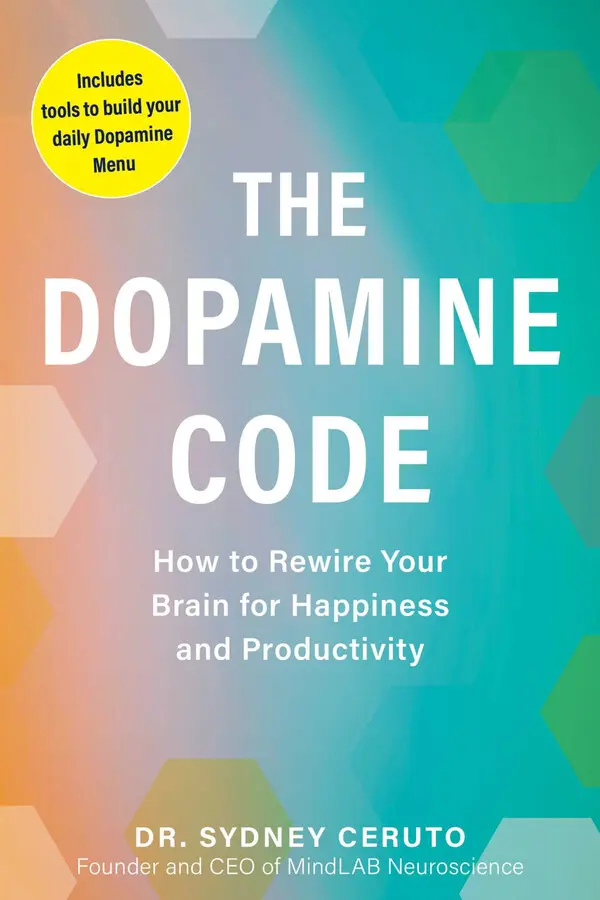
The Dopamine Code

Decode Your Drive

Why Your Brain Rewards the Wrong Things

Your brain's reward system runs every decision, every craving, every crash — and it was never designed for the life you're living. The Dopamine Code is Dr. Ceruto's framework for understanding the architecture behind what drives you, drains you, and keeps you locked in patterns that willpower alone will never fix.

Published by Simon & Schuster, The Dopamine Code is Dr. Ceruto's framework for building your own Dopamine Menu — a personalized system for motivation, focus, and enduring life satisfaction.

Order Now

Ships June 9, 2026

The Dopamine Code by Dr. Sydney Ceruto — Decode Your Drive
Locations

The Intelligence Brief

Neuroscience-backed analysis on how your brain drives what you feel, what you choose, and what you can’t seem to change — direct from Dr. Ceruto.