





Blended Family Dynamics in Miami

In Miami, family loyalty runs multigenerational and deep. Blended family tension here isn't just between two households — it's between entire neural lineages.

Two family systems colliding. The attachment architecture does not integrate on its own.

Blended family tension is neural, not interpersonal.

Book a Strategy Call

Key Points

  1. The biological parent's nervous system generates the motivational architecture for the hard work of parenting — the attachment bond creates a reward signal that sustains effort even when the effort is costly.
  2. The nervous system does not file the co-parenting relationship in the same folder as a business partnership.
  3. The result is jealousy, withdrawal, or reactivity that the step-parent finds disproportionate to the actual situation — because the nervous system is not responding to the actual situation alone.
  4. The question the blended family must navigate is not how to eliminate this calibration — that is not neurologically possible.
  5. Step-parents enter the family system with their own encoded neural history — and that history activates inside the new family in ways that are rarely examined directly.
  6. The step-parent's nervous system is not responding to this family alone.
  7. A family trip, a meaningful conversation, a moment of genuine warmth — these are not negligible, but they do not substitute for the cumulative neural encoding that co-regulation produces over time.

Why Effort Alone Cannot Resolve Blended Family Tension

“A family trip, a meaningful conversation, a moment of genuine warmth — these are not negligible, but they do not substitute for the cumulative neural encoding that co-regulation produces over time.”

The most frustrating feature of blended family difficulty is how thoroughly it resists goodwill. Every member of the family may be genuinely trying — the step-parent who shows up consistently, the biological parent who works to facilitate connection, the children who want to want it to work. And the tension persists anyway, organized by forces that operate well below the level of intention or effort.

This is not a failure of commitment. It is the predictable result of asking multiple attachment systems to do something they were not designed to do simultaneously: integrate new attachment figures into an existing loyalty architecture while that architecture is still active. The brain does not recognize this as a blending. It registers it as a structural conflict — and it responds accordingly.

Understanding why the nervous system organizes around this conflict, rather than around the family’s genuine desire for cohesion, is where the work begins. The answer is not found in the family’s intentions. It is found in the neural architecture every member brings to the table — and in what happens when multiple incompatible architectures are asked to operate as one system.

The Loyalty Architecture Problem

Children do not choose loyalty conflicts. The brain creates them automatically. The attachment system — the neural circuitry responsible for maintaining bonds with primary caregivers — is designed to protect those bonds against perceived threats. It does not evaluate threats rationally. It responds to pattern.

A step-parent, however warm and consistent, arrives in a position the attachment system is already trained to read as potentially threatening to the biological parent bond. The child does not experience this as a thought. “if I connect with this person, I am betraying my parent.” They experience it as a feeling they cannot explain: resistance, irritability, withdrawal, the inability to accept affection that they consciously want to accept. The behavior is not manipulation and not ingratitude. It is the loyalty architecture executing its protective function.

The biological parent present in the home has their own architecture complicating the picture. They are simultaneously asking the child to form a new bond while knowing, at some level, that the step-parent’s presence changes the child’s existing bond with the absent parent. The nervous system holds both positions at once — advocate for integration, protector of the existing bond. And the result is an emotional ambivalence that the parent often cannot name but the family system registers clearly.

The absent biological parent carries the most powerful structural position of all: they do not have to be present to exert influence. The loyalty architecture runs toward them regardless of contact frequency. In some families, this is reinforced actively and consciously. In others, the reinforcement is entirely neural — the child’s attachment circuitry maintains the bond independent of anything the absent parent does or says. The step-parent is not competing with a person. They are competing with a neural pattern that was written before they arrived and cannot be overwritten by relationship effort alone.

What makes the loyalty architecture problem particularly resistant to standard approaches is that every well-intentioned intervention designed to encourage connection risks activating the very protective mechanism it is trying to dissolve. When the biological parent explicitly encourages the child to love the step-parent, the attachment system can read that encouragement as pressure — a signal that the primary bond requires management rather than genuine security. The child’s nervous system interprets the need for explicit encouragement as evidence that the bond is in some way threatened, and it increases the protective response accordingly. The loyalty conflict tightens precisely because someone is trying to loosen it. Addressing the loyalty architecture requires working with the pattern, not against it — which means understanding exactly what the pattern is protecting before attempting to change it.

None of this is visible at the behavioral surface. The child who goes quiet at the dinner table when the step-parent addresses them directly is not displaying a preference. They are executing a neural program. The child who performs warmth during a family activity and then withdraws afterward is not being manipulative. They are managing a regulatory demand that the performance generated — and paying the cost in the only context where the cost is safe to display. The behavior is the signal. What the loyalty architecture is doing beneath the behavior is the information. Working at the level of the signal without understanding the architecture producing it is where most well-intentioned approaches run out of road.

What the Step-Parent’s Nervous System Is Carrying

Step-parents enter the family system with their own encoded neural history — and that history activates inside the new family in ways that are rarely examined directly.

The previous partnership left encoded patterns in the step-parent’s attachment and expectation circuitry. The way conflict felt, the cues that signaled rejection, the postures of emotional withdrawal — these are not neutral memories. They are active programs, available for reactivation whenever the new family system produces inputs that sufficiently resemble the conditions that wrote them. A child’s hostility that reads as contempt. A co-parenting disagreement that echoes a prior relationship’s dynamic. A moment of exclusion from the biological parent-child bond that activates encoded abandonment architecture from an earlier relationship.

The step-parent’s nervous system is not responding to this family alone. It is responding to this family through the lens of everything it was trained by before. The gap between what the step-parent consciously knows — “this child is grieving, this is not personal”. And what their nervous system is generating — alarm, rejection, a defensive pulling-back — is not a failure of perspective. It is the predictable result of encoded patterns activating faster than conscious reasoning can override them.

Add to this the specific exhaustion of sustained emotional labor performed without the biological bond that motivates it for the other parent. The biological parent’s nervous system generates the motivational architecture for the hard work of parenting — the attachment bond creates a reward signal that sustains effort even when the effort is costly. The step-parent is performing comparable labor from a different neural foundation: one that has not had the years of co-regulation, the skin-contact bonding of infancy, the accumulated neural reward of watching a child develop from the beginning. The effort is real. The sustaining architecture is different. And when the effort is met with rejection rather than warmth, the step-parent’s system has far fewer neural resources to fall back on.

The Co-Parenting Dynamic and What It Activates

The co-parenting relationship between biological parents introduces a third attachment architecture into the blended family’s system. One that is itself encoded with the history of a relationship that ended under conditions that were, at minimum, difficult, and often involved loss, conflict, grief, or betrayal.

The nervous system does not file the co-parenting relationship in the same folder as a business partnership. It files it adjacent to the relationship it grew from — and that relationship carries charge. Communication between co-parents activates the encoded history of the prior partnership even when the content of the communication is entirely practical. A disagreement about pickup time is processed by the nervous system through the same circuitry that processed the arguments that preceded separation. The emotional valence of the original relationship bleeds into the logistical relationship of co-parenting, and the result is disproportionate reactivity to neutral content that the adults involved cannot fully explain.

For the new partner — the step-parent observing or involved in co-parenting dynamics. The co-parenting relationship activates a different pattern: the one organized around the continued presence of the prior partner in the family system. Even when the biological parents have no romantic interest in each other and no desire for reunion, the step-parent’s nervous system does not always process the relationship through that logical lens. It processes it through encoded threat-detection patterns related to bonding, exclusion, and the security of attachment. The result is jealousy, withdrawal, or reactivity that the step-parent finds disproportionate to the actual situation — because the nervous system is not responding to the actual situation alone. It is responding to what the actual situation activates from prior encoding.

When the Blended Family Has Children From Both Partners

Blended families that include children from both partners — what the culture sometimes calls a “yours, mine, and ours” configuration. Carry the full complexity of all prior architectures plus a new one: the question of differential neural investment across children who are biologically related to different adults in the same household.

Biological parents instinctively calibrate toward their own children. This is not a character defect. It is the attachment system executing its protective function. The question the blended family must navigate is not how to eliminate this calibration — that is not neurologically possible. But how to manage a family system in which every adult is, at some level, running a different neural reward signal for different children. Every child is aware of this differential at a level they cannot articulate.

Step-siblings carry their own relational architecture into the household — attachment histories, peer relationship patterns, encoded family role expectations. And are asked to reorganize those patterns around siblings who did not grow up with them, in a family system that is itself still in the process of organizing. The private school where step-siblings are enrolled in the same grade. The shared bedroom that forces proximity without shared history. The family vacation that asks children who have known each other for eight months to perform the cohesion of a family that has been together for years. The nervous system of each child is doing the best it can with the architecture it arrived with. The result is friction that looks behavioral and is neural.

What Integration Actually Requires at the Neural Level

Integration is the word families use when they mean cohesion — and cohesion is what they are told to work toward. What the nervous system actually requires for genuine integration is something the language of cohesion does not capture: the formation of new encoded patterns across multiple attachment systems simultaneously, in a sequence that accounts for the order in which those systems are capable of change.

Attachment bonds are not formed through decisions or declarations. They are formed through repeated co-regulatory experiences — moments in which one nervous system and another share a state, return to baseline together, and encode that shared pattern as safety. For a child to build a genuine secondary attachment to a step-parent, what is required is not affection or effort but accumulated co-regulatory history. Hundreds of small moments in which the step-parent’s nervous system offers a regulated state and the child’s nervous system accepts it. Not because the child has decided to, but because the pattern has been offered consistently enough to become familiar, and familiar eventually becomes safe.

This sequence cannot be accelerated through relationship milestones. A family trip, a meaningful conversation, a moment of genuine warmth — these are not negligible, but they do not substitute for the cumulative neural encoding that co-regulation produces over time. What accelerates the process is not more intense positive experiences but the removal of the obstacles that prevent co-regulation from accumulating. The loyalty architecture that blocks the child from accepting the step-parent’s regulated state. The step-parent’s encoded rejection patterns that cause them to withdraw from co-regulatory opportunities when they feel they are not being received. The co-parenting tension that elevates the ambient activation level in the household and reduces everyone’s capacity for the regulatory work that attachment formation requires.

Marble console with crystal brain sculpture and MindLAB journal in warm Miami evening light with tropical hardwood and copper accents

Each of these obstacles operates at a specific layer of the neural architecture. Each requires a different kind of work to address. The loyalty conflict in the child is not the same architectural problem as the encoded reactivity in the step-parent, which is not the same problem as the threat-detection activation in the co-parenting dynamic. Treating them as a single problem and applying a single framework produces the result that most blended families have already encountered: strategies that work in the room and fail at home, improvements that hold for weeks and then regress, progress that is real and fragile because the underlying architecture has not changed. What integration actually requires is a sequenced approach — identify the specific patterns operating in each member’s architecture, address them at the level where they were encoded. Build the co-regulatory foundation that attachment formation depends on, in an order the nervous system of each family member can actually follow.

The timing question matters as much as the method. Integration work that targets the child’s loyalty architecture before the co-parenting relationship has been stabilized will stall — because the ambient threat signal generated by an activated co-parenting dynamic continuously refreshes the child’s protective response. Integration work that focuses on the step-parent’s bond-building without first addressing the step-parent’s encoded reactivity will plateau — because the step-parent’s withdrawal patterns will repeatedly interrupt the co-regulatory accumulation the bond formation depends on. The family system is not a collection of individual problems to be addressed in any sequence of convenience. It is an interconnected architecture in which each element’s capacity to change depends on the state of the elements around it. Understanding that interdependency — and working within it deliberately — is what distinguishes precision work from the kind of earnest effort that produces temporary relief and structural stagnation.

What Changes When the Architecture Changes

The blended family does not need members who try harder. It needs the neural architectures running beneath the family’s efforts to be understood precisely — and then addressed at the level where they operate.

When the child’s loyalty conflict is understood as an attachment architecture problem rather than a behavior problem, the approach changes. The step-parent is no longer trying to win affection the child’s nervous system is structured to withhold. The work becomes recalibrating the loyalty signal — not eliminating the bond with the biological parent, which is neither possible nor the goal. Creating enough neural space in the child’s attachment system for a secondary bond to form alongside the primary one. This requires patience, precision, and a methodology that works at the level of attachment circuitry rather than at the level of behavioral reinforcement.

When the step-parent’s encoded history is identified and addressed directly — rather than left to activate and destabilize the new family’s dynamics from beneath. The step-parent’s nervous system stops running the old family’s programs inside the new family. The reactivity that was organized by prior encoding reduces. The emotional labor of step-parenting becomes more sustainable because the neural foundation it draws from has been stabilized.

When the co-parenting relationship is approached with precision about what the nervous system carries from the prior partnership. The encoded conflict patterns, the residual threat-detection calibrations, the grief that did not fully process — the co-parenting dynamic becomes less reactive and more functional. Not because the adults like each other better, but because their nervous systems are no longer running the history of the relationship that ended inside the logistics of the relationship that continues.

Blended families that work do not work because their members want it more. They work because the neural architectures within the family system have been given what they need to do something they were not originally designed to do. And that requires a different kind of work than the culture’s scripts about love, patience, and effort are prepared to offer.

Marker What You Experience What's Happening Neurologically What We Restructure
Effort Alone Cannot Resolve Blended The most frustrating feature of blended family difficulty is how thoroughly it resists goodwill. Understanding why the nervous system organizes around this conflict, rather than around the family's genuine desire for cohesion, is where the work begins. Understanding why the nervous system organizes around this conflict, rather than around the family's genuine desire for cohesion, is where the work begins.
Loyalty Architecture Problem And the result is an emotional ambivalence that the parent often cannot name but the family system registers clearly. The attachment system — the neural circuitry responsible for maintaining bonds with primary caregivers — is designed to protect those bonds against perceived threats. Addressing the loyalty architecture requires working with the pattern, not against it — which means understanding exactly what the pattern is protecting before attempting to change it.
the Step-Parent's Nervous System Is Step-parents enter the family system with their own encoded neural history — and that history activates inside the new family in ways that are rarely examined directly. The biological parent's nervous system generates the motivational architecture for the hard work of parenting — the attachment bond creates a reward signal that sustains effort even when the effort is costly. Step-parents enter the family system with their own encoded neural history — and that history activates inside the new family in ways that are rarely examined directly.
Co-Parenting Dynamic and What It The emotional valence of the original relationship bleeds into the logistical relationship of co-parenting, and the result is disproportionate reactivity to neutral content that the adults involved cannot fully explain. A disagreement about pickup time is processed by the nervous system through the same circuitry that processed the arguments that preceded separation. The co-parenting relationship between biological parents introduces a third attachment architecture into the blended family's system.
the Blended Family Has Children Blended families that include children from both partners — what the culture sometimes calls a “yours, mine, and ours” configuration. But how to manage a family system in which every adult is, at some level, running a different neural reward signal for different children. Blended families that include children from both partners — what the culture sometimes calls a “yours, mine, and ours” configuration.
Integration Actually Requires at the They are formed through repeated co-regulatory experiences — moments in which one nervous system and another share a state, return to baseline together, and encode that shared pattern as safety. Integration work that targets the child's loyalty architecture before the co-parenting relationship has been stabilized will stall — because the ambient threat signal generated by an activated co-parenting dynamic continuously refreshes the child's protective response. What integration actually requires is a sequenced approach — identify the specific patterns operating in each member's architecture, address them at the level where they were encoded.

Why Blended Family Dynamics Matters in Miami

Blended Family Dynamics in Miami

Miami’s Latin family culture brings a specific layer of intensity to blended family dynamics that has no equivalent elsewhere: the concept of family loyalty is not simply emotional here. It is structural, multigenerational, and encoded into the social architecture of entire extended networks. When a family blends, the child’s loyalty conflict is not just between two parents. It is between two familial lineages — both of which are actively present, often geographically close, and each of which is exerting a gravitational pull on the child’s attachment system in real time.

Abuela’s opinion of the step-parent matters in Miami in ways that would not register as clearly in other cities. The extended family is not peripheral to the child’s attachment architecture — it is part of the architecture. When the paternal grandmother communicates, through language, gesture, or silence, that the step-parent is an outsider, the child’s nervous system processes that signal through the loyalty circuitry it has already organized around protecting the paternal bond. The step-parent is not just navigating one child’s resistance. They are navigating a multigenerational loyalty system that operates independently of any single family member’s intentions.

Bi-cultural blended families — where the two biological families carry distinct cultural frameworks for what family means, how authority operates within it, who has standing to discipline a child, what the correct emotional expression is during conflict. Introduce attachment architecture conflicts that are not visible as cultural disagreements until they have already encoded as tension. The step-parent from one cultural background who attempts a disciplinary approach normal within their family of origin may not understand why it produces such disproportionate resistance in the blended household. The resistance is not about the specific act. It is about the neural signal the act sends: an authority that the child’s attachment system has not granted, operating in a way that the child’s encoded family-role expectations have not prepared them for.

Custody-sharing across Miami-Dade adds logistical friction that sustains the nervous system’s activation around transition. The Thursday evening handoff at a Kendall parking lot is not a neutral logistical event. For the child, it is a repeated attachment transition. A moment in which the nervous system is asked to shift between two attachment contexts that carry different emotional climates, different behavioral expectations, and different encoded signals about safety and belonging. For the adults, it is a repeated activation of the co-parenting relationship and all the encoded history that relationship carries. The physical geography of the city — the distance between Coral Gables and North Miami, the traffic that makes every transition longer than it should be — is not separate from the family’s emotional experience. It is part of the load the nervous system is managing every week.

My work with blended families in Miami addresses the specific neural architecture this city’s family culture produces. The multigenerational loyalty systems, the bi-cultural attachment conflicts, the logistical friction of custody transitions across a sprawling metropolitan geography. At the level where they operate, not at the level of communication strategies that leave the architecture untouched.

Dr. Sydney Ceruto, PhD — Founder, MindLAB Neuroscience

Dr. Sydney Ceruto, PhD — Founder & CEO, MindLAB Neuroscience

Dr. Ceruto holds a PhD in Behavioral & Cognitive Neuroscience from NYU and two Master’s degrees from Yale University. She lectures at the Wharton Executive Development Program at the University of Pennsylvania and has been an Executive Contributor to the Forbes Coaching Council since 2019. Dr. Ceruto is the author of The Dopamine Code (Simon & Schuster, June 2026). She founded MindLAB Neuroscience in 2000 and has spent over 26 years pioneering Real-Time Neuroplasticity™ — a methodology that permanently rewires the neural pathways driving behavior, decisions, and emotional responses.

References

Bowlby, J. (1988). A secure base: Parent-child attachment and healthy human development. Basic Books.

Papernow, P. L. (2013). Surviving and thriving in stepfamily relationships: What works and what doesn’t. Routledge.

Hetherington, E. M., & Kelly, J. (2002). For better or for worse: Divorce reconsidered. W. W. Norton & Company.

Schore, A. N. (2001). Effects of a secure attachment relationship on right brain development, affect regulation, and infant mental health. Infant Mental Health Journal, 22(1–2), 7–66. https://doi.org/10.1002/1097-0355(200101/04)22:13.0.CO;2-N

Success Stories

“The divorce wasn't destroying me emotionally — it was destroying me neurologically. My amygdala was treating every interaction with my ex, every legal update, every quiet evening as a survival-level threat. Years of talk-based approaches hadn't touched it. Dr. Ceruto identified the attachment disruption driving the response and restructured it at the root. The threat response stopped. Not because I learned to tolerate it — because the pattern was no longer running.”

Daniela M. — Attorney North Miami Beach, FL

“I'd relocated internationally before, but this time my nervous system wouldn't settle. Everything unfamiliar registered as danger — new people, new routines, even the sound of a different language outside my window. Pushing through it only deepened the pattern. Dr. Ceruto identified that my nervous system was coding unfamiliarity itself as threat and restructured the response at its source. The world stopped feeling hostile. I stopped bracing.”

Katarina L. — Gallerist Zurich, CH

“When my youngest left for college, I didn't just feel sad — I felt erased. My entire sense of self had been wired to caregiving for two decades, and I didn't know who I was without it. Years of talk-based approaches hadn't touched it. Dr. Ceruto mapped the identity circuitry that had fused with the role and restructured it. I didn't find a new purpose — I found the one that had been underneath the whole time.”

Diane L. — Nonprofit Director Chicago, IL

“When the inheritance came, it didn't feel like a gift — it felt like a grenade in every family relationship I had. I couldn't make a single financial decision without a flood of guilt and second-guessing. Years of talking through it hadn't changed anything. Dr. Ceruto identified the neural loop connecting money to fear of family rejection and dismantled it. The paralysis didn't fade — it stopped.”

Vivienne R. — Philanthropist Palm Beach, FL

“Dr. Ceruto is truly exceptional. I’ve always been skeptical about anyone being able to get through to me, but she has a unique way of bringing about profound changes. She is incredibly intuitive and often knows the answers to complex matters before you even get there. In just a couple of months, I noticed significant changes in how I live my life. Sydney is honest and direct, yet compassionate. She personally relates to you without judgment and demonstrates real investment in your success.”

Ash — Neurologist La Jolla, CA

“I came to Dr. Ceruto thinking I needed help with my career, but she quickly recognized that the real roadblocks were the relationships I was choosing and how I dealt with conflict. With her support, I finally left unhealthy situations I’d struggled to end for years. She helped me identify deep-seated patterns I didn’t realize were holding me back. I never feel rushed, and she follows up with detailed written insights I reflect on for weeks. She uncovered major blockers I would never have spotted alone.”

Rachel L. — Brand Strategist Montecito, CA

Frequently Asked Questions About Blended Family Dynamics

Why does my child resist the step-parent even when they clearly want the relationship to work?

Because two things can be simultaneously true at the neural level: the child consciously wants the connection, and the attachment system is generating a protective resistance to it. The attachment circuitry is designed to maintain loyalty to primary caregivers against perceived threats. A step-parent — regardless of how consistently warm or present they are — arrives in a structural position the nervous system reads as potentially threatening to the existing biological parent bond. The child is not being manipulative. They are not choosing the resistance. Their attachment architecture is executing its protective function, and that function operates faster than conscious choice. The gap between what the child wants and what their nervous system allows is not a character issue. It is a neural architecture issue — and it requires working at that level to address it.

Why do step-parent and step-child relationships feel so much harder than expected, even with genuine effort?

Because the relationship is being built against an architecture that was not designed for it. Biological parent-child bonds develop over years of co-regulation — shared neurological attunement that begins before birth and accumulates through thousands of physical, emotional, and relational interactions. That accumulated neural history creates the bond's depth and the motivation that sustains parenting through difficulty. A step-parent is attempting to build something that resembles that bond without the neurological foundation it was built on — and doing so while the child's attachment system is simultaneously maintaining a strong bond with an absent biological parent. The effort is real. The structural conditions make the effort harder than most frameworks acknowledge. That difficulty is not a reflection of the relationship's potential — it is a reflection of the architecture the relationship is being built inside.

How does the prior relationship encode into the new blended family's dynamics?

Every adult enters a blended family carrying the neural encoding of the relationship that ended. The patterns of conflict, the cues that triggered defensiveness or withdrawal, the emotional postures that the prior partnership trained — these do not remain contained to memories of the prior relationship. They are active programs, available for reactivation whenever the new family system produces inputs that sufficiently resemble the conditions that wrote them. A co-parenting disagreement that echoes the prior relationship's conflict dynamic. A moment of relational exclusion that activates encoded abandonment patterns from an earlier bond. A child's behavior that the step-parent processes through the lens of a prior partnership rather than the current situation. The new family is not just navigating present-moment dynamics. It is navigating present-moment dynamics through the filters of what the nervous system learned before.

What makes co-parenting communication so charged even when the content is logistical?

Because the nervous system does not file co-parenting communication in the same folder as a business logistics exchange. It files it adjacent to the relationship it emerged from — and that relationship carries encoded charge. The tone of a text message, the phrasing of a request, the timing of a response: all of these are being processed by a nervous system that has a long, detailed history with the person on the other end. A message that would read as neutral from a colleague reads as loaded from a former partner, because the nervous system applies the entire relational history to the interpretation. The charge is not manufactured. It is the accurate output of a threat-detection system that learned this relationship under difficult conditions and has not been recalibrated to handle the new, more limited version of it.

Why do children in blended families sometimes behave better at school or with friends than at home?

The home environment is where the attachment architecture is most active. School and peer contexts are relationally important, but they do not carry the same neurological weight as the primary attachment environment — the place where the child's sense of safety, belonging, and loyalty is most deeply organized. The loyalty conflict, the ambivalence about the blended family's structure, the grief about the prior family configuration — these are attachment-level experiences that activate most intensely in the attachment context. The child who holds it together at school and falls apart at home is not performing for teachers. Their nervous system is responding more intensely in the environment where the attachment stakes are highest. That intensity is information about where the work needs to happen.

How does the new partner's presence change the child's relationship with their biological parent?

The child's attachment system is constantly monitoring the biological parent bond for signs of dilution or threat. When a new partner enters the picture — regardless of how the biological parent manages the introduction — the child's nervous system registers a structural change in the attachment landscape. The biological parent's attention, energy, and emotional availability are now shared with an adult who did not previously exist in the child's relational world. The nervous system reads this as a change in the bond's security, not necessarily as a threat to the parent's love, but as a change in the relational architecture that the child has been organizing around. Anxiety, regressive behavior, increased demands for the biological parent's attention — these are attachment responses to a real structural change, not behavioral problems requiring correction.

Is a Strategy Call conducted in person or virtually?

The Strategy Call is a one-hour phone consultation — not a virtual session and not an in-person meeting. Before the call takes place, I review what you share about your situation to confirm I can offer something specifically useful for your family's pattern. The fee is $250. This does not apply toward any program investment. The call is a genuine assessment: I evaluate the specific neural architecture behind what your family is navigating, and whether my methodology is the right fit. If it is not the right fit, I will tell you that directly. A blended family system involves multiple individuals with distinct attachment histories — understanding who is carrying what, and where the work needs to be targeted, is what the Strategy Call is designed to establish.

Can blended family dynamics improve, or are the attachment architecture differences permanent?

The neural architecture is not permanent — but it does not change through goodwill, time, or effort alone. Neuroplasticity means the attachment circuitry is capable of reorganization. A step-parent and step-child can develop genuine bonding; the nervous system can build a secondary attachment bond alongside the primary biological one. Co-parents can recalibrate the threat-detection that their prior relationship encoded, reducing the reactivity in their current co-parenting dynamic. Adults can identify and address the prior-relationship patterns activating inside the new family and stop running them. What determines the outcome is whether the work is targeted at the level where the patterns live — the attachment and threat-detection architecture — rather than applied at the level of communication skills and behavioral agreements that leave the underlying architecture untouched.

How is blended family work different from standard couples or family work?

Standard relational frameworks were developed for and tested on families organized around a single biological unit. They address conflict communication, emotional attunement, and behavioral patterns — all of which are relevant, and none of which are sufficient for a family system in which multiple incompatible attachment architectures are operating simultaneously. Blended family dynamics require understanding each member's prior attachment history and what it encoded, the structural loyalty conflicts the blended configuration automatically produces, the specific patterns the prior relationship left in each adult's nervous system, and the way those patterns interact inside the new family. That level of architectural precision is what distinguishes this work from approaches that apply general relational frameworks to a configuration those frameworks were not designed to address.

How do I take the first step?

The entry point is a one-hour Strategy Call by phone, at a fee of $250. Before the call takes place, I review what you share about your family's situation to confirm I can offer something specifically useful for the patterns you are navigating. I do not take every inquiry — the call is a genuine assessment, not a preliminary step toward a sales conversation. Blended family dynamics involve multiple individuals with distinct attachment histories and different positions within the family system. Understanding who is carrying what — which patterns belong to which history, and where the work needs to be targeted — is what the Strategy Call is designed to clarify. If my approach is the right fit, you will leave the call with a precise picture of what the work involves. If it is not, I will say so directly.

Also available in: Wall Street · Midtown Manhattan · Beverly Hills · Lisbon

Take the First Step

The Strategy Call is a focused conversation with Dr. Ceruto that maps the specific neural mechanisms driving your concerns and determines the right path forward.

Book a Strategy Call
MindLAB Neuroscience consultation room

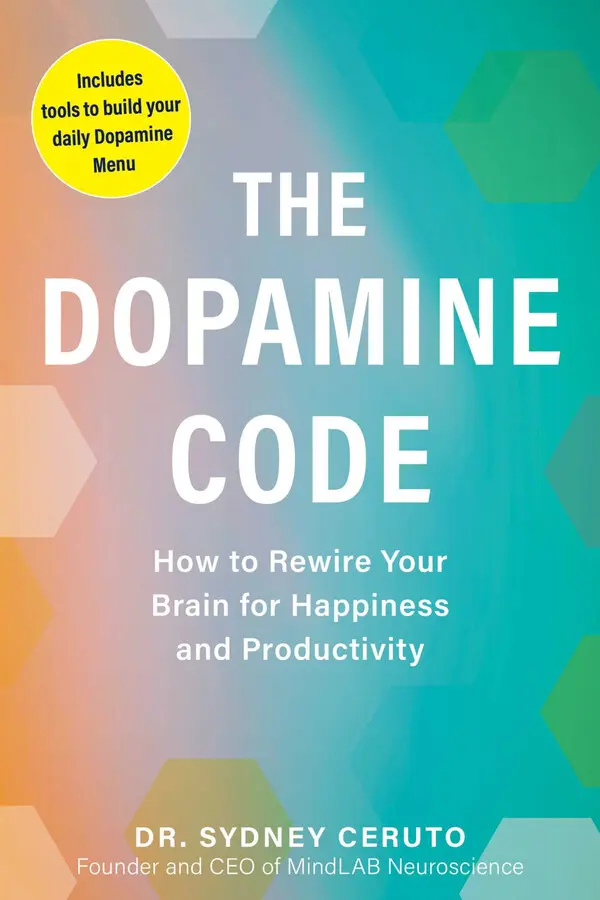
The Dopamine Code

Decode Your Drive

Why Your Brain Rewards the Wrong Things

Your brain's reward system runs every decision, every craving, every crash — and it was never designed for the life you're living. The Dopamine Code is Dr. Ceruto's framework for understanding the architecture behind what drives you, drains you, and keeps you locked in patterns that willpower alone will never fix.

Published by Simon & Schuster, The Dopamine Code is Dr. Ceruto's framework for building your own Dopamine Menu — a personalized system for motivation, focus, and enduring life satisfaction.

Order Now

Ships June 9, 2026

The Dopamine Code by Dr. Sydney Ceruto — Decode Your Drive
Locations

The Intelligence Brief

Neuroscience-backed analysis on how your brain drives what you feel, what you choose, and what you can’t seem to change — direct from Dr. Ceruto.