Divorce & Separation in Miami

Miami's divorce-relocation pipeline, cross-state custody complexity, and Latin family shame architecture create a layered activation that standard support does not address.

Divorce is not a legal event that also affects the emotions. It is a neurological rupture — the removal of the person who was most deeply embedded in the brain's co-regulation architecture. The partner who organized the threat-detection system's sense of safety — whose patterns were woven into the brain's daily predictions — is being extracted from the neural infrastructure that formed around them. The brain experiences this as an attachment amputation. It responds with the same alarm, disorientation, and loss-of-ground that any significant structural removal triggers in a system built for stability.

At MindLAB Neuroscience, I work at the level of the neural architecture undergoing this rupture. Divorce reorganization is not a grieving process to be supported through to completion. It is a reconstruction project — rebuilding the identity architecture that organized itself around "us" into something that can function, clearly and without constant compensatory effort, as "I." That reconstruction requires precision. The emotional activation of divorce makes it nearly impossible to execute the prefrontal reorganization work it demands. My work creates the conditions under which the nervous system can do what the circumstances require of it.

Book a Strategy Call

Key Points

  1. This produces the specific disorientation of post-separation life: the pull toward reconciliation that is not actually about wanting reconciliation but about the nervous system attempting to resolve an unresolved attachment disruption.
  2. The removal of the co-regulating partner activates the brain's attachment system at its deepest operational layer.
  3. The goal of working at the neural architecture level is not the elimination of loss or the acceleration of grief into a schedule.
  4. The self-organizing neural architecture that can generate a stable, coherent sense of self that does not require the partnership as its foundation.
  5. The most underestimated dimension of divorce is what it removes from the nervous system's infrastructure before a single legal document is filed.
  6. The result is the exhaustion and fragmentation that characterizes the mid-divorce period: not because the person is weak, but because the neural system is being asked to execute contradictory programs at the same time.
  7. The reconstruction project cannot begin cleanly until the activation load of the divorce process itself reduces enough to make prefrontal function available for it.

What the Brain Loses When a Marriage Ends

“The reconstruction is not a return — it is a genuine forward construction of an identity architecture that functions without the partnership as its organizing structure.”

The most underestimated dimension of divorce is what it removes from the nervous system’s infrastructure before a single legal document is filed. The partner was not simply a companion. They were a co-regulator — a person whose predictable presence, whose familiar nervous-system patterns, whose physical proximity and emotional attunement had become integrated into the brain’s regulatory architecture over months or years of shared living. When you sleep next to someone long enough, your nervous system learns to regulate partly against theirs. When you know someone’s rhythms — when they’re tired, when they’re troubled, when the day has been bad and when it has been good. Your threat-detection system uses that knowledge as an ongoing calibration input. Co-regulation is not optional or supplementary. It is structural.

The removal of the co-regulating partner activates the brain’s attachment system at its deepest operational layer. The attachment system did not evolve to distinguish between chosen separation and loss. It is designed to detect disruption in the attachment bond and to mobilize the organism toward reestablishing proximity with the attachment figure. The result is the specific, disorienting experience of wanting to call the person you are leaving. Their absence is felt most acutely in the moments that previously included them — the ordinary architecture of daily life now alien because the person who gave it familiar shape is gone. These responses are not signs of weakness or confusion about the decision. They are the nervous system executing its attachment-preservation programming in response to the severance of an attachment bond.

What makes divorce distinct from other attachment losses is its adversarial dimension. Grief after loss has a clear emotional structure. Divorce grief operates alongside anger, alongside legal negotiation, alongside the presence of the lost person. Who is still real, still visible, still generating demands and responses — in a situation that requires ongoing contact even as the attachment bond is being dissolved. The nervous system is being asked to simultaneously grieve the loss of the attachment figure and manage the ongoing functional relationship with that same person as a co-parent, asset negotiator, or custody adversary. These are structurally incompatible demands. The result is the exhaustion and fragmentation that characterizes the mid-divorce period: not because the person is weak, but because the neural system is being asked to execute contradictory programs at the same time.

The Identity Reconstruction Problem

Marriage produces identity architecture. Not metaphorically — literally. The brain’s self-organizing systems, over the years of a marriage, reorganize around the fact of the partnership. Preferences, routines, social networks, professional decisions, geographic choices, and the basic narrative structure of a life all develop with the relationship as an organizing variable. “We” is not merely a pronoun. It is a neural model — a working representation of the self that includes the partner as a structural component.

When that model loses its anchor, the identity architecture does not simply revert to its pre-marriage form. The person who existed before the marriage has been modified by years of relational organization. The social network that once existed independently has reorganized around the couple. The professional trajectory that was plotted with a partner’s income as a variable has to be replanned without it. The geographic choices that made sense as a family unit may no longer function as a solo arrangement. Every domain of life that incorporated the marriage as an organizing fact now requires active prefrontal reconstruction — replanning, re-decision, re-narrating. In a moment when the prefrontal system is operating under the heaviest emotional load it will experience in ordinary adult life.

This is the structural trap of divorce. The cognitive reconstruction the situation demands requires exactly the capacities that the emotional activation of divorce most severely degrades. Prefrontal function — the brain’s capacity for clear planning, accurate self-assessment, and future-oriented decision-making — is significantly compromised under chronic grief and threat activation. The person most in need of sound judgment is operating the neural systems that generate it at a significant deficit. The result is the characteristic mid-divorce pattern. Decisions made under activation require revision when the activation lifts. Clarity arrives in brief windows, then collapses. The mind needed to organize the transition is itself unavailable.

When the Nervous System Cannot Find Forward

The attachment system’s response to bond severance includes a search phase — a period during which the nervous system is oriented toward reestablishing proximity with the lost attachment figure. In straightforward grief, this phase is time-bounded; the search encounters evidence of permanent absence and the brain begins the work of reorganizing around that fact. In divorce, the search phase is complicated by the continued presence and functional availability of the person being separated from. The attachment figure is not gone. They are simply changing their role — from partner to co-parent, from primary attachment figure to the person across the mediation table. The nervous system’s search architecture cannot cleanly update this information. The person is present; the bond is severed; the system continues orienting toward the original relationship structure even as the legal process dismantles it.

This produces the specific disorientation of post-separation life: the pull toward reconciliation that is not actually about wanting reconciliation but about the nervous system attempting to resolve an unresolved attachment disruption. The intrusive memories that function as the attachment system’s attempt to keep the neural model of the relationship available. The hypervigilance about the former partner’s behavior, location, and emotional state that is not surveillance but the threat-detection system remaining calibrated to a relationship that was once its primary source of safety information.

Parallel to the attachment disruption, the identity reorganization is running — slowly, unevenly, and against the current of everything else happening simultaneously. The brain needs to generate a new working model of the self not organized around the partnership. It must do this inside a legal process that continuously reinforces the partnership’s salience — requiring decisions about shared assets, shared children, and shared futures. The reconstruction project cannot begin cleanly until the activation load of the divorce process itself reduces enough to make prefrontal function available for it. Most people reach this phase long after the legal process has concluded — and often without understanding that the work of actual reorganization is still ahead of them.

Where Patterns From the Marriage Go

Divorce does not remove the relational patterns that the marriage produced. The communication dynamics, the defensive architectures, the conflict-response sequences, the emotional management strategies that developed within the marriage. These were learned by the nervous system through years of repetition, and they are available as the default programs for managing relational difficulty. They arrive, intact, in the next significant relationship, the co-parenting dynamic, and the professional and social contexts where the newly single person is navigating interpersonal territory.

The person who managed conflict through withdrawal in the marriage will withdraw in co-parenting disagreements. The person who appeased in order to avoid escalation will appease in custody negotiations to their own detriment. The patterns the nervous system learned as survival strategies within the marriage do not become irrelevant when the marriage ends. They become the operating architecture for whatever comes next — unless they are examined and reorganized at the level where they were encoded.

This is why the post-divorce period is so often characterized by a disorienting sense of repetition: the same difficulties, the same emotional responses, the same exhausting sequences. In a different context, with different people, after the relationship that supposedly produced them has ended. The relationship ended. The neural programs it left behind did not. My work addresses those programs directly — not through analysis of the marriage. Through precise work on the nervous system patterns the marriage encoded and that the brain is still running as its current operating architecture.

What Reorganization Actually Looks Like

The goal of working at the neural architecture level is not the elimination of loss or the acceleration of grief into a schedule. Both of those approaches misunderstand what the nervous system needs. The goal is restoring the capacity that the emotional activation of divorce has degraded. The prefrontal function that makes identity reconstruction possible, the regulatory capacity that allows the attachment system’s response to complete its cycle rather than loop indefinitely. The self-organizing neural architecture that can generate a stable, coherent sense of self that does not require the partnership as its foundation.

When the regulatory capacity is restored, the grief response can complete rather than running in chronic, unresolved activation. When the prefrontal system is functioning without the suppression of emotional flooding, the identity reconstruction work becomes possible — replanning, re-decision, re-narrating — with genuine clarity rather than forced urgency under activation. When the relational patterns the marriage encoded are examined and reorganized, what arrives next is shaped by conscious choice rather than by the nervous system’s available programs from the previous architecture. The outcome is not a person who has recovered from divorce. It is a person whose nervous system is organized around who they are now — not around the “we” that is no longer the structural reality of their life.

The Identity Architecture Crisis

The most disorienting aspect of divorce is not the emotional pain. It is the structural disorientation of discovering that the self that existed inside the marriage does not translate cleanly into life outside it. The brain’s self-organizing architecture is not fixed. Over the course of a marriage, the neural systems responsible for self-representation. For organizing the answers to “who am I,” “what matters to me,” “what am I for” — incorporate the relationship as a structural variable. The partnership becomes part of the operating definition of the self, not as a conscious decision but as the natural result of years of shared living, shared decision-making, and shared construction of a life. Divorce does not simply end the relationship. It exposes the degree to which the identity architecture was built around it.

This is why the immediate post-divorce period so often produces a specific kind of groundlessness that people struggle to name. It is not a depressive collapse, though it can develop into one. It is not simply grief, though grief is present. It is the disorientation of operating a self-concept that was organized around a structural element that is no longer there — like trying to navigate a building after a load-bearing wall has been removed. The structure is standing, but nothing aligns the way it used to, and the pathways through it no longer lead where expected.

The identity reconstruction that divorce requires is not a recovery of the pre-marriage self. That self has been modified by the years of the partnership. The social architecture developed differently. The professional trajectory moved in directions that incorporated the marriage as a variable. The self-concept accumulated experiences, adaptations, and organized commitments that did not exist before. The reconstruction is not a return — it is a genuine forward construction of an identity architecture that functions without the partnership as its organizing structure. That construction requires prefrontal capacity, time, and conditions that support it. The divorce process itself routinely fails to provide those conditions.

Why Divorce Grief Differs from Other Loss

Divorce produces grief, but it is not the grief structure that accompanies death or disappearance. The attachment figure is not gone. They are present, functional, and often specifically antagonistic — negotiating, disputing, requiring responses that activate the same neural systems the attachment bond ran through. The brain’s grief architecture evolved in the context of irreversible loss: the attachment figure is absent and cannot be reached. Divorce presents the nervous system with a fundamentally different structural challenge: the person being grieved is continuously present, available, and in active relational contact. The brain cannot complete the grief cycle the way it would with a death. The stimulus that triggers the cycle — the person themselves — is being continuously reintroduced.

Marble console with crystal brain sculpture and MindLAB journal in warm Miami evening light with tropical hardwood and copper accents

The adversarial dimension adds a layer that ordinary grief never produces. Grief after bereavement is not organized around a legal opponent. Divorce grief operates alongside the specific threat activation of litigation — the knowledge that the person you are grieving is currently receiving advice designed to protect their interests at potential cost to yours. The prefrontal system is being asked to make accurate assessments about asset division, custody arrangements. Post-divorce planning while the attachment system is running grief and the threat-detection system is treating the opposing legal position as a danger signal. These are three simultaneous neural demands on systems that share regulatory resources. The exhaustion of the active divorce period is not weakness. It is what happens when those systems are all running at high load simultaneously.

A further distinction: divorce grief often lacks the social container that surrounds bereavement. Death produces a community response — meals, visits, acknowledgment, explicit permission to be in grief. Divorce produces a different social response, often organized around taking sides, assigning blame, offering unsolicited assessments of whether the decision was right. Implying that the grieving person should be further along in their recovery than they appear to be. The absence of a clear social container for divorce grief means that the nervous system is processing an attachment loss of significant magnitude without the communal regulation that accompanies more legible forms of loss. The grief is real; the cultural permission to be in it is inconsistent. This asymmetry is itself a source of activation that compounds the underlying experience.

What Rebuilding Looks Like

Rebuilding after divorce is not a linear process. It is not primarily about emotional recovery in the conventional sense — moving through stages toward acceptance and returning to a previous baseline. The nervous system does not have a pre-divorce baseline to return to. The marriage changed it. The reconstruction is forward: building a nervous system that is organized around the current reality of an independent life, that can regulate without the co-regulating partner as an available anchor. That holds a coherent, stable identity that does not require the partnership as its structural foundation.

The first phase of genuine rebuilding — which often begins only after the acute legal process has concluded — is regulatory restoration. The chronic activation of the divorce period depletes the nervous system’s regulatory resources. The threat-detection system has been running at elevated sensitivity for an extended period. The prefrontal system has been operating under sustained emotional suppression. The attachment system has been in search mode, oriented toward a bond that is being dissolved. Before the construction of a genuinely new architecture is possible, the system needs to come out of the chronic activation state. Not by suppressing what is happening, but by working precisely at the level of the regulatory deficit the divorce period has produced.

The second phase is identity reconstruction — the active prefrontal work of replanning, re-decision, and re-narrating the life architecture in a form that functions without the partnership as its organizing variable. This is not an emotional exercise. It is a cognitive and neural construction project. It requires genuine prefrontal availability — the capacity for accurate self-assessment, forward-looking planning, and narrative coherence — that the regulatory restoration phase makes possible. What emerges is not a recovered version of the pre-marriage self. It is a genuinely new architecture: one that holds the history of the marriage without being organized around it, that can function in the relational contexts the divorce has produced. That is capable of genuine forward movement rather than continuous renegotiation with the past.

Marker What You Experience What's Happening Neurologically What We Restructure
the Brain Loses When a The result is the specific, disorienting experience of wanting to call the person you are leaving. The most underestimated dimension of divorce is what it removes from the nervous system's infrastructure before a single legal document is filed. The most underestimated dimension of divorce is what it removes from the nervous system's infrastructure before a single legal document is filed.
Identity Reconstruction Problem In a moment when the prefrontal system is operating under the heaviest emotional load it will experience in ordinary adult life. Prefrontal function — the brain's capacity for clear planning, accurate self-assessment, and future-oriented decision-making — is significantly compromised under chronic grief and threat activation. The brain's self-organizing systems, over the years of a marriage, reorganize around the fact of the partnership.
the Nervous System Cannot Find The attachment system's response to bond severance includes a search phase — a period during which the nervous system is oriented toward reestablishing proximity with the lost attachment figure. The attachment system's response to bond severance includes a search phase — a period during which the nervous system is oriented toward reestablishing proximity with the lost attachment figure. In straightforward grief, this phase is time-bounded; the search encounters evidence of permanent absence and the brain begins the work of reorganizing around that fact.
Where Patterns From the Marriage The communication dynamics, the defensive architectures, the conflict-response sequences, the emotional management strategies that developed within the marriage. Through precise work on the nervous system patterns the marriage encoded and that the brain is still running as its current operating architecture. My work addresses those programs directly — not through analysis of the marriage.
Reorganization Actually Looks Like The goal of working at the neural architecture level is not the elimination of loss or the acceleration of grief into a schedule. The goal of working at the neural architecture level is not the elimination of loss or the acceleration of grief into a schedule. The goal of working at the neural architecture level is not the elimination of loss or the acceleration of grief into a schedule.
Identity Architecture Crisis The self-concept accumulated experiences, adaptations, and organized commitments that did not exist before. Over the course of a marriage, the neural systems responsible for self-representation. It is the structural disorientation of discovering that the self that existed inside the marriage does not translate cleanly into life outside it.

Why Divorce & Separation Matters in Miami

Divorce & Separation in Miami

Miami is one of the most active divorce-relocation corridors in the country. The Northeast pipeline — professionals and families arriving from New York, New Jersey, and Connecticut. Brings with it a specific pattern: one spouse relocated enthusiastically and the other followed under conditions of ambivalence or obligation. When the marriage fails, the relocation itself becomes part of the rupture. The person who moved to accommodate the partnership is now in a city chosen for reasons that no longer exist. They are distant from the support architecture they left behind, navigating divorce in a place where they have not yet built the connections that make a rupture of this scale survivable.

Custody across state lines is a distinct legal and emotional complexity that Miami divorce frequently produces. When one parent’s origin network is in New York and the other’s is in Miami — or when post-divorce plans include relocation back North. The custody architecture has to accommodate geographic distance in a way that requires the nervous system to hold the child’s attachment to both parents as a live, ongoing project rather than a resolved arrangement. The threat-detection system remains activated around the child’s wellbeing in a way that does not resolve when the legal agreement is signed. It resolves when the arrangement stabilizes enough for the nervous system to stop scanning it for danger.

Latin family structures impose a specific shame architecture on divorce that operates independently of the individual’s own values. In Venezuelan, Colombian, Cuban-American, and broader Latin communities, divorce carries social weight that extends beyond the couple into the family system. The extended family’s response — the aunts, the grandparents, the community’s assessment of what the divorce means — becomes part of the nervous system’s threat load. The person is grieving the marriage while simultaneously managing the social threat of being seen as someone who failed at the thing the family system places enormous weight on. That layered activation — attachment loss plus identity threat plus social shame — is a specific neural pattern that requires specific attention rather than generalized support.

Miami’s rhythm demands that the newly divorced person perform recovery faster than the nervous system can execute it. The social culture is dense, visible, and organized around projection. The Brickell happy hour, the South Beach Saturday, the Coconut Grove school pickup where the community is watching — these are evaluation environments that arrive before the nervous system has had time to reorganize. The person is asked to present as intact while the internal architecture is still in active reconstruction. The performance cost is enormous, and it delays genuine recovery by keeping attentional and regulatory resources occupied with management rather than reorganization. My work in Miami addresses the specific neural patterns this city’s divorce landscape produces.

The professional relocation population in Miami adds a second layer to the divorce activation load. The move was often made on the basis of a shared vision — tax advantages, lifestyle, the promise of a different pace. And the divorce dismantles not only the relationship but the rationale for the geographic choice. The person examining whether to remain in Miami is doing so while their prefrontal system is operating under the heaviest emotional load of the divorce period. Is precisely when geographic decisions of this magnitude should not be made. And yet the practical reality — leases, school enrollments, professional commitments — requires that they be addressed before the nervous system has the regulatory capacity to address them well.

My work with people navigating divorce in Miami takes seriously the compounding weight of the relocation dimension, the cross-cultural shame architecture. The professional performance demands of a city that moves at a pace that allows very little space for the internal reconstruction that the transition requires. The work is not support. It is precision reorganization — at the level of the neural systems that are actually running the activation, not at the surface of the behavior and emotion it produces.

Dr. Sydney Ceruto, PhD — Founder, MindLAB Neuroscience

Dr. Sydney Ceruto, PhD — Founder & CEO, MindLAB Neuroscience

Dr. Ceruto holds a PhD in Behavioral & Cognitive Neuroscience from NYU and two Master’s degrees from Yale University. She lectures at the Wharton Executive Development Program at the University of Pennsylvania and has been an Executive Contributor to the Forbes Coaching Council since 2019. Dr. Ceruto is the author of The Dopamine Code (Simon & Schuster, June 2026). She founded MindLAB Neuroscience in 2000 and has spent over 26 years pioneering Real-Time Neuroplasticity™ — a methodology that permanently rewires the neural pathways driving behavior, decisions, and emotional responses.

References

Sbarra, D. A., & Hazan, C. (2008). Coregulation, dysregulation, self-regulation: An integrative analysis and empirical agenda for understanding adult attachment, separation, loss, and recovery. Personality and Social Psychology Review, 12(2), 141–167. https://doi.org/10.1177/1088868308315702

Bowlby, J. (1980). Attachment and Loss: Vol. 3. Loss: Sadness and Depression. Basic Books.

Slotter, E. B., Gardner, W. L., & Finkel, E. J. (2010). Who am I without you? The influence of romantic breakup on the self-concept. Personality and Social Psychology Bulletin, 36(2), 147–160. https://doi.org/10.1177/0146167209352250

Going, J., & Hazan, C. (2011). Adult attachment and emotion regulation. In B. Lichtenberg & S. Auerbach (Eds.), Attachment Theory and Research. Psychological Inquiry, 22(3), 167–172. https://doi.org/10.1080/1047840X.2011.574113

Success Stories

“The divorce wasn't destroying me emotionally — it was destroying me neurologically. My amygdala was treating every interaction with my ex, every legal update, every quiet evening as a survival-level threat. Years of talk-based approaches hadn't touched it. Dr. Ceruto identified the attachment disruption driving the response and restructured it at the root. The threat response stopped. Not because I learned to tolerate it — because the pattern was no longer running.”

Daniela M. — Attorney North Miami Beach, FL

“When the inheritance came, it didn't feel like a gift — it felt like a grenade in every family relationship I had. I couldn't make a single financial decision without a flood of guilt and second-guessing. Years of talking through it hadn't changed anything. Dr. Ceruto identified the neural loop connecting money to fear of family rejection and dismantled it. The paralysis didn't fade — it stopped.”

Vivienne R. — Philanthropist Palm Beach, FL

“I'd relocated internationally before, but this time my nervous system wouldn't settle. Everything unfamiliar registered as danger — new people, new routines, even the sound of a different language outside my window. Pushing through it only deepened the pattern. Dr. Ceruto identified that my nervous system was coding unfamiliarity itself as threat and restructured the response at its source. The world stopped feeling hostile. I stopped bracing.”

Katarina L. — Gallerist Zurich, CH

“When my youngest left for college, I didn't just feel sad — I felt erased. My entire sense of self had been wired to caregiving for two decades, and I didn't know who I was without it. Years of talk-based approaches hadn't touched it. Dr. Ceruto mapped the identity circuitry that had fused with the role and restructured it. I didn't find a new purpose — I found the one that had been underneath the whole time.”

Diane L. — Nonprofit Director Chicago, IL

“When I first started with Dr. Ceruto, I’d felt at a standstill for two years. Over several months, we worked through my cognitive distortions and I ultimately landed my dream job after years of rejections. She is both gentle and assertive — she tells it like it is, and you’re never second-guessing what she means. Most importantly, she takes a personal interest in my mental, emotional, and physical wellbeing. I have no doubt I’ll be in touch with Dr. Ceruto for years to come.”

Chelsea A. — Publicist Dublin, IE

“What I appreciate about Dr. Ceruto is her candid, direct approach — truly from a place of warmth and support. Every week delivered concrete value, and I never felt like I was wasting time the way I had with traditional methods. She draws from her clinical and academic expertise to dig deeper into the roots of issues. She helped me make enormous progress after a year of personal loss, including getting my faltering career back on track. She follows up after every session with additional materials.”

Eric F. — Surgeon Coral Gables, FL

Frequently Asked Questions About Divorce & Separation

Why does part of me still want to reach out to my ex, even though I know the relationship has to end?

Because the part of you that wants to reach out is not operating from the same system as the part of you that knows the relationship has to end. The attachment system — the brain's primary architecture for maintaining proximity to bonded figures — does not evaluate the quality of the relationship or the rationality of continuing it. It detects a disruption in an attachment bond and generates the pull toward reestablishing proximity. That pull is neurological, not a failure of conviction. Your ex was embedded in the nervous system's co-regulatory architecture — the relationship organized how the brain's threat-detection system registered safety and ground. The attachment system is trying to restore what it learned to depend on. Understanding that the pull is architectural, not indicative of what you should do, is the first step toward not being run by it.

Why does the grief feel worst in ordinary moments — waking up, making coffee, driving to work?

Because those ordinary moments were the architecture of the shared life. The nervous system did not only encode the marriage in the significant events — the celebrations, the conflicts, the milestones. It encoded the partnership in the texture of daily life: who made the coffee, how the morning began, what the drive to work sounded like with someone else in the car. These routines were co-regulatory anchors — predictable patterns that the threat-detection system used as evidence that the environment was stable and safe. When the partnership ends, the ordinary moments are no longer ordinary. Each one registers as evidence of the structural change, and the attachment system responds. The grief in the small moments is not disproportionate. It is the nervous system accurately processing the full scope of what has changed.

My divorce was the right decision. So why do I feel so destabilized?

Because the rightness of the decision does not change what the nervous system is experiencing. The attachment system does not evaluate whether the bond that was severed should have been severed — it responds to the severance. The co-regulation that the partnership provided does not become unnecessary because the relationship was unhealthy; it becomes unavailable. The identity architecture that organized around the marriage does not dissolve cleanly because the marriage should have ended; it requires active reconstruction. The destabilization after a chosen divorce is not ambivalence about the decision. It is the nervous system processing the real consequences of the decision — consequences that were worth choosing, and that are nonetheless significant. Those two things can both be true.

How long does it actually take to reorganize after a significant marriage?

The honest answer is that the timeline is determined by the depth of the reorganization required, not by the duration of the marriage alone. A marriage that organized the identity architecture deeply — where professional decisions, geography, and self-concept all developed around the partnership — may require more fundamental reconstruction than a longer marriage that preserved more independent structure. What research consistently shows is that the legal finalization of a divorce does not correspond to the completion of the nervous system's reorganization. The legal process ends when the paperwork is done. The neural reorganization ends when the identity architecture has genuinely reconstituted around the person's independent reality — and that work, done precisely, requires time, capacity, and the right kind of support.

How do I co-parent effectively when being around my ex activates everything the divorce was trying to resolve?

The activation you experience around your ex is not a character flaw or evidence that the co-parenting arrangement won't work. It is the nervous system responding to the presence of someone who was the primary attachment figure — now occupying a fundamentally different relational role that the nervous system was never trained to navigate. Co-parenting requires the brain to maintain a functional, low-conflict relationship with someone it is simultaneously grieving, and those are contradictory neural demands. What makes it possible over time is not suppression of the activation but reorganization of the underlying architecture. Proximity to the former partner stops activating the attachment system at this intensity when the nervous system has genuinely reconstituted around a different relational reality.

Will I keep repeating the same patterns in future relationships?

Without specific work at the level of where the patterns were encoded, yes — the probability is significant. The relational programs the nervous system learned inside the marriage are available as default operating architecture for any subsequent relationship that presents similar conditions. This is not because the person is inherently limited. It is because the brain learns through repetition, encodes what it has practiced, and applies those patterns in contexts that share enough structural features to trigger their use. What changes this outcome is not simply intention or awareness — though both matter. It is precise, neural-level work on the specific patterns that the marriage encoded, targeting them at the architectural level where they live rather than managing their behavioral expressions above the surface.

Is a Strategy Call conducted in person or virtually?

The Strategy Call is a one-hour phone consultation — not a virtual session and not an in-person meeting. It is a precision assessment: I evaluate your specific situation, the neural patterns you are navigating, and whether my methodology is the right fit for what you are dealing with. The fee is $250. This does not apply toward any program investment. I review what you share before the call takes place to ensure I can offer something genuinely useful for your specific circumstances. The call is a direct assessment of fit — not a formality, not a preliminary sales conversation. If my approach addresses what you are dealing with, you will have a clear picture of what the work involves. If it does not, I will tell you that directly.

My children seem to be handling it fine. Should I focus on them rather than my own process?

Children are far better at concealing distress than adults typically recognize, and their presentation during an acute family transition is frequently not an accurate indicator of their internal state. The most reliable predictor of how children navigate this transition is the quality of emotional regulation and co-parenting function their parents can maintain. A parent in chronic, unresolved activation — with prefrontal function compromised by ongoing grief — is less able to provide the regulated, stable presence that children's attachment systems require during significant disruption. Doing your own reorganization work is not in competition with your children's wellbeing. It is, in a direct neurological sense, part of providing for it.

I am not sure whether to leave. Can this work help with that uncertainty?

Yes. The decision of whether to leave a marriage is among the most significant a person makes. It is frequently made from within chronic threat activation — the precise condition that most compromises the prefrontal system's capacity for accurate, forward-looking assessment. What I work on is not which decision is right. That is yours to make, and I will not direct it. What I work on is restoring the prefrontal capacity and nervous-system clarity that makes a genuine, non-reactive decision possible. When you reach a conclusion, you have reasonable confidence it emerged from your actual values — not from the activation state of a nervous system in sustained distress.

How do I take the first step?

The entry point is a one-hour Strategy Call by phone, at a fee of $250. Before the call takes place, I review what you share about your situation to confirm that my approach addresses what you are navigating. I do not take every inquiry — the call is a genuine assessment of fit, not a scheduling formality. During the hour, I evaluate the specific patterns you are dealing with, the architecture behind them, and what precision work in this area would actually involve for your situation. If my approach is the right fit, you leave the call with a clear picture of what the work entails and what outcomes are realistic. If it is not the right fit, I will tell you that directly.

Also available in: Wall Street · Midtown Manhattan · Beverly Hills · Lisbon

Take the First Step

The Strategy Call is a focused conversation with Dr. Ceruto that maps the specific neural mechanisms driving your concerns and determines the right path forward.

Book a Strategy Call
MindLAB Neuroscience consultation room

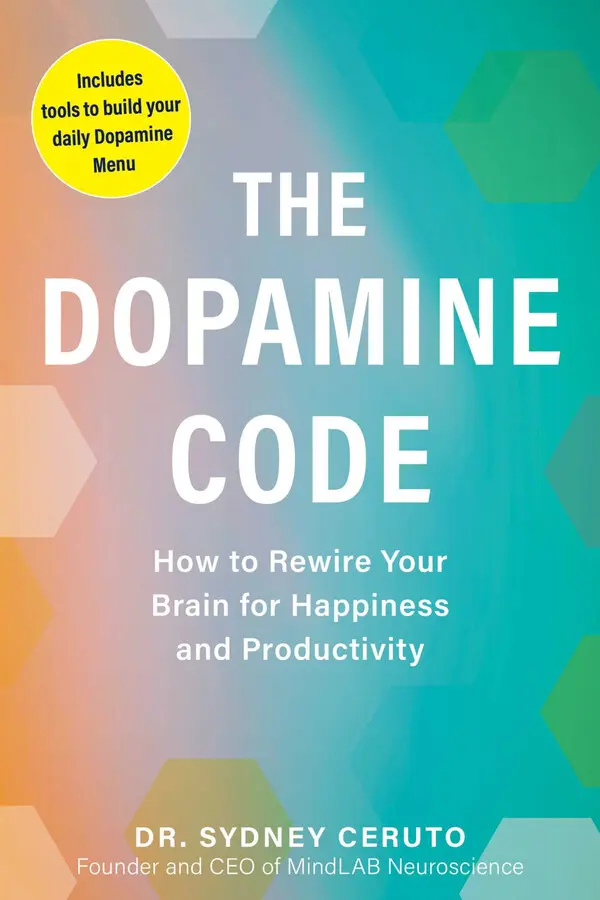
The Dopamine Code

Decode Your Drive

Why Your Brain Rewards the Wrong Things

Your brain's reward system runs every decision, every craving, every crash — and it was never designed for the life you're living. The Dopamine Code is Dr. Ceruto's framework for understanding the architecture behind what drives you, drains you, and keeps you locked in patterns that willpower alone will never fix.

Published by Simon & Schuster, The Dopamine Code is Dr. Ceruto's framework for building your own Dopamine Menu — a personalized system for motivation, focus, and enduring life satisfaction.

Order Now

Ships June 9, 2026

The Dopamine Code by Dr. Sydney Ceruto — Decode Your Drive
Locations

The Intelligence Brief

Neuroscience-backed analysis on how your brain drives what you feel, what you choose, and what you can’t seem to change — direct from Dr. Ceruto.