





Family Conflict Resolution in Wall Street

Finance hours reshape the family's regulatory architecture around absence. Wealth-complicated dynamics produce conflict that runs through threat-detection encoding, not disagreement about money.

The same fight. Every holiday. Every phone call. The pattern runs itself.

Family conflict is neural architecture — not personality.

Book a Strategy Call

Key Points

  1. The quiet between conflicts is not neutral for nervous systems that have been encoded to read this particular relational environment as threatening.
  2. The conflict in their current family — the marriage, the new family they have created — is being processed by a nervous system that learned its conflict programs in a very different environment.
  3. What changes is the neural architecture underlying how that conflict moves through the family system.
  4. When the co-regulation network destabilizes — when the marital nervous system dysregulates, or when a parent's threat-response system is chronically activated — the effect propagates through the family architecture.
  5. The mother whose parenting style generates conflict with her adult children was parented in a way that trained her nervous system's relational patterns.
  6. What one person's nervous system stops doing in the conflict cycle changes what the cycle can do.
  7. The goal is a family system in which the nervous systems of the people inside it are capable of genuine co-regulation — not just the absence of escalation, but the presence of actual regulatory support.

Why Families Fight the Same Fight, Again and Again

“You can know, with precision, that your parent's criticism activates your threat-detection system in a way it has since childhood.”

Every family develops a conflict repertoire — a set of patterns that recur with enough reliability that the people inside them can sometimes predict, word for word, where the argument will go. The content changes. The destination does not. This is not a failure of effort, intelligence, or care. It is the predictable output of nervous systems that have learned each other’s threat signatures and respond to them with encoded protective programs that were adaptive once and are now simply automatic.

The amygdala — the brain’s primary threat-detection structure — learns through repetition. In a family system, that learning happens across years and decades of shared experience. Each person’s threat-detection architecture encodes not just what is dangerous in the abstract, but what this specific family member does when they are scared, defensive, or overwhelmed. The tone of voice. The particular phrase that signals escalation is coming. The silence that precedes withdrawal. The nervous system reads these signals faster than conscious thought and initiates its protective response before the interaction has fully developed.

This is why insight often fails to interrupt family conflict. You can know, with precision, that your parent’s criticism activates your threat-detection system in a way it has since childhood. You can name the pattern, trace its history, understand its logic. And the next time that tone of voice arrives, the amygdala fires before the analysis completes. Because the threat-detection system does not wait for permission from the reasoning mind before initiating the response it has practiced thousands of times.

What follows is co-dysregulation: one person’s nervous system in threat-response activating the threat-detection system of the person across from them, whose protective response then amplifies the first person’s activation, in a loop that can escalate to significant harm or collapse to exhausted withdrawal. And then reset, ready to run again the next time the triggering conditions appear. The loop is the conflict. And the loop lives in neural architecture, not in the content of what anyone said.

The specificity of family encoding is one of the things that makes family conflict so resistant to general approaches. Your threat-detection system did not learn a generic conflict pattern. It learned this family’s specific threat signatures — the particular combination of voice, timing, topic, and relational position that signals danger in this relational environment. That specificity is also why the work, to be effective, must be equally specific. Generic communication frameworks do not reach the level of specificity at which the encoding operates. The conflict does not respond to general principles. It responds to precision work at the level of the specific neural architecture that is running it.

The Architecture of Protection

Protective patterns are not character defects. They are solutions the nervous system developed to manage threat in a relational environment that required management. The person who escalates when criticized developed escalation as a protective response to an environment where passivity was dangerous. The person who goes silent when conflict rises developed withdrawal as a protective response to an environment where engagement made things worse. The person who generates conflict to stay in control developed that strategy because the alternative — waiting for what came next — was intolerable.

These strategies worked. That is why they encoded. The nervous system files successful threat-management approaches as operational programs and makes them available automatically when the threat signature returns. The problem is that the threat signature it is reading — the pattern of cues that signals danger — is built from a specific relational history that may no longer reflect the current situation. The parent who learned to escalate in a household where passivity meant defeat brings that program into a marriage, into parenting, into family interactions that do not share the conditions that wrote the original encoding. The escalation is not proportionate to the current threat. It is proportionate to the threat that trained it.

In a family system, every person is bringing their own encoded protective repertoire into interaction with people who have developed their own protective repertoire partly in response to theirs. A family’s conflict pattern is not the sum of individual defects. It is an emergent property of nervous systems that have been co-regulating and co-dysregulating for years — each one’s threat-detection architecture calibrated, at least in part, by the others.

This is why family conflict that began between two people often spreads structurally. The nervous systems in the family are connected. When the co-regulation network destabilizes — when the marital nervous system dysregulates, or when a parent’s threat-response system is chronically activated — the effect propagates through the family architecture. Children’s nervous systems are particularly susceptible to the regulatory state of primary attachment figures. They absorb the dysregulation not as information about the conflict’s content but as a signal about the safety of the environment. The threat-detection architecture they are building is being shaped by the nervous-system states of the people they depend on for regulation.

When the Conflict Is Generational

Family conflict patterns frequently cross generations. The mother whose parenting style generates conflict with her adult children was parented in a way that trained her nervous system’s relational patterns. Her threat-detection architecture learned what proximity means, what criticism signals, what care looks like, in a family system that had its own co-dysregulation history. She is not repeating the pattern consciously. She is enacting the relational architecture she was taught, in an environment whose encoded cues match hers closely enough that the programs run automatically.

Generational transmission of conflict patterns is not primarily about repeated exposure to the same behaviors, though that is part of it. It operates through the nervous system’s earliest developmental encoding. The infant’s regulatory architecture is built in relationship with primary caregivers whose own regulatory capacity — or dysregulation — is the relational environment the infant is adapting to. A caregiver whose own threat-detection system is chronically activated provides a regulatory environment that encodes differently than one whose nervous system is calibrated toward safety. The encoding is not about the caregiver’s intentions. It is about the state of the nervous system doing the caregiving.

This is why insight-based approaches to generational family conflict often hit a wall. Understanding the pattern intellectually does not recalibrate the nervous-system architecture that is running it. The adult who has full insight into how their family of origin shaped their relational patterns can still find that, in the presence of their family, the old threat-response programs activate with full force. Because the family environment contains the specific encoded threat signatures that wrote those programs. The insight is real. The architecture underneath it has not changed.

Working at the neural level with generational family conflict means identifying the specific threat-detection patterns each person is bringing to the system, understanding how those patterns interact to produce the recurring conflict cycle. Targeting the underlying encoding — not just the behavioral expressions of it — with the precision required to produce durable reorganization rather than temporary management.

What Happens Between the Conflicts

Family conflict is not only the acute escalation. It is also what the nervous system does between the visible episodes. The anticipatory monitoring, the hypervigilance to early warning signals, the low-grade tension that lives in shared space when the threat-detection system has learned that this family environment carries real activation risk. The quiet between conflicts is not neutral for nervous systems that have been encoded to read this particular relational environment as threatening.

Families living inside chronic conflict develop a baseline dysregulation that becomes the ambient condition of shared life. Mealtimes carry tension. Holidays are loaded. Simple logistical coordination becomes fraught because the nervous system is not evaluating the calendar or the grocery list. It is evaluating the threat environment and reading the other person’s state for early signs of the pattern it is prepared to respond to. This hypervigilance is exhausting, and it is invisible to anyone who has not been inside a family system calibrated this way.

Children who grow up inside chronically conflicted family systems develop threat-detection architectures organized around the ambient dysregulation of the home environment. Their nervous systems learn to monitor for signs of escalation before it arrives. They develop protective programs appropriate to their position in the conflict system. The one who mediates, the one who disappears, the one who escalates to displace attention, the one who over-functions to hold the system together. These roles are not chosen. They are the nervous system’s solution to the threat environment of the family.

The long-term cost of these adaptive roles is not always visible until these children are adults — navigating relationships, parenting. Workplace dynamics with threat-detection architectures and protective programs that were built inside a family system that no longer exists. The conflict in their current family — the marriage, the new family they have created — is being processed by a nervous system that learned its conflict programs in a very different environment. The programs are accurate to their origin. They are not accurate to the current situation. The conflict they generate in the present is real. Its source is historical.

The Role of the Nervous System in Resolution

Resolution of family conflict that is durable — not temporary de-escalation but genuine reorganization of the patterns that generate the conflict — requires working at the level where the conflict lives. Conversation about the conflict operates in the prefrontal system. The conflict itself operates in the threat-detection architecture. These are not the same system, and reaching the second from the first requires more than insight, more than communication skills, and more than a sincere commitment to change.

The prefrontal system — the brain’s regulatory mechanism. Is designed to evaluate the amygdala’s threat signals and apply context: to recognize that this situation does not warrant the response that is being prepared, to inhibit the protective program before it deploys, to choose a response that reflects the current relational reality rather than the encoded threat history. When this regulatory relationship is functioning adequately, people can make different choices in conflict even when the triggering conditions are present. The prefrontal system provides the gap between stimulus and response that makes choice available.

In family conflict patterns that are deeply encoded and chronically activated, this regulatory gap is often very small. The threat-detection system fires fast. The protective program is highly practiced. The prefrontal system’s capacity to intervene before the response deploys is compromised by the speed and intensity of the amygdala’s activation, by the chronic stress that degrades prefrontal regulatory capacity. By the sheer automaticity of patterns that have been running for years or decades without interruption. Rebuilding the regulatory capacity — not just knowing you want to respond differently. Having the neural architecture that makes a different response neurobiologically available in the moment — is central to what durable resolution actually requires.

My work with family conflict patterns targets this architecture directly. The goal is not conflict-free family life. Conflict is a function of the fact that people who matter to each other will sometimes want different things, see situations differently, and feel hurt by each other’s responses. What changes is the neural architecture underlying how that conflict moves through the family system. The speed at which threat-detection activates, the automatic force of protective programs, the regulatory capacity that determines whether the conflict can be contained before it encodes as another repetition of the chronic pattern. When the architecture recalibrates, families that have been locked in the same conflict for years find that the pattern that seemed immovable has become genuinely navigable.

Mahogany desk with crystal brain sculpture and MindLAB journal in warm lamp light surrounded by leather-bound volumes in institutional Wall Street study

When One Person Cannot Change the System Alone

A question that arises often in family conflict work is whether change is possible when only one person is working on the pattern. It is a fair question, and the answer is more nuanced than a simple yes or no. Family conflict patterns are systemic — they exist in the interaction between nervous systems, not in any individual person alone. When one person’s threat-detection architecture begins to recalibrate, the system they are embedded in does not automatically follow. The other people in the system are still running their encoded programs, still reading the triggering cues, still deploying the protective responses that the pattern has made automatic.

What changes when one person recalibrates is their contribution to the co-dysregulation cycle. If the pattern requires a particular kind of escalation to complete its cycle — and one person’s escalation program no longer deploys automatically — the pattern cannot complete in its established form. This creates an opening. The system is disrupted. The other people in it may find that their own programs deploy into different conditions than expected, which can initiate their own process of recalibration. Or the system may initially escalate — attempting to recreate the conditions that restore the familiar pattern — before eventually reorganizing around the new input the recalibrating person is providing.

Working with family conflict individually — when bringing the full family system together is not possible, or when one person is ready to work and others are not. Is not a compromise or a second-best option. It is a legitimate and often highly effective entry point. What one person’s nervous system stops doing in the conflict cycle changes what the cycle can do. That change propagates through the family system in ways that are often more significant than they appear from the outside.

What My Work Addresses

I work with family conflict at the level of the neural architecture that generates and maintains it. The threat-detection encoding, the protective programs, the co-regulation and co-dysregulation dynamics, the generational transmission patterns, and the regulatory deficits that prevent durable change from taking hold. This is not mediation. It is not communication skills training. It is not conflict management, if by management we mean strategies for keeping the conflict contained rather than addressing the architecture producing it.

The people I work with are dealing with conflict patterns that have resisted every other approach — because those approaches operated above the level of the architecture that is running the pattern. The conflict has been talked about, analyzed, negotiated, and managed. And it is still running. That durability is not evidence that the conflict is intractable. It is evidence that the interventions applied have not reached the level where the conflict actually lives.

Working at the neural architecture level means identifying with precision which components of the conflict system are encoded and which are reactive, understanding the specific threat-detection signatures that trigger each person’s protective programs, rebuilding the prefrontal regulatory capacity that makes genuine responsiveness available in the moment of activation. Recalibrating the threat-detection threshold so that the family environment stops reading as chronically dangerous when it is not. The goal is a family system in which the nervous systems of the people inside it are capable of genuine co-regulation — not just the absence of escalation, but the presence of actual regulatory support. That is what durable resolution looks like at the architectural level.

The families that arrive at this work have already tried what was available. They have had the conversations, read the books, attempted the frameworks. The pattern is still running because the pattern was never about what they said or did not say. It was about the architecture underneath every exchange. The threat-detection systems that encoded in this specific relational history, the protective programs that run before any choice is available, the co-regulation network that has been calibrated around dysregulation for so long that regulation feels foreign. That architecture can be recalibrated. It requires precision work at the level where the encoding lives. That is what I do.

Marker What You Experience What's Happening Neurologically What We Restructure
Families Fight the Same Fight You can know, with precision, that your parent's criticism activates your threat-detection system in a way it has since childhood. The amygdala — the brain's primary threat-detection structure — learns through repetition. And then reset, ready to run again the next time the triggering conditions appear.
Architecture of Protection They are solutions the nervous system developed to manage threat in a relational environment that required management. They are solutions the nervous system developed to manage threat in a relational environment that required management. They are solutions the nervous system developed to manage threat in a relational environment that required management.
the Conflict Is Generational The mother whose parenting style generates conflict with her adult children was parented in a way that trained her nervous system's relational patterns. Her threat-detection architecture learned what proximity means, what criticism signals, what care looks like, in a family system that had its own co-dysregulation history. Understanding the pattern intellectually does not recalibrate the nervous-system architecture that is running it.
Happens Between the Conflicts It is also what the nervous system does between the visible episodes. The anticipatory monitoring, the hypervigilance to early warning signals, the low-grade tension that lives in shared space when the threat-detection system has learned that this family environment carries real activation risk. It is also what the nervous system does between the visible episodes.
Role of the Nervous System Rebuilding the regulatory capacity — not just knowing you want to respond differently. The prefrontal system's capacity to intervene before the response deploys is compromised by the speed and intensity of the amygdala's activation, by the chronic stress that degrades prefrontal regulatory capacity. These are not the same system, and reaching the second from the first requires more than insight, more than communication skills, and more than a sincere commitment to change.
One Person Cannot Change the A question that arises often in family conflict work is whether change is possible when only one person is working on the pattern. Family conflict patterns are systemic — they exist in the interaction between nervous systems, not in any individual person alone. What changes when one person recalibrates is their contribution to the co-dysregulation cycle.

Why Family Conflict Resolution Matters in Wall Street

Family Conflict Resolution on Wall Street

Finance-industry hours do not just reduce time with family. They restructure the family’s regulatory architecture around absence. The partner and children at home develop nervous systems organized around the absent parent’s irregular presence. Learning to need less, to manage their own regulation, to not expect the kind of consistent attunement that a present parent provides. The absent parent returns to a family system that has adapted to function without them. The conflict that erupts at the reunion is not about the surface content of whatever disagreement triggers it. It is about the nervous system’s attempt to negotiate re-entry into a regulatory system that reorganized in the absence.

Wealth-complicated family dynamics on Wall Street carry a specific conflict structure that operates through the family’s relationship to money as a proxy for care, control, and power. When financial decisions have historically been made unilaterally — because one person generates the income and the culture of finance treats financial authority as an extension of professional authority. The non-earning partner’s nervous system develops a threat-detection architecture organized around financial vulnerability. Each money conversation activates that threat architecture, regardless of the conversation’s content. The conflict that surfaces around financial decisions is being driven by the threat-detection encoding of the person who has experienced financial control as a loss of safety, not by the specific decision on the table.

The performance culture that dominates Wall Street family systems. In which achievement is the primary language of value and children’s performance is read as evidence of the family’s overall standing — generates a parent-child conflict architecture organized around evaluation. The child’s nervous system learns that parental warmth is conditional on performance, which activates the same threat-detection architecture as any contingent attachment environment. The parent is not withholding love. They are enacting a value system that their own nervous system encoded as necessary for survival in the finance culture they inhabit. Both nervous systems are executing accurately on the threat models they were trained by. The conflict between them is real and is producing genuine harm. The content of the argument about grades or college choices is not where the conflict lives.

Bonus cycles, restructuring seasons, and the specific anxiety load of environments that produce abrupt professional reversals keep the Wall Street family’s nervous system in periodic states of high activation. The family absorbs the threat-response state of the breadwinning parent through co-regulation dynamics — the household’s emotional temperature follows the market calendar in ways that family members can sense without being able to name. Conflict that escalates during Q4 or during market volatility is not coincidental. The threat-detection systems in the family are responding to the activated threat state of the person whose financial performance is under evaluation. My work with Wall Street families addresses the specific neural architecture this environment writes into family systems — the absence dynamics, the performance-contingent relational patterns. The market-synchronized conflict cycles that recur year after year without a different level of intervention reaching the level where they actually live.

The transition out of finance — retirement, a voluntary exit, or an involuntary departure from a career that has organized the family system’s identity, schedule. Relational dynamics for decades — produces a specific family conflict architecture built around role disruption. The person who has been absent is suddenly present. The family system that adapted to function without their daily involvement must now accommodate a new kind of constant proximity. The nervous systems that learned their regulatory rhythms around the finance calendar have no established encoding for this version of the relationship. The conflict that emerges in that transition is not about the exit. It is about nervous systems negotiating a relational reorganization they were never trained for.

Dr. Sydney Ceruto, PhD — Founder, MindLAB Neuroscience

Dr. Sydney Ceruto, PhD — Founder & CEO, MindLAB Neuroscience

Dr. Ceruto holds a PhD in Behavioral & Cognitive Neuroscience from NYU and two Master’s degrees from Yale University. She lectures at the Wharton Executive Development Program at the University of Pennsylvania and has been an Executive Contributor to the Forbes Coaching Council since 2019. Dr. Ceruto is the author of The Dopamine Code (Simon & Schuster, June 2026). She founded MindLAB Neuroscience in 2000 and has spent over 26 years pioneering Real-Time Neuroplasticity™ — a methodology that permanently rewires the neural pathways driving behavior, decisions, and emotional responses.

References

Siegel, D. J. (2012). The developing mind: How relationships and the brain interact to shape who we are (2nd ed.). Guilford Press. https://doi.org/10.1521/9781462527632

Coan, J. A., Schaefer, H. S., & Davidson, R. J. (2006). Lending a hand: Social regulation of the neural response to threat. Psychological Science, 17(12), 1032–1039. https://doi.org/10.1111/j.1467-9280.2006.01832.x

Porges, S. W. (2011). The polyvagal theory: Neurophysiological foundations of emotions, attachment, communication, and self-regulation. W. W. Norton. https://doi.org/10.1037/a0026070

Morris, A. S., Silk, J. S., Steinberg, L., Myers, S. S., & Robinson, L. R. (2007). The role of the family context in the development of emotion regulation. Social Development, 16(2), 361–388. https://doi.org/10.1111/j.1467-9507.2007.00389.x

Success Stories

“The divorce wasn't destroying me emotionally — it was destroying me neurologically. My amygdala was treating every interaction with my ex, every legal update, every quiet evening as a survival-level threat. Years of talk-based approaches hadn't touched it. Dr. Ceruto identified the attachment disruption driving the response and restructured it at the root. The threat response stopped. Not because I learned to tolerate it — because the pattern was no longer running.”

Daniela M. — Attorney North Miami Beach, FL

“When the inheritance came, it didn't feel like a gift — it felt like a grenade in every family relationship I had. I couldn't make a single financial decision without a flood of guilt and second-guessing. Years of talking through it hadn't changed anything. Dr. Ceruto identified the neural loop connecting money to fear of family rejection and dismantled it. The paralysis didn't fade — it stopped.”

Vivienne R. — Philanthropist Palm Beach, FL

“I'd relocated internationally before, but this time my nervous system wouldn't settle. Everything unfamiliar registered as danger — new people, new routines, even the sound of a different language outside my window. Pushing through it only deepened the pattern. Dr. Ceruto identified that my nervous system was coding unfamiliarity itself as threat and restructured the response at its source. The world stopped feeling hostile. I stopped bracing.”

Katarina L. — Gallerist Zurich, CH

“When my youngest left for college, I didn't just feel sad — I felt erased. My entire sense of self had been wired to caregiving for two decades, and I didn't know who I was without it. Years of talk-based approaches hadn't touched it. Dr. Ceruto mapped the identity circuitry that had fused with the role and restructured it. I didn't find a new purpose — I found the one that had been underneath the whole time.”

Diane L. — Nonprofit Director Chicago, IL

“Four hours a night for over two years — that was my ceiling. Supplements, sleep protocols, medication — nothing touched it because nothing addressed why my brain wouldn't shut down. Dr. Ceruto identified the cortisol loop that was keeping my nervous system locked in a hypervigilant state and dismantled it. I sleep now. Not because I learned tricks — because the pattern driving the insomnia no longer exists.”

Adrian M. — Hedge Fund Manager New York, NY

“The same relational patterns my mother and grandmother lived through kept repeating in my own life — the hypervigilance, the emotional shutdown, the inability to feel safe even when nothing was wrong. Talking through it changed nothing. Dr. Ceruto identified the epigenetic stress signatures driving the pattern and restructured them at the neurological level. The cycle that ran through three generations stopped with me.”

Gabriela W. — Real Estate Developer Miami, FL

Frequently Asked Questions About Family Conflict Resolution

Is this therapy? Is it family therapy?

No. My work is not therapy, and it is not family therapy. I am a neuroscientist working at the level of the neural architecture that generates and maintains family conflict — the threat-detection encoding, the protective programs, the co-dysregulation dynamics, and the regulatory deficits that prevent durable change from taking hold. This is a fundamentally different approach from therapeutic modalities that address the content of the conflict, the communication patterns surrounding it, or the historical narrative of how it developed. The distinction matters because family conflict that has persisted through therapeutic approaches is often persisting precisely because those approaches have not reached the level where the conflict actually lives. That is where this work begins.

Does the entire family need to participate?

Not necessarily. Family conflict patterns are systemic — they exist in the interaction between nervous systems. When one person's threat-detection architecture recalibrates, their contribution to the co-dysregulation cycle changes, and that change propagates through the family system. Working individually — when the full family cannot participate or when one person is ready to work and others are not — is a legitimate and often highly effective entry point. What one person's nervous system stops doing in the conflict cycle changes what the cycle can produce. The system cannot complete its established pattern when one of the components has been genuinely reorganized. Individual work is not a compromise. It is a precise intervention in the shared system.

Why does my family keep having the same conflict no matter what we try?

Because the approaches you have tried have operated above the level where the conflict lives. Conversation, communication skills, negotiation, and insight all engage the prefrontal system — the brain's reasoning layer. The conflict itself lives in the threat-detection architecture: the amygdala's encoded threat signatures, the protective programs that activate automatically when those signatures appear, and the co-regulation dynamics between family members' nervous systems. The amygdala does not receive the output of the conversation and revise its encoding accordingly. It responds to pattern-matching and prior experience, faster than conscious reasoning. Until the work reaches that level, the conflict will continue — not because the family has not tried, but because the interventions have not yet reached the system that is running the pattern.

Can conflict patterns that have been running for decades actually change?

Yes. The brain's neuroplasticity — its capacity to reorganize its architecture in response to new experience — does not expire. Conflict patterns that have been running for decades are often more deeply encoded and more central to the family's relational architecture, which means the recalibration work is more foundational and requires more precision. But the duration of the pattern does not determine whether change is possible. What determines the outcome is whether the work reaches the level where the pattern is encoded — the threat-detection architecture — rather than being applied above it, at the level of conscious reasoning and behavioral strategy. Duration affects the depth of the work required. It does not foreclose the possibility of genuine reorganization.

What is the difference between family conflict resolution and conflict management?

Conflict management means developing strategies for keeping conflict contained — communication protocols, de-escalation approaches, structured agreements about how disagreements will be handled. These approaches have real value and can reduce the frequency and severity of conflict episodes. They operate above the level of the architecture generating the conflict. The threat-detection encoding that is triggering the pattern, the protective programs that are deploying automatically, and the co-dysregulation dynamics that amplify activation through the family system remain in place. The conflict is being managed while the system running it continues unchanged. Resolution at the neural architecture level means the threat-detection thresholds recalibrate, the protective programs lose their automaticity, and the regulatory capacity that determines whether activation can be contained before it escalates is genuinely rebuilt. That is a different outcome.

How do generational patterns transmit through families?

Generational transmission operates primarily through the regulatory environment of early development. The infant and young child's nervous system is being built in relationship with primary caregivers whose own threat-detection architecture and regulatory capacity — or chronic dysregulation — is the relational environment the child is adapting to. A caregiver whose nervous system is chronically activated provides a regulatory environment that encodes differently than one whose system is calibrated toward safety and reliable co-regulation. The child is not learning their caregivers' conflict patterns through observation and imitation, though that contributes. They are developing a threat-detection architecture shaped by the nervous-system states of the people they depended on for regulation. This is why insight into the family of origin, though genuinely useful, does not by itself recalibrate the architecture that was built inside it.

Why does conflict escalate so quickly when I am with my family?

Because your threat-detection architecture has been trained specifically on this relational environment. The cues that signal escalation is coming — a particular tone of voice, a familiar phrase, a specific facial expression, the beginning of a conversation pattern you have experienced many times before — are encoded in your amygdala as threat signatures. The nervous system reads those signatures faster than conscious thought and initiates the protective response before you have had time to evaluate whether it is proportionate to the current situation. The speed of escalation in family environments is not a character flaw or a failure of intention. It is the amygdala executing accurately on a threat model that was trained across years of experience in exactly this relational context. The training is precise. That precision is why the recalibration work needs to be equally precise.

Is a Strategy Call conducted in person or virtually?

The Strategy Call is a one-hour phone consultation — not a virtual session and not an in-person meeting. It is a precision assessment: I evaluate your specific conflict patterns, the neural architecture behind them, and whether my methodology is the right fit for your situation. The fee is $250. This does not apply toward any program investment. I review what you share before the call takes place to ensure I can offer something genuinely useful. The call is not a preliminary step toward a sales conversation — it is a direct assessment of fit, and I will tell you honestly whether my approach addresses what you are dealing with. If it does not, I will say so.

Can one person change a family conflict pattern without the others changing?

Yes — partially and powerfully. Family conflict patterns require all participants to continue doing what they have always done in order to complete their established cycle. When one person's threat-detection architecture recalibrates — when their protective programs no longer deploy automatically in response to the triggering cues, when their prefrontal regulatory capacity can hold the activation before it generates the familiar response — the cycle encounters a pattern-disrupting input. The system cannot complete its established form. Other members may initially escalate, attempting to restore the familiar conditions. Over time, the pattern reorganizes around the new input. The person who did the work did not change the other family members. They changed their contribution to the shared system, and the system responded. That is not a small thing. It is often the most significant intervention available.

How do I take the first step?

The entry point is a one-hour Strategy Call by phone, at a fee of $250. Before the call takes place, I review what you share about your situation to confirm that I can offer something specifically useful for your pattern. I do not take every inquiry — the call is a genuine assessment, not a formality. During the hour, I evaluate your specific conflict patterns, the neural architecture behind them, and whether my methodology is the right fit. If it is, you will have a clear picture of what the work involves and what outcomes are realistic. If my approach is not the right fit, I will tell you that directly rather than proceed with work unlikely to produce what you need.

Also available in: Miami · Midtown Manhattan · Beverly Hills · Lisbon

Take the First Step

The Strategy Call is a focused conversation with Dr. Ceruto that maps the specific neural mechanisms driving your concerns and determines the right path forward.

Book a Strategy Call
MindLAB Neuroscience consultation room

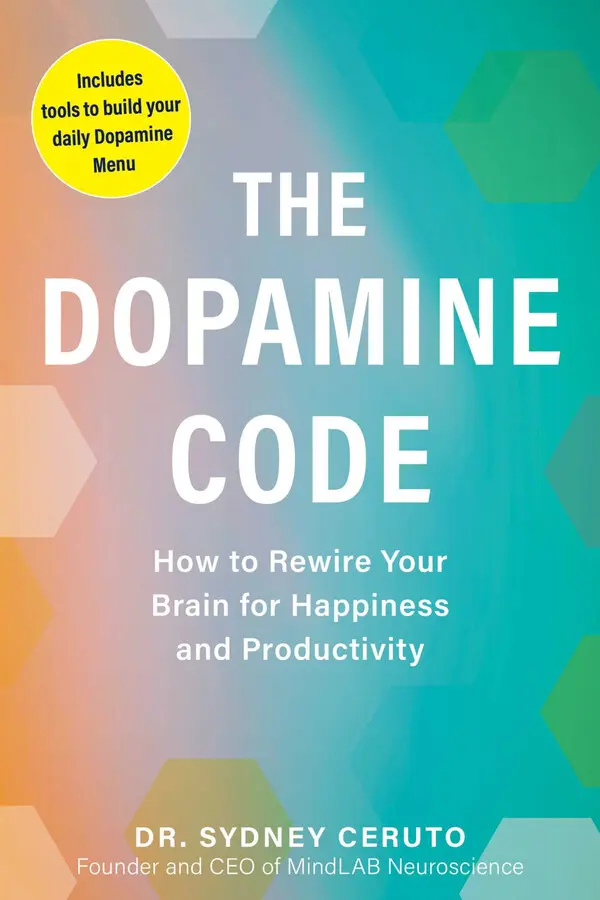
The Dopamine Code

Decode Your Drive

Why Your Brain Rewards the Wrong Things

Your brain's reward system runs every decision, every craving, every crash — and it was never designed for the life you're living. The Dopamine Code is Dr. Ceruto's framework for understanding the architecture behind what drives you, drains you, and keeps you locked in patterns that willpower alone will never fix.

Published by Simon & Schuster, The Dopamine Code is Dr. Ceruto's framework for building your own Dopamine Menu — a personalized system for motivation, focus, and enduring life satisfaction.

Order Now

Ships June 9, 2026

The Dopamine Code by Dr. Sydney Ceruto — Decode Your Drive
Locations

The Intelligence Brief

Neuroscience-backed analysis on how your brain drives what you feel, what you choose, and what you can’t seem to change — direct from Dr. Ceruto.