Career & Performance in Wall Street

<p>The career pattern is not a strategy problem. It is architecture.</p><p>Neural architecture determines your professional ceiling. It can be recalibrated.</p>

Career stagnation, burnout, and performance plateaus are maintained by neural architecture — the brain's reward system calibrating what work feels worth doing, the prediction system generating anxiety about change, and the identity architecture organizing self-worth around professional role. Dr. Ceruto's methodology identifies the specific circuits maintaining the pattern and intervenes at the structural level — recalibrating the architecture that determines how you engage with your career, lead your team, and sustain performance under pressure.

Schedule a Strategy Call

Career Coaching

Career stagnation and indecision are maintained by neural architecture — the brain’s reward system coding certain paths as safe while others register as threat. Dr. Ceruto targets the architecture maintaining the pattern, not the career strategy sitting above it.

Learn more about Career Coaching in Wall Street →

Career Change & Pivot

Career change is an identity architecture problem. The brain has spent years organizing self-worth around the current career. Pivoting requires dismantling one identity architecture and building another — while the threat-detection system treats the demolition as danger.

Learn more about Career Change & Pivot in Wall Street →

Leadership Development

Leadership capacity is neural architecture — the prefrontal cortex’s regulatory capacity under pressure, the threat-detection system’s calibration of challenge, and the emotional regulation that sets the tone for everyone around you. The leader’s nervous system is the team’s regulatory environment.

Learn more about Leadership Development in Wall Street →

Workplace Burnout

Burnout is not exhaustion from working too hard — it is the collapse of the brain’s reward-effort calibration. The dopamine system that once generated engagement has been depleted by sustained output without adequate reward registration. This is architectural collapse, not insufficient vacation.

Learn more about Workplace Burnout in Wall Street →

Performance Optimization

Peak performance is neural architecture operating at optimal calibration — sustained focus under pressure, engagement without crisis, challenge processed as activating rather than paralyzing. Performance optimization targets the architecture that determines the ceiling.

Learn more about Performance Optimization in Wall Street →

Imposter Syndrome at Work

Imposter syndrome is a miscalibration between the brain’s self-evaluation system and actual competence. The self-assessment circuitry discounts evidence of competence and amplifies evidence of inadequacy. The person is not underestimating themselves — their evaluation architecture is running the wrong model.

Learn more about Imposter Syndrome at Work in Wall Street →

Career & Performance on Wall Street

Wall Street’s career architecture is organized around a promotion timeline that functions as both motivation and trap. The analyst-to-associate-to-VP-to-MD progression creates a reward structure where the next title is always the goal, and each achievement recalibrates the reward system to target the next level. The VP who made MD discovers that the achievement does not produce the satisfaction the prediction system spent years anticipating. The reward architecture was calibrated for the pursuit, not the arrival.

The compensation trap is Wall Street’s defining career architecture problem. The professional earning at a level that funds a lifestyle, a family’s expectations, and a social identity cannot accept the compensation reduction that a career change would require — even when the career is producing burnout, relationship destruction, or a progressive loss of engagement. The brain’s threat-detection system codes the compensation reduction as a survival threat. The golden handcuffs are not metaphorical. They are the nervous system’s response to the perceived risk of losing the income the identity was built on.

Lateral moves to fintech, private equity, and hedge funds represent career architecture decisions that the industry frames as strategic but that involve genuine neural reorganization. The professional moving from a bulge-bracket bank to a fintech startup is not simply changing employers. The performance architecture, the social identity, the daily structure, the risk profile — every element of the career’s neural scaffolding must reorganize. Some professionals thrive in the transition because the new environment matches their architecture better. Others struggle because the architecture that succeeded in traditional finance does not transfer.

Post-2020 career recalculation produced a cohort of Wall Street professionals who questioned the career architecture for the first time. Remote work demonstrated that the lifestyle was optional. Return-to-office mandates forced a choice: recommit to the architecture or change it. The professionals who returned and the professionals who left both made career decisions that involved neural reorganization — the returner recommitted the identity architecture to the career, while the leaver dismantled it. Neither path was simple.

Trading desk burnout follows a specific trajectory that the industry normalizes. The first years produce adrenaline-driven engagement — the dopamine system responds to the intensity, the novelty, and the financial reward with genuine activation. Years three through five produce the first signs of reward-system depletion. By year seven to ten, many traders are operating on architecture that has been running at unsustainable activation for so long that the system has recalibrated sustained stress as the baseline. The burnout is not sudden. It is a progressive architectural degradation that the culture’s normalization of intensity makes invisible until it collapses.


Dr. Sydney Ceruto, PhD — Founder, MindLAB Neuroscience

Dr. Sydney Ceruto, PhD — Founder & CEO, MindLAB Neuroscience

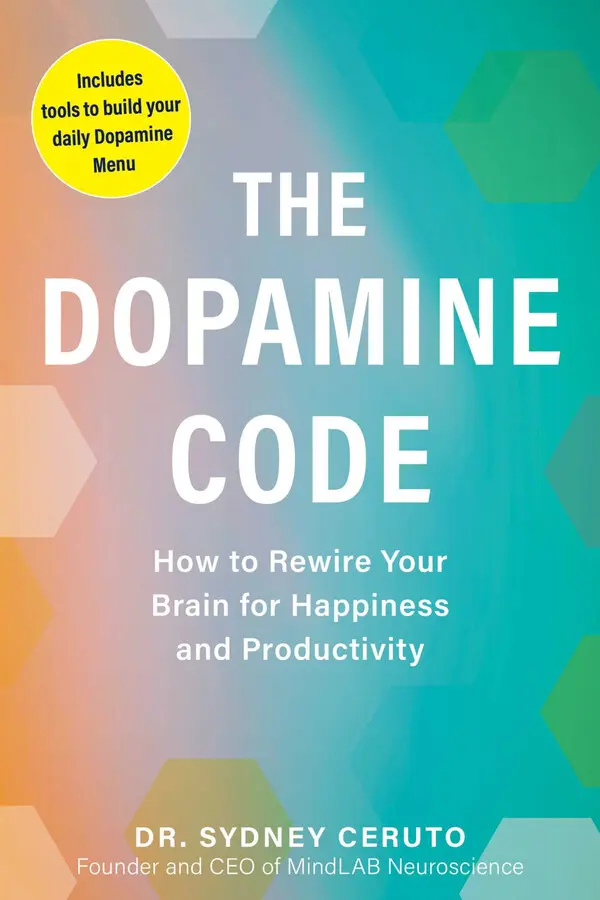
Dr. Ceruto holds a PhD in Behavioral & Cognitive Neuroscience from NYU and two Master’s degrees from Yale University. She lectures at the Wharton Executive Development Program at the University of Pennsylvania and has been an Executive Contributor to the Forbes Coaching Council since 2019. Dr. Ceruto is the author of The Dopamine Code (Simon & Schuster, June 2026). She founded MindLAB Neuroscience in 2000 and has spent over 26 years pioneering Real-Time Neuroplasticity™ — a methodology that permanently rewires the neural pathways driving behavior, decisions, and emotional responses.

References

Maslach, C., & Leiter, M. P. (2016). Understanding the burnout experience: Recent research and its implications for psychiatry. World Psychiatry, 15(2), 103–111. https://doi.org/10.1002/wps.20311

Arnsten, A. F. T. (2009). Stress signalling pathways that impair prefrontal cortex structure and function. Nature Reviews Neuroscience, 10(6), 410–422. https://doi.org/10.1038/nrn2648

Salamone, J. D., & Correa, M. (2012). The mysterious motivational functions of mesolimbic dopamine. Neuron, 76(3), 470–485. https://doi.org/10.1016/j.neuron.2012.10.021

Diamond, A. (2013). Executive functions. Annual Review of Psychology, 64, 135–168. https://doi.org/10.1146/annurev-psych-113011-143750

Career & Performance FAQ — Wall Street

What is the neuroscience behind career performance?

Career performance is maintained by the interaction of multiple neural systems — the dopamine-driven reward and motivation architecture that determines engagement, the prefrontal cortex's regulatory capacity that governs decision-making under pressure, the threat-detection system that determines whether challenge is processed as opportunity or danger, and the identity architecture that organizes self-worth around professional role. When any of these systems is miscalibrated, the output is predictable: stagnation, burnout, imposter syndrome, or performance that plateaus below actual capability.

Is this therapy or executive coaching?

Neither. This is neuroscience advisory. Executive coaching works at the level of strategy, accountability, and behavioral change. Therapy works at the level of narrative and insight. My methodology works at the level of the neural architecture maintaining the career pattern. The distinction matters because the circuits governing performance, motivation, and professional identity operate below the level that coaching or therapy can reach. All three approaches have value. They operate at different levels of the system.

Who do you typically work with?

I work with professionals across the career spectrum — executives navigating leadership transitions, founders scaling beyond their individual capacity, mid-career professionals facing burnout or stagnation, and people in career transitions who need to rebuild their professional identity architecture. The common thread is not seniority or industry. It is the recognition that the career pattern they are experiencing is being maintained by something deeper than strategy or effort.

Can this help if I am already high-performing?

Yes. High performers often have the clearest sense that their ceiling is architectural rather than strategic. They have optimized everything within their control — the schedule, the habits, the accountability systems — and the performance plateau persists. That plateau is typically maintained by neural architecture: the threat-detection system's response to increased visibility, the reward system's diminishing engagement signal, or the prefrontal regulatory capacity operating at maximum load. Addressing the architecture raises the ceiling that optimization alone cannot move.

What happens during a Strategy Call?

The Strategy Call is a one-hour phone consultation at a fee of $250. Before the call, I review what you share about your professional situation. During the hour, I assess the specific neural patterns maintaining your career or performance difficulty, the architecture behind them, and whether my methodology is the right fit. If it is, you leave with a clear picture of what the work involves. If my approach is not the right fit, I will tell you directly. The fee does not apply toward any program investment.

How is this different from executive coaching?

Executive coaching works at the level of strategy, behavior, and accountability — what to do, how to do it, and the structure to ensure follow-through. My work targets the neural architecture that determines whether the strategy can be executed. The executive who knows exactly what leadership requires but cannot sustain it under pressure has a strategy. What they lack is the architectural capacity to deploy it when the prefrontal system is under load. Coaching provides the map. My work rebuilds the vehicle.

How long does it take to see results?

The timeline depends on the specific architecture involved. Performance-related patterns — focus under pressure, decision-making speed, stress regulation — often shift relatively quickly because the prefrontal systems involved can be recalibrated efficiently. Deeper architectural patterns — career identity, burnout recovery, imposter syndrome — require more sustained work because they involve the brain's self-organizing identity structure. During the Strategy Call, I assess the specific pattern and provide a realistic timeline.

Can burnout that has been building for years actually reverse?

Yes. Burnout is the collapse of the brain's reward-effort calibration — the dopamine system has been depleted by sustained output without adequate reward registration. The system can recalibrate, but the process requires more than rest. The architecture that was depleted needs active rebuilding — the reward system's sensitivity to engagement, the prefrontal cortex's regulatory capacity, and the identity architecture that organized self-worth around the depleting pattern all need to be addressed. Duration of burnout affects the depth of the work required, not whether recovery is possible.

How do I take the first step?

The entry point is a one-hour Strategy Call by phone, at a fee of $250. I review what you share before the call to confirm I can offer something specifically useful for your professional situation. During the hour, I assess the neural architecture behind your career or performance pattern and whether my methodology is the right fit. If it is not, I will say so directly.

Ready to Address What Is Actually Happening

A single phone call with Dr. Ceruto will clarify whether the neural architecture driving the pattern can be recalibrated — and what the path forward looks like.

Schedule a Strategy Call
MindLAB Neuroscience consultation room
Locations

The Intelligence Brief

Neuroscience-backed analysis on how your brain drives what you feel, what you choose, and what you can’t seem to change — direct from Dr. Ceruto.