Career & Performance in Midtown Manhattan

<p>The career pattern is not a strategy problem. It is architecture.</p><p>Neural architecture determines your professional ceiling. It can be recalibrated.</p>

Career stagnation, burnout, and performance plateaus are maintained by neural architecture — the brain's reward system calibrating what work feels worth doing, the prediction system generating anxiety about change, and the identity architecture organizing self-worth around professional role. Dr. Ceruto's methodology identifies the specific circuits maintaining the pattern and intervenes at the structural level — recalibrating the architecture that determines how you engage with your career, lead your team, and sustain performance under pressure.

Schedule a Strategy Call

Career Coaching

Career stagnation and indecision are maintained by neural architecture — the brain’s reward system coding certain paths as safe while others register as threat. Dr. Ceruto targets the architecture maintaining the pattern, not the career strategy sitting above it.

Learn more about Career Coaching in Midtown Manhattan →

Career Change & Pivot

Career change is an identity architecture problem. The brain has spent years organizing self-worth around the current career. Pivoting requires dismantling one identity architecture and building another — while the threat-detection system treats the demolition as danger.

Learn more about Career Change & Pivot in Midtown Manhattan →

Leadership Development

Leadership capacity is neural architecture — the prefrontal cortex’s regulatory capacity under pressure, the threat-detection system’s calibration of challenge, and the emotional regulation that sets the tone for everyone around you. The leader’s nervous system is the team’s regulatory environment.

Learn more about Leadership Development in Midtown Manhattan →

Workplace Burnout

Burnout is not exhaustion from working too hard — it is the collapse of the brain’s reward-effort calibration. The dopamine system that once generated engagement has been depleted by sustained output without adequate reward registration. This is architectural collapse, not insufficient vacation.

Learn more about Workplace Burnout in Midtown Manhattan →

Performance Optimization

Peak performance is neural architecture operating at optimal calibration — sustained focus under pressure, engagement without crisis, challenge processed as activating rather than paralyzing. Performance optimization targets the architecture that determines the ceiling.

Learn more about Performance Optimization in Midtown Manhattan →

Imposter Syndrome at Work

Imposter syndrome is a miscalibration between the brain’s self-evaluation system and actual competence. The self-assessment circuitry discounts evidence of competence and amplifies evidence of inadequacy. The person is not underestimating themselves — their evaluation architecture is running the wrong model.

Learn more about Imposter Syndrome at Work in Midtown Manhattan →

Career & Performance in Midtown Manhattan

Midtown Manhattan concentrates corporate headquarters, media companies, and advertising agencies in a geography that makes career competition physically visible. The professional walking between office towers is surrounded by people doing similar work at competing companies — a continuous comparison input that the brain’s self-evaluation system processes automatically. The density is not just geographic. It is competitive, evaluative, and constant.

Media and advertising industry churn creates a specific career architecture pattern in Midtown. The industry’s contraction — agency consolidation, AI displacement, digital transformation eliminating traditional roles — has produced a cohort of professionals whose career identity architecture was built for an industry that no longer exists in its previous form. The creative director whose expertise was built over fifteen years discovers that the expertise itself is being questioned. The career architecture crisis is not about skills. It is about an identity organized around a professional role that the market has devalued.

The middle-management squeeze is Midtown’s defining career pressure point. The professional above individual contributor and below senior leadership occupies a position that requires the most career architecture flexibility and receives the least organizational support. Managing up and managing down simultaneously, absorbing pressure from both directions, executing strategy they did not design while developing people they may not have chosen — the middle manager’s neural architecture is under load from every direction. Burnout concentrates at this level because the architecture is carrying the most diverse demand with the least autonomy.

Creative-to-corporate identity friction is a Midtown pattern that surfaces in career coaching contexts. The professional who entered the industry for creative expression and now spends most of their time in meetings, managing budgets, and navigating corporate politics has experienced a gradual identity architecture shift that they may not have consciously chosen. The career progressed. The creative identity atrophied. The dissatisfaction that follows is not about the current role’s demands. It is about the gap between the identity architecture the person built their career on and the architecture the career now requires.

Office politics intensity in Midtown’s corporate headquarters is a performance architecture variable that professionals often underestimate. The political environment — who has access, who is visible, who is protected — is a continuous input to the brain’s threat-detection system. The professional navigating a politically complex environment is consuming prefrontal regulatory resources on political assessment that would otherwise be available for the actual work. Performance in politically intense environments is always a dual-architecture challenge: the work itself and the political environment surrounding it.


Dr. Sydney Ceruto, PhD — Founder, MindLAB Neuroscience

Dr. Sydney Ceruto, PhD — Founder & CEO, MindLAB Neuroscience

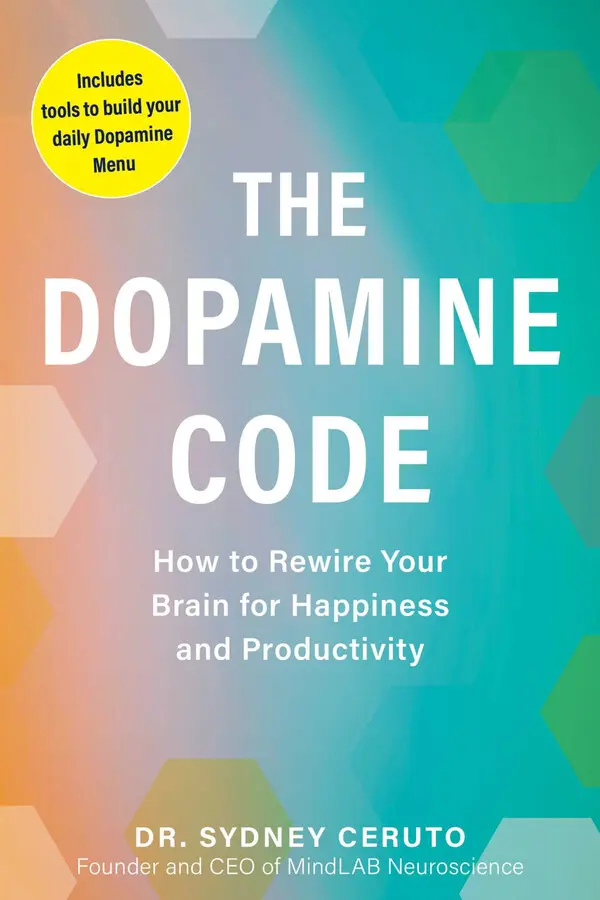
Dr. Ceruto holds a PhD in Behavioral & Cognitive Neuroscience from NYU and two Master’s degrees from Yale University. She lectures at the Wharton Executive Development Program at the University of Pennsylvania and has been an Executive Contributor to the Forbes Coaching Council since 2019. Dr. Ceruto is the author of The Dopamine Code (Simon & Schuster, June 2026). She founded MindLAB Neuroscience in 2000 and has spent over 26 years pioneering Real-Time Neuroplasticity™ — a methodology that permanently rewires the neural pathways driving behavior, decisions, and emotional responses.

References

Maslach, C., & Leiter, M. P. (2016). Understanding the burnout experience: Recent research and its implications for psychiatry. World Psychiatry, 15(2), 103–111. https://doi.org/10.1002/wps.20311

Arnsten, A. F. T. (2009). Stress signalling pathways that impair prefrontal cortex structure and function. Nature Reviews Neuroscience, 10(6), 410–422. https://doi.org/10.1038/nrn2648

Salamone, J. D., & Correa, M. (2012). The mysterious motivational functions of mesolimbic dopamine. Neuron, 76(3), 470–485. https://doi.org/10.1016/j.neuron.2012.10.021

Diamond, A. (2013). Executive functions. Annual Review of Psychology, 64, 135–168. https://doi.org/10.1146/annurev-psych-113011-143750

Career & Performance FAQ — Midtown Manhattan

What is the neuroscience behind career performance?

Career performance is maintained by the interaction of multiple neural systems — the dopamine-driven reward and motivation architecture that determines engagement, the prefrontal cortex's regulatory capacity that governs decision-making under pressure, the threat-detection system that determines whether challenge is processed as opportunity or danger, and the identity architecture that organizes self-worth around professional role. When any of these systems is miscalibrated, the output is predictable: stagnation, burnout, imposter syndrome, or performance that plateaus below actual capability.

Is this therapy or executive coaching?

Neither. This is neuroscience advisory. Executive coaching works at the level of strategy, accountability, and behavioral change. Therapy works at the level of narrative and insight. My methodology works at the level of the neural architecture maintaining the career pattern. The distinction matters because the circuits governing performance, motivation, and professional identity operate below the level that coaching or therapy can reach. All three approaches have value. They operate at different levels of the system.

Who do you typically work with?

I work with professionals across the career spectrum — executives navigating leadership transitions, founders scaling beyond their individual capacity, mid-career professionals facing burnout or stagnation, and people in career transitions who need to rebuild their professional identity architecture. The common thread is not seniority or industry. It is the recognition that the career pattern they are experiencing is being maintained by something deeper than strategy or effort.

Can this help if I am already high-performing?

Yes. High performers often have the clearest sense that their ceiling is architectural rather than strategic. They have optimized everything within their control — the schedule, the habits, the accountability systems — and the performance plateau persists. That plateau is typically maintained by neural architecture: the threat-detection system's response to increased visibility, the reward system's diminishing engagement signal, or the prefrontal regulatory capacity operating at maximum load. Addressing the architecture raises the ceiling that optimization alone cannot move.

What happens during a Strategy Call?

The Strategy Call is a one-hour phone consultation at a fee of $250. Before the call, I review what you share about your professional situation. During the hour, I assess the specific neural patterns maintaining your career or performance difficulty, the architecture behind them, and whether my methodology is the right fit. If it is, you leave with a clear picture of what the work involves. If my approach is not the right fit, I will tell you directly. The fee does not apply toward any program investment.

How is this different from executive coaching?

Executive coaching works at the level of strategy, behavior, and accountability — what to do, how to do it, and the structure to ensure follow-through. My work targets the neural architecture that determines whether the strategy can be executed. The executive who knows exactly what leadership requires but cannot sustain it under pressure has a strategy. What they lack is the architectural capacity to deploy it when the prefrontal system is under load. Coaching provides the map. My work rebuilds the vehicle.

How long does it take to see results?

The timeline depends on the specific architecture involved. Performance-related patterns — focus under pressure, decision-making speed, stress regulation — often shift relatively quickly because the prefrontal systems involved can be recalibrated efficiently. Deeper architectural patterns — career identity, burnout recovery, imposter syndrome — require more sustained work because they involve the brain's self-organizing identity structure. During the Strategy Call, I assess the specific pattern and provide a realistic timeline.

Can burnout that has been building for years actually reverse?

Yes. Burnout is the collapse of the brain's reward-effort calibration — the dopamine system has been depleted by sustained output without adequate reward registration. The system can recalibrate, but the process requires more than rest. The architecture that was depleted needs active rebuilding — the reward system's sensitivity to engagement, the prefrontal cortex's regulatory capacity, and the identity architecture that organized self-worth around the depleting pattern all need to be addressed. Duration of burnout affects the depth of the work required, not whether recovery is possible.

How do I take the first step?

The entry point is a one-hour Strategy Call by phone, at a fee of $250. I review what you share before the call to confirm I can offer something specifically useful for your professional situation. During the hour, I assess the neural architecture behind your career or performance pattern and whether my methodology is the right fit. If it is not, I will say so directly.

Ready to Address What Is Actually Happening

A single phone call with Dr. Ceruto will clarify whether the neural architecture driving the pattern can be recalibrated — and what the path forward looks like.

Schedule a Strategy Call
MindLAB Neuroscience consultation room
Locations

The Intelligence Brief

Neuroscience-backed analysis on how your brain drives what you feel, what you choose, and what you can’t seem to change — direct from Dr. Ceruto.