





Career Counseling in Westchester County

Career dissatisfaction is not a mindset problem. It is encoded in the neural circuits that construct your professional identity — and those circuits can be permanently restructured.

MindLAB Neuroscience approaches career counseling through the brain systems that actually govern professional identity — the default mode network — the brain's self-referential thought system —, the medial prefrontal cortex, and the memory circuits responsible for simulating your future self. This is where career decisions are made and changed.

Book a Strategy Call
ForbesUSA TodayHuffPostNewsweekAssociated PressCosmopolitanBusiness InsiderForbesUSA TodayHuffPostNewsweekAssociated PressCosmopolitanBusiness Insider

Key Points

  1. Career indecision is not insufficient information — it is competing neural valuations in the orbitofrontal cortex assigning conflicting weights to different professional paths.
  2. The brain processes career transitions through the same grief circuits activated by loss, creating emotional resistance that logical career planning cannot address.
  3. Professional identity is neurologically embedded in the default mode network, meaning career change requires restructuring self-concept at the neural level — not just updating a resume.
  4. Risk tolerance in career decisions is biologically determined by dopaminergic and serotonergic circuit function — explaining why some people leap while equally intelligent others freeze.
  5. Effective career guidance must address the neural mechanisms driving hesitation, not just provide the information the conscious mind uses to rationalize decisions already made by deeper circuits.

The Career Misalignment Pattern

“You are not stuck because you lack options. You are stuck because the neural circuits that evaluate career decisions have been recalibrated by years of experience to favor safety over alignment — and no amount of strategic thinking can override a biological constraint.”

Something does not fit. You may not be able to articulate it precisely, but the signal is persistent. The role looks right on paper. The compensation is strong. The title reflects years of effort. And still, the feeling of misalignment does not resolve.

You have tried different approaches. You may have worked with a strategist who helped refine your resume and optimize your professional profile. You may have explored goal-setting frameworks, values exercises, or personality inventories. Each one produced a temporary sense of clarity. None of it lasted. The dissonance returned — quieter, maybe, but unchanged at its core.

This pattern is remarkably consistent among the professionals who seek career counseling at MindLAB Neuroscience. They are not confused about their abilities. They are not lacking motivation or direction in the conventional sense. They are experiencing something deeper: a misalignment between the professional identity their brain has constructed over years of reinforced experience and the career direction they intellectually know they want.

The frustration compounds because everything they try operates at the surface. Strategies, plans, and frameworks address the behavioral layer — what to do, how to position, where to apply. But the resistance lives underneath. It lives in neural architecture.

My clients describe this as knowing what they want but feeling unable to move toward it — as though an invisible structure keeps pulling them back to the familiar. That invisible structure is real. It is biological. And it is precisely what conventional career guidance is not equipped to address.

The Neuroscience of Career Identity

Professional identity is not a story you tell yourself. It is a neural construction maintained by some of the most robust systems in the brain.

Research has demonstrated that the medial prefrontal cortex — the brain’s self-concept center — encodes identity specifically in terms of self-importance — how central a trait or attribute is to who you are. This region shows distinct activation patterns calibrated to the degree of personal importance of incoming self-relevant information. This encoding is unique to self-referential processing. The same pattern does not emerge when processing information about others.

What this means for career identity is direct. Your brain does not treat your professional role as a neutral fact. It encodes it as a dimension of who you are, weighted by how central that role feels to your identity. When a professional has spent eight or ten years in finance, the brain has encoded “financial professional” as a high-importance self-concept. Considering a different direction does not simply require a new plan. It requires updating one of the most heavily weighted identity encodings the brain maintains.

A second mechanism compounds this. Autobiographical reasoning — the process of constructing meaning from personal history — recruits a specific prefrontal region. This is the neural process that builds the narrative connecting your past to your present to your projected future. When this process is disrupted, the narrative fractures. Professionals describe this as “not knowing who I am anymore” or “feeling like I lost the thread.” These are not metaphors. They describe a specific neural state.

A third critical mechanism involves the brain’s capacity to construct future scenarios. Imagining specific possible futures with vivid detail depends on a strengthened connection between the brain’s memory-assembly system and its value-assessment region. The memory system retrieves and assembles details from experience. The value-assessment region integrates those details with self-knowledge. When this circuit functions well, professionals can generate rich, credible simulations of themselves in new roles. When it is compromised, the future feels abstract and unreachable. Career decisions default to the path of least resistance: staying where you are.
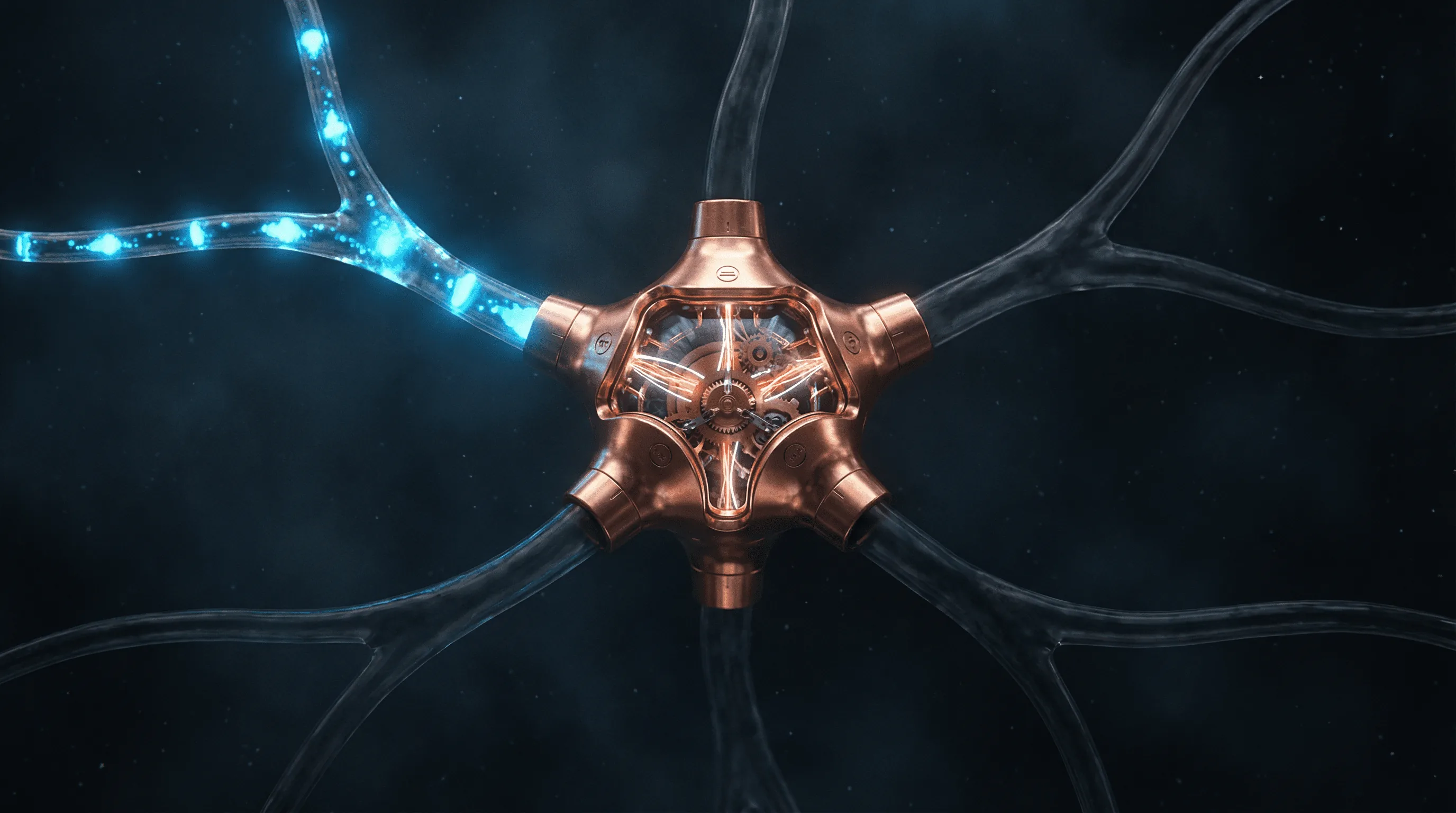
Career counseling and career assessment — copper neural crossroads with selected pathway representing professional direction

How Dr. Ceruto Approaches Career Counseling

Dr. Ceruto’s Real-Time Neuroplasticity — the brain’s ability to rewire itself — methodology engages the neural systems that maintain career identity directly. This is not a process of exploring feelings about work or setting new professional goals. It is a structured intervention targeting the specific mechanisms that govern how the brain constructs, maintains, and can restructure professional self-concept.

The work begins with the brain’s self-importance hierarchy — identifying which career identities are encoded as genuinely self-defining versus externally imposed. For professionals who entered their field because of family expectations, market pressures, or path-dependent momentum rather than genuine identity alignment, this distinction is critical. The brain does not differentiate between identities you chose and identities that were chosen for you. It simply encodes what has been reinforced. Dr. Ceruto’s methodology surfaces this architecture and creates the conditions for deliberate updating.

Simultaneously, the process strengthens the brain’s capacity to generate vivid, specific simulations of alternative career futures. This is the mechanism that transforms “I think I might want to do something different” into a credible, inhabitable vision of a new professional direction.

The NeuroSync program addresses focused career identity questions where professional direction, personal relationships, and geographic transitions all require coordinated neural recalibration.

The pattern that presents most often is a professional who has done significant conscious work — reflection, planning, conversation — and still cannot move. The obstacle is not insufficient thinking. It is that the thinking happens at one level while the identity architecture operates at another. Bridging that gap is the work.

What to Expect

The process begins with a Strategy Call — a precise, strategy conversation where Dr. Ceruto assesses the nature of the career question and determines whether the engagement is appropriate. This call is itself an instrument of clarity. Many professionals report that the Strategy Call alone reframes their understanding of what has been keeping them stuck.

From there, the engagement follows a structured arc. Initial assessment maps the existing identity architecture. Progress is measured through observable shifts in how the brain processes career identity — not subjective improvement, but observable changes in decision-making patterns and professional direction.

The timeline is personalized. There are no fixed programs applied uniformly. What remains constant is the precision of the methodology and the depth of the practitioner’s understanding of the systems involved.

References

Levorsen, M., Aoki, R., Matsumoto, K., Sedikides, C., & Izuma, K. (2023). The self-concept is represented in the medial prefrontal cortex in terms of self-importance. Journal of Neuroscience, 43(20), 3675–3686. https://doi.org/10.1523/JNEUROSCI.2178-22.2023

D’Argembeau, A., Cassol, H., Phillips, C., Balteau, E., Salmon, E., & Van der Linden, M. (2014). Brains creating stories of selves: The neural basis of autobiographical reasoning. Social Cognitive and Affective Neuroscience, 9(3), 313–319. https://doi.org/10.1093/scan/nss114

Campbell, K. L., Madore, K. P., Benoit, R. G., Thakral, P. P., & Schacter, D. L. (2018). Increased memory-to-planning-center coordination during the construction of episodic future events. Hippocampus, 28(2), 76–80. https://doi.org/10.1002/hipo.22812

The Neural Architecture of Career Navigation

Career navigation at its most fundamental level is a neural prediction problem. The brain is continuously generating predictions about future experience based on current trajectory, evaluating those predictions against the reward signals it requires to sustain motivation, and adjusting behavior accordingly. When the prediction is positive — when the trajectory produces reliable signals of challenge, mastery, and meaningful outcome — motivation sustains itself with minimal conscious effort. When the prediction turns negative — when the trajectory signals progressive misalignment between the neural architecture’s requirements and the actual experience of the career environment — the brain generates the experience of being stuck, pulled in multiple directions, or unable to commit with conviction to any particular path.

Neuroscience consultation — rosewood table with crystal brain sculpture and branded journal for strategy call preparation

The prefrontal cortex governs the executive capacities that career navigation requires: scenario construction, value-based decision-making under uncertainty, temporal integration across short- and long-horizon considerations, and the regulation of threat responses that would otherwise narrow the decision field to immediate safety rather than long-term fit. When the prefrontal system is operating under the elevated load that career uncertainty creates — the rumination, the circular weighing of options, the anxiety about making the wrong choice — its capacity for the precise integration required for good career decisions is progressively compromised. The professional becomes less capable of clear career thinking at exactly the moment when clarity is most needed.

Dopaminergic reward calibration is the deeper variable. Career satisfaction is not primarily a function of external success metrics — title, compensation, prestige — though the brain encodes these as proxy reward signals. It is a function of whether the career environment produces reliable access to the specific categories of intrinsic reward that an individual’s neural architecture has been calibrated to require. Intellectual novelty, social influence, technical mastery, creative autonomy, leadership impact — these are not interchangeable. They engage different neural circuits, produce different neurochemical signatures, and have different long-term effects on engagement and performance.

Why Traditional Approaches Fall Short

Career counseling as conventionally practiced is an advisory conversation — a guided process of identifying preferences, examining options, assessing practical constraints, and building a career action plan. At its best, it combines solid understanding of occupational landscape with genuine empathetic attention to the individual’s situation. What it lacks is the neural specificity required to distinguish between the careers that will genuinely sustain this particular person’s engagement over time and the careers that look good on the available preference data but will produce progressive depletion once the novelty of the initial transition fades.

The gap is not in the counselor’s knowledge of the occupational landscape or in the quality of the assessment instruments. The gap is in the level of analysis. Preferences are not the same as neural requirements. What a person says they prefer under conditions of career uncertainty reflects a mix of genuine preference, socially conditioned aspiration, anxiety-driven safety-seeking, and the influence of whoever most recently made a compelling argument for a particular path. Neural requirements are more stable, more specific, and far more predictive of sustained engagement. They are also invisible to self-report instruments and conventional counseling conversations.

The downstream cost of this limitation is significant. Career transitions made on the basis of preference matching without neural architecture mapping produce a predictable pattern: initial relief and optimism, followed by progressive recognition of the same underlying dissatisfaction in the new environment, followed by the accumulated discouragement of another expensive transition that did not produce the intended result. The problem was not the career that was left or the career that was entered. The problem was that the neural variables determining long-term fit were never assessed.

How Neural Career Counseling Works

My approach to career counseling operates at the level of neural architecture rather than conscious preference. The counseling conversation is a structured investigation of the neural signatures embedded in an individual’s career history — the periods of peak engagement and peak depletion, the challenge types that generated intrinsic reward versus cognitive fatigue, the environmental conditions that produced the most reliable access to the states of absorption and mastery that the brain finds most reinforcing.

This investigation produces a neural profile of career fit that is considerably more specific than any conventional assessment. From this profile, I evaluate the career options under consideration against the actual neural variables that will determine whether sustained engagement is possible — not against a generic match of interests and aptitudes, but against the precise reward architecture of this particular individual’s dopaminergic system, the specific threat patterns that will erode regulatory capacity over time in specific work environments, and the cognitive load requirements that will either sustain or deplete prefrontal capacity across the career horizon.

The counseling relationship itself is calibrated to the decision architecture. Short-horizon career decisions — whether to take a specific offer, whether to make a lateral move, whether to transition from a specific role — are well-served by a focused engagement that produces the neural clarity the decision requires. Longer-horizon career restructuring — substantial field changes, entrepreneurial transitions, career re-entry after extended absence — require the sustained partnership of a multi-phase engagement that can track and recalibrate as the transition unfolds and new data emerges from the individual’s neural responses to new environments.

What This Looks Like in Practice

The professionals who seek this work have typically been navigating career uncertainty for longer than they anticipated. They have considered their options extensively. They have often consulted with counselors, coaches, and trusted advisors. They may have read widely on career decision-making. And they remain unable to commit with conviction to a direction. This is not indecision. It is the brain accurately registering that the available frameworks have not yet identified the answer at the level of specificity it requires.

A Strategy Call with Dr. Ceruto reframes the career question. The conversation moves from what do you think you want to what does your neural architecture require, and examines the career history for the data points that reveal the answer. From that foundation, the engagement is structured around the presenting need. For professionals navigating a specific transition decision, a NeuroSync engagement produces the directional clarity the decision requires. For those in extended career exploration or complex multi-phase transition, the NeuroConcierge partnership sustains the investigation across the full arc of the change.

Marker Traditional Approach Neuroscience-Based Approach Why It Matters
Focus Career exploration, market analysis, and professional development planning Resolving the neural conflicts between competing career valuations and restructuring the identity circuits that resist professional evolution
Method Career counseling sessions with interest inventories, labor market data, and action planning Targeted intervention in the orbitofrontal valuation and default mode identity circuits that determine career decision quality
Duration of Change Advice-dependent; the same decision patterns recur at each subsequent career crossroads Permanent restructuring of neural decision architecture that produces clear, accurate career navigation across all future transitions

Why Career Counseling Matters in Westchester County

Career Counseling in Westchester County

Career counseling in Westchester addresses a population whose career challenges are rarely about competence or opportunity. The professionals in Scarsdale, Rye, and Chappaqua seeking career guidance are typically highly capable individuals whose neural decision-making architecture is generating paralysis rather than clarity. The paralysis is not about the career itself — it is about the compound implications of career change in a community where professional identity, financial architecture, and social standing are tightly integrated.

The dual-career household, which is the norm in Westchester’s affluent communities, adds a career navigation dimension: one partner’s career change affects the other partner’s career flexibility. The family’s financial model — calibrated to two incomes at specific levels — constrains the career options that are genuinely viable. The brain processes these constraints not as logistical factors but as threat signals: the possibility of financial inadequacy in a community where financial adequacy is defined by the most expensive standard on the street.

My work addresses career navigation at the neural architecture level: the decision-making circuits locked in approach-avoidance conflict, the identity processing systems that resist professional redefinition, and the social threat-detection patterns that transform career exploration from an exciting possibility into a source of anticipatory dread.

Dr. Sydney Ceruto, PhD — Founder, MindLAB Neuroscience

Dr. Sydney Ceruto, PhD — Founder & CEO, MindLAB Neuroscience

Dr. Ceruto holds a PhD in Behavioral & Cognitive Neuroscience from NYU and two Master’s degrees from Yale University. She lectures at the Wharton Executive Development Program at the University of Pennsylvania and has been an Executive Contributor to the Forbes Coaching Council since 2019. Dr. Ceruto is the author of The Dopamine Code (Simon & Schuster, June 2026). She founded MindLAB Neuroscience in 2000 and has spent over 26 years pioneering Real-Time Neuroplasticity™ — a methodology that permanently rewires the neural pathways driving behavior, decisions, and emotional responses.

References

Bechara, A., Damasio, H., & Damasio, A. R. (2000). Emotion, decision making and the orbitofrontal cortex. Cerebral Cortex, 10(3), 295–307. https://doi.org/10.1093/cercor/10.3.295

Rangel, A., Camerer, C., & Montague, P. R. (2008). A framework for studying the neurobiology of value-based decision making. Nature Reviews Neuroscience, 9(7), 545–556. https://doi.org/10.1038/nrn2357

Creswell, J. D., Way, B. M., Eisenberger, N. I., & Lieberman, M. D. (2007). Neural correlates of dispositional mindfulness during affect labeling. Psychosomatic Medicine, 69(6), 560–565. https://doi.org/10.1097/PSY.0b013e3180f6171f

Pessoa, L. (2008). On the relationship between emotion and cognition. Nature Reviews Neuroscience, 9(2), 148–158. https://doi.org/10.1038/nrn2317

Success Stories

“When I started working with Dr. Ceruto, I was feeling stuck, not happy whatsoever, detached from family and friends, and definitely not confident. I’d never tried a neuroscience-based approach before, so I wasn’t sure what to expect — but I figured I had nothing to lose. My life has completely changed for the better. I don’t feel comfortable discussing publicly why I sought help, but I was made to feel safe, secure, and consistently supported. Just knowing I could reach her day or night was a relief.”

Algo R. — Fund Manager Dubai, UAE

“My communication was damaging every relationship in my professional life and I couldn't see it. Dr. Ceruto's neuroscience-based approach didn't just improve how I communicate — it rewired the stress response that was driving the pattern in the first place. The people around me noticed the change before I fully understood what had happened. That tells you everything.”

Bob H. — Managing Partner London, UK

“After the concussion, my processing speed collapsed — I couldn't hold complex information the way I used to, and no one could explain why the fog wasn't lifting. Dr. Ceruto mapped the damaged pathways and built compensatory networks around them. My brain doesn't work the way it did before the injury. It works differently — and in some ways, more efficiently than it ever did.”

Owen P. — Orthopedic Surgeon Scottsdale, AZ

“The conviction was always there at the start — and then the momentum would vanish, every single time. Discipline and accountability systems changed nothing. Dr. Ceruto identified a dopamine signaling deficit in my mesolimbic pathway that was collapsing my ability to sustain effort toward a goal. Once that pattern was restructured, finishing stopped requiring force. The motivation wasn't missing — it was being interrupted.”

Landon J. — Restaurateur New York, NY

“When the demands of my career began negatively impacting my quality of life, I knew I needed help beyond my usual coping mechanisms. I landed on Dr. Ceruto’s name and couldn’t be happier. Her credentials are impeccable, but upon meeting her, all uneasiness dissipated immediately. She has an innate ability to navigate the particulars of your profession no matter how arcane it may be. By the middle of the first session, you’re talking to a highly intelligent and intuitive friend. She is simply that good.”

Norine D. — Attorney Newport Beach, CA

“My body had simply stopped knowing when to sleep. Crossing time zones weekly for over two years had broken something fundamental, and every protocol, supplement, and device I tried couldn't hold longer than a few days. Dr. Ceruto identified the disruption at the level of my suprachiasmatic nucleus and recalibrated the signaling pattern driving the dysfunction. Within weeks, my circadian rhythm locked back in. I sleep now. Consistently. Regardless of where I land.”

Jonathan K. — Diplomat Geneva, CH

Frequently Asked Questions About Career Counseling in Westchester County

What makes neuroscience-based career counseling different from working with a career strategist?

A career strategist works at the behavioral level — optimizing your resume, refining your positioning, setting goals. MindLAB Neuroscience works at the neural level where career identity is actually encoded. Dr. Ceruto's Real-Time Neuroplasticity methodology targets the prefrontal cortex self-concept system and hippocampal circuits responsible for future-self simulation. This produces durable identity change, not temporary motivation or tactical adjustments.

Why do I feel stuck in my career even when I know what I want to change?

Career identity is encoded in neural pathways built over years of reinforced professional experience. Your brain has physically structured itself around your current role — a phenomenon researchers call occupational neuroplasticity — the brain's ability to rewire itself —. Knowing you want change is a cognitive event. Actually changing requires restructuring the neural architecture that maintains your current professional self-concept. The gap between knowing and moving is not a willpower problem. It is an architecture problem.

Is career counseling at MindLAB appropriate for someone considering a complete industry change in Miami?

Industry transitions are among the most neurologically demanding career shifts because they require updating multiple identity nodes simultaneously — professional role, social reference group, daily routines, and domain expertise identity. Dr. Ceruto's methodology is specifically designed for this level of complexity. The process strengthens the hippocampal (related to the brain's memory center)-prefrontal circuit responsible for constructing vivid future-self simulations in unfamiliar contexts, which is the neural prerequisite for sustainable industry change.

How does the Strategy Call work, and what should I expect?

The Strategy Call is a focused, strategy conversation — not a consultation or sales pitch. Dr. Ceruto uses it to assess the nature of your career question, evaluate whether the engagement is appropriate, and determine what the process would look like for your specific situation. Many professionals find that this single conversation reframes their understanding of what has been maintaining their stuck point. It is the entry point for all engagements.

Can I work with Dr. Ceruto virtually if I am based in Brickell or Coral Gables?

Yes. MindLAB Neuroscience operates from 17301 Biscayne Blvd in North Westchester County Beach and serves professionals throughout Westchester County-Dade through both in-person and virtual engagement. The methodology operates with full precision in virtual format. Many professionals across Brickell, Coral Gables, Westchester County Beach, Wynwood, and Aventura choose a combination of formats based on their schedules and preferences.

I recently relocated to Miami and feel professionally off-track. Is this a career counseling issue?

Geographic relocation is one of the most common triggers for career identity disruption. Your professional self-concept was built within one ecosystem — your former city's industry mix, social norms, and professional network. Westchester County operates on a different set of signals. What you are experiencing is not a career problem in the traditional sense. It is a neural recalibration event. Neuroscience-based career counseling can distinguish between genuine career misalignment and the temporary identity disruption that accompanies major geographic transitions.

How long does career counseling typically take to produce results?

Timeline depends on the depth of the career identity question and the complexity of the neural patterns involved. A focused single-issue engagement may produce measurable shifts in self-concept processing within weeks to months. Career identity reconstructions involving multiple simultaneous transitions — common among Westchester County professionals managing relocation, industry change, and personal life shifts concurrently — require longer engagement. Dr. Ceruto does not impose arbitrary timelines. The work continues until the neural change is durable.

Why do I feel paralyzed about career decisions despite having plenty of information about my options?

Career paralysis in well-informed individuals is one of the clearest indicators that the obstacle is neural, not informational. The orbitofrontal cortex assigns value to career options through circuits that integrate emotion, identity, social pressure, and prediction — far more inputs than the conscious analytical mind tracks. When these circuits generate conflicting valuations, the result is paralysis regardless of how much information you have.

More information often worsens the paralysis because it adds variables to an already overloaded valuation system. Resolution requires recalibrating the neural circuits computing career value so they produce clear signals rather than adding more data to systems that are already overwhelmed.

How does Dr. Ceruto's approach help with career direction when I genuinely do not know what I want?

Not knowing what you want is typically a signal processing problem, not an information problem. The brain's valuation system is generating conflicting or muted signals about career direction — either because it has been overridden by social expectations, fear-based filtering, or outdated reward patterns that no longer reflect your genuine priorities.

Dr. Ceruto's approach works with the neural systems that compute genuine preference — the ventromedial prefrontal cortex and the dopaminergic circuits that encode what actually produces sustained engagement versus what merely produces temporary satisfaction or social approval. Recalibrating these systems allows authentic career signals to emerge with clarity they previously lacked.

What role does fear play in career decisions, and how does this approach address it?

Fear is the primary distorting force in career decisions. The amygdala's threat-detection system classifies career risks — financial uncertainty, status loss, identity disruption, social judgment — as survival-level threats, triggering the same neural responses as physical danger. Under this activation, the prefrontal cortex loses access to the integrative processing needed for accurate career evaluation.

Most career guidance acknowledges fear but lacks the tools to address it at the neural level where it actually operates. Dr. Ceruto targets the threat-classification circuits directly, recalibrating the thresholds so career decisions are processed with proportionate rather than survival-level risk assessment. When fear is neurologically right-sized, career clarity emerges naturally.

Also available in: Miami · Wall Street · Midtown Manhattan · Beverly Hills · Lisbon

Your Career Identity Is a Neural Construction — Not a Narrative You Are Stuck With

In a city where 41 percent of professionals arrived after 2021 and career identity is constantly tested against Miami's pace, the question is not what you should do next. It is what your brain will let you become. Dr. Ceruto answers that question in one conversation.

Book a Strategy Call
MindLAB Neuroscience consultation room

The Dopamine Code

Decode Your Drive

Why Your Brain Rewards the Wrong Things

Your brain's reward system runs every decision, every craving, every crash — and it was never designed for the life you're living. The Dopamine Code is Dr. Ceruto's framework for understanding the architecture behind what drives you, drains you, and keeps you locked in patterns that willpower alone will never fix.

Published by Simon & Schuster, The Dopamine Code is Dr. Ceruto's framework for building your own Dopamine Menu — a personalized system for motivation, focus, and enduring life satisfaction.

Order Now

Ships June 9, 2026

The Dopamine Code by Dr. Sydney Ceruto — Decode Your Drive
Locations

The Intelligence Brief

Neuroscience-backed analysis on how your brain drives what you feel, what you choose, and what you can’t seem to change — direct from Dr. Ceruto.