







Energy Management in Nassau County

Cognitive energy is not willpower — it is a measurable neurobiological resource. Dr. Ceruto identifies where your brain's energy systems are failing and rebuilds them from the circuit level.

Cognitive energy is not willpower — it is a measurable neurobiological resource. Dr. Ceruto identifies where your brain’s energy systems are failing and rebuilds them from the circuit level.

Book a Strategy Call
ForbesUSA TodayHuffPostNewsweekAssociated PressCosmopolitanBusiness InsiderForbesUSA TodayHuffPostNewsweekAssociated PressCosmopolitanBusiness Insider

Key Points

  1. A full day of demanding cognitive work produces measurable glutamate accumulation in the lateral prefrontal cortex — the first identified biological marker of decision fatigue.
  2. The brain cycles through higher and lower arousal on approximately 90-minute intervals — repeatedly overriding this rhythm produces progressively diminishing returns.
  3. Striatal dopamine synthesis capacity directly predicts willingness to expend cognitive effort — this is neurochemistry, not personality.
  4. Seven hours of office work with regular breaks fails to prevent mental fatigue, and cognitive functions do not return to baseline even after four hours of post-work rest.
  5. Heart rate variability, vagal tone, and prefrontal cognitive control are not separate systems — they share neural substrate, making autonomic health a direct determinant of cognitive energy.
  6. Cognitive energy is an emergent property of multiple interacting brain systems — metabolic, dopaminergic, and autonomic — requiring a multi-system approach to restore.
  7. The goal is restored capacity through biological realignment — working with the brain's architecture instead of against it.

The experience of running out of mental energy by midafternoon is not a discipline failure. It is a biological event with a precise neurochemical signature. Cognitive energy is an emergent property of multiple interacting brain systems. When any of them fall out of alignment, the subjective experience is identical: mental fog, motivational deflation, and declining performance that no amount of caffeine or determination can override.

The Metabolic Cost of Thinking

“Running out of mental energy by midafternoon is not a discipline failure. It is a biological event with a precise neurochemical signature — prefrontal glutamate accumulation that directly impairs cognitive control and shifts decisions toward low-effort options.”

The dorsolateral prefrontal cortex is the most metabolically expensive real estate in the brain. It consumes glucose and oxygen at rates disproportionate to its size, and it is uniquely vulnerable to energetic stress. When cognitive demand is sustained for hours without adequate recovery, this region’s fuel supply cannot keep pace with its consumption rate.

A landmark neuroimaging study using magnetic resonance spectroscopy demonstrated that a full day of demanding cognitive work produces measurable glutamate accumulation in the lateral prefrontal cortex. Glutamate, the brain’s primary excitatory neurotransmitter, builds up approximately 8% above baseline after sustained high-demand work. This accumulation is not merely a byproduct; it directly impairs cognitive control. Participants with higher prefrontal glutamate levels made approximately 10% more impulsive decisions, shifting from deliberate, value-based choices toward short-term, low-effort options. This is the first biological marker of what people experience as decision fatigue, which is neurochemical, not motivational decline.

Translucent copper and blue wave forms visualizing sleep cycle phases against deep navy background

The 90-Minute Architecture

The brain does not operate as a continuous processor. It cycles through periods of higher and lower arousal on approximately 90-minute intervals — the Basic Rest-Activity Cycle. This rhythm is observable in sleep architecture and mirrored during waking hours through fluctuations in alertness, cognitive capacity, and autonomic tone. When this ultradian rhythm is repeatedly overridden through sustained work without micro-recovery, the brain enters what researchers describe as ultradian stress syndrome. This creates a state of progressively diminishing returns in which continued effort produces less output at greater metabolic cost.

Seven hours of simulated office work with ten-minute breaks every fifty minutes failed to prevent mental fatigue, and cognitive functions did not return to baseline even after four and a half hours of post-work rest. The implication is direct: the standard workday model systematically depletes neural energy beyond what short breaks can restore.

Dopamine and the Architecture of Motivation

The subjective experience of having energy to begin a task, sustain focus through difficulty, and push through resistance is governed largely by the dopaminergic system. Specifically the mesolimbic pathway connects the midbrain to the prefrontal cortex. Dopamine does not simply produce pleasure; it encodes the predicted value of effort. When dopamine signaling is robust, the brain calculates that the reward of completing a task justifies the metabolic cost. When dopaminergic tone drops the same task registers as not worth the effort, and motivation collapses even though nothing about the task itself has changed.

Striatal dopamine synthesis capacity directly predicts willingness to expend cognitive effort. Individuals with higher dopamine availability in the striatum consistently choose harder, higher-reward tasks over easier alternatives. This is not personality. It is neurochemistry.

The Autonomic Foundation

Beneath the cognitive architecture sits the autonomic nervous system. The framework linking cardiac vagal tone to prefrontal cognitive control establishes that the body’s recovery state and the brain’s cognitive capacity are not separate systems. They are the same system measured at different levels.

Chronic sympathetic dominance erodes heart rate variability, impairs prefrontal function, and creates the familiar pattern of a brain that feels simultaneously wired and depleted.

How Dr. Ceruto Rebuilds Cognitive Energy

Dr. Ceruto’s approach treats cognitive energy as a multi-system problem requiring a multi-system solution. The methodology maps which specific energy systems are compromised and targets each one with interventions matched to the mechanism.

Neuroscience consultation — rosewood table with crystal brain sculpture and branded journal for strategy call preparation

For prefrontal depletion, the focus is restructuring cognitive work patterns to align with the brain’s ultradian architecture rather than fighting it. For dopaminergic collapse, the work addresses the upstream conditions, including chronic stress exposure, sleep deficit, and reward-system habituation, that suppress dopamine availability. For autonomic dysregulation, the intervention rebuilds vagal tone and parasympathetic capacity so that the body’s recovery system can support rather than undermine cognitive output.

The result is not more energy through more effort. It is restored capacity through biological realignment — working with the brain’s architecture instead of against it.

Marker What You Experience What's Happening Neurologically What We Restructure
Afternoon cognitive collapse Sharp mornings degrading to foggy, impulsive decision-making by midafternoon Prefrontal glutamate has accumulated approximately 8% above baseline after sustained cognitive work, directly impairing cognitive control and shifting choices toward short-term, low-effort options Cognitive work patterns to align with the brain's ultradian architecture rather than fighting its 90-minute processing cycles
Motivational flatness Tasks that should feel engaging registering as not worth the effort, drive evaporating without explanation Dopamine signaling in the mesolimbic pathway has weakened — the brain calculates that the reward of completing a task no longer justifies the metabolic cost The upstream conditions suppressing dopamine availability — chronic stress, sleep deficit, and reward-system habituation
Diminishing returns from breaks Short breaks and coffee failing to restore the sharpness you had in the morning Seven hours of simulated office work with ten-minute breaks every fifty minutes fails to prevent mental fatigue — cognitive functions do not return to baseline even after four hours of rest The recovery architecture itself — matching break patterns to the brain's actual neurochemical clearance requirements
Wired yet depleted Simultaneously exhausted and unable to relax, a nervous energy that neither produces work nor permits rest Chronic sympathetic dominance has eroded heart rate variability and impaired prefrontal function — the body's recovery system and the brain's cognitive system are the same system, measured at different levels Vagal tone and parasympathetic capacity so the body's recovery system supports rather than undermines cognitive output
Decision quality decline Making increasingly impulsive or conservative choices as the day progresses without recognizing the shift Participants with higher prefrontal glutamate make approximately 10% more impulsive decisions — this is the first biological marker of decision fatigue, which is neurochemical decline The metabolic conditions that allow prefrontal function to sustain decision quality across a full working day

Why Energy Management Matters in Nassau County

Energy Management in Nassau County

Energy management for Nassau County's LIRR commuter population is not a lifestyle optimization — it is a neural systems challenge. The professional in Great Neck or Garden City who reports persistent low energy despite adequate sleep, exercise, and nutrition is describing a system whose energy-allocation architecture has been shaped by years of sustained demand without sufficient recovery. The available energy is not depleted by any single source. It is distributed across too many simultaneous demands — the commute's autonomic cost, the career's cognitive load, the family's emotional and logistical requirements, the community's social obligations — and the total draw consistently exceeds the system's regenerative capacity.

The LIRR commute itself consumes a measurable portion of the day's neural energy budget. The autonomic activation of the departure sequence, the sensory processing of the crowded train environment, the cognitive engagement of the work preparation that many commuters perform during transit, and the social-monitoring circuits that activate in the proximity of other commuters — these are not neutral experiences. They are neural expenditures that occur before the workday has begun, reducing the available cognitive and emotional energy for the professional and personal demands that follow.

The energy pattern specific to Nassau County's North Shore professionals includes a social energy dimension that less connected communities do not impose. The school event, the neighborhood gathering, the professional networking dinner at the club — each of these requires social performance energy that the brain budgets from the same finite pool supplying work cognition and family engagement. The individual experiencing persistent energy depletion is often unaware of how much neural budget the social architecture of North Shore life is consuming because the expenditure has been normalized as community participation.

My work addresses energy management at the level of the neural systems governing energy allocation, autonomic cycling, and recovery capacity — the specific architecture that determines how much energy is available, how it is distributed across demands, and why the current allocation pattern produces depletion despite adequate caloric and sleep inputs.

Dr. Sydney Ceruto, PhD — Founder, MindLAB Neuroscience

Dr. Sydney Ceruto, PhD — Founder & CEO, MindLAB Neuroscience

Dr. Ceruto holds a PhD in Behavioral & Cognitive Neuroscience from NYU and two Master’s degrees from Yale University. She lectures at the Wharton Executive Development Program at the University of Pennsylvania and has been an Executive Contributor to the Forbes Coaching Council since 2019. Dr. Ceruto is the author of The Dopamine Code (Simon & Schuster, June 2026). She founded MindLAB Neuroscience in 2000 and has spent over 26 years pioneering Real-Time Neuroplasticity™ — a methodology that permanently rewires the neural pathways driving behavior, decisions, and emotional responses.

References

Wiehler, A., Branzoli, F., Adanyeguh, I., Mochel, F., & Pessiglione, M. (2022). A neuro-metabolic account of why daylong cognitive work alters the control of economic decisions. Current Biology, 32(17), 3564–3575. https://doi.org/10.1016/j.cub.2022.07.010

Westbrook, A., van den Bosch, R., Maraone, J. I., Manohar, S., & Husain, M. (2020). Dopamine promotes cognitive effort by biasing the benefits versus costs of cognitive work. Science, 367(6484), 1362–1366. https://doi.org/10.1126/science.aaz5891

Thayer, J. F., & Lane, R. D. (2000). A model of neurovisceral integration in emotion regulation and dysregulation. Journal of Affective Disorders, 61(3), 201–216. https://doi.org/10.1016/S0165-0327(00)00338-4

Marcora, S. M., Staiano, W., & Manning, V. (2009). Mental fatigue impairs physical performance in humans. Journal of Applied Physiology, 106(3), 857–864. https://doi.org/10.1152/japplphysiol.91324.2008

Success Stories

“Endocrinologists, sleep clinics, functional medicine — every specialist cleared me, and no one could tell me why I was exhausted every single day. Dr. Ceruto identified that my HPA axis was locked in a low-grade stress activation I couldn't feel consciously. Once that pattern was disrupted at the neurological level, my energy came back in a way that felt completely foreign. I'd forgotten what it was like to not be tired.”

Danielle K. — Luxury Hospitality Beverly Hills, CA

“My body had simply stopped knowing when to sleep. Crossing time zones weekly for over two years had broken something fundamental, and every protocol, supplement, and device I tried couldn't hold longer than a few days. Dr. Ceruto identified the disruption at the level of my suprachiasmatic nucleus and recalibrated the signaling pattern driving the dysfunction. Within weeks, my circadian rhythm locked back in. I sleep now. Consistently. Regardless of where I land.”

Jonathan K. — Diplomat Geneva, CH

“Four hours a night for over two years — that was my ceiling. Supplements, sleep protocols, medication — nothing touched it because nothing addressed why my brain wouldn't shut down. Dr. Ceruto identified the cortisol loop that was keeping my nervous system locked in a hypervigilant state and dismantled it. I sleep now. Not because I learned tricks — because the pattern driving the insomnia no longer exists.”

Adrian M. — Hedge Fund Manager New York, NY

“My kids had been sleeping through the night for three years, but my brain hadn't caught up. I was still waking every ninety minutes like clockwork — no amount of sleep hygiene or supplements touched it. Dr. Ceruto identified the hypervigilance loop that had hardwired itself during those early years and dismantled it at the source. My brain finally learned the threat was over. I sleep through the night now without effort.”

Catherine L. — Board Director Greenwich, CT

“Color-coded calendars, alarms, accountability partners — I'd built an entire scaffolding system just to stay functional, and none of it addressed why my brain couldn't sequence and prioritize on its own. Dr. Ceruto identified the specific prefrontal pattern that was misfiring and restructured it. I don't need the scaffolding anymore. My brain actually does what I need it to do.”

Jordan K. — Venture Capitalist San Francisco, CA

“Every few months I'd blow up my life in a different way — new venture, new relationship, new fixation — and call it ambition. Dr. Ceruto identified the reward prediction error that was running the cycle. My brain had learned to chase escalation because it was the only thing that overrode what I was actually avoiding. Once she restructured the dopamine loop at the root, the compulsion to escalate just stopped. I didn't lose my drive — I lost the desperation underneath it.”

Kofi A. — Brand Strategist London, UK

Frequently Asked Questions About Energy Management in Nassau County

What is neuroscience-based energy management?

Neuroscience-based energy management identifies the specific brain systems responsible for mental stamina — brain metabolism, chemical signaling, nervous system balance, and recovery — and determines which are compromised. Dr. Ceruto designs interventions that target the biological source of the energy deficit rather than applying generalized productivity strategies.

Why does cognitive energy decline even when I have slept enough?

Sleep restores baseline neural capacity, but cognitive energy during the day depends on additional systems. These include the rate of prefrontal glutamate, the brain's primary excitatory chemical, accumulation under sustained demand, the integrity of dopaminergic motivation circuits, and the autonomic balance between sympathetic activation and parasympathetic recovery. If any of these systems are dysregulated through chronic stress, thermal load, or schedule fragmentation, energy declines regardless of sleep quantity.

Who benefits from this type of work?

Individuals experiencing persistent mental fatigue, motivational decline, or decision-making degradation that does not resolve with rest, exercise, or schedule changes. This includes people managing sustained high-stakes decisions, multi-timezone demands, bilingual mental demands, or the compounding environmental stressors common in subtropical, high-pressure urban environments.

What does the engagement process involve?

Engagement begins with a Strategy Call — a phone-based conversation with Dr. Ceruto that maps the specific energy systems contributing to the deficit. The Strategy Call carries a $250 fee. Based on this mapping, Dr. Ceruto determines the appropriate program structure. Program structure and investment details are discussed during the Strategy Call.

When do people typically notice a difference in their energy levels?

Initial shifts — particularly in afternoon cognitive stamina and decision-making consistency — often emerge within the first few weeks as work patterns are restructured around the brain's natural rhythm cycles. Deeper changes to motivation and energy regulation and stress response balance develop over a longer arc as the underlying brain systems recalibrate.

Also available in: Miami · Wall Street · Midtown Manhattan · Beverly Hills · Lisbon

Take the First Step Toward Energy Management

The Strategy Call is a focused conversation with Dr. Ceruto that maps the specific neural mechanisms driving your concerns and determines the right path forward.

Book a Strategy Call
MindLAB Neuroscience consultation room

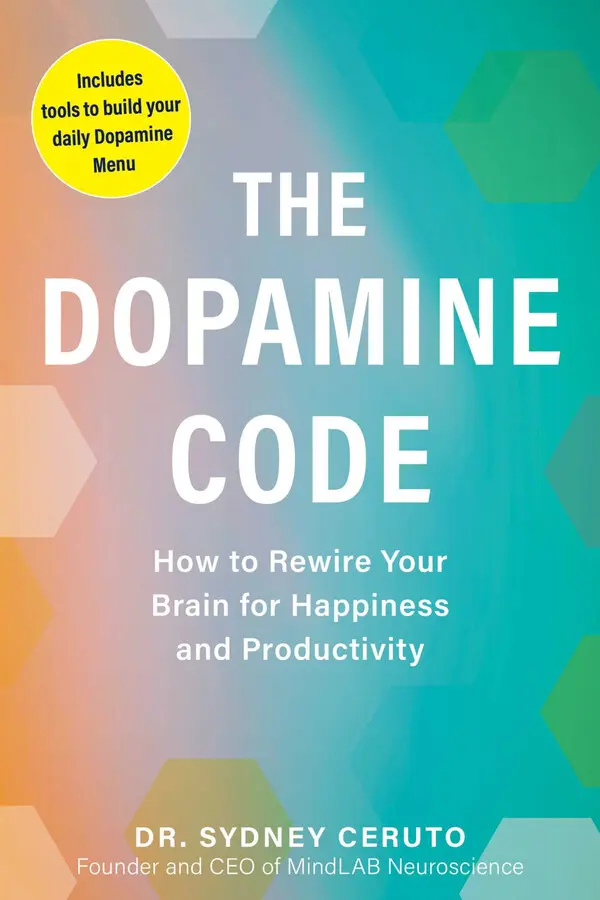
The Dopamine Code

Decode Your Drive

Why Your Brain Rewards the Wrong Things

Your brain's reward system runs every decision, every craving, every crash — and it was never designed for the life you're living. The Dopamine Code is Dr. Ceruto's framework for understanding the architecture behind what drives you, drains you, and keeps you locked in patterns that willpower alone will never fix.

Published by Simon & Schuster, The Dopamine Code is Dr. Ceruto's framework for building your own Dopamine Menu — a personalized system for motivation, focus, and enduring life satisfaction.

Order Now

Ships June 9, 2026

The Dopamine Code by Dr. Sydney Ceruto — Decode Your Drive
Locations

The Intelligence Brief

Neuroscience-backed analysis on how your brain drives what you feel, what you choose, and what you can’t seem to change — direct from Dr. Ceruto.