Career & Performance in Bergen County

<p>The career pattern is not a strategy problem. It is architecture.</p><p>Neural architecture determines your professional ceiling. It can be recalibrated.</p>

Career stagnation, burnout, and performance plateaus are maintained by neural architecture — the brain's reward system calibrating what work feels worth doing, the prediction system generating anxiety about change, and the identity architecture organizing self-worth around professional role. Dr. Ceruto's methodology identifies the specific circuits maintaining the pattern and intervenes at the structural level — recalibrating the architecture that determines how you engage with your career, lead your team, and sustain performance under pressure.

Schedule a Strategy Call
ForbesUSA TodayHuffPostNewsweekAssociated PressCosmopolitanBusiness InsiderForbesUSA TodayHuffPostNewsweekAssociated PressCosmopolitanBusiness Insider

Career Coaching

Career stagnation and indecision are maintained by neural architecture — the brain’s reward system coding certain paths as safe while others register as threat. Dr. Ceruto targets the architecture maintaining the pattern, not the career strategy sitting above it.

Learn more about Career Coaching in Bergen County →

Career Change & Pivot

Career change is an identity architecture problem. The brain has spent years organizing self-worth around the current career. Pivoting requires dismantling one identity architecture and building another — while the threat-detection system treats the demolition as danger.

Learn more about Career Change & Pivot in Bergen County →

Leadership Development

Leadership capacity is neural architecture — the prefrontal cortex’s regulatory capacity under pressure, the threat-detection system’s calibration of challenge, and the emotional regulation that sets the tone for everyone around you. The leader’s nervous system is the team’s regulatory environment.

Learn more about Leadership Development in Bergen County →

Workplace Burnout

Burnout is not exhaustion from working too hard — it is the collapse of the brain’s reward-effort calibration. The dopamine system that once generated engagement has been depleted by sustained output without adequate reward registration. This is architectural collapse, not insufficient vacation.

Learn more about Workplace Burnout in Bergen County →

Performance Optimization

Peak performance is neural architecture operating at optimal calibration — sustained focus under pressure, engagement without crisis, challenge processed as activating rather than paralyzing. Performance optimization targets the architecture that determines the ceiling.

Learn more about Performance Optimization in Bergen County →

Imposter Syndrome at Work

Imposter syndrome is a miscalibration between the brain’s self-evaluation system and actual competence. The self-assessment circuitry discounts evidence of competence and amplifies evidence of inadequacy. The person is not underestimating themselves — their evaluation architecture is running the wrong model.

Learn more about Imposter Syndrome at Work in Bergen County →

Career & Performance in Bergen County

Bergen County’s professional population is defined by a specific career architecture: the Manhattan-employed executive who has optimized for performance at the highest levels and organized their entire life — geography, school district, daily schedule, domestic structure — around sustaining that performance. The finance professional based in Alpine to Midtown, the corporate attorney taking NJ Transit from Englewood to their firm, the tech executive who relocated to Saddle River for the schools — these professionals are not experiencing career stress in the generic sense. They are running a performance system that was designed for ascent and has no architecture for maintenance, plateau, or the question of whether the trajectory still serves them.

The reward-effort calculation shifts in ways Bergen County professionals rarely anticipate. The dopaminergic system that drove the early career — the genuine neurological engagement with challenge, advancement, and increasing compensation — depletes over decades of sustained high output. The professional continues performing at the same level, but the internal experience changes. What once felt like drive now feels like obligation. The effort cost increases while the reward signal diminishes. This is not burnout in the popular sense. It is a specific neurological pattern where the system that generated motivation has exhausted its response to the stimuli the career provides.

Bergen County’s environment makes this pattern particularly difficult to address because the professional’s entire life structure depends on the career continuing at its current level. The mortgage in Tenafly, the tuition at Bergen County Academies, the lifestyle that dual executive incomes sustain — these create a financial architecture that makes career recalibration feel impossible regardless of what the neural system is signaling. Dr. Ceruto identifies this as the performance trap specific to affluent neighborhoods: the professional whose neurological architecture is signaling for change inside an economic structure that prohibits it. Dr. Ceruto designs interventions that work within that constraint, addressing the neural performance system without requiring the life restructuring that Bergen County’s financial commitments make impractical.


Dr. Sydney Ceruto, PhD — Founder, MindLAB Neuroscience

Dr. Sydney Ceruto, PhD — Founder & CEO, MindLAB Neuroscience

Dr. Ceruto holds a PhD in Behavioral & Cognitive Neuroscience from NYU and two Master’s degrees from Yale University. She lectures at the Wharton Executive Development Program at the University of Pennsylvania and has been an Executive Contributor to the Forbes Coaching Council since 2019. Dr. Ceruto is the author of The Dopamine Code (Simon & Schuster, June 2026). She founded MindLAB Neuroscience in 2000 and has spent over 26 years pioneering Real-Time Neuroplasticity™ — a methodology that permanently rewires the neural pathways driving behavior, decisions, and emotional responses.

References

Diamond, A. (2013). Executive functions. Annual Review of Psychology, 64, 135–168. https://doi.org/10.1146/annurev-psych-113011-143750

Arnsten, A. F. T. (2009). Stress signalling pathways that impair prefrontal cortex structure and function. Nature Reviews Neuroscience, 10(6), 410–422. https://doi.org/10.1038/nrn2648

Schultz, W. (2015). Neuronal reward and decision signals: from theories to data. Physiological Reviews, 95(3), 853–951. https://doi.org/10.1152/physrev.00023.2014

Success Stories

“Three months. That's how long it took to go from debilitating panic to leading with clarity. Years of conventional approaches hadn't moved the needle — Dr. Ceruto identified the root neural pattern and eliminated it. She didn't teach me to manage the panic. She made it unnecessary. I didn't know that was possible.”

Ella E. — Media Executive Manhattan, NY

“Every system, every supplement, every productivity method I tried collapsed within weeks — and nothing held because nothing addressed why my attention kept fragmenting. Dr. Ceruto identified the dopamine regulation pattern that was hijacking my prefrontal cortex every time I needed sustained focus. She didn't give me another workaround. She restructured the architecture underneath. My brain holds now. That's not something I ever thought I'd be able to say.”

Derek S. — Film Producer Beverly Hills, CA

“Dr. Ceruto's methodology sharpened my negotiation instincts and built a level of mental resilience I didn't know I was missing. The difference showed up in how my team responds to me — trust, respect, and a willingness to follow that I'd been trying to manufacture for years. I stopped trying to project authority and started operating from it. That's the difference.”

Victoria W. — Trial Attorney New York, NY

“Slower processing, foggier recall, decisions that used to be instant taking longer than they should — I'd been accepting it all as inevitable decline for two years. Dr. Ceruto identified the prefrontal efficiency pattern that was degrading and restructured it at the neurological level. The sharpness didn't just come back. It came back faster and more precise than it was a decade ago. Nothing I'd tried before even addressed the right problem.”

Elliott W. — Wealth Advisor Atherton, CA

“My communication was damaging every relationship in my professional life and I couldn't see it. Dr. Ceruto's neuroscience-based approach didn't just improve how I communicate — it rewired the stress response that was driving the pattern in the first place. The people around me noticed the change before I fully understood what had happened. That tells you everything.”

Bob H. — Managing Partner London, UK

“Dr. Ceruto's methodology took me from a founder on the verge of quitting to a leader capable of building the team and culture that drove Liquid IV's success. Her ability to restructure how I make decisions and lead under pressure changed the trajectory of the entire company. I don't say that lightly. The company I built after working with her was fundamentally different from the company I was building before — because I was fundamentally different.”

Brandin C. — Tech Founder Los Angeles, CA

“Dr. Ceruto restructured how I show up in high-stakes conversations. The blind spots I couldn't see for years became visible in our first sessions. I went from an overwhelmed Managing Director to a leader people actually want to follow. The change wasn't cosmetic — it was architectural. The way I process high-pressure interactions is fundamentally different now.”

Matteo R. — Investment Banker London, UK

“My body had simply stopped knowing when to sleep. Crossing time zones weekly for over two years had broken something fundamental, and every protocol, supplement, and device I tried couldn't hold longer than a few days. Dr. Ceruto identified the disruption at the level of my suprachiasmatic nucleus and recalibrated the signaling pattern driving the dysfunction. Within weeks, my circadian rhythm locked back in. I sleep now. Consistently. Regardless of where I land.”

Jonathan K. — Diplomat Geneva, CH

“Everyone around me had decided I was just 'wired differently' — creative but unreliable, brilliant but scattered. Years of trying to build systems around the chaos never worked because nobody identified what was actually driving it. Dr. Ceruto mapped the default mode network pattern that was hijacking my focus and recalibrated it at the source. The ideas still come fast — but now my prefrontal cortex decides what to do with them, not the noise.”

Jonah T. — Serial Entrepreneur New York, NY

“The way I was processing decisions under pressure had a cost I couldn't see — until Dr. Ceruto mapped it. She identified the neural pattern driving my reactivity in high-stakes situations and restructured it at the root. I don't just perform better under pressure now. I think differently under pressure. That's not something any executive coach or performance program ever came close to delivering.”

Rob W. — Portfolio Manager Manhattan, NY

“The conviction was always there at the start — and then the momentum would vanish, every single time. Discipline and accountability systems changed nothing. Dr. Ceruto identified a dopamine signaling deficit in my mesolimbic pathway that was collapsing my ability to sustain effort toward a goal. Once that pattern was restructured, finishing stopped requiring force. The motivation wasn't missing — it was being interrupted.”

Landon J. — Restaurateur New York, NY

Frequently Asked Questions About Neuroscience-Based Performance Optimization

Why has my performance plateaued despite working harder than ever?

Performance plateaus reflect the neural architecture ceiling — the biological limit of your current prefrontal circuits, reward system calibration, and cognitive resource allocation. Working harder within existing architecture produces diminishing returns because the constraint is not effort but capacity. The circuits that determine maximum performance quality are operating at their current architectural limit.

Can neuroscience actually raise my performance ceiling, not just help me reach the current one?

Yes. The neural systems governing performance capacity — prefrontal endurance, dopaminergic motivation, cognitive resource allocation, and executive function efficiency — are biologically modifiable through targeted intervention. Neuroplasticity ensures these systems can be expanded at any age, raising the biological ceiling on what your brain can sustain rather than optimizing behavior within unchanged constraints.

How does this approach address inconsistent performance — brilliant some days, mediocre on others?

Performance inconsistency reflects measurable fluctuations in prefrontal cortex function driven by biological variables: sleep quality, cumulative cognitive load, stress-response activation, and dopaminergic drive. Identifying which variables most affect your specific performance pattern allows targeted intervention that reduces the variability — producing consistent high-quality output rather than oscillation between commanding and diminished days.

How is this different from performance enhancement programs or productivity systems?

Productivity systems optimize behavior within existing neural capacity — they organize effort more efficiently. Dr. Ceruto expands the neural capacity itself. When the biological infrastructure supporting executive function, sustained attention, and cognitive endurance is strengthened, the individual can sustain higher-quality output across longer periods without the system-dependent scaffolding that conventional approaches require.

Can this approach help with specific performance challenges like procrastination?

Yes. Procrastination reflects the brain's temporal discounting function — the dopamine system assigns disproportionate value to immediate comfort relative to future outcomes. This is a measurable neural parameter, not a willpower failure. Dr. Ceruto targets the specific dopaminergic circuits governing temporal valuation, producing changes in motivation architecture that willpower and accountability systems cannot achieve.

What aspects of performance improve first after neural optimization?

Performance consistency is typically the first noticeable improvement — the elimination of bad days that were previously unexplained. Decision clarity and reduced rumination follow, reflecting improved prefrontal function. Cognitive endurance — the ability to maintain quality output later in the day and later in the week — improves as neural resource allocation is optimized. Creative and strategic capacity improvements develop as the architecture supporting these higher-order functions is strengthened.

Is this approach appropriate for high performers who want to go further, or only for those struggling?

The approach is most impactful for high performers precisely because they are operating closest to their architectural ceiling — meaning small improvements in neural capacity produce disproportionate performance gains. Individuals performing at 90% of their biological ceiling who gain 10% in neural capacity experience a larger absolute improvement than individuals performing at 50% who gain the same percentage.

What does the Strategy Call assess regarding performance capacity?

The Strategy Call maps your current performance architecture — identifying prefrontal endurance limits, reward system calibration, stress-response patterns that degrade function, and the specific biological variables most affecting your performance consistency. You leave with a clear understanding of what is neurologically driving your performance ceiling and where targeted intervention will produce the greatest capacity expansion.

Ready to Address What Is Actually Happening

A single phone call with Dr. Ceruto will clarify whether the neural architecture driving the pattern can be recalibrated — and what the path forward looks like.

Schedule a Strategy Call
MindLAB Neuroscience consultation room

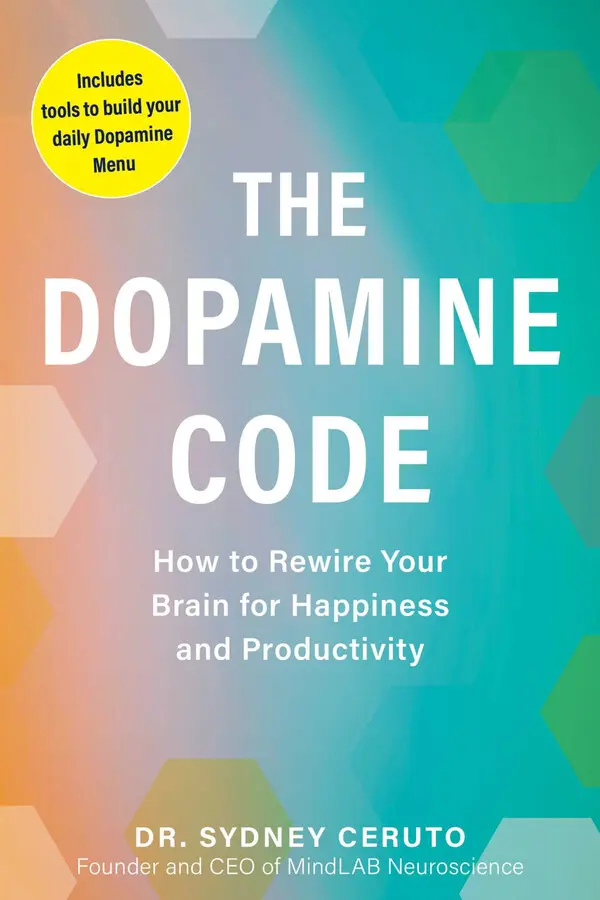
The Dopamine Code

Decode Your Drive

Why Your Brain Rewards the Wrong Things

Your brain's reward system runs every decision, every craving, every crash — and it was never designed for the life you're living. The Dopamine Code is Dr. Ceruto's framework for understanding the architecture behind what drives you, drains you, and keeps you locked in patterns that willpower alone will never fix.

Published by Simon & Schuster, The Dopamine Code is Dr. Ceruto's framework for building your own Dopamine Menu — a personalized system for motivation, focus, and enduring life satisfaction.

Order Now

Ships June 9, 2026

The Dopamine Code by Dr. Sydney Ceruto — Decode Your Drive
Locations

The Intelligence Brief

Neuroscience-backed analysis on how your brain drives what you feel, what you choose, and what you can’t seem to change — direct from Dr. Ceruto.