Relationships & Dating in Bergen County

<p>The pattern keeps repeating. Different person, same outcome.</p><p>Relationship architecture is encoded in the brain. It can be recalibrated.</p>

Relationship patterns are not personality — they are the output of attachment architecture encoded in early experience and maintained by the brain's prediction, reward, and threat-detection systems. The brain builds models of how relationships work based on its earliest attachment experiences, then uses those models to predict and respond to every subsequent connection. Dr. Ceruto's methodology identifies the specific neural architecture maintaining the pattern and intervenes at the structural level — recalibrating the systems that determine how you connect, communicate, and respond to closeness.

Book a Strategy Call
ForbesUSA TodayHuffPostNewsweekAssociated PressCosmopolitanBusiness InsiderForbesUSA TodayHuffPostNewsweekAssociated PressCosmopolitanBusiness Insider

Relationship Coaching

The brain builds models of how relationships work from earliest experience, then runs those models in every subsequent partnership. When the model was built on inconsistency or threat, the predictions it generates create the very patterns the person is trying to escape.

Learn more about Relationship Coaching in Bergen County →

Dating Confidence

Dating confidence is not a mindset — it is the output of how the brain’s threat-detection, reward, and self-evaluation systems interact under romantic pursuit. When any of these systems is miscalibrated, dating produces anxiety and self-sabotage rather than authentic engagement.

Learn more about Dating Confidence in Bergen County →

Attachment Patterns

Encoded in the brain’s prediction and threat-detection systems during the earliest years — the operating system for every subsequent relationship. These are not personality types. They are neural architectures that were adaptive responses to the environment that built them.

Learn more about Attachment Patterns in Bergen County →

Communication Breakdown

Not a skills deficit — a threat-response pattern. When the amygdala codes the partner’s tone or topic as a threat, the prefrontal cortex’s capacity for measured response is hijacked. The nervous system has moved from connection mode to protection mode.

Learn more about Communication Breakdown in Bergen County →

Codependency & Enmeshment

An attachment architecture where the brain’s self-regulation and identity systems have organized around another person. The reward system generates its primary signal from the other person’s approval. This is not excessive caring — it is architecture built in an environment where safety depended on managing another person’s state.

Learn more about Codependency & Enmeshment in Bergen County →

Trust Rebuilding

Trust is a prediction — the brain’s assessment that another person will behave safely and consistently. When trust is violated, the prediction model updates to code the person as unreliable. Rebuilding requires providing the prediction system with enough corrective experience to update the model.

Learn more about Trust Rebuilding in Bergen County →

Intimacy Avoidance

The brain’s threat-detection system has learned to code closeness as danger. The withdrawal is not a commitment issue — it is a protective response generated by architecture that learned to treat vulnerability as a precursor to harm. The person wants connection. The nervous system blocks it.

Learn more about Intimacy Avoidance in Bergen County →

Relationships & Dating in Bergen County

Bergen County’s relationship architecture is shaped by a specific paradox: the community is structured around families and couples, yet the conditions that sustain those relationships — time, presence, emotional bandwidth — are systematically consumed by the professional and domestic demands the county imposes. The dual-income executive household in Saddle River or Ridgewood is not struggling because the relationship is flawed. It is struggling because both partners are depleting their regulatory resources in Manhattan all day, traveling home on NJ Transit with diminished prefrontal capacity, and arriving into a domestic environment that requires emotional engagement they no longer have the neurological resources to provide.

The successful-suburb paradox operates powerfully inside relationships. The couple who has achieved everything — the house in Tenafly, the children in excellent schools, the combined income that places them in one of the wealthiest counties in America — cannot easily name the disconnection they feel. The external architecture looks complete. When the emotional architecture inside the relationship has quietly eroded, the discrepancy between the visible life and the experienced life produces shame rather than honest assessment. Bergen County’s social environment does not reward vulnerability between couples. It rewards the appearance of having it together.

Cultural dimensions add structural complexity. Fort Lee and Palisades Park’s Korean-American community carries specific relationship expectations around roles, emotional expression, and the management of marital difficulty that can make relational dissatisfaction operate as a private, unspoken architecture for years. The South Asian communities across Paramus and surrounding towns carry parallel frameworks where family expectation and individual relational need exist in genuine tension. Dr. Ceruto’s work with Bergen County couples and individuals addresses the neural architecture of disconnection — the specific patterns by which two people who chose each other gradually lose access to the emotional circuitry that connection requires, and the environmental factors in Bergen County that accelerate that process.


Dr. Sydney Ceruto, PhD — Founder, MindLAB Neuroscience

Dr. Sydney Ceruto, PhD — Founder & CEO, MindLAB Neuroscience

Dr. Ceruto holds a PhD in Behavioral & Cognitive Neuroscience from NYU and two Master’s degrees from Yale University. She lectures at the Wharton Executive Development Program at the University of Pennsylvania and has been an Executive Contributor to the Forbes Coaching Council since 2019. Dr. Ceruto is the author of The Dopamine Code (Simon & Schuster, June 2026). She founded MindLAB Neuroscience in 2000 and has spent over 26 years pioneering Real-Time Neuroplasticity™ — a methodology that permanently rewires the neural pathways driving behavior, decisions, and emotional responses.

References

Feldman, R. (2017). The neurobiology of human attachments. Trends in Cognitive Sciences, 21(2), 80–99. https://doi.org/10.1016/j.tics.2016.11.007

Eisenberger, N. I. (2012). The neural bases of social pain: evidence for shared representations with physical pain. Psychosomatic Medicine, 74(2), 126–135. https://doi.org/10.1097/PSY.0b013e3182464dd1

Coan, J. A., Schaefer, H. S., & Davidson, R. J. (2006). Lending a hand: social regulation of the neural response to threat. Psychological Science, 17(12), 1032–1039. https://doi.org/10.1111/j.1467-9280.2006.01832.x

Success Stories

“The same relational patterns my mother and grandmother lived through kept repeating in my own life — the hypervigilance, the emotional shutdown, the inability to feel safe even when nothing was wrong. Talking through it changed nothing. Dr. Ceruto identified the epigenetic stress signatures driving the pattern and restructured them at the neurological level. The cycle that ran through three generations stopped with me.”

Gabriela W. — Real Estate Developer Miami, FL

“I could perform at the highest level professionally and still feel hijacked emotionally in my closest relationships — and no conventional approach had ever explained why those two realities coexisted. Dr. Ceruto identified the limbic imprint — an amygdala encoding from childhood that was running every intimate interaction I had. She didn't help me understand it better. She dismantled it. The reactivity isn't something I regulate anymore. The pattern that generated it is gone.”

Natasha K. — Art Advisor Beverly Hills, CA

“Every close relationship I had eventually hit the same wall — I'd flood emotionally and shut down or explode, and nothing I'd tried gave me real control over it. Dr. Ceruto identified that my autonomic nervous system was defaulting to fight-or-flight the moment real intimacy was on the line. She didn't give me coping tools. She restructured the default. The flooding stopped because the trigger architecture changed.”

Simone V. — Publicist New York, NY

“Dr. Ceruto restructured how I show up in high-stakes conversations. The blind spots I couldn't see for years became visible in our first sessions. I went from an overwhelmed Managing Director to a leader people actually want to follow. The change wasn't cosmetic — it was architectural. The way I process high-pressure interactions is fundamentally different now.”

Matteo R. — Investment Banker London, UK

“Dr. Ceruto's methodology sharpened my negotiation instincts and built a level of mental resilience I didn't know I was missing. The difference showed up in how my team responds to me — trust, respect, and a willingness to follow that I'd been trying to manufacture for years. I stopped trying to project authority and started operating from it. That's the difference.”

Victoria W. — Trial Attorney New York, NY

“What sets Dr. Ceruto’s dopamine work apart is the deep dive into how dopamine actually affects motivation and focus — not surface-level advice, but real science applied to your specific brain. The assessments were spot-on, and the strategies were tailored to my individual dopamine profile rather than a generic template. I noticed real improvements in my drive and mental clarity within weeks, not months. This is a must for anyone wanting to optimize their brain with real science rather than guesswork or generic programs.”

Maria P. — University Dean Monaco

Frequently Asked Questions About Neuroscience-Based Relationship Pattern Resolution

Why do I keep choosing the same type of partner despite knowing the pattern is harmful?

Partner selection is driven by neural templates in the attachment and reward systems that operate below conscious awareness. These templates — built from early attachment experience and reinforced through subsequent relationships — define what love feels like at the neural level. The brain generates attraction to partners who activate these templates regardless of conscious preference. Choosing differently requires restructuring the templates themselves, not overriding them with conscious intention.

Can relationship patterns formed in childhood genuinely be changed in adulthood?

Yes. While attachment templates are initially established during early development, the neural circuits encoding them remain plastic throughout adulthood. Neuroplasticity research demonstrates that attachment patterns, emotional regulation in relationships, and partner selection templates can all be restructured through targeted intervention. The brain's relational architecture is not permanently fixed by childhood experience.

How does this approach differ from couples counseling or relationship advice?

Relationship advisory and couples work address the dynamic between two people — communication patterns, conflict resolution, and relational skills. Dr. Ceruto addresses the neural architecture that each individual brings to relationships — the attachment templates, threat-response patterns, and reward circuits that determine partner selection, conflict behavior, and bonding capacity. When individual architecture changes, relational dynamics change as a downstream effect.

Can this work help me if I am single and struggling with dating?

Yes. Dating challenges — attraction to unavailable partners, anxiety that prevents authentic connection, avoidance of intimacy, or inability to sustain interest — are outputs of specific neural architecture. The attachment system, social threat-detection circuits, and reward architecture produce dating patterns as reliably as they produce relationship patterns. Restructuring these systems changes the dating experience at its neural source.

How does this approach address the fear of vulnerability that prevents deep connection?

Fear of vulnerability is processed through the amygdala's social threat-detection system — the brain classifies emotional openness as dangerous based on prior relational experience where vulnerability produced pain. This classification operates automatically, producing emotional walls that the individual may want to lower but neurologically cannot. Dr. Ceruto recalibrates the threat classification so vulnerability is processed as connection opportunity rather than danger.

Can this work help repair a relationship that is struggling?

When one partner's neural architecture changes — improved emotional regulation, more accurate empathic processing, reduced threat-driven conflict responses — the relational dynamic shifts because the neural signals entering the relationship have changed. Partners frequently report that the individual's work with Dr. Ceruto produced relationship improvements that couples-focused approaches had not achieved, because the architectural source of the relational patterns was addressed.

How does this approach address codependency or anxious attachment patterns?

Anxious attachment and codependent patterns are generated by specific configurations of the attachment and threat-detection systems — the brain classifies relational distance as survival-level threat, producing pursuit behaviors, boundary violations, and emotional dysregulation that the conscious mind recognizes as problematic but cannot override. Dr. Ceruto restructures the attachment architecture so relational security is generated internally rather than dependent on constant external reassurance.

What does the Strategy Call cover for relationship pattern challenges?

The Strategy Call maps the neural architecture driving your specific relationship patterns — the attachment templates governing partner selection, the threat-response circuits producing conflict behavior, the reward architecture determining attraction patterns, and the social cognition systems governing empathic accuracy and emotional communication. You leave with a neurological understanding of why your relationships follow the patterns they do.

Take the First Step

The Strategy Call is a focused conversation with Dr. Ceruto that maps the specific neural mechanisms driving your concerns and determines the right path forward.

Book a Strategy Call
MindLAB Neuroscience consultation room

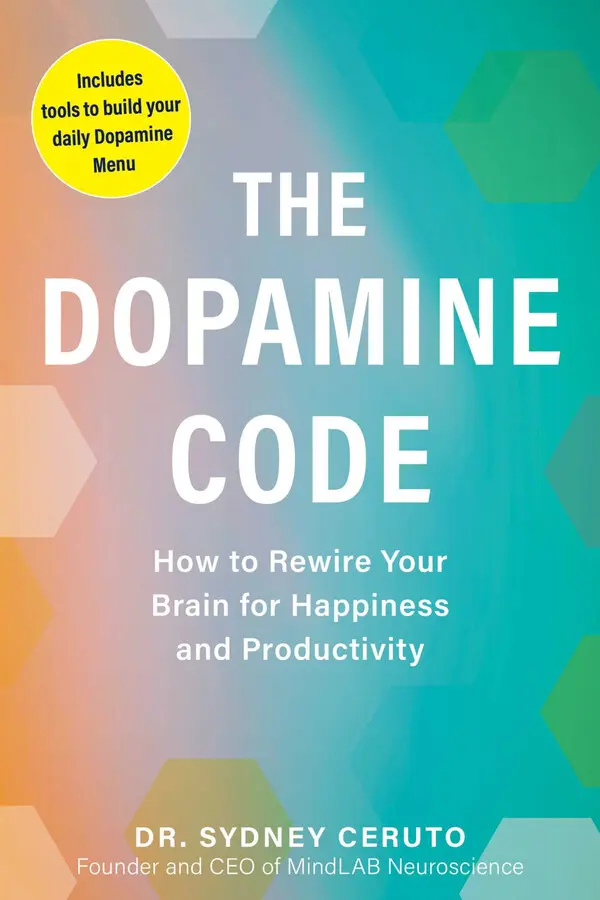
The Dopamine Code

Decode Your Drive

Why Your Brain Rewards the Wrong Things

Your brain's reward system runs every decision, every craving, every crash — and it was never designed for the life you're living. The Dopamine Code is Dr. Ceruto's framework for understanding the architecture behind what drives you, drains you, and keeps you locked in patterns that willpower alone will never fix.

Published by Simon & Schuster, The Dopamine Code is Dr. Ceruto's framework for building your own Dopamine Menu — a personalized system for motivation, focus, and enduring life satisfaction.

Order Now

Ships June 9, 2026

The Dopamine Code by Dr. Sydney Ceruto — Decode Your Drive
Locations

The Intelligence Brief

Neuroscience-backed analysis on how your brain drives what you feel, what you choose, and what you can’t seem to change — direct from Dr. Ceruto.