ADHD Coaching
The brain’s attention-allocation system is organized around novelty and urgency rather than importance. Dr. Ceruto identifies the specific architecture maintaining the dysregulation and works at the level where the pattern lives.









The brain’s attention-allocation system is organized around novelty and urgency rather than importance. Dr. Ceruto identifies the specific architecture maintaining the dysregulation and works at the level where the pattern lives.
Sustained focus requires a stable prefrontal activation pattern while suppressing competing inputs. When this system is dysregulated, attention fragments regardless of effort: the architecture, not willpower, determines focus capacity.
The prefrontal cortex’s suite of higher-order cognitive capacities: planning, organizing, initiating, prioritizing, and cognitive flexibility. Intelligence is intact. The capacity to deploy it effectively is compromised.
The brain’s capacity to direct, sustain, and flexibly shift attention based on priority. When regulation is compromised, attention becomes stimulus-driven: captured by whatever is loudest or newest rather than what matters most.
The brain’s inability to accurately perceive and track the passage of time. An hour feels like ten minutes. Deadlines exist as abstractions until they are immediately present. This is a perceptual deficit, not poor planning.
The paradox of ADHD attention: the brain that cannot sustain focus on priorities locks onto certain inputs with extraordinary intensity. The problem is not the capacity for deep engagement but the involuntary nature of the lock-on.
Emotions arrive faster, hit harder, and take longer to resolve. The prefrontal regulatory system that modulates emotional intensity and duration is the same system ADHD compromises: this is architecture, not overreaction.
Bergen County’s environment creates a specific tension for the person whose attention-allocation system is already dysregulated. The suburb is designed for structure (scheduled activities, organized school systems, predictable domestic architecture) and that structure can function as external scaffolding that masks the extent of the underlying attention pattern. The Bergen County professional with ADHD-pattern attention may have navigated decades of high performance not because the attention system was regulated but because the environment provided enough external organization to compensate. When that scaffolding shifts (a career change, a child leaving for college, a role that demands more self-directed work) the underlying architecture is suddenly exposed.
the daily travel from Tenafly or Closter to Manhattan introduces a daily attention challenge that is easy to underestimate. The NJ Transit ride is long enough to demand sustained focus on preparation or decompression and short enough to feel like it should be manageable. For the person whose prefrontal system struggles with task initiation and sustained engagement, this daily window becomes a repeated experience of failure: the intention to read, plan, or process that dissolves into phone scrolling and fragmented thought. The pattern is minor in isolation. Accumulated across years of traveling, it reinforces a self-concept of inefficiency that has nothing to do with intelligence or capability and everything to do with how the attention system allocates resources.
The academic pressure in Bergen County households adds a generational dimension. The parent managing their own attention dysregulation while monitoring a child’s performance at Bergen County Academies or Ridgewood High School is running executive function demands that would challenge a fully regulated system. Dr. Ceruto identifies the pattern that emerges in these families: the parent whose own attention architecture was never properly understood, now watching similar patterns emerge in their child, navigating a school system that demands precisely the sustained, organized focus that the family’s shared neural architecture makes most difficult. Dr. Ceruto designs approaches that address the architectural reality rather than imposing organizational systems that the attention system will reliably reject.

Dr. Sydney Ceruto, PhD, Neuroscientist & Author, MindLAB Neuroscience
Dr. Ceruto holds a PhD in Behavioral & Cognitive Neuroscience from NYU and Master’s degrees in Clinical Psychology and Business Psychology from Yale University. She lectures at the Wharton Executive Development Program at the University of Pennsylvania and has been an Executive Contributor to the Forbes Coaching Council since 2019. Dr. Ceruto is the author of The Dopamine Code (Simon & Schuster, June 2026). She founded MindLAB Neuroscience in 2000 and has spent over 26 years leading it, pioneering Real-Time Neuroplasticity™, a methodology that durably rewires the neural pathways driving behavior, decisions, and emotional responses.
Castellanos, F. X., & Proal, E. (2012). Large-scale brain systems in ADHD: beyond the prefrontal–striatal model. Trends in Cognitive Sciences, 16(1), 17–26. https://doi.org/10.1016/j.tics.2011.11.007
Volkow, N. D., Wang, G. J., Kollins, S. H., et al. (2009). Evaluating dopamine reward pathway in ADHD: clinical implications. JAMA, 302(10), 1084–1091. https://doi.org/10.1001/jama.2009.1308
Diamond, A. (2013). Executive functions. Annual Review of Psychology, 64, 135–168. https://doi.org/10.1146/annurev-psych-113011-143750
Attention challenges can arise from multiple neural mechanisms: ADHD-related dopaminergic variation is one pathway, but chronic stress, sleep disruption, anxiety-related prefrontal suppression, and accumulated cognitive load can all produce focus difficulties through different circuits. The specific mechanism matters because the intervention that addresses dopaminergic variation differs from the intervention that addresses stress-related prefrontal degradation. Dr. Ceruto identifies the specific neural architecture producing your attention challenges.
Medication modulates neurotransmitter availability, primarily dopamine and norepinephrine, providing the brain with more of the chemicals its attention circuits require. This addresses the chemical substrate but does not restructure the circuits themselves. Dr. Ceruto's approach targets the neural architecture governing attention allocation, priority signaling, and executive function, producing structural improvements in how the brain directs and sustains cognitive resources. The approaches address different layers and can be complementary.
Yes. Neuroplasticity research demonstrates that the prefrontal circuits governing executive function, the dopaminergic pathways determining attention allocation, and the anterior cingulate cortex mediating cognitive control all remain modifiable throughout adulthood. The brain's attention architecture responds to targeted intervention at any age: the neural systems do not become fixed after childhood despite the common misconception.
This pattern, sometimes called hyperfocus, reflects how the dopamine system assigns priority signals. When the brain classifies a task as sufficiently novel, interesting, or urgent, the dopaminergic system provides abundant focus resources. When a task lacks these qualities, the priority signal is insufficient to sustain prefrontal engagement regardless of the task's objective importance. The challenge is in the brain's priority computation, not in attention capacity itself.
The assessment maps the specific attention challenges (sustained focus, task initiation, priority management, impulse control, working memory) against the neural systems most likely producing them. Different attention challenges trace to different circuits: initiation difficulties may reflect dopaminergic drive, while sustained attention challenges may reflect prefrontal endurance. This specificity ensures intervention targets the actual constraint rather than applying a general attention enhancement approach.
Yes. The emotional dimension of attention challenges is generated by the same neural architecture: the prefrontal-limbic circuits that regulate emotional responses are the same circuits whose atypical function produces the attention challenges. When the underlying architecture is addressed, both the attention patterns and the emotional responses generated by living with them improve simultaneously because they share the same neural substrate.
Professional environments designed for neurotypical attention (long meetings, sustained document review, sequential task completion) impose demands that attention-atypical architecture processes differently. Dr. Ceruto's approach does not attempt to make the brain conform to environments designed for a different architecture. It strengthens the specific circuits governing executive function and priority signaling so the individual can meet professional demands from expanded neural capacity rather than exhausting compensatory effort.
The Strategy Call maps your specific attention architecture: which circuits are producing the challenges, what compensatory strategies you have developed and their neural cost, and where the most productive intervention points lie. You leave with a clear, neurologically grounded understanding of why your attention operates the way it does and what can be structurally addressed.
A single phone call with Dr. Sydney Ceruto will clarify whether your attention system's architecture can be recalibrated, and what the path forward looks like.
Schedule a Strategy Call
Decode Your Drive
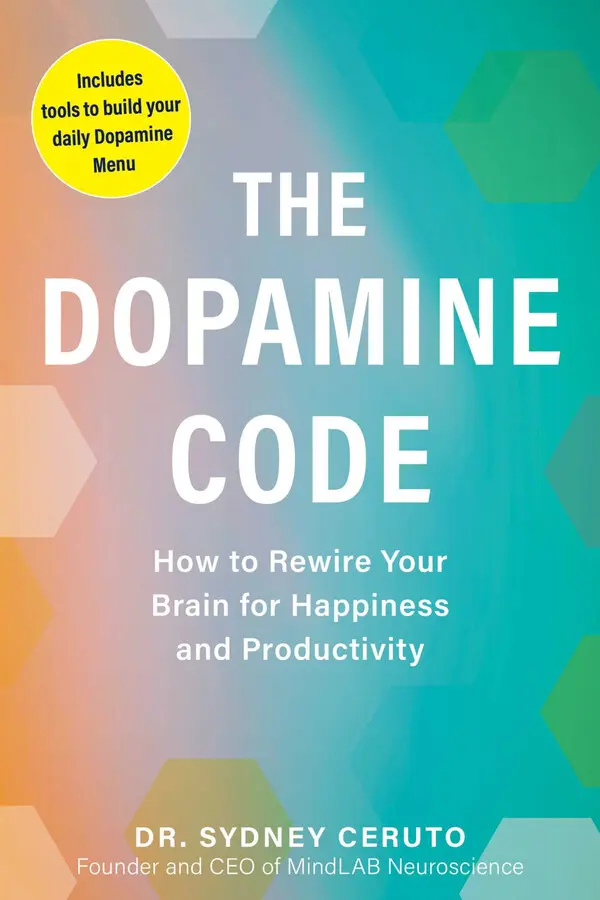
Your brain's reward system runs every decision, every craving, every crash, and it was never designed for the life you're living. The Dopamine Code is Dr. Ceruto's framework for understanding the architecture behind what drives you, drains you, and keeps you locked in patterns that willpower alone will never fix.
Published by Simon & Schuster, The Dopamine Code is Dr. Ceruto's framework for building your own Dopamine Menu, a personalized system for motivation, focus, and enduring life satisfaction.
Order Now!Available now