People-Pleasing & Boundary Setting in Bergen County

Bergen County's layered social hierarchies train the approval-seeking circuit into overdrive. The path forward is neurological, not motivational.

If you consistently say yes when every part of you wants to say no, that isn't weakness or poor discipline — it's a brain running a deeply encoded approval-seeking program. The discomfort you feel at the idea of disappointing someone is real, neurological, and trainable.

At MindLAB Neuroscience, I work with the reward and threat circuits that drive people-pleasing behavior at its source. This isn't about rehearsing assertive phrases. It's about changing the neural architecture that makes "no" feel dangerous in the first place.

Book a Strategy Call
ForbesUSA TodayHuffPostNewsweekAssociated PressCosmopolitanBusiness InsiderForbesUSA TodayHuffPostNewsweekAssociated PressCosmopolitanBusiness Insider

Key Points

  1. The brain genuinely does not distinguish clearly between physical threat and social threat when the alarm fires.
  2. When you feel that pull to agree, to smooth things over, to do the thing you'd rather not do rather than endure someone's disappointment, your brain is doing exactly what it was trained to do.
  3. The brain's reward circuitry — the mesolimbic system — evolved to seek resources that support survival.
  4. The more consistently approval was available as a reward in your environment, the more precisely your brain tuned itself to pursue it.
  5. In the brain's threat hierarchy, social exclusion activates the same neural alarm systems as physical danger.
  6. When you start to say no — when you feel the words forming, when you imagine the other person's face falling — the amygdala fires.
  7. The prefrontal cortex — the part of your brain responsible for deliberate judgment and values-based decisions — is supposed to modulate that alarm signal.

The Neuroscience of Saying Yes When You Mean No

“We rebuild the prefrontal capacity to evaluate social pressure accurately and strengthen the internal reward signals that make your own values — not others' approval — the compass your brain consults first.”

People-pleasing isn’t a personality flaw. It’s a pattern — and like all patterns, it has a structure in the brain that can be understood and changed. When you feel that pull to agree, to smooth things over, to do the thing you’d rather not do rather than endure someone’s disappointment, your brain is doing exactly what it was trained to do.

The question isn’t why you’re this way. The question is what, precisely, is running the program — and how do you retrain it.

Approval as a Reward Signal

The brain’s reward circuitry — the mesolimbic system — evolved to seek resources that support survival. For a deeply social species, belonging and approval are survival resources. Acceptance registers as reward. Rejection registers as threat.

When you earn approval, your reward system responds with a signal that reinforces the behavior that earned it. Over time, approval-seeking becomes a habit the brain actively pursues — not because you’re weak, but because the circuit was built to optimize for it. The more consistently approval was available as a reward in your environment, the more precisely your brain tuned itself to pursue it.

This is the trap. A circuit that was genuinely useful — social attunement, reading others, adapting — becomes rigid. It starts executing in situations where it costs you rather than serves you.

Why “No” Triggers a Threat Response

The amygdala — the brain’s threat-detection structure — is exquisitely sensitive to social rejection. In the brain’s threat hierarchy, social exclusion activates the same neural alarm systems as physical danger. This isn’t metaphor. The brain genuinely does not distinguish clearly between physical threat and social threat when the alarm fires.

When you start to say no — when you feel the words forming, when you imagine the other person’s face falling — the amygdala fires. That tightening in your chest, the urge to backtrack immediately, the sudden flood of reasons why the other person’s need is more important than yours: that’s a threat response, not a character assessment.

The prefrontal cortex — the part of your brain responsible for deliberate judgment and values-based decisions — is supposed to modulate that alarm signal. It’s supposed to evaluate whether the threat is real and proportionate. In people-pleasers, this prefrontal override consistently fails under social pressure. The alarm wins before the judgment arrives.

Why You Can’t Just “Decide” to Stop

People-pleasing is not a decision problem. It’s an architecture problem. You can know, intellectually, that you have the right to say no. You can believe it completely when you’re alone. And then the moment arrives, the amygdala fires, and the override fails — and you hear yourself saying yes again.

This is why the standard advice doesn’t work. Scripts, affirmations, and boundary-setting worksheets operate at the level of conscious intention. They don’t reach the reward circuitry and threat-detection architecture that runs the pattern before conscious intention has a chance to engage.

Meaningful change requires working at the level of the circuit itself — understanding what specific approval signals your brain has been trained to pursue, what threats it’s been trained to avoid, and rebuilding the prefrontal capacity to evaluate those signals accurately rather than react to them automatically.

What Changes When the Circuit Changes

When the reward circuit is recalibrated, approval from others stops functioning as a primary reward signal. It doesn’t disappear — social belonging remains important, as it should. But it stops being the override that makes your own needs invisible.

When the threat circuit is recalibrated, the anticipation of someone’s disappointment stops triggering the same alarm as genuine danger. The prefrontal evaluation comes online. You can assess whether a boundary is worth holding without the amygdala flooding the assessment with threat signals before you can think clearly.

Neuroscience consultation — rosewood table with crystal brain sculpture and branded journal for strategy call preparation

People often describe this shift as finally having access to a pause — a moment between the request and the response where they can actually decide. That pause isn’t willpower. It’s a prefrontal circuit that’s finally strong enough to hold the amygdala response long enough for judgment to arrive.

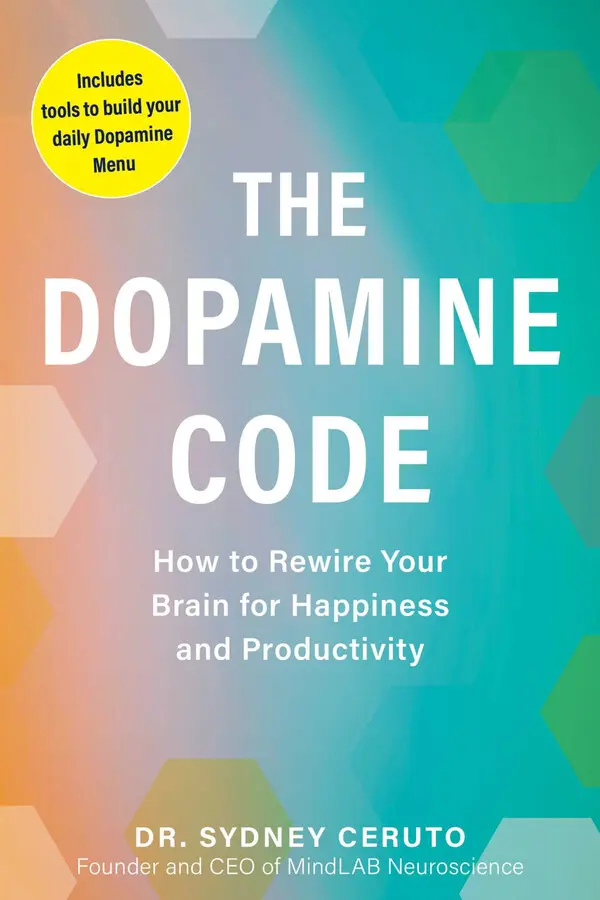
For a complete framework on understanding and resetting your dopamine reward system, I cover the full science in my forthcoming book The Dopamine Code (Simon & Schuster, June 2026). Learn more.

The Work

My approach begins by mapping the specific approval circuits that are most active for you — the relationships, contexts, and stakes where the pattern runs hardest. We identify the reward history that trained the circuit and the threat signals that keep it locked in place.

From there, the work is systematic and neurologically grounded. We don’t rehearse boundary scripts. We rebuild the prefrontal capacity to evaluate social pressure accurately and strengthen the internal reward signals that make your own values — not others’ approval — the compass your brain consults first.

This isn’t fast work. Circuits built over years don’t restructure in weeks. But the change is structural — which means it holds.

Marker What You Experience What's Happening Neurologically What We Restructure
The Neuroscience of Saying Yes When You Mean No When you feel that pull to agree, to smooth things over, to do the thing you'd rather not do rather than endure someone's disappointment, your brain is doing exactly what it was trained to do. This is not weakness — it is a deeply reinforced neural pattern responding to a threat signal. It's a pattern — and like all patterns, it has a structure in the brain that can be understood and changed. The structure is a specific combination of threat sensitivity and reward conditioning: the amygdala has learned to treat disapproval as danger, and the reward system has been shaped by years of receiving approval as its primary positive signal. The specific combination of threat sensitivity and reward conditioning that sustains the pattern — recalibrating the amygdala's threat response to disapproval and rebuilding the reward system's signal strength for approval-independent behavior, so that saying no stops activating the full alarm.
Approval as a Reward Signal When you earn approval, your reward system responds with a signal that reinforces the behavior that earned it. Over time and repetition, approval-seeking becomes one of the strongest behavioral drivers the brain has — not because you decided it should be, but because it was systematically rewarded. The brain's reward circuitry — the mesolimbic system — evolved to seek resources that support survival. In social species, approval from others has historically been a genuine survival resource: it signals belonging, access to cooperation, protection from exclusion. The brain did not invent the approval drive from nothing. The mesolimbic system's calibration toward social approval as a primary reward source — building the circuitry's sensitivity to the full range of internal rewards that do not depend on another person's response, so that approval remains valued without being the dominant signal governing behavior.
Why Saying 'No' Triggers a Threat Response When you start to say no — when you feel the words forming, when you imagine the other person's face falling — the amygdala fires. Not as metaphor. An actual threat signal, the same architecture that responds to physical danger, activating in response to the anticipated disapproval of someone whose opinion the brain has encoded as safety-relevant. The amygdala — the brain's threat-detection structure — is exquisitely sensitive to social rejection. In a nervous system that learned early that approval was required for safety, the amygdala encoded disapproval as a genuine threat and built a proportionate response: avoidance, appeasement, compliance. The amygdala's learned threat classification of social disapproval — specifically, updating the stored association between disapproval and danger so that the threat response activates only when actual safety is at risk, not whenever someone might be displeased.
Why You Can't Just Decide to Have Boundaries You can know, intellectually, that you have the right to say no. You can rehearse the conversation, prepare the words, commit to the boundary in advance. And then the moment arrives and the approval drive overrides the intention, the boundary dissolves, and the pattern runs again. Meaningful change requires working at the level of the circuit itself — understanding what specific approval signals your brain has been trained to pursue, what threats it's been trained to avoid, and rebuilding the prefrontal system's capacity to intervene before the threat response reaches the behavior. The target is the circuit's automatic sequence — the rapid threat detection, the compliance response that deploys before the reflective mind can apply the intention — so that the prefrontal system gains enough time to act on the person's actual preference rather than the amygdala's learned protective response.

Why People-Pleasing & Boundary Setting Matters in Bergen County

People-Pleasing and Boundary Setting in Bergen County, New Jersey

People-pleasing in Bergen County's community-oriented suburban environment is structurally reinforced because the behavior produces genuine social capital. The parent who chairs the committee, manages the carpool, coordinates the fundraiser, and maintains availability for every community request is valued by the school, the neighborhood, and the social network. The neural cost — the chronic depletion, the resentment, the progressive loss of the individual's own needs and preferences — is invisible because the behavior looks like generosity and community spirit.

Boundary-setting in Bergen County's connected communities carries social consequences, and in the county's cultural communities, may carry additional cultural consequences. The individual whose cultural framework emphasizes communal obligation, family duty, and social harmony may experience boundary-setting not just as social risk but as cultural violation. The brain's threat system processes this dual consequence — social and cultural — and generates resistance proportionate to the combined cost.

My work addresses people-pleasing at the neural level — the self-worth circuitry organized around external validation, the threat-detection system that treats boundary-setting as social and potentially cultural danger, and the conditions under which boundaries can be established within Bergen County's connected suburban environment and the specific cultural expectations the individual's heritage community maintains.

Dr. Sydney Ceruto, PhD — Founder, MindLAB Neuroscience

Dr. Sydney Ceruto, PhD — Founder & CEO, MindLAB Neuroscience

Dr. Ceruto holds a PhD in Behavioral & Cognitive Neuroscience from NYU and two Master’s degrees from Yale University. She lectures at the Wharton Executive Development Program at the University of Pennsylvania and has been an Executive Contributor to the Forbes Coaching Council since 2019. Dr. Ceruto is the author of The Dopamine Code (Simon & Schuster, June 2026). She founded MindLAB Neuroscience in 2000 and has spent over 26 years pioneering Real-Time Neuroplasticity™ — a methodology that permanently rewires the neural pathways driving behavior, decisions, and emotional responses.

References

Eisenberger, N. I., & Lieberman, M. D. (2004). Why rejection hurts: A common neural alarm system for physical and social pain. *Trends in Cognitive Sciences*, 8(7), 294–300. https://doi.org/10.1016/j.tics.2004.05.010

Haber, S. N., & Knutson, B. (2010). The reward circuit: Linking primate anatomy and human imaging. *Neuropsychopharmacology*, 35(1), 4–26. https://doi.org/10.1038/npp.2009.129

Ochsner, K. N., Silvers, J. A., & Buhle, J. T. (2012). Functional imaging studies of emotion regulation: A synthetic review and evolving model of the cognitive control of emotion. *Annals of the New York Academy of Sciences*, 1251(1), E1–E24. https://doi.org/10.1111/j.1749-6632.2012.06751.x

Davey, C. G., Yucel, M., & Allen, N. B. (2008). The emergence of depression in adolescence: Development of the prefrontal cortex and the representation of reward. *Neuroscience & Biobehavioral Reviews*, 32(1), 1–19. https://doi.org/10.1016/j.neubiorev.2007.04.016

Success Stories

“When my youngest left for college, I didn't just feel sad — I felt erased. My entire sense of self had been wired to caregiving for two decades, and I didn't know who I was without it. Years of talk-based approaches hadn't touched it. Dr. Ceruto mapped the identity circuitry that had fused with the role and restructured it. I didn't find a new purpose — I found the one that had been underneath the whole time.”

Diane L. — Nonprofit Director Chicago, IL

“Ninety-hour weeks felt like discipline — the inability to stop felt like a competitive advantage. Nothing I tried touched it because nothing identified what was actually driving it. Dr. Ceruto mapped the dopamine loop that had fused my sense of identity to output. Once that circuit was visible, she dismantled it. I still work at a high level. I just don't need it to know who I am anymore.”

Jason M. — Private Equity New York, NY

“I knew the scrolling was a problem, but I didn't understand why I couldn't stop — or why it left me feeling hollow every time. Dr. Ceruto identified the dopamine-comparison loop that had fused my sense of worth to a feed. Years of trying to set boundaries with my phone hadn't worked because the problem was never the phone. Once the loop broke, the compulsion just stopped. My relationships started recovering almost immediately.”

Anika L. — Creative Director Los Angeles, CA

“Dr. Ceruto's methodology took me from a founder on the verge of quitting to a leader capable of building the team and culture that drove Liquid IV's success. Her ability to restructure how I make decisions and lead under pressure changed the trajectory of the entire company. I don't say that lightly. The company I built after working with her was fundamentally different from the company I was building before — because I was fundamentally different.”

Brandin C. — Tech Founder Los Angeles, CA

“Willpower, accountability systems, cutting up cards — none of it worked because none of it addressed what was actually driving the behavior. Dr. Ceruto identified the reward prediction error that had been running my purchasing decisions for over a decade. Once the loop was visible, it lost its power. The compulsion didn't fade — it stopped.”

Priya N. — Fashion Executive New York, NY

“Dr. Ceruto delivers results. I’ve worked with her at two different points in my career. By the end of the introductory consultation, I knew I’d found the right person. She pointed out the behaviors and thought distortions holding me back, then guided me through the transformation with direct, practical recommendations I could apply immediately. She supplemented our sessions with valuable reading materials and was available whenever I needed her. I am a better leader and a better person because of our work together.”

Leeza F. — Serial Entrepreneur Austin, TX

Frequently Asked Questions About People-Pleasing & Boundary Setting

Is people-pleasing really a brain pattern, or is it just a habit I learned?

It's both — and understanding why matters. The brain learns habits by reinforcing circuits that produce rewards. When approval from others functioned as a consistent reward signal, the brain built and strengthened the circuit that pursues it. What began as learned behavior became encoded architecture. That's why deciding to stop people-pleasing rarely works on its own: the decision operates at the level of conscious intention, while the pattern operates at the level of the reward and threat circuits that run below it. The work addresses the circuit, not just the intention.

Why do I feel genuine physical discomfort when I try to say no?

The amygdala — the brain's threat-detection structure — treats anticipated social rejection as a genuine alarm signal. When you imagine saying no and picture someone's disappointment or frustration, the amygdala fires a threat response before your thinking brain has a chance to evaluate whether the threat is real or proportionate. That tightening in the chest, the urge to backtrack, the flood of justifications for why the other person's need is more important — those are symptoms of a threat response, not a character assessment. The physical discomfort is real. It's neurological. And it's trainable.

I've read books about boundaries and I know the techniques. Why don't they work for me?

Scripts and frameworks operate at the level of conscious thought. People-pleasing operates at the level of the reward and threat circuits that activate before conscious thought engages. When the amygdala fires and the override fails, no amount of rehearsed language changes the output. Meaningful change requires working at the level of the circuits themselves — recalibrating what signals the reward system pursues and strengthening the prefrontal capacity to hold the amygdala response long enough for actual judgment to arrive. That's architectural work, not skill-rehearsal work.

How is what you do different from assertiveness training?

Assertiveness training teaches you what to say and how to say it. My work addresses why saying it feels neurologically impossible in the first place. We work with the reward circuit that makes approval a primary driver and the threat circuit that makes anticipated disappointment register as danger. When those circuits are recalibrated, assertiveness isn't a skill you have to consciously deploy — it's a natural output of a brain that's no longer running the approval-seeking program at maximum gain.

Will changing this pattern damage my relationships?

The relationships that are genuinely mutual typically improve when one person stops people-pleasing — because the dynamic becomes more honest and sustainable. What can shift are relationships that were structured around your accommodation: where one person took and the other gave, and the pattern was never examined. Some of those relationships do change. The work helps you develop the clarity to see which relationships are mutual and which ones were dependent on your circuit running the approval program — and to make thoughtful decisions from that clarity rather than reactive ones.

I'm a high-performing professional. How do I maintain my relationships and performance while changing this pattern?

The goal is never to become less attuned to others. Social attunement is a strength; approval-seeking at your own expense is its dysregulated form. The work preserves what's genuine — the responsiveness, the interpersonal skill, the ability to read a room — while recalibrating the circuit that runs those capacities past the point where they serve you. Many professionals find that their performance improves when the approval circuit stops consuming the cognitive and emotional resources it was burning. You have more available when you're not continuously running the optimization program.

How does the Strategy Call work?

The Strategy Call is a one-hour phone conversation — not a session and not a consultation, but a precise, unhurried conversation about what you're navigating, how your specific patterns are structured, and whether my approach is the right fit for what you need. The fee is $250. Investment details for the work itself are discussed during the call.

How long does it take to change people-pleasing patterns?

Circuits built over years don't restructure in weeks. Meaningful change — the kind where the pattern doesn't quietly return when you're under pressure — typically requires sustained, systematic work over months rather than weeks. The timeline varies depending on how deeply the approval circuit is encoded, what relationships and environments are reinforcing it, and how consistently the work is engaged. What I can say is that the change, when it happens, is structural rather than surface-level. It holds under the conditions where the old pattern used to run hardest.

Is this the right approach if people-pleasing is connected to my cultural background?

Yes, and the distinction matters. Some accommodation behaviors that get labeled as people-pleasing in one cultural context were functional adaptations in another — expressions of family loyalty, intergenerational respect, or communal obligation that are genuinely meaningful. The goal of this work is not to replace cultural values with individualism. It's to develop the precision to identify which accommodation behaviors are serving your values and relationships, and which ones have outrun their usefulness and are now running at your expense. That's a nuanced distinction, and the work is specific to your actual context.

What if I've been people-pleasing for so long I don't know what I actually want?

This is more common than most people realize, and it's a neurologically coherent problem. When the approval circuit runs for years at high gain, the internal signals that communicate your own preferences — what you actually want, what you actually find meaningful — get progressively crowded out. The brain stops prioritizing them because they're not the signal that the circuit is tracking. Part of the work involves restoring access to those preference signals: not through introspective exercises, but by changing the circuit that's been running over them.

Also available in: Miami · Wall Street · Midtown Manhattan · Beverly Hills · Lisbon

Take the First Step

The Strategy Call is a focused conversation with Dr. Ceruto that maps the specific neural mechanisms driving your concerns and determines the right path forward.

Book a Strategy Call
MindLAB Neuroscience consultation room

The Dopamine Code

Decode Your Drive

Why Your Brain Rewards the Wrong Things

Your brain's reward system runs every decision, every craving, every crash — and it was never designed for the life you're living. The Dopamine Code is Dr. Ceruto's framework for understanding the architecture behind what drives you, drains you, and keeps you locked in patterns that willpower alone will never fix.

Published by Simon & Schuster, The Dopamine Code is Dr. Ceruto's framework for building your own Dopamine Menu — a personalized system for motivation, focus, and enduring life satisfaction.

Order Now

Ships June 9, 2026

The Dopamine Code by Dr. Sydney Ceruto — Decode Your Drive
Locations

The Intelligence Brief

Neuroscience-backed analysis on how your brain drives what you feel, what you choose, and what you can’t seem to change — direct from Dr. Ceruto.