Perfectionism & Self-Sabotage in Bergen County

Bergen County's performance culture doesn't create perfectionism — it reveals the neural pattern that was already there.

You know exactly what you need to do. You have the skill. You have the plan. And then, at the moment it matters most, something shifts — you stall, you overcomplicate, you pull back right before the finish line. That is not a discipline problem. It is a neural one.

Perfectionism and self-sabotage are two expressions of the same underlying pattern: a brain that has learned to treat success as a threat. When achievement becomes dangerous to your sense of self, the brain's survival circuits will undermine your progress — not because you are broken, but because the system is doing what it was built to do. Working with that system, not against it, is how the pattern changes.

Book a Strategy Call
ForbesUSA TodayHuffPostNewsweekAssociated PressCosmopolitanBusiness InsiderForbesUSA TodayHuffPostNewsweekAssociated PressCosmopolitanBusiness Insider

Key Points

  1. When an opportunity arrives that would require you to become someone different, the brain registers a threat to its own stability.
  2. The anterior cingulate and amygdala are subcortical — they respond to threat signals before the prefrontal cortex, the seat of conscious reasoning, has even registered what is happening.
  3. The dopamine reward system anticipates positive outcomes, but the amygdala has learned that those same outcomes bring scrutiny, expectation, and the possibility of a much more visible failure.
  4. The self-valuation circuits that determine your baseline sense of worth are among the most responsive to targeted, sustained work of any neural system.
  5. This is what makes genuine change possible — not by overriding the pattern with effort, but by updating the underlying model the brain is running.
  6. The reward/threat conflict resolves when the amygdala no longer registers success as a signal that something is about to go wrong.
  7. When the dopamine reward system can anticipate positive outcomes without triggering the counterweight of threat, forward motion becomes sustainable — not because you pushed harder, but because the brakes have been released.

When the Brain Treats Success as a Threat

“That model was built from years of accumulated experience: feedback you received, roles you filled, stories you told about yourself.”

Most people assume self-sabotage is a willpower problem. They try harder, set stricter rules, build more accountability — and the pattern persists. What they are missing is a neural mechanism that operates faster than conscious intention.

At the center of this pattern is the anterior cingulate cortex — the brain’s error-detection circuit. In perfectionism, this circuit runs in overdrive. Every attempt, every output, every decision gets scanned against an internal standard that was never designed to be reachable. The result is a constant low-level alarm: something is wrong, something is not enough. That alarm wears down forward motion over time.

Self-sabotage is what happens when that alarm escalates to a new threat: success itself. This sounds paradoxical, but it makes complete neurological sense. Your brain holds a model of who you are — your identity. That model was built from years of accumulated experience: feedback you received, roles you filled, stories you told about yourself. When an opportunity arrives that would require you to become someone different, the brain registers a threat to its own stability. The amygdala — the brain’s threat-response center — activates. And when the amygdala fires, goal-directed behavior gets interrupted.

Why Knowing Better Doesn’t Help

The frustrating part of this pattern is how clearly intelligent people can see it in themselves and still not change it. You know you are procrastinating. You know you are picking fights before a big opportunity. You know you are staying busy with everything except the thing that matters. The awareness does not stop the behavior.

This is because the self-sabotage loop operates below the level where insight lives. The anterior cingulate and amygdala are subcortical — they respond to threat signals before the prefrontal cortex, the seat of conscious reasoning, has even registered what is happening. By the time you have a thought about what you should be doing, the threat response has already altered your behavior. Insight, on its own, cannot interrupt a pattern that begins before thought forms.

The reward/threat conflict is also a factor. High achievers carry a complicated relationship with success. The dopamine reward system anticipates positive outcomes, but the amygdala has learned that those same outcomes bring scrutiny, expectation, and the possibility of a much more visible failure. The brain is simultaneously pulling toward and away from the goal. Perfectionism — endlessly refining, never finishing, raising the standard — becomes the compromise position. It preserves the possibility of success without the risk of actually arriving there.

The Identity Angle

This is what distinguishes the self-worth angle from the cognitive angle. The question is not just “why do I overthink” — it is “why does succeeding feel dangerous to who I am.”

For some people, struggle is baked into identity. Being the person who always almost made it, who works harder than anyone but never quite lands it, who is underestimated — these become load-bearing parts of a self-concept. Success would require dismantling that story. The brain, which prioritizes predictability above almost everything else, resists that dismantling reflexively.

For others, the threat is social. The identity is built around being liked, not threatening, easy to be around. Visible success changes the social calculus. It invites comparison, resentment, expectation. The amygdala has learned that standing out is dangerous. Self-sabotage is the mechanism that keeps the person safely invisible.

And for others still, the issue is the gap between the external presentation and the internal sense of worth. They have built a life that looks like success. But inside, the self-valuation system holds a different number. When real success arrives — undeniable, visible, requiring them to fully inhabit it — the gap becomes impossible to maintain. Self-sabotage closes the gap by ensuring the external reality stays just uncertain enough to match the internal one.

What Changes When You Work at the Neural Level

The anterior cingulate cortex is not permanently calibrated. The threat associations the amygdala holds are not fixed. The self-valuation circuits that determine your baseline sense of worth are among the most responsive to targeted, sustained work of any neural system. This is what makes genuine change possible — not by overriding the pattern with effort, but by updating the underlying model the brain is running.

The work identifies precisely where the threat signal is generated: what success means at the identity level, and where the gap between external reality and internal worth is widest. From there, the anterior cingulate error-detection circuit can be recalibrated — not by lowering standards, but by separating achievement from identity in the way the brain actually processes them.

Neuroscience consultation — rosewood table with crystal brain sculpture and branded journal for strategy call preparation

The reward/threat conflict resolves when the amygdala no longer registers success as a signal that something is about to go wrong. When the dopamine reward system can anticipate positive outcomes without triggering the counterweight of threat, forward motion becomes sustainable — not because you pushed harder, but because the brakes have been released.

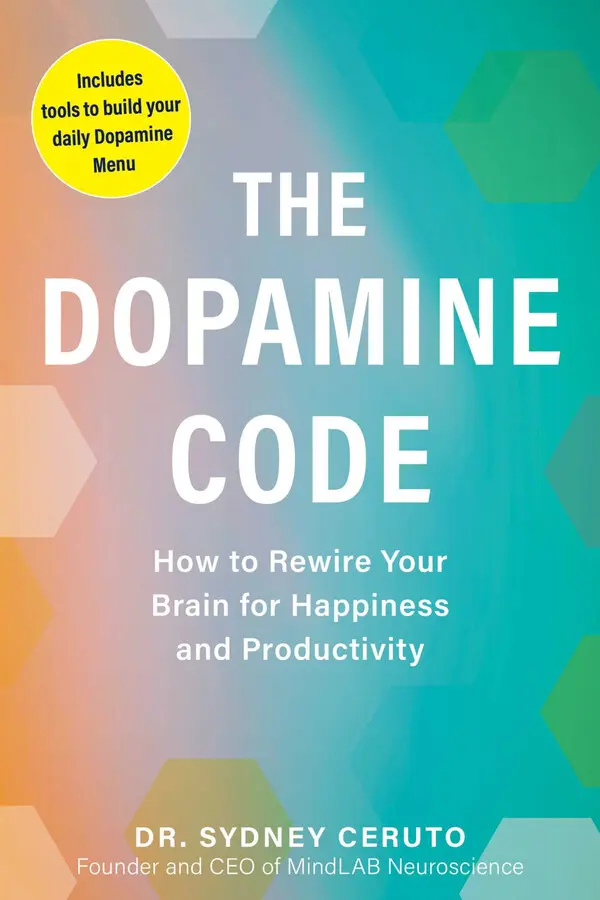
The neuroscience of how dopamine shapes your relationship with success is covered in my forthcoming book The Dopamine Code (Simon & Schuster, June 2026). Learn more.

This Is Not About Lowering the Bar

One of the most common concerns I hear: “I don’t want to stop caring about excellence.” This misunderstands what the work does. High standards, attention to quality, and a drive to do things well are not the problem. The problem is an error-detection circuit so sensitive that it cannot distinguish between useful feedback and catastrophic failure — and a threat system so overactive that it treats the finish line as a cliff edge.

What changes is not your standards. What changes is the neural relationship between your identity and your outcomes. You can want excellence without needing to undermine yourself before it arrives.


Marker What You Experience What's Happening Neurologically What We Restructure
How the Brain Treats Success as a Threat Reaching the finish line and then finding reasons to delay, undermine, or abandon the result — or completing the work and immediately discounting it as not good enough despite external evidence to the contrary The amygdala — the brain's threat-response center — activates when outcomes approach the upper boundary of an encoded self-concept, treating success that would require a new identity as a genuine threat rather than a reward The amygdala's threat classification of outcomes that exceed the current self-concept, so the nervous system can register achievement as safe rather than identity-destabilizing
Knowing Better Doesn't Help By the time you have a thought about what you should be doing, the threat response has already altered your behavior. The anterior cingulate and amygdala are subcortical — they respond to threat signals before the prefrontal cortex, the seat of conscious reasoning, has even registered what is happening. The frustrating part of this pattern is how clearly intelligent people can see it in themselves and still not change it.
Identity Angle The question is not just "why do I overthink" — it is "why does succeeding feel dangerous to who I am." For some people, struggle is baked into identity. The brain, which prioritizes predictability above almost everything else, resists that dismantling reflexively. Visible success changes the social calculus.
This Is Not About Lowering What changes is the neural relationship between your identity and your outcomes. The problem is an error-detection circuit so sensitive that it cannot distinguish between useful feedback and catastrophic failure — and a threat system so overactive that it treats the finish line as a cliff edge. One of the most common concerns I hear: "I don't want to stop caring about excellence." This misunderstands what the work does.

Why Perfectionism & Self-Sabotage Matters in Bergen County

Perfectionism and Self-Sabotage in Bergen County, New Jersey

Perfectionism in Bergen County is reinforced by a suburban environment where the standard for home, children's achievement, and social performance is set by affluent communities operating at high levels. Bergen County's culturally diverse population adds a perfectionism layer: the first-generation professional carrying expectations from the family's immigration investment may maintain a perfectionist standard that integrates both the American suburban standard and the cultural community's achievement expectations — a double standard that the brain's self-evaluation system processes as a single, impossibly high bar.

Self-sabotage emerges when this combined standard exceeds achievability. The individual who cannot begin the career change because neither the American professional standard nor the cultural community's expectations permit the risk of visible failure. The parent who cannot ease the pressure on the child's academic trajectory because both the school community and the cultural community are evaluating the outcome. The paralysis is not indecision. It is a neural system calculating that the cost of imperfect execution in front of two evaluating audiences exceeds the cost of not attempting.

My work addresses perfectionism and self-sabotage at the neural architecture level — the self-evaluation circuits calibrated to Bergen County's combined suburban and cultural standards, the threat-prediction systems producing avoidance when the combined standard feels unattainable, and the conditions under which the system can be recalibrated to permit action despite the dual evaluation architecture the individual navigates.

Dr. Sydney Ceruto, PhD — Founder, MindLAB Neuroscience

Dr. Sydney Ceruto, PhD — Founder & CEO, MindLAB Neuroscience

Dr. Ceruto holds a PhD in Behavioral & Cognitive Neuroscience from NYU and two Master’s degrees from Yale University. She lectures at the Wharton Executive Development Program at the University of Pennsylvania and has been an Executive Contributor to the Forbes Coaching Council since 2019. Dr. Ceruto is the author of The Dopamine Code (Simon & Schuster, June 2026). She founded MindLAB Neuroscience in 2000 and has spent over 26 years pioneering Real-Time Neuroplasticity™ — a methodology that permanently rewires the neural pathways driving behavior, decisions, and emotional responses.

References

Hajcak, G., & Foti, D. (2008). Errors are aversive: Defensive motivation and the error-related negativity. *Psychological Science*, 19(2), 103–108. https://doi.org/10.1111/j.1467-9280.2008.02053.x

Inzlicht, M., Bartholow, B. D., & Hirsh, J. B. (2015). Emotional foundations of cognitive control. *Trends in Cognitive Sciences*, 19(3), 126–132. https://doi.org/10.1016/j.tics.2015.01.004

Carver, C. S., & Scheier, M. F. (1998). On the self-regulation of behavior. Cambridge University Press. https://doi.org/10.1017/CBO9781139174794

Ochsner, K. N., & Gross, J. J. (2005). The cognitive control of emotion. *Trends in Cognitive Sciences*, 9(5), 242–249. https://doi.org/10.1016/j.tics.2005.03.010

Success Stories

“Dr. Ceruto's methodology took me from a founder on the verge of quitting to a leader capable of building the team and culture that drove Liquid IV's success. Her ability to restructure how I make decisions and lead under pressure changed the trajectory of the entire company. I don't say that lightly. The company I built after working with her was fundamentally different from the company I was building before — because I was fundamentally different.”

Brandin C. — Tech Founder Los Angeles, CA

“When my youngest left for college, I didn't just feel sad — I felt erased. My entire sense of self had been wired to caregiving for two decades, and I didn't know who I was without it. Years of talk-based approaches hadn't touched it. Dr. Ceruto mapped the identity circuitry that had fused with the role and restructured it. I didn't find a new purpose — I found the one that had been underneath the whole time.”

Diane L. — Nonprofit Director Chicago, IL

“I knew the scrolling was a problem, but I didn't understand why I couldn't stop — or why it left me feeling hollow every time. Dr. Ceruto identified the dopamine-comparison loop that had fused my sense of worth to a feed. Years of trying to set boundaries with my phone hadn't worked because the problem was never the phone. Once the loop broke, the compulsion just stopped. My relationships started recovering almost immediately.”

Anika L. — Creative Director Los Angeles, CA

“Ninety-hour weeks felt like discipline — the inability to stop felt like a competitive advantage. Nothing I tried touched it because nothing identified what was actually driving it. Dr. Ceruto mapped the dopamine loop that had fused my sense of identity to output. Once that circuit was visible, she dismantled it. I still work at a high level. I just don't need it to know who I am anymore.”

Jason M. — Private Equity New York, NY

“The way I was processing decisions under pressure had a cost I couldn't see — until Dr. Ceruto mapped it. She identified the neural pattern driving my reactivity in high-stakes situations and restructured it at the root. I don't just perform better under pressure now. I think differently under pressure. That's not something any executive coach or performance program ever came close to delivering.”

Rob W. — Portfolio Manager Manhattan, NY

“Dr. Ceruto's methodology sharpened my negotiation instincts and built a level of mental resilience I didn't know I was missing. The difference showed up in how my team responds to me — trust, respect, and a willingness to follow that I'd been trying to manufacture for years. I stopped trying to project authority and started operating from it. That's the difference.”

Victoria W. — Trial Attorney New York, NY

Frequently Asked Questions About Perfectionism & Self-Sabotage

What is the difference between perfectionism and high standards?

High standards are calibrated to a specific output: you want the work to be excellent, and when it is, you can recognize that and move forward. Perfectionism is driven by an error-detection circuit that has been set so sensitively that it cannot register completion — the alarm keeps firing even when the standard has been met. The difference shows up in behavior: high standards produce finished work; perfectionism produces endless revision, deferred completion, or avoidance. The neural system driving each one is different, which is why insight alone does not convert perfectionism into high standards.

Why do I keep sabotaging things right when they're about to go well?

The timing is not accidental. Self-sabotage most commonly activates at the threshold of success because that is where the brain's threat system registers the greatest danger. Your brain holds a model of who you are — your identity. When success would require that model to update significantly, the amygdala can respond to it as a threat, the same way it responds to physical danger. The self-sabotage behavior — stalling, picking fights, overcorrecting, withdrawing — is the threat response interrupting forward motion. It is not irrational. It is the brain protecting an identity that has not yet learned that success is safe.

I understand why I do this. Why can't I stop it?

Because the pattern operates faster than understanding does. The anterior cingulate and amygdala respond to signals before the conscious, reasoning part of your brain has processed what is happening. By the time you have the thought "I'm doing it again," the behavioral pattern has already been initiated. Insight is valuable — it tells you what to work on. But it cannot interrupt a response that begins before thought forms. The pattern changes when the underlying neural associations change, not when the awareness of the pattern increases.

Is self-sabotage always about fear of success?

Not always, but more often than people recognize. Self-sabotage also appears as a response to fear of exposure — succeeding would make you visible, and visibility invites scrutiny. It appears as a way of protecting a self-concept built around struggle: if success arrives, the identity that was organized around overcoming hardship needs to reorganize. And it appears as the behavioral expression of a gap between external achievement and internal self-worth — the brain keeps the outer reality close to the inner one. "Fear of success" is a simplification of a more specific neural dynamic, but the pattern it describes is real.

How is this different from insight-based work or talk-based approaches?

My work operates at the level of the underlying neural mechanism — the specific circuits generating the error-detection alarm, the threat associations driving the amygdala response, and the self-valuation model the brain is protecting. This is not a process of reviewing the past and developing new interpretations. It is targeted work on the neural associations that are actively producing the behavior. The distinction matters because insight-based approaches can add clarity without changing the timing of the response. What I focus on is changing the response itself.

Can perfectionism and self-sabotage be connected to low self-worth even when I appear confident?

Yes, and this is one of the most common patterns. The confidence and the self-sabotage are not contradictory — they are the same neural system operating in different directions at different moments. The self-valuation circuits hold a specific baseline. Much of the high-functioning behavior around it — the drive, the preparation, the achievement — can be organized around managing the gap between visible performance and internal worth. When success would require fully inhabiting the visible version, the baseline asserts itself. Self-sabotage is the mechanism that keeps the outer reality from getting too far from the inner one.

What does the first step look like?

It begins with a Strategy Call — a focused, one-hour phone conversation to understand the specific pattern: where it shows up, what it protects, what update the self-concept would need to allow success to land. There is a $250 fee for the Strategy Call. From there, if we both determine that this work is the right fit, we discuss what a structured engagement would involve. Investment details are addressed during that conversation.

How long does it take to change a pattern like this?

The neural systems involved — the anterior cingulate, the amygdala's threat-association networks, the self-valuation circuits — are among the most responsive to sustained, targeted work. They are not fixed. But the timeline depends on how deeply the pattern is embedded, how central it is to the identity, and how much the environment continues to reinforce it. In my experience, the most important variable is not time but depth: whether the work is reaching the neural associations driving the behavior, or addressing surface-level symptoms. Depth produces durable change. Surface work produces temporary improvement followed by reversion.

Does this work if the perfectionism is connected to specific high-stakes situations — not a general life pattern?

Yes. Some people experience this pattern only under specific conditions: before a major opportunity, in a particular relationship, when certain kinds of recognition are possible. The situational specificity is useful diagnostic information — it tells you which associations the amygdala has formed, and in what context the threat signal was originally learned. Targeted work on a situational pattern is often faster than working on a pervasive one, because the source associations are easier to identify and reach.

Can perfectionism protect me from something? Is there a reason I should be cautious about changing it?

This is the right question. Perfectionism does protect something — usually an identity, a relationship, or a self-concept that would need to reorganize if success arrived. That reorganization is real work, and the brain is right to prepare for it. What the pattern gets wrong is the threat level: the reorganization that would be required is manageable, and the version of you on the other side of it is not more vulnerable. The caution you feel is real information. The fear that drives the caution is responding to a model of what success means that is outdated. Part of the work is updating that model so the protection is no longer necessary.

Also available in: Miami · Wall Street · Midtown Manhattan · Beverly Hills · Lisbon

Take the First Step

The Strategy Call is a focused conversation with Dr. Ceruto that maps the specific neural mechanisms driving your concerns and determines the right path forward.

Book a Strategy Call
MindLAB Neuroscience consultation room

The Dopamine Code

Decode Your Drive

Why Your Brain Rewards the Wrong Things

Your brain's reward system runs every decision, every craving, every crash — and it was never designed for the life you're living. The Dopamine Code is Dr. Ceruto's framework for understanding the architecture behind what drives you, drains you, and keeps you locked in patterns that willpower alone will never fix.

Published by Simon & Schuster, The Dopamine Code is Dr. Ceruto's framework for building your own Dopamine Menu — a personalized system for motivation, focus, and enduring life satisfaction.

Order Now

Ships June 9, 2026

The Dopamine Code by Dr. Sydney Ceruto — Decode Your Drive
Locations

The Intelligence Brief

Neuroscience-backed analysis on how your brain drives what you feel, what you choose, and what you can’t seem to change — direct from Dr. Ceruto.