







Gut-Brain Axis & Neurotransmitter Health in Bergen County

The gut produces over ninety percent of the body's serotonin and more than half its dopamine. When gut function is compromised, cognition, mood, and mental clarity follow. Dr. Ceruto maps the neuroscience of this connection.

The gut produces over ninety percent of the body's serotonin and more than half its dopamine. When gut function is compromised, cognition, mood, and mental clarity follow. Dr. Ceruto maps the neuroscience of this connection.

Book a Strategy Call
ForbesUSA TodayHuffPostNewsweekAssociated PressCosmopolitanBusiness InsiderForbesUSA TodayHuffPostNewsweekAssociated PressCosmopolitanBusiness Insider

Key Points

  1. The gut-brain axis is a precisely mapped, multi-channel communication network — neural, hormonal, immune, and metabolic — not a metaphor or wellness concept.
  2. The vagus nerve carries approximately eighty percent of its signals from gut to brain, giving gut-derived signals direct access to emotion regulation, stress response, and cognitive processing.
  3. The gut microbiome actively sets the threshold at which the stress response activates — it is calibrating your stress sensitivity, not merely responding to stress.
  4. Under inflammatory conditions, tryptophan is shunted away from serotonin production toward kynurenine, simultaneously reducing mood-stabilizing chemistry and generating neurotoxic metabolites.
  5. Short-chain fatty acids produced by beneficial gut bacteria cross into the brain, reduce neuroinflammation, and support growth factor production — their loss removes critical neuroprotective support.
  6. Specific microbial metabolites directly stimulate vagal neurons, making microbiome health a measurable determinant of vagal tone and autonomic regulation.
  7. The focus is on identifying how an individual's gut environment is influencing cognitive function and stress resilience through specific mechanisms, not generic probiotic recommendations.

The gut-brain axis is not a metaphor. It is a precisely mapped, multi-channel communication network linking the gastrointestinal tract to the central nervous system through neural, hormonal, immune, and metabolic pathways. This system is bidirectional. The brain continuously modulates gut function while the gut simultaneously generates signals that shape cognition, emotional regulation, and neurological health.

The Architecture of Gut-Brain Communication

“Approximately ninety to ninety-five percent of the body's serotonin and more than fifty percent of its dopamine are produced in the gut — your digestive system is not peripheral to your brain. It is a primary production site for the chemicals that govern how you think and feel.”

The enteric nervous system — often called the second brain — is an intrinsic neural network embedded in the walls of the gastrointestinal tract. It contains two hundred to six hundred million neurons, a count comparable to the entire spinal cord. These neurons coordinate digestion, immune response, and chemical signaling independently of central nervous system input. They also serve as the primary peripheral production site for several critical neurotransmitters — chemical messengers that carry signals between brain cells.

The numbers are striking. Approximately ninety to ninety-five percent of the body’s total serotonin is produced in the gut by specialized cells in the intestinal lining. More than fifty percent of dopamine is produced in the gastrointestinal tract. GABA, acetylcholine, a chemical messenger for memory and attention, and a range of neuroactive compounds including short-chain fatty acids are generated by gut bacteria and influence brain function through multiple pathways.

The vagus nerve — the primary neural highway between gut and brain — carries approximately eighty percent of its signals from gut to brain rather than the reverse. Vagal nerve endings sit in close proximity to the cells producing these neurotransmitters. Signals travel to the brainstem and from there activate the brain’s hormonal control center, the amygdala, and cortical regions. This gives gut-derived signals direct access to emotion regulation, stress response, and higher cognitive processing.
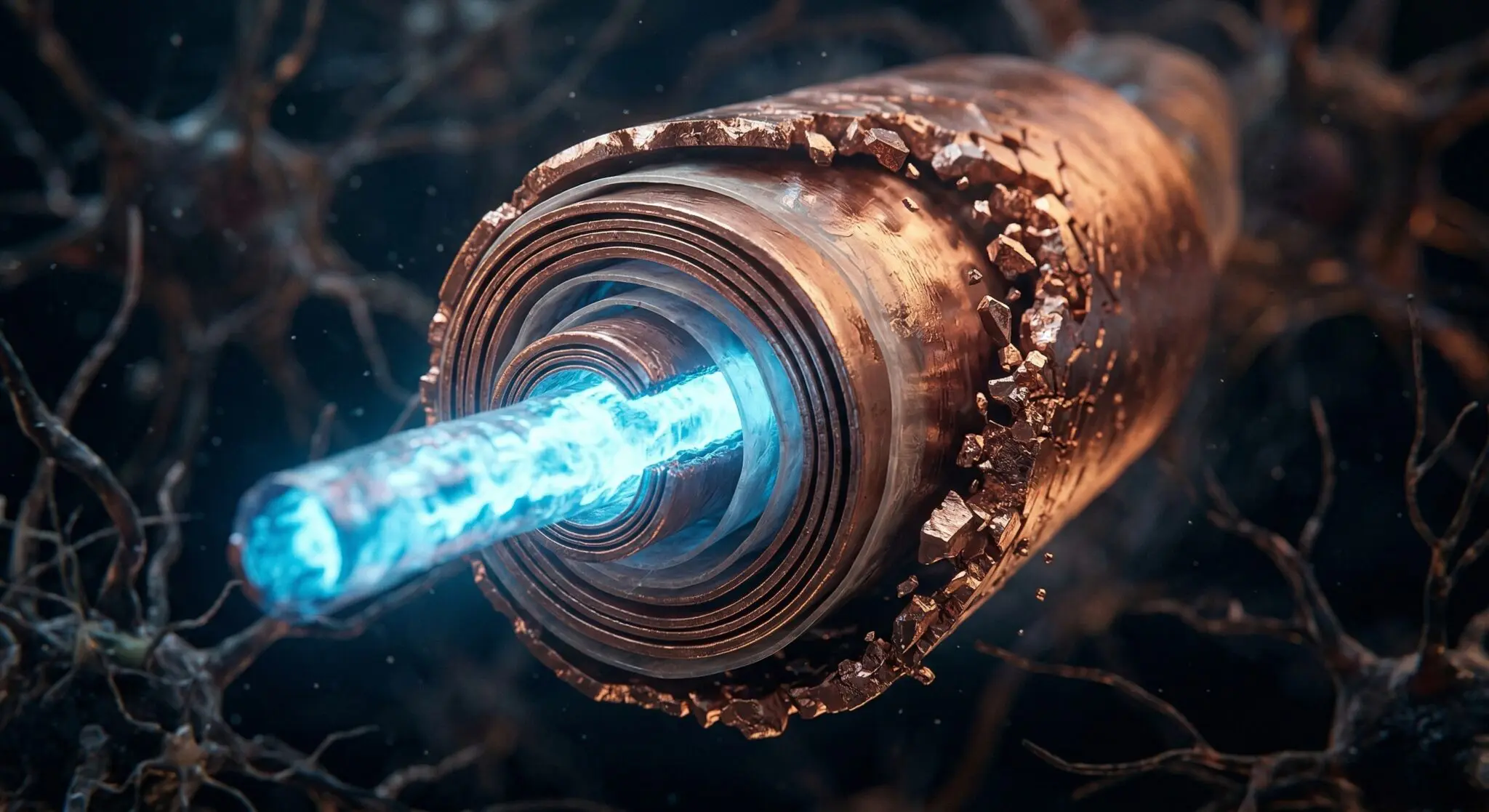
Macro cross-section of neural pathway with copper sheathing forming around blue signal core depicting active brain optimization

From Gut Disruption to Cognitive Impairment

When the gut microbiome loses diversity or shifts toward pro-inflammatory bacterial populations, the consequences ripple through every channel of gut-brain communication.

The intestinal barrier normally prevents bacterial toxins, undigested food particles, and inflammatory molecules from entering the bloodstream. When this barrier becomes permeable, bacterial toxins enter circulation and trigger system-wide inflammatory responses. These inflammatory signals cross into the brain, activating immune cells and initiating neuroinflammation. The result: impaired strengthening of neural connections, suppressed growth of new neurons, and degraded connection density in key brain regions.

The gut microbiome also directly shapes stress-response calibration. Animals raised without gut bacteria show exaggerated cortisol and stress hormone responses — partially reversible when bacteria are introduced. This means the microbiome is not merely responding to stress. It is actively setting the threshold at which the stress response activates.

Short-chain fatty acids produced by beneficial gut bacteria, particularly butyrate, propionate, and acetate, cross into the brain and reduce neuroinflammation, support gut barrier integrity, and influence the production of brain growth factors. When the bacterial populations producing these compounds decline, the brain loses a critical source of anti-inflammatory and growth support.

Tryptophan Metabolism and the Serotonin-Cognition Link

The relationship between gut health and serotonin availability has direct cognitive implications that extend beyond mood regulation. Dietary tryptophan, the essential amino acid that serves as the raw material for serotonin, is metabolized through two competing pathways. One produces serotonin. The other produces kynurenine — a compound with its own effects on brain function.

Under inflammatory conditions, the body shunts tryptophan toward kynurenine production. This simultaneously reduces the raw material available for serotonin and generates metabolites that can be neurotoxic. Low mood and impaired cognition are neurochemically linked through this shared metabolic pathway.

Neuroscience consultation — rosewood table with crystal brain sculpture and branded journal for strategy call preparation

The Vagal Connection

The vagus nerve’s role extends beyond simple signal transmission. It mediates a critical anti-inflammatory reflex. When vagal tone is strong, this reflex keeps inflammation in check throughout the body and brain. When vagal tone weakens — whether from chronic stress, poor sleep, or gut disruption itself — this anti-inflammatory brake weakens. Both peripheral and central inflammation then escalate.

Animals without gut bacteria exhibit significantly decreased vagal nerve activity compared to animals with normal gut bacteria. This effect reverses when bacteria are restored. Specific microbial metabolites directly stimulate vagal neurons, meaning that microbiome health is not an abstract wellness concept. It is a measurable determinant of vagal tone and, by extension, the autonomic regulation of stress, inflammation, and cognitive function.

The Neuroscience Perspective

Dr. Ceruto’s approach to gut-brain axis health is grounded in neuroscience education, understanding how disruptions in gut function translate to changes in brain chemistry, neural architecture, and cognitive performance. This is distinct from digestive symptom management or generic probiotic recommendations. The focus is on identifying the specific mechanisms by which an individual’s gut environment is influencing their cognitive function, emotional regulation, and stress resilience, then building a framework for targeted optimization.

A neuroscientist educates on the brain side of gut-brain communication. Gastroenterologists and functional medicine practitioners address the clinical management of digestive conditions. Dr. Ceruto provides the neural context that connects gut health to the cognitive outcomes that matter most: clarity, emotional stability, and sustained executive performance.

Marker What You Experience What's Happening Neurologically What We Restructure
Mood instability after meals Emotional dysregulation that worsens with dietary changes or digestive disruption A compromised intestinal barrier is allowing bacterial toxins into circulation, triggering neuroinflammation that impairs synaptic strengthening and new neuron growth The gut-brain inflammatory pathway — identifying which barrier and microbiome disruptions are driving neuroinflammatory signaling
Cognitive fog with digestive symptoms Brain fog that co-occurs with bloating, irregular digestion, or food sensitivities Loss of microbial diversity has reduced short-chain fatty acid production, removing a critical source of anti-inflammatory and growth support for the brain The microbiome conditions that restore short-chain fatty acid production and its downstream neuroprotective effects
Stress sensitivity escalation Increasingly exaggerated stress responses to situations that previously felt manageable The gut microbiome is actively setting the threshold at which the stress response activates — dysbiosis raises that sensitivity The stress-response calibration mechanism the microbiome governs, restoring proportionate cortisol and stress hormone activation
Low mood with no clear cause Persistent low-grade depression that does not respond to conventional approaches Inflammation is shunting tryptophan away from serotonin production and toward kynurenine — simultaneously reducing mood-stabilizing serotonin and generating neurotoxic metabolites The tryptophan metabolism pathway — reducing inflammatory shunting to restore raw material availability for serotonin synthesis
Autonomic dysregulation Poor vagal tone, reduced stress recovery, and difficulty achieving calm states Gut dysbiosis has decreased vagal nerve activity, weakening the anti-inflammatory reflex that keeps both peripheral and central inflammation in check Vagal tone restoration through microbiome optimization — specific microbial metabolites directly stimulate vagal neurons

Why Gut-Brain Axis & Neurotransmitter Health Matters in Bergen County

Gut-Brain Axis and Neurotransmitter Health in Bergen County, New Jersey

The gut-brain axis in Bergen County's commuter population operates under conditions created by the GW Bridge lifestyle's specific dietary and stress patterns. The chronic stress of unpredictable bridge crossings activates the HPA axis in ways that alter gut permeability and microbial composition. The dietary patterns shaped by the commuter schedule — the rushed morning without adequate breakfast, the grab-and-go lunch in Manhattan, the late dinner after the evening bridge crossing — disrupt the feeding schedule that the microbiome requires for optimal function. The coffee dependence that the sleep-deprived commuter maintains adds an additional gut-brain input.

Bergen County's diverse food landscape introduces a dietary dimension: the individual whose cultural cuisine is different from the American dietary environment that the commuter lifestyle promotes may experience a gut-brain disconnect when the cultural diet that the family provides at home alternates with the convenience diet that the Manhattan workday imposes. The microbiome adapts to both inputs inconsistently, producing the digestive irregularity that many Bergen County commuters accept as normal.

My work addresses gut-brain axis optimization at the systems level — the specific ways the GW Bridge lifestyle has disrupted the microbiome-brain communication, the dietary patterns created by the commuter schedule, the cultural dietary dimensions that Bergen County's diverse population introduces, and the targeted interventions that restore the axis's function within the constraints of the commuter lifestyle.

Dr. Sydney Ceruto, PhD — Founder, MindLAB Neuroscience

Dr. Sydney Ceruto, PhD — Founder & CEO, MindLAB Neuroscience

Dr. Ceruto holds a PhD in Behavioral & Cognitive Neuroscience from NYU and two Master’s degrees from Yale University. She lectures at the Wharton Executive Development Program at the University of Pennsylvania and has been an Executive Contributor to the Forbes Coaching Council since 2019. Dr. Ceruto is the author of The Dopamine Code (Simon & Schuster, June 2026). She founded MindLAB Neuroscience in 2000 and has spent over 26 years pioneering Real-Time Neuroplasticity™ — a methodology that permanently rewires the neural pathways driving behavior, decisions, and emotional responses.

References

Mayer, E. A. (2011). Gut feelings: The emerging biology of gut-brain communication. Nature Reviews Neuroscience, 12(8), 453-466. https://doi.org/10.1038/nrn3071

Margolis, K. G., & Gershon, M. D. (2021). The gut, its microbiome, and the brain: Connections and communications. Journal of Clinical Investigation, 131(18), e143768. https://doi.org/10.1172/JCI143768

Bonaz, B., Sinniger, V., & Pellissier, S. (2018). Vagus nerve stimulation at the interface of brain-gut interactions. Cold Spring Harbor Perspectives in Medicine, 9(8), a034199. https://doi.org/10.1101/cshperspect.a034199

Success Stories

“Nothing was wrong — and that's exactly why no one could help me. I wasn't struggling. I wanted to know what my brain was actually capable of if its resting-state architecture was optimized. Dr. Ceruto mapped my default mode network and restructured how it allocates resources between focused and diffuse processing. The cognitive clarity I operate with now isn't something I'd ever experienced before — and I had no idea it was available.”

Nathan S. — Biotech Founder Singapore

“Slower processing, foggier recall, decisions that used to be instant taking longer than they should — I'd been accepting it all as inevitable decline for two years. Dr. Ceruto identified the prefrontal efficiency pattern that was degrading and restructured it at the neurological level. The sharpness didn't just come back. It came back faster and more precise than it was a decade ago. Nothing I'd tried before even addressed the right problem.”

Elliott W. — Wealth Advisor Atherton, CA

“I'd optimized everything — diet, fitness, sleep — but my cognitive sharpness was quietly declining and no one could explain why. Dr. Ceruto identified the synaptic density patterns that were thinning and built a protocol to reverse the trajectory. This wasn't prevention in theory. My neuroplasticity reserve is measurably stronger now than it was three years ago. Nothing I'd tried before even addressed the right problem.”

Henrique L. — University Dean Lisbon, PT

“After the concussion, my processing speed collapsed — I couldn't hold complex information the way I used to, and no one could explain why the fog wasn't lifting. Dr. Ceruto mapped the damaged pathways and built compensatory networks around them. My brain doesn't work the way it did before the injury. It works differently — and in some ways, more efficiently than it ever did.”

Owen P. — Orthopedic Surgeon Scottsdale, AZ

“Endocrinologists, sleep clinics, functional medicine — every specialist cleared me, and no one could tell me why I was exhausted every single day. Dr. Ceruto identified that my HPA axis was locked in a low-grade stress activation I couldn't feel consciously. Once that pattern was disrupted at the neurological level, my energy came back in a way that felt completely foreign. I'd forgotten what it was like to not be tired.”

Danielle K. — Luxury Hospitality Beverly Hills, CA

“Working with Dr. Ceruto was one of the most transformative experiences of my life. I was stuck in a cycle of dissatisfaction, unsure of where I was headed or why I felt so unfulfilled. From the very first session, she helped me peel back the layers and uncover what truly mattered. Her ability to connect neuroscience with practical life strategies was incredible. She guided me to clarify my goals, break free from limiting beliefs, and align my actions with my values. I finally feel real purpose.”

Nichole P. — Wealth Advisor Sarasota, FL

Frequently Asked Questions About Gut-Brain Axis & Neurotransmitter Health in Bergen County

What does gut-brain axis assessment involve at MindLAB Neuroscience?

Dr. Ceruto evaluates how gut function influences brain performance through neural, immune, and metabolic connections between the digestive system and cognitive function. This includes assessing vagal tone — the body's calming response capacity —, inflammatory markers, stress physiology, and cognitive patterns suggesting gut-brain disruption. These patterns include brain fog, mood instability, or anxiety coinciding with digestive irregularities.

How does the gut actually influence brain function?

Through multiple channels operating simultaneously. The vagus nerve — the body's main calming nerve — carries signals from the gut directly to brainstem regions governing emotion and cognition. Gut bacteria produce neurotransmitters, chemical messengers between brain cells, including serotonin and dopamine. Short-chain fatty acids from beneficial bacteria cross the blood-brain barrier and modulate neuroinflammation. And the gut's immune cells, representing over seventy percent of the body's immune system, generate inflammatory signals that directly affect brain endothelial cells and microglial activity.

Who benefits from this kind of neuroscience-based gut-brain assessment?

Individuals experiencing cognitive symptoms alongside digestive concerns — brain fog, mood instability, anxiety, or concentration difficulties that seem to worsen with dietary changes or stress. Also those with inflammatory patterns, autoimmune tendencies, or a history of antibiotic use who notice that cognitive function has shifted without an obvious neurological explanation. The connection between gut and brain is often missed because the symptoms are evaluated in separate clinical silos.

How does the engagement begin?

The process starts with a Strategy Call — a phone-only conversation with a $250 fee. This call evaluates the individual’s cognitive concerns, digestive history, and overall health patterns to determine whether Dr. Ceruto’s neuroscience-based framework for gut-brain axis optimization is the appropriate path. Program structure and investment details are discussed during the Strategy Call.

What kind of timeline should someone expect for improvement?

Gut-brain axis optimization involves both rapid-response and slow-adaptation components. Some individuals notice improvements in mental clarity, mood stability, and energy within weeks as inflammatory drivers begin to resolve. Deeper microbiome remodeling and the neural adaptations that follow — including changes in vagal tone and neuroinflammatory status — develop over several months. Dr. Ceruto establishes individualized timelines based on the complexity of each person’s gut-brain dynamics.

Also available in: Miami · Wall Street · Midtown Manhattan · Beverly Hills · Lisbon

Take the First Step Toward Gut-Brain Balance

The Strategy Call is a focused conversation with Dr. Ceruto that maps the specific neural mechanisms driving your concerns and determines the right path forward.

Book a Strategy Call
MindLAB Neuroscience consultation room

The Dopamine Code

Decode Your Drive

Why Your Brain Rewards the Wrong Things

Your brain's reward system runs every decision, every craving, every crash — and it was never designed for the life you're living. The Dopamine Code is Dr. Ceruto's framework for understanding the architecture behind what drives you, drains you, and keeps you locked in patterns that willpower alone will never fix.

Published by Simon & Schuster, The Dopamine Code is Dr. Ceruto's framework for building your own Dopamine Menu — a personalized system for motivation, focus, and enduring life satisfaction.

Order Now

Ships June 9, 2026

The Dopamine Code by Dr. Sydney Ceruto — Decode Your Drive
Locations

The Intelligence Brief

Neuroscience-backed analysis on how your brain drives what you feel, what you choose, and what you can’t seem to change — direct from Dr. Ceruto.