







Cortisol & HPA Axis Optimization in Bergen County

Chronic cortisol elevation restructures the brain — shrinking the hippocampus, impairing prefrontal function, and degrading the neural architecture of decision-making. Dr. Ceruto provides neuroscience-based HPA axis assessment and optimization.

Cortisol dysregulation is rarely about stress management — it's about the HPA axis — the brain-body loop governing your stress response — being stuck in a pattern it learned years ago. At MindLAB Neuroscience, we identify the neural and behavioral drivers sustaining that dysregulation and build lasting recalibration into how your brain and body respond to pressure.
Book a Strategy Call
ForbesUSA TodayHuffPostNewsweekAssociated PressCosmopolitanBusiness InsiderForbesUSA TodayHuffPostNewsweekAssociated PressCosmopolitanBusiness Insider

Key Points

  1. Cortisol follows a precise twenty-four-hour rhythm with million-fold signal amplification — its disruption under chronic stress is one of the most consequential biological events for cognition.
  2. Glucocorticoid receptor downregulation creates a destructive feedback loop: sustained cortisol reduces the brain's sensitivity to cortisol, weakening the brake on further cortisol release.
  3. Chronic cortisol causes the amygdala to grow more reactive while simultaneously atrophying the hippocampus — shifting the brain from considered response toward reflexive alarm.
  4. Healthy cortisol is secreted in ultradian pulses every three hours, and tissue responses depend critically on this pulsatile pattern — chronic flat-high cortisol desensitizes receptors in ways pulsatile delivery does not.
  5. Elevated night-time cortisol is significantly associated with worse fluid cognitive ability, confirming the evening nadir is a critical neural maintenance window.
  6. Loss of the healthy diurnal cortisol slope has been linked to accelerated cognitive decline over five-to-nine-year follow-up periods.
  7. Optimization requires precise assessment of diurnal cortisol patterns, sleep architecture, and autonomic function — not generic stress management recommendations.

Cortisol is not the enemy. In its healthy state, it follows a precise twenty-four-hour rhythm — morning peak to evening trough. It peaks in the morning to mobilize alertness and cognitive readiness, declines through the afternoon, and reaches its lowest point in the evening to permit cellular repair and neurogenesis. This rhythm is one of the most elegant systems in human biology, and its disruption is one of the most consequential.

The hypothalamic-pituitary-adrenal axis — cascade governing cortisol release — operates through a hierarchical amplification system of extraordinary sensitivity. Corticotropin-releasing hormone from the hypothalamus triggers adrenocorticotropic hormone from the pituitary, which drives cortisol synthesis in the adrenal cortex. The signal amplification is roughly a million-fold from initiation to output. Under acute stress, this system performs exactly as designed: rapid mobilization, focused cognition, and efficient recovery.

When the System Loses Its Rhythm

“The paradox high-performing individuals recognize: needing to decide everything immediately while trusting none of those decisions. That is not anxiety — it is what happens when excess cortisol floods prefrontal circuits beyond their operating window.”

Under chronic stress, the HPA axis undergoes allostatic dysregulation — progressive feedback mechanism failure. Three structural changes drive this failure.

Macro cross-section of neural pathway with copper sheathing forming around blue signal core depicting active brain optimization

First, glucocorticoid receptor downregulation — reduced brain sensitivity to cortisol. The hippocampus, which contains the highest density of cortisol receptors in the brain, serves as the primary brake on the HPA axis. When sustained cortisol exposure reduces receptor sensitivity, the brake weakens. Less inhibition means more cortisol, which further reduces receptor sensitivity — creating a destructive positive feedback loop.

Second, structural remodeling. Chronic cortisol causes dendritic hypertrophy in the amygdala while simultaneously causing dendritic atrophy in the hippocampus. The amygdala grows more reactive; the structures responsible for contextual evaluation and emotional regulation grow less capable. The brain shifts its gain from considered response toward reflexive alarm.

Third, loss of pulsatility. Healthy cortisol is secreted in ultradian pulses approximately every three hours, and tissue responses depend critically on this pulsatile pattern. Chronic flat-high cortisol desensitizes receptors in ways that pulsatile delivery does not, degrading the system’s ability to respond appropriately to actual threats.

The Cognitive Consequences

The prefrontal cortex bears the greatest cognitive cost. Excess cortisol blocks extraneuronal catecholamine transporters, flooding prefrontal circuits with dopamine and norepinephrine beyond the narrow occupancy window required for optimal function. Working memory degrades. Cognitive flexibility narrows. Decision-making becomes simultaneously more urgent and less reliable — a paradox that high-performing individuals recognize as the feeling of needing to decide everything immediately while trusting none of those decisions.

In the hippocampus, cortisol suppresses adult neurogenesis through multiple converging mechanisms: reactive oxygen species accumulation in neural stem cells and suppression of the PI3K/Akt and Wnt signaling pathways essential for neuronal differentiation. It also directly antagonizes brain-derived neurotrophic factor — growth protein for neurons — expression. Two-photon microscopy studies have shown that chronic glucocorticoid elevation produces net spine loss by eliminating stable, long-standing dendritic spines — distinct synaptic degradation.

A meta-analysis of five longitudinal cohort studies found that elevated night-time cortisol was significantly associated with worse fluid cognitive ability. This confirms that the evening cortisol nadir is not merely a rest period but a critical window for neural maintenance. When this window is compressed or eliminated, cognitive decline accelerates.

The Cortisol Awakening Response as Assessment Window

The cortisol awakening response is one of the most informative biomarkers of HPA axis integrity. This response is driven by the circadian system itself, not merely by the act of waking. A blunted or absent cortisol awakening response signals that the circadian-HPA coupling has weakened — compromised circadian-HPA coupling.

Neuroscience consultation — rosewood table with crystal brain sculpture and branded journal for strategy call preparation

Loss of the healthy diurnal cortisol slope — the ratio between morning peak and evening trough — has been prospectively linked to accelerated cognitive decline over five-to-nine-year follow-up periods. This is not a correlation of convenience; it reflects the fundamental relationship between cortisol rhythmicity and the neural systems that sustain executive function over time.

A Neuroscience Framework for Optimization

Dr. Ceruto’s approach to cortisol and HPA axis optimization begins with precise assessment of the individual’s stress physiology. This is not through a generic stress questionnaire, but through evaluation of diurnal cortisol patterns, sleep architecture, autonomic nervous system function, and the cognitive markers that reveal which neural systems are under cortisol-mediated strain.

The intervention framework targets multiple levels simultaneously. At the HPA axis level, the goal is restoring the natural cortisol rhythm a neuroscientist maps the brain side of stress physiology, while medical providers address clinical endocrine concerns when indicated.


Marker What You Experience What's Happening Neurologically What We Restructure
Decision urgency without confidence Feeling compelled to act immediately on every decision while simultaneously doubting every choice Excess cortisol floods prefrontal circuits with dopamine and norepinephrine beyond the narrow window required for optimal function The cortisol rhythm that keeps prefrontal neurochemistry within its effective operating range
Flattened morning drive Mornings that once started sharp now begin sluggish, requiring hours to reach baseline alertness The cortisol awakening response has weakened — a signal that circadian-HPA coupling has broken down The coupling between the circadian system and HPA axis to restore the morning cortisol peak that mobilizes cognitive readiness
Emotional reactivity Disproportionate emotional responses to minor provocations, especially later in the day Chronic cortisol has caused the amygdala to grow more reactive while the structures responsible for emotional regulation have atrophied The structural balance between threat-detection and regulatory circuits — reducing amygdala hypertrophy while restoring hippocampal capacity
Memory consolidation failure Learning new information requires multiple repetitions where one pass used to suffice Cortisol suppresses adult neurogenesis and directly antagonizes the brain's growth protein, degrading the hippocampus's ability to form new memories Growth factor expression and the synaptic maintenance processes cortisol is suppressing
Night-time cognitive erosion Waking at 3 AM with a racing mind, unable to return to restful sleep Elevated night-time cortisol is compressing the evening recovery window critical for neural maintenance and fluid cognitive ability The evening cortisol nadir — a critical maintenance window whose compression accelerates cognitive decline

Why Cortisol & HPA Axis Optimization Matters in Bergen County

Cortisol and HPA Axis Optimization in Bergen County, New Jersey

The HPA axis of the Bergen County commuter has been specifically shaped by the GW Bridge corridor's unpredictability. Unlike commuters on fixed-schedule rail systems, the bridge driver's stress-response system must calibrate to variable-length crossings — some mornings the bridge adds 15 minutes, some mornings 75. This unpredictability trains the HPA axis to maintain elevated readiness calibrated to worst-case rather than average-case demand, producing a cortisol profile that is chronically elevated because the system cannot predict when the next high-demand crossing will occur.

The cortisol awakening response is particularly dysregulated in the Bergen County population because the alarm time itself may vary based on anticipated traffic conditions. The system cannot establish the consistent early-morning cortisol surge pattern that a fixed-schedule wake cycle would allow. Instead, the HPA axis produces an anticipatory surge organized around the bridge-traffic prediction rather than the circadian signal, creating a cortisol rhythm that follows the traffic app's forecast rather than the body's biological clock.

My work addresses cortisol and HPA optimization at the neuroendocrine level — the specific dysregulation pattern the GW Bridge corridor's unpredictability has produced, the set point elevation from years of variable-demand commuting, and the targeted interventions that restore healthy cortisol cycling within the bridge corridor's non-negotiable scheduling constraints.

Dr. Sydney Ceruto, PhD — Founder, MindLAB Neuroscience

Dr. Sydney Ceruto, PhD — Founder & CEO, MindLAB Neuroscience

Dr. Ceruto holds a PhD in Behavioral & Cognitive Neuroscience from NYU and two Master’s degrees from Yale University. She lectures at the Wharton Executive Development Program at the University of Pennsylvania and has been an Executive Contributor to the Forbes Coaching Council since 2019. Dr. Ceruto is the author of The Dopamine Code (Simon & Schuster, June 2026). She founded MindLAB Neuroscience in 2000 and has spent over 26 years pioneering Real-Time Neuroplasticity™ — a methodology that permanently rewires the neural pathways driving behavior, decisions, and emotional responses.

References

Herman, J. P., Nawreen, N., Smail, M. A., & Cotella, E. M. (2020). Brain mechanisms of HPA axis regulation: Neurocircuitry and feedback in context. Stress, 24(4), 383-401. https://doi.org/10.1080/10253890.2020.1859475

Liston, C., & Gan, W. B. (2011). Glucocorticoids are critical regulators of dendritic spine development and plasticity in vivo. Proceedings of the National Academy of Sciences, 108(38), 16074-16079. https://doi.org/10.1073/pnas.1110444108

Echouffo-Tcheugui, J. B., et al. (2018). Circulating cortisol and cognitive and structural brain measures. Neurology, 91(21), e1961-e1970. https://doi.org/10.1212/WNL.0000000000006549

Vyas, S., et al. (2016). Chronic stress and glucocorticoids: From neuronal plasticity to neurodegeneration. Neural Plasticity, 2016, 6391686. https://doi.org/10.1155/2016/6391686

Success Stories

“Slower processing, foggier recall, decisions that used to be instant taking longer than they should — I'd been accepting it all as inevitable decline for two years. Dr. Ceruto identified the prefrontal efficiency pattern that was degrading and restructured it at the neurological level. The sharpness didn't just come back. It came back faster and more precise than it was a decade ago. Nothing I'd tried before even addressed the right problem.”

Elliott W. — Wealth Advisor Atherton, CA

“Nothing was wrong — and that's exactly why no one could help me. I wasn't struggling. I wanted to know what my brain was actually capable of if its resting-state architecture was optimized. Dr. Ceruto mapped my default mode network and restructured how it allocates resources between focused and diffuse processing. The cognitive clarity I operate with now isn't something I'd ever experienced before — and I had no idea it was available.”

Nathan S. — Biotech Founder Singapore

“After the concussion, my processing speed collapsed — I couldn't hold complex information the way I used to, and no one could explain why the fog wasn't lifting. Dr. Ceruto mapped the damaged pathways and built compensatory networks around them. My brain doesn't work the way it did before the injury. It works differently — and in some ways, more efficiently than it ever did.”

Owen P. — Orthopedic Surgeon Scottsdale, AZ

“I'd optimized everything — diet, fitness, sleep — but my cognitive sharpness was quietly declining and no one could explain why. Dr. Ceruto identified the synaptic density patterns that were thinning and built a protocol to reverse the trajectory. This wasn't prevention in theory. My neuroplasticity reserve is measurably stronger now than it was three years ago. Nothing I'd tried before even addressed the right problem.”

Henrique L. — University Dean Lisbon, PT

“The same relational patterns my mother and grandmother lived through kept repeating in my own life — the hypervigilance, the emotional shutdown, the inability to feel safe even when nothing was wrong. Talking through it changed nothing. Dr. Ceruto identified the epigenetic stress signatures driving the pattern and restructured them at the neurological level. The cycle that ran through three generations stopped with me.”

Gabriela W. — Real Estate Developer Miami, FL

“Dr. Ceruto is a true professional with massive experience helping people get where they need to be. The important thing for me was understanding my strengths, developing ways to use them, and learning from the pitfalls that kept me from reaching my goals. She broke it all down and simplified the obstacles that had been painful blockers in my career, providing guidance and tools to conquer them. You will learn a lot about yourself and have a partner who works with you every step of the way.”

Michael S. — Real Estate Developer Boca Raton, FL

Frequently Asked Questions About Cortisol & HPA Axis Optimization in Bergen County

What is HPA axis optimization at MindLAB Neuroscience?

Dr. Ceruto provides neuroscience-based education on how the hypothalamic-pituitary-adrenal axis — the brain’s primary stress response system — governs cortisol release, and how chronic dysregulation produces measurable changes in brain structure and cognitive function. The focus is on understanding individual stress physiology and building protocols that restore healthy cortisol rhythmicity and protect neural architecture.

How does chronic cortisol actually change the brain?

Sustained cortisol elevation causes dendritic atrophy in the hippocampus and prefrontal cortex — memory and executive regions. It also causes dendritic growth in the amygdala, increasing threat reactivity. It suppresses the production of brain-derived neurotrophic factor — a neuronal growth protein —, impairs the generation of new neurons, and eliminates stable dendritic spines that encode long-standing memories and skills. These are structural changes, not merely functional fluctuations.

Who benefits most from this type of neuroscience-based stress assessment?

Individuals carrying sustained stress loads — whether from demanding careers, financial pressure, family complexity, major life transitions, or the accumulated weight of years of operating without adequate recovery. The hallmark is a pattern where cognitive performance, emotional regulation — managing emotions —, or sleep quality has shifted despite no obvious acute crisis. This suggests that the stress response system itself has lost its calibration.

What does the initial process involve?

The process begins with a Strategy Call — a phone-only conversation with a $250 fee. This focused discussion evaluates the individual’s stress history, cognitive concerns, and current physiological patterns to determine whether Dr. Ceruto’s neuroscience-based approach is appropriate. Program structure and investment details are discussed during the Strategy Call.

How long does HPA axis recalibration take?

Cortisol rhythm restoration involves both functional and structural dimensions. Functional improvements — better sleep, reduced grogginess, improved stress tolerance — can emerge within weeks. The deeper structural recovery — hippocampal preservation, prefrontal regrowth, normalized amygdala reactivity — unfolds over months of sustained protocol adherence. Dr. Ceruto provides individualized timelines based on assessment findings.

Also available in: Miami · Wall Street · Midtown Manhattan · Beverly Hills · Lisbon

Take the First Step Toward Stress Hormone Balance

The Strategy Call is a focused conversation with Dr. Ceruto that maps the specific neural mechanisms driving your concerns and determines the right path forward.

Book a Strategy Call
MindLAB Neuroscience consultation room

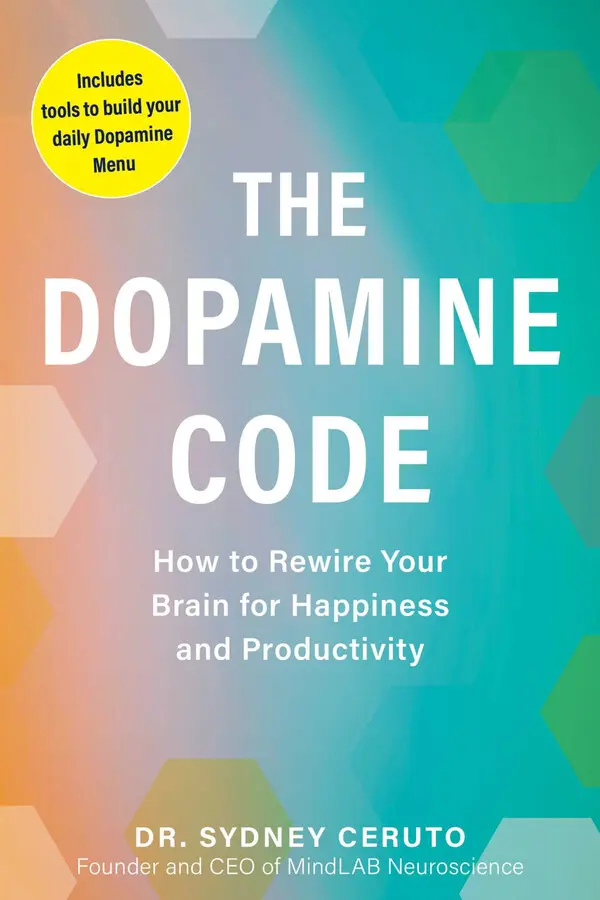
The Dopamine Code

Decode Your Drive

Why Your Brain Rewards the Wrong Things

Your brain's reward system runs every decision, every craving, every crash — and it was never designed for the life you're living. The Dopamine Code is Dr. Ceruto's framework for understanding the architecture behind what drives you, drains you, and keeps you locked in patterns that willpower alone will never fix.

Published by Simon & Schuster, The Dopamine Code is Dr. Ceruto's framework for building your own Dopamine Menu — a personalized system for motivation, focus, and enduring life satisfaction.

Order Now

Ships June 9, 2026

The Dopamine Code by Dr. Sydney Ceruto — Decode Your Drive
Locations

The Intelligence Brief

Neuroscience-backed analysis on how your brain drives what you feel, what you choose, and what you can’t seem to change — direct from Dr. Ceruto.