





Perfectionism in Bergen County

Perfectionism is not high standards — it is a neural system that blocks satisfaction, amplifies error detection, and converts performance into threat. Dr. Ceruto targets the circuit dysfunction directly.

Perfectionism isn't high standards — it's the brain's threat-detection system applying a survival lens to performance. The resulting loop — overthink, delay, over-correct, repeat — consumes the resources needed for the actual work. At MindLAB Neuroscience, we identify the neural patterns driving perfectionism's grip and rebuild the relationship between effort, output, and self-evaluation.
Book a Strategy Call

Key Points

  1. Perfectionism involves three interdependent neural systems: an inflated standard-setting circuit, a hypersensitive error-detection system, and a reward system that cannot register satisfactory outcomes.
  2. The outcome-evaluation center generates a chronic disappointment signal by encoding the reward that could have been obtained rather than the reward that was — satisfaction is structurally blocked.
  3. Fear of failure fully mediates the relationship between perfectionism and procrastination — it is fear-based perfectionism, not high standards, that drives task avoidance.
  4. All dimensions of perfectionism have linearly increased since 1989, with the largest increase in socially prescribed perfectionism.
  5. Among high-perfectionism professionals, over sixty percent report elevated stress, and self-critical perfectionism uniquely predicts both emotional exhaustion and burnout.
  6. The distinction between excellence-seeking and maladaptive perfectionism is neurological: approach-motivated mastery pursuit versus avoidance-motivated threat response.
  7. The standard-setting circuit operates largely below conscious awareness — cognitive persuasion to "lower standards" fails because it does not reach the circuit maintaining the dysfunction.

Perfectionism is widely misunderstood as a virtue — the mark of someone who simply cares more about quality. The neuroscience reveals a fundamentally different picture. Perfectionism is a pattern of dysregulated neural computation involving three interdependent systems. An overactive standard-setting circuit generates impossible benchmarks. A hypersensitive error-detection system treats every imperfection as a crisis. And a reward system fails to register satisfactory outcomes as genuinely rewarding.

The Impossible Standard Machine

“Perfectionism is not the mark of someone who cares more about quality. It is a pattern of dysregulated neural computation: an overactive standard-setting circuit generates impossible benchmarks, a hypersensitive error-detection system treats every imperfection as a crisis, and a reward system fails to register satisfactory outcomes as genuinely rewarding.”

The orbitofrontal cortex — outcome-evaluation center — generates predictions about how good a result should be, then compares that prediction against the actual result. In healthy functioning, this system enables adaptive goal-setting. The brain sets a reasonable target, evaluates performance against it, and generates a positive signal when the target is met.

In perfectionism, this expected-value computation becomes chronically inflated. Standards are internally calibrated so high that virtually no real-world output can match them.

The orbitofrontal cortex generates a persistent “disappointment signal” when performance falls short of expectation. It encodes the reward that could have been obtained rather than the reward that was. In perfectionists, this signal is chronically active. Objectively strong performance does not generate the reward signal the brain would normally provide. Satisfaction is structurally blocked at the neural source.

Dense luminous neural threads condensing into single focused copper beam of clarity in deep navy void

The Error Alarm That Never Resets

The anterior cingulate cortex — error-detection and performance-monitoring hub — is designed to fire briefly following an error, initiate a correction, then reset. In perfectionism, this system is chronically overactive. Research consistently documents an amplified error response in perfectionists, indicating that the anterior cingulate treats each imperfection as a high-stakes event requiring crisis-level neural resources.

The error signal does not stay contained. It radiates outward — triggering cognitive control responses, registering bodily distress, and assigning emotional weight to the mistake. In perfectionism, this network becomes hypersensitive to threat. Errors are not information to be processed but dangers to be feared, avoided, or suppressed.

The Reward System Blindspot

The striatum — core reward-processing structure — encodes the difference between expected and actual outcomes. Dopamine neurons fire when outcomes exceed expectations, remain silent for fully predicted outcomes, and are suppressed when outcomes disappoint.

In perfectionism, the orbitofrontal cortex has set the reference point so high that even strong performance produces a zero or negative dopamine signal. The brain is calibrated to register only “perfect” as rewarding — and since perfect is a moving target, the reward signal never arrives.

The result is a functional inability to experience satisfaction from personal achievement that is specific to performance domains. The perfectionist produces high-quality work, receives no neurochemical reward from it, and must immediately raise the standard or pursue the next challenge to keep the system from feeling chronically under-stimulated.

Perfectionism as Threat Response

The neuroscience distinguishes between two fundamentally different motivational architectures that produce superficially similar behavior. Excellence-seeking is approach-motivated — driven by pursuit of mastery. Maladaptive perfectionism is avoidance-motivated — driven by fear and threat circuit.

Fear of failure fully mediates the relationship between perfectionism and procrastination. Research across tens of thousands of participants confirms that it is not high standards but fear-based perfectionism that drives task avoidance. The brain’s cost-benefit system, when operating under threat, assigns inflated costs to performance while deflating the anticipated reward. The neural arithmetic consistently produces a negative expected value for starting, making inaction the path of least resistance.

The Rising Epidemic

Research tracking college students across the United States, Canada, and the United Kingdom found that all dimensions of perfectionism have linearly increased since 1989. The largest increase has been in socially prescribed perfectionism — belief that others demand perfection. This reflects an intensifying external pressure environment that the brain’s threat-detection system cannot ignore.

Neuroscience consultation — rosewood table with crystal brain sculpture and branded journal for strategy call preparation

Among high-perfectionism lawyers, over sixty percent report elevated stress and half report elevated depression. Among physicians, self-critical perfectionism is the only perfectionism dimension that uniquely predicts both emotional exhaustion and depersonalization burnout.

How Dr. Ceruto Addresses Perfectionism

Dr. Ceruto’s approach identifies which component of the perfectionism circuit is dominant: orbitofrontal standard inflation, anterior cingulate error hypersensitivity, reward blockade, or threat-driven motivation. The methodology does not attempt to lower standards through cognitive persuasion — which fails because the standard-setting circuit operates largely below conscious awareness. Instead, it targets the neural systems maintaining the dysfunction.

For standard inflation, the work recalibrates the expected-value computation so that adequate performance generates a genuine positive signal. For error hypersensitivity, the intervention adjusts the error-detection threshold — recalibrating when errors warrant attention versus when the alarm reflects circuit noise.

For reward blockade, the focus shifts to retraining the reward system to register incremental progress as genuinely rewarding. For threat-dominant presentations, the work shifts the motivational foundation from avoidance back toward approach.


Marker What You Experience What's Happening Neurologically What We Restructure
Never feeling satisfied with results Completing strong work but experiencing no sense of accomplishment, immediately raising the bar The outcome-evaluation center has chronically inflated expected values — the brain generates a persistent disappointment signal because no real-world output can match internal standards The expected-value computation so that adequate performance generates a genuine positive reward signal
Disproportionate distress over minor errors Small mistakes triggering crisis-level emotional responses that feel impossible to shake The anterior cingulate cortex — the error-detection hub — is chronically overactive, treating each imperfection as a high-stakes event requiring crisis-level neural resources The error-detection threshold so the brain distinguishes between errors warranting attention and circuit noise
Procrastination despite capability Avoiding starting tasks you know you can do well, or endlessly revising work that is already complete Fear of failure fully mediates the relationship between perfectionism and procrastination — the brain's cost-benefit system under threat assigns inflated costs to performance The motivational foundation from avoidance-driven back toward approach-driven, so starting feels possible rather than threatening
Achievement anhedonia Accomplishments registering as hollow or meaningless almost immediately after completion The striatum cannot generate a positive dopamine signal because the reference point is set so high that even strong performance produces a zero or negative prediction error The reward system's reference calibration so incremental progress registers as genuinely rewarding rather than inadequate
Rising external pressure Increasing sense that others expect perfection, amplifying self-imposed standards beyond what was already unsustainable Socially prescribed perfectionism has linearly increased since 1989 — the brain's threat-detection system cannot ignore intensifying external pressure signals The distinction between internally generated standards and externally imposed threat signals so the brain can evaluate each independently

Why Perfectionism Matters in Bergen County

Perfectionism in Bergen County, New Jersey

Perfectionism in Bergen County is reinforced by a suburban environment where the standard — for home presentation, children's achievement, professional output, and social performance — is set by affluent communities whose residents are maintaining high levels across all domains. The perfectionist brain in Tenafly or Ridgewood receives continuous confirmation that its standard is merely the community norm, making the pattern nearly impossible to identify as excessive.

Bergen County's diverse communities add a perfectionism variant: the first-generation professional carrying the expectations of the family and the cultural community is maintaining a perfectionist standard organized not just around personal achievement but around the obligation to represent the family's investment in the immigration, the cultural community's expectations of success, and the implicit promise that the sacrifices of the prior generation will be justified by the current generation's achievement. This culturally loaded perfectionism is more resistant to intervention because the standard is maintained by communal investment rather than individual ambition.

My work addresses perfectionism at the neural architecture level — the self-evaluation circuits setting the standard, the threat-prediction systems generating avoidance when perfection appears unattainable, the cultural reinforcement that adds communal weight to the individual standard, and the conditions under which the perfectionist system can be recalibrated to permit execution without the guarantee of perfection the current architecture demands.

Dr. Sydney Ceruto, PhD — Founder, MindLAB Neuroscience

Dr. Sydney Ceruto, PhD — Founder & CEO, MindLAB Neuroscience

Dr. Ceruto holds a PhD in Behavioral & Cognitive Neuroscience from NYU and two Master’s degrees from Yale University. She lectures at the Wharton Executive Development Program at the University of Pennsylvania and has been an Executive Contributor to the Forbes Coaching Council since 2019. Dr. Ceruto is the author of The Dopamine Code (Simon & Schuster, June 2026). She founded MindLAB Neuroscience in 2000 and has spent over 26 years pioneering Real-Time Neuroplasticity™ — a methodology that permanently rewires the neural pathways driving behavior, decisions, and emotional responses.

References

Barke, A., Schmidt-Samoa, C., Van Heer, C. A., Stahl, J., Dechent, P., & Bode, S. (2017). To err is (perfectly) human: Behavioural and neural correlates of error processing and perfectionism. Social Cognitive and Affective Neuroscience, 12(10), 1647–1657. https://doi.org/10.1093/scan/nsx082

Curran, T., & Hill, A. P. (2019). Perfectionism is increasing over time: A meta-analysis of birth cohort differences from 1989 to 2016. Psychological Bulletin, 145(4), 410–429. https://doi.org/10.1037/bul0000138

Sirois, F. M., & Molnar, D. S. (2017). A meta-analytic and conceptual update on the associations between procrastination and multidimensional perfectionism. European Journal of Personality, 31(2), 137–159. https://doi.org/10.1002/per.2098

Cheval, B., Boisgontier, M. P., Orsholits, D., Sieber, S., Guessous, I., Gabriel, R., Courvoisier, D. S., et al. (2022). A neuro-computational account of procrastination behavior. Nature Communications, 13, 5726. https://doi.org/10.1038/s41467-022-33119-w

Success Stories

“The way I was processing decisions under pressure had a cost I couldn't see — until Dr. Ceruto mapped it. She identified the neural pattern driving my reactivity in high-stakes situations and restructured it at the root. I don't just perform better under pressure now. I think differently under pressure. That's not something any executive coach or performance program ever came close to delivering.”

Rob W. — Portfolio Manager Manhattan, NY

“I'd optimized everything — diet, fitness, sleep — but my cognitive sharpness was quietly declining and no one could explain why. Dr. Ceruto identified the synaptic density patterns that were thinning and built a protocol to reverse the trajectory. This wasn't prevention in theory. My neuroplasticity reserve is measurably stronger now than it was three years ago. Nothing I'd tried before even addressed the right problem.”

Henrique L. — University Dean Lisbon, PT

“When the inheritance came, it didn't feel like a gift — it felt like a grenade in every family relationship I had. I couldn't make a single financial decision without a flood of guilt and second-guessing. Years of talking through it hadn't changed anything. Dr. Ceruto identified the neural loop connecting money to fear of family rejection and dismantled it. The paralysis didn't fade — it stopped.”

Vivienne R. — Philanthropist Palm Beach, FL

“After the concussion, my processing speed collapsed — I couldn't hold complex information the way I used to, and no one could explain why the fog wasn't lifting. Dr. Ceruto mapped the damaged pathways and built compensatory networks around them. My brain doesn't work the way it did before the injury. It works differently — and in some ways, more efficiently than it ever did.”

Owen P. — Orthopedic Surgeon Scottsdale, AZ

“Color-coded calendars, alarms, accountability partners — I'd built an entire scaffolding system just to stay functional, and none of it addressed why my brain couldn't sequence and prioritize on its own. Dr. Ceruto identified the specific prefrontal pattern that was misfiring and restructured it. I don't need the scaffolding anymore. My brain actually does what I need it to do.”

Jordan K. — Venture Capitalist San Francisco, CA

“My phone was the first thing I touched in the morning and the last thing I put down at night — and every app blocker, digital detox protocol, and willpower-based system I tried lasted less than a week. Dr. Ceruto identified the variable-ratio reinforcement loop that had hijacked my attention circuits and dismantled it at the neurological level. My phone is still in my pocket. The compulsion to reach for it isn't. That's a fundamentally different kind of fix.”

Tomas R. — Architect Lisbon, PT

Frequently Asked Questions About Perfectionism in Bergen County

What is perfectionism support at MindLAB Neuroscience?

Perfectionism support at MindLAB Neuroscience uses neuroscience principles to address the brain circuits behind chronic perfectionism. We target the overactive standard-setting system and hypersensitive error-detection mechanisms. The blocked reward signals for adequate performance create threat-based motivation that converts performance into fear. Dr. Ceruto identifies the specific system driving each person's perfectionism pattern.

How does perfectionism differ from simply having high standards?

High standards engage the brain's approach-motivation system — the dopamine reward circuit that produces curiosity, engagement, and satisfaction from progress. Perfectionism engages the threat-avoidance system — brain's threat-detection center — that produces anxiety, shame, and fear of failure. The neuroscience is clear: it is not the height of the standard but the motivational architecture behind it that determines whether high standards enhance or degrade performance and well-being.

Who benefits most from this approach?

Professionals who recognize a pattern of chronic dissatisfaction with strong performance, an inability to complete or release work, procrastination driven by fear of producing imperfect output, or burnout from maintaining standards that never feel met. High-performing individuals in finance, law, medicine, creative industries, and entrepreneurship are particularly well-represented — these fields combine high external performance visibility with intense internal standard-setting.

What does the process involve?

The process begins with a Strategy Call — a phone-based conversation with Dr. Ceruto that maps the specific perfectionism pattern, identifies which neural system is dominant, and determines the appropriate intervention pathway. The Strategy Call carries a $250 fee. Program structure and investment details are discussed during the Strategy Call.

Can perfectionism actually be changed at the neural level?

Yes. The neural systems sustaining perfectionism — standard-setting, error-detection, and reward processing — are all experience-dependent. They were shaped by repeated experience and can be reshaped through targeted intervention. Clinical research demonstrates measurable changes in prefrontal neural activation patterns following structured perfectionism interventions, with corresponding reductions in perfectionism measures and associated distress.

Also available in: Miami · Wall Street · Midtown Manhattan · Beverly Hills · Lisbon

Take the First Step Beyond Perfectionism

The Strategy Call is a focused conversation with Dr. Ceruto that maps the specific neural mechanisms driving your concerns and determines the right path forward.

Book a Strategy Call
MindLAB Neuroscience consultation room

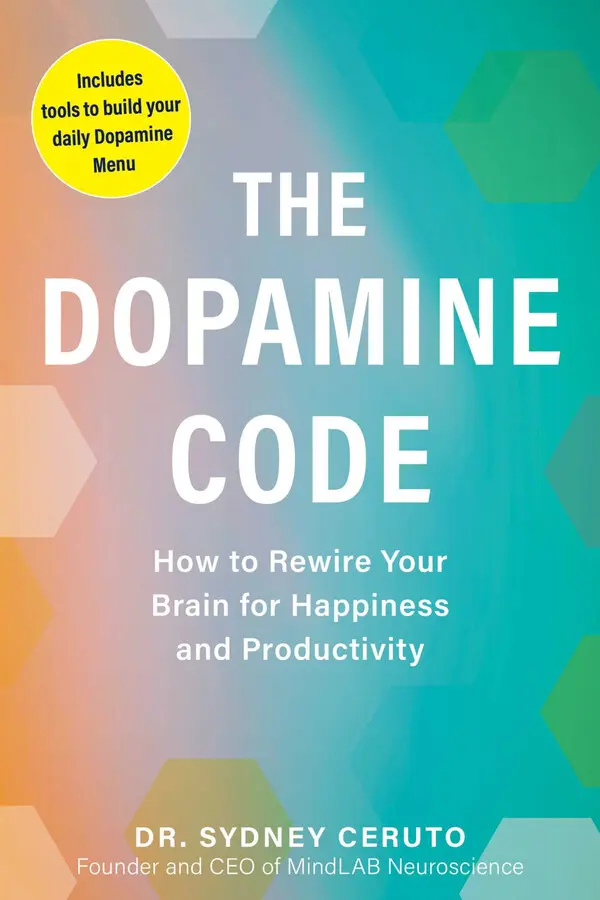
The Dopamine Code

Decode Your Drive

Why Your Brain Rewards the Wrong Things

Your brain's reward system runs every decision, every craving, every crash — and it was never designed for the life you're living. The Dopamine Code is Dr. Ceruto's framework for understanding the architecture behind what drives you, drains you, and keeps you locked in patterns that willpower alone will never fix.

Published by Simon & Schuster, The Dopamine Code is Dr. Ceruto's framework for building your own Dopamine Menu — a personalized system for motivation, focus, and enduring life satisfaction.

Order Now

Ships June 9, 2026

The Dopamine Code by Dr. Sydney Ceruto — Decode Your Drive
Locations

The Intelligence Brief

Neuroscience-backed analysis on how your brain drives what you feel, what you choose, and what you can’t seem to change — direct from Dr. Ceruto.