Racing Thoughts in Bergen County

Racing thoughts are not fast thinking — they are unfiltered thinking. Dr. Ceruto targets the thalamic gating failure and arousal dysregulation that flood the mind faster than it can process.

Racing thoughts are not a sign of a busy mind — they're a signal that the brain's arousal system has lost its off-switch. Without intervention, the pattern deepens: sleep suffers, focus fractures, decisions blur. At MindLAB Neuroscience, we identify the neural drivers of your brain's inability to downshift and build a targeted recalibration strategy.
Book a Strategy Call

Key Points

  1. Racing thoughts reflect a breakdown in the thalamic reticular nucleus — the brain's cognitive gatekeeper — not excessive mental speed or intelligence.
  2. Under elevated activity, the filter neurons can paradoxically switch from inhibitory to excitatory function, becoming an amplifier precisely when regulation is most needed.
  3. Sympathetic activation accelerates cognitive tempo globally — improving simple reaction time while degrading complex reasoning, making the brain faster at producing content and worse at managing it.
  4. Adults with insomnia score higher on racing thought measures than patients with diagnosed bipolar disorder during hypomanic episodes — racing thoughts at bedtime specifically predict insomnia severity.
  5. The brain's arousal-cognition relationship follows an inverted-U curve: moderate arousal produces the sharpest thinking, while high arousal produces fast but non-selective, non-convergent thought.
  6. The distinction between racing thoughts and productive fast thinking is structural: in productive thinking the thalamic filter is intact and the prefrontal cortex steers; in racing thoughts the gate is open.
  7. NREM slow-wave sleep is the only known state in which the thalamocortical circuit undergoes complete GABAergic recalibration — sleep architecture is foundational to resolution.

Racing thoughts feel like acceleration — the mind producing content at a speed that exceeds the brain’s ability to evaluate, organize, or dismiss it. But the neuroscience reveals that the problem is not excessive speed. It is a breakdown in the filtering system that normally determines which thoughts reach conscious awareness and which are suppressed before they arrive.

The Brain’s Cognitive Filter

“The problem is not excessive speed. It is a breakdown in the filtering system that normally determines which thoughts reach conscious awareness and which are suppressed before they arrive — and under pressure, that filter can reverse polarity, becoming an amplifier precisely when regulation is most needed.”

All cognitive content, including sensory input, memory retrieval, and internally generated thought, passes through the thalamus before reaching the cortex. The thalamic reticular nucleus functions as the brain’s primary cognitive gatekeeper. Under normal conditions, this nucleus selectively inhibits irrelevant thalamic relay channels while permitting task-relevant content through, creating the attentional spotlight that enables focused, sequential thought.

The thalamic reticular nucleus — brain’s cognitive gatekeeper — operates through GABAergic inhibition through stress, sleep deprivation, or sustained arousal — the filter opens. Thalamic relay neurons fire freely, flooding the cortex with unfiltered, unsorted content. This is the neurobiological substrate of racing thoughts.

Dense luminous neural threads condensing into single focused copper beam of clarity in deep navy void

Research demonstrates a critical vulnerability in this system: under conditions of elevated activity, GABAergic neurons in the thalamic reticular nucleus can paradoxically switch from inhibitory to excitatory function due to impaired chloride transport. The filter does not merely weaken under pressure — it can reverse polarity, becoming an amplifier precisely when regulation is most needed.

The Arousal-Speed Connection

The locus coeruleus — brainstem arousal center — projects norepinephrine to virtually every region of the cortex. This system operates the brain’s cognitive throttle. At moderate norepinephrine levels, signal-to-noise ratio is optimized: relevant content is sharpened, irrelevant content is suppressed, and the prefrontal cortex maintains executive control over the thought stream. At high norepinephrine levels gain increases indiscriminately. Both relevant and irrelevant cognitive content is amplified, and the prefrontal cortex loses the capacity to selectively attend.

The relationship between arousal and cognitive performance follows an inverted-U curve. Moderate arousal produces the sharpest thinking. High arousal produces the fastest thinking — but it is non-selective, non-convergent, and beyond the prefrontal cortex’s evaluation bandwidth. Thoughts arrive faster than they can be tagged as relevant or discarded. The subjective experience is being flooded: too many thoughts, too fast, none completing before the next one arrives.

Research confirms that sympathetic nervous system activation accelerates cognitive tempo globally — increasing associative memory retrieval, threat-appraisal cycle speed, default mode network activity, and working memory load simultaneously. Critically, this acceleration improves simple reaction time while degrading complex reasoning and decision quality. The brain becomes faster at producing content and worse at managing it.

The Excitation-Inhibition Imbalance

Racing thoughts reflect a fundamental shift in the brain’s excitation-inhibition balance — the ratio between glutamatergic and GABAergic systems — that drives neural activity and the GABAergic system that shapes, trims, and sequences it. When this balance tips toward excess excitation, thought generation outpaces evaluation. Excess glutamatergic drive from cortex to thalamus can overwhelm the thalamic reticular nucleus’s inhibitory capacity, further destabilizing the gating system.

The distinction between racing thoughts and productive fast thinking is structurally clear. In productive cognition, the prefrontal cortex acts as executive director — selecting, sequencing, and discarding thought content. In racing thought states, the prefrontal cortex is an overwhelmed passenger, reactive and unable to interrupt the thought stream. In productive thinking, the thalamic filter is intact; in racing thoughts, the gate is open. In productive thinking, the individual steers their thought stream. In racing thoughts, the individual is dragged by it.

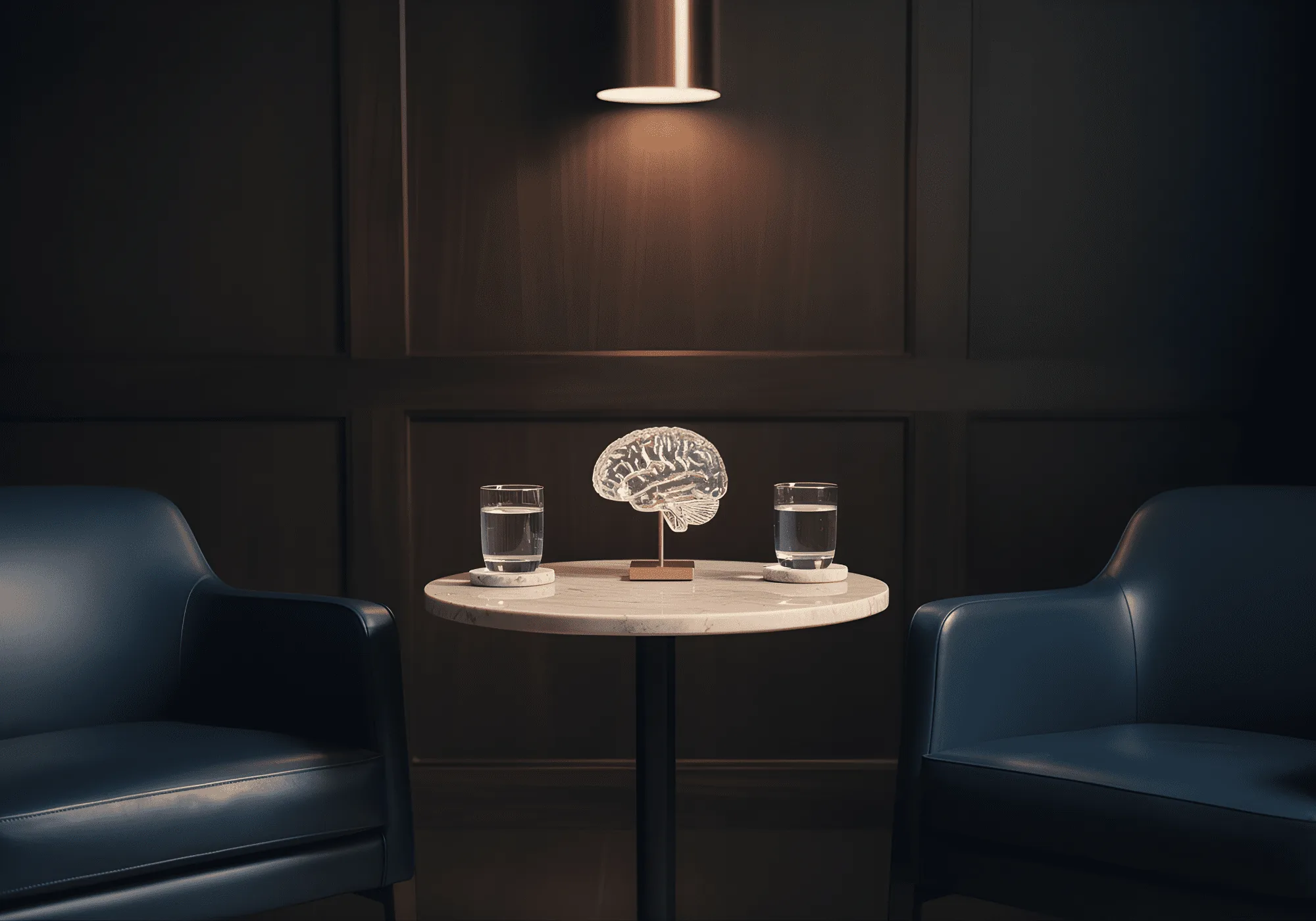
Neuroscience consultation — rosewood table with crystal brain sculpture and branded journal for strategy call preparation

Racing Thoughts and Sleep

Research reveals a finding that reframes the clinical significance of racing thoughts: adults with insomnia disorder score higher on racing thought measures than patients with diagnosed bipolar disorder during hypomanic episodes. Racing thoughts at bedtime, not rumination or worry, are the specific predictor of insomnia severity. The thalamic gating failure that produces racing thoughts during the day becomes most disabling at night, when the brain needs to transition from wakefulness to sleep. The filter must close completely to allow the slow oscillations of deep sleep to emerge.

How Dr. Ceruto Addresses Racing Thoughts

Dr. Ceruto’s approach identifies which level of the racing thought cascade is primary: thalamic gating failure, locus coeruleus hyperactivation, excitation-inhibition imbalance, or prefrontal evaluation overload. The methodology does not attempt to slow thoughts through suppression — which paradoxically increases their intensity — but addresses the upstream mechanism generating the unfiltered stream.

For thalamic gating dysfunction, the work focuses on restoring GABAergic inhibitory tone so the filter can resume selective operation. For arousal-driven presentations, the intervention targets locus coeruleus regulation to bring norepinephrine levels back within the optimal range. For excitation-inhibition imbalance, the approach addresses both sides of the equation — reducing glutamatergic excess and strengthening GABAergic braking capacity. Sleep architecture restoration is foundational across all presentations, as NREM slow-wave sleep is the only known state in which the thalamocortical circuit undergoes complete GABAergic recalibration.

Marker What You Experience What's Happening Neurologically What We Restructure
Unfiltered thought flood Thoughts arriving faster than you can evaluate or dismiss them, one idea crashing into the next The thalamic reticular nucleus — the brain's cognitive gatekeeper — has weakened under stress or sleep deprivation, allowing unfiltered content to flood the cortex The thalamic gating system's GABAergic inhibitory tone so the filter can resume selective operation
Wired but unable to think clearly Feeling mentally accelerated yet unable to produce coherent, sequential reasoning High norepinephrine levels from the locus coeruleus have increased gain indiscriminately — both relevant and irrelevant content is amplified while the prefrontal cortex loses selective control Locus coeruleus regulation to bring norepinephrine back within the optimal range where signal clarity is sharpest
Racing thoughts at bedtime Mind accelerating precisely when trying to sleep, with drowsiness vanishing the moment the head hits the pillow The thalamic filter must close completely to allow the slow oscillations of deep sleep to emerge — gating failure at night becomes most disabling because it blocks the sleep transition Sleep architecture restoration — NREM slow-wave sleep is the only known state in which the thalamocortical circuit undergoes complete GABAergic recalibration
Thoughts dragging you rather than you directing them Feeling like a passenger in your own mind, unable to steer or interrupt the thought stream The prefrontal cortex has shifted from executive director to overwhelmed passenger — in productive thinking it steers the stream; in racing thoughts it is reactive and unable to interrupt The prefrontal executive capacity to resume directorial control over the thought stream rather than being carried along by it
Escalation under pressure Racing thoughts intensifying precisely during high-stakes moments when clear thinking matters most Sympathetic activation accelerates cognitive tempo globally — improving simple reaction time while degrading complex reasoning and decision quality The excitation-inhibition balance so the brain's thought-generation system and thought-management system operate in proportion

Why Racing Thoughts Matters in Bergen County

Racing Thoughts in Bergen County, New Jersey

Racing thoughts in Bergen County's professional population reflect a cognitive system running at the speed the career demands but unable to reduce its velocity when the context changes. The professional mind that processes information rapidly throughout the workday continues operating at professional speed during the GW Bridge commute home — but now processing personal concerns, family worries, financial calculations, and social dynamics at a velocity intended for market data and professional analysis. The thoughts are not random. They are rapid sequential processing events organized around the multiple domains Bergen County life demands attention to, arriving faster than the conscious mind can evaluate and resolve them.

The pre-sleep variant is amplified by the bridge commute's timing: the individual whose evening return was delayed by bridge traffic arrives home later, compresses the evening activities, and reaches bedtime with the accumulated unprocessed items from all domains releasing simultaneously as the focused cognitive engagement of the day gives way to the default mode processing that sleep preparation initiates.

My work addresses racing thoughts at the neural systems level — the cognitive velocity trained by the professional environment, the default mode network activation that the bridge commute's semi-idle state promotes, the conditions under which the cognitive system can downshift from professional processing speed to the reflective pace that personal life and sleep preparation require.

Dr. Sydney Ceruto, PhD — Founder, MindLAB Neuroscience

Dr. Sydney Ceruto, PhD — Founder & CEO, MindLAB Neuroscience

Dr. Ceruto holds a PhD in Behavioral & Cognitive Neuroscience from NYU and two Master’s degrees from Yale University. She lectures at the Wharton Executive Development Program at the University of Pennsylvania and has been an Executive Contributor to the Forbes Coaching Council since 2019. Dr. Ceruto is the author of The Dopamine Code (Simon & Schuster, June 2026). She founded MindLAB Neuroscience in 2000 and has spent over 26 years pioneering Real-Time Neuroplasticity™ — a methodology that permanently rewires the neural pathways driving behavior, decisions, and emotional responses.

References

Piguet, C., Dayer, A., Kosel, M., Desseilles, M., Vuilleumier, P., & Bertschy, G. (2010). Phenomenology of racing and crowded thoughts in mood disorders: A theoretical reappraisal. Journal of Affective Disorders, 121(3), 189–198. https://doi.org/10.1016/j.jad.2009.05.006

Weiner, L., Martz, E., Kilic-Huck, U., Siegel, N., Bertschy, G., Geoffroy, P. A., Weibel, S., & Bourgin, P. (2021). Investigating racing thoughts in insomnia: A neglected piece of the puzzle. Comprehensive Psychiatry, 111, 152271. https://doi.org/10.1016/j.comppsych.2021.152271

Ferguson, B. R., & Gao, W. J. (2018). Thalamic control of cognition and social behavior via regulation of gamma-aminobutyric acidergic signaling and excitation/inhibition balance in the medial prefrontal cortex. Biological Psychiatry, 83(8), 657–669. https://doi.org/10.1016/j.biopsych.2017.11.033

Ross, J. A., & Van Bockstaele, E. J. (2021). The locus coeruleus-norepinephrine system in stress and arousal: Unraveling historical, current, and future perspectives. Frontiers in Psychiatry, 11, 601519. https://doi.org/10.3389/fpsyt.2020.601519

Success Stories

“I'd optimized everything — diet, fitness, sleep — but my cognitive sharpness was quietly declining and no one could explain why. Dr. Ceruto identified the synaptic density patterns that were thinning and built a protocol to reverse the trajectory. This wasn't prevention in theory. My neuroplasticity reserve is measurably stronger now than it was three years ago. Nothing I'd tried before even addressed the right problem.”

Henrique L. — University Dean Lisbon, PT

“Color-coded calendars, alarms, accountability partners — I'd built an entire scaffolding system just to stay functional, and none of it addressed why my brain couldn't sequence and prioritize on its own. Dr. Ceruto identified the specific prefrontal pattern that was misfiring and restructured it. I don't need the scaffolding anymore. My brain actually does what I need it to do.”

Jordan K. — Venture Capitalist San Francisco, CA

“When the inheritance came, it didn't feel like a gift — it felt like a grenade in every family relationship I had. I couldn't make a single financial decision without a flood of guilt and second-guessing. Years of talking through it hadn't changed anything. Dr. Ceruto identified the neural loop connecting money to fear of family rejection and dismantled it. The paralysis didn't fade — it stopped.”

Vivienne R. — Philanthropist Palm Beach, FL

“My phone was the first thing I touched in the morning and the last thing I put down at night — and every app blocker, digital detox protocol, and willpower-based system I tried lasted less than a week. Dr. Ceruto identified the variable-ratio reinforcement loop that had hijacked my attention circuits and dismantled it at the neurological level. My phone is still in my pocket. The compulsion to reach for it isn't. That's a fundamentally different kind of fix.”

Tomas R. — Architect Lisbon, PT

“The way I was processing decisions under pressure had a cost I couldn't see — until Dr. Ceruto mapped it. She identified the neural pattern driving my reactivity in high-stakes situations and restructured it at the root. I don't just perform better under pressure now. I think differently under pressure. That's not something any executive coach or performance program ever came close to delivering.”

Rob W. — Portfolio Manager Manhattan, NY

“After the concussion, my processing speed collapsed — I couldn't hold complex information the way I used to, and no one could explain why the fog wasn't lifting. Dr. Ceruto mapped the damaged pathways and built compensatory networks around them. My brain doesn't work the way it did before the injury. It works differently — and in some ways, more efficiently than it ever did.”

Owen P. — Orthopedic Surgeon Scottsdale, AZ

Frequently Asked Questions About Racing Thoughts in Bergen County

What is racing thoughts support at MindLAB Neuroscience?

Racing thoughts support is a neuroscience-grounded approach that addresses the specific neural mechanisms producing uncontrolled, high-speed thought cascades — whether the primary driver is thalamic gating failure, arousal system dysregulation — control system breakdown —, excitation-inhibition imbalance, or prefrontal evaluation overload. Dr. Ceruto identifies the upstream mechanism and targets it directly rather than attempting to manage the symptom.

How are racing thoughts different from fast or creative thinking?

The distinction is structural. In productive fast thinking, the prefrontal cortex — the brain's executive control center — maintains executive control — directing, sequencing, and discarding thought content. The brain’s cognitive filter is intact, and the thinker steers the thought stream. In racing thoughts, the filter has failed, the prefrontal cortex is overwhelmed by the volume of arriving content, and the thinker is dragged by a thought stream they cannot interrupt. The key neurological marker is whether the excitation-inhibition balance is maintained or has tipped toward unregulated excitation.

Who typically seeks this type of support?

Individuals who experience persistent, uncontrollable thought acceleration — particularly at night, during transitions between tasks, or following high-stress periods. This includes professionals in 24/7 market environments, individuals managing multiple high-stakes projects simultaneously, and anyone who has noticed that their mind produces content at a pace that outstrips their ability to evaluate or act on it. Racing thoughts that interfere with sleep onset are an especially strong indicator.

What should I expect from the initial process?

The process begins with a Strategy Call — a phone-based conversation with Dr. Ceruto that maps the specific racing thought pattern, identifies which neural system is primary, and determines the appropriate intervention pathway. The Strategy Call carries a $250 fee. Program structure and investment details are discussed during the Strategy Call.

What is the typical timeline for improvement?

Racing thoughts driven primarily by arousal dysregulation, the breakdown of normal control systems, often respond relatively quickly once sleep architecture and autonomic regulation are addressed — many individuals notice a reduction in nighttime thought cascades within the first several weeks. Thalamic gating dysfunction and entrenched excitation-inhibition imbalance typically require longer restructuring, as these involve restoring inhibitory neurotransmitter systems that have been chronically depleted. The timeline depends on how long the pattern has been established and how many concurrent stressors are active.

Also available in: Miami · Wall Street · Midtown Manhattan · Beverly Hills · Lisbon

Take the First Step Beyond Racing Thoughts

The Strategy Call is a focused conversation with Dr. Ceruto that maps the specific neural mechanisms driving your concerns and determines the right path forward.

Book a Strategy Call
MindLAB Neuroscience consultation room

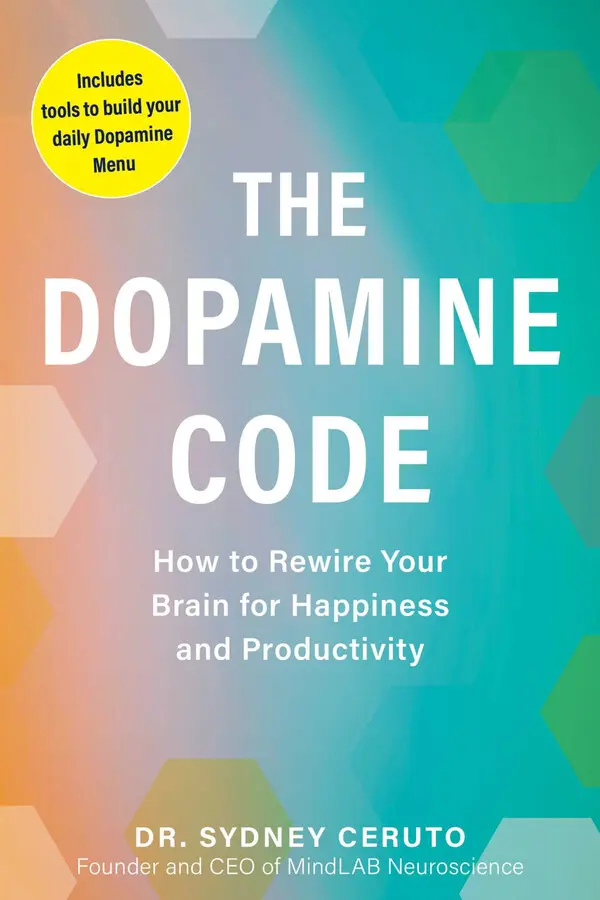
The Dopamine Code

Decode Your Drive

Why Your Brain Rewards the Wrong Things

Your brain's reward system runs every decision, every craving, every crash — and it was never designed for the life you're living. The Dopamine Code is Dr. Ceruto's framework for understanding the architecture behind what drives you, drains you, and keeps you locked in patterns that willpower alone will never fix.

Published by Simon & Schuster, The Dopamine Code is Dr. Ceruto's framework for building your own Dopamine Menu — a personalized system for motivation, focus, and enduring life satisfaction.

Order Now

Ships June 9, 2026

The Dopamine Code by Dr. Sydney Ceruto — Decode Your Drive
Locations

The Intelligence Brief

Neuroscience-backed analysis on how your brain drives what you feel, what you choose, and what you can’t seem to change — direct from Dr. Ceruto.