Overthinking & Mental Clarity Support in Bergen County

When the brain's filtering, switching, and self-referential systems lose calibration, thinking becomes a trap rather than a tool. Dr. Ceruto identifies the specific neural dysfunction and restores the clarity your brain was designed to produce.

Overthinking, brain fog, racing thoughts, and cognitive overload are not personality traits or stress reactions. They are measurable disruptions in the brain’s filtering architecture, default mode regulation, and prefrontal executive control. Dr. Ceruto’s methodology maps which systems have failed and intervenes at the neural mechanism rather than the behavioral surface.

Book a Strategy Call

Analysis Paralysis Support

Analysis paralysis is a measurable breakdown in the brain’s value-comparison architecture. The ventromedial prefrontal cortex cannot generate clear value differentials between options, the anterior cingulate cortex amplifies conflict signals, and the dopaminergic reward system treats information-gathering itself as rewarding — creating a self-sustaining loop in which seeking more data deepens rather than resolves the paralysis.


Learn more about Analysis Paralysis Support in Bergen County →

Cognitive Overload Support

Cognitive overload represents a capacity breach in the brain’s working memory and prefrontal systems. Working memory holds approximately four meaningful chunks simultaneously — a structural constraint, not a training limitation. When load exceeds this ceiling, a predictable cascade follows: compensatory effort, decompensation with rising errors and emotional volatility, and cognitive shutdown as neurotransmitter reserves deplete.

Learn more about Cognitive Overload Support in Bergen County →

Mental Fog & Cognitive Clarity Support

Brain fog corresponds to measurable disruptions in functional brain connectivity, neurotransmitter dynamics, and information processing efficiency. Three converging mechanisms — neuroinflammation from chronically activated microglia, depleted norepinephrine reserves in the locus coeruleus, and degraded connectivity between the dorsal attention and default mode networks — each produce the characteristic experience of reduced sharpness and slowed processing.

Learn more about Mental Fog & Cognitive Clarity Support in Bergen County →

Overthinking & Rumination Support

Rumination is a self-referential neural loop driven by default mode network hyperactivation, impaired salience network switching, and weakened prefrontal executive inhibition. The subgenual anterior cingulate cortex binds negative emotional content to self-referential thought, creating a cycle that consumes cognitive resources while producing nothing actionable. Each repetition strengthens the circuit through experience-dependent plasticity.

Learn more about Overthinking & Rumination Support in Bergen County →

Perfectionism Support

Perfectionism involves at least three interdependent neural dysfunctions: an overactive orbitofrontal cortex that generates impossible standards, a hypersensitive anterior cingulate that treats every imperfection as a crisis, and a striatal reward system that fails to register adequate performance as genuinely rewarding. The motivational architecture operates through threat-avoidance rather than approach — driven by fear of failure rather than pursuit of excellence.

Learn more about Perfectionism Support in Bergen County →

Racing Thoughts Support

Racing thoughts reflect a breakdown in the thalamic reticular nucleus — the brain’s cognitive gatekeeper — combined with arousal dysregulation from the locus coeruleus-norepinephrine system. When GABAergic inhibition fails, thalamic relay neurons fire freely, flooding the cortex with unfiltered content faster than the prefrontal cortex can evaluate. The problem is not excessive speed but the collapse of the filtering system.

Learn more about Racing Thoughts Support in Bergen County →
Dr. Sydney Ceruto, PhD — Founder, MindLAB Neuroscience

Dr. Sydney Ceruto, PhD — Founder & CEO, MindLAB Neuroscience

Dr. Ceruto holds a PhD in Behavioral & Cognitive Neuroscience from NYU and two Master’s degrees from Yale University. She lectures at the Wharton Executive Development Program at the University of Pennsylvania and has been an Executive Contributor to the Forbes Coaching Council since 2019. Dr. Ceruto is the author of The Dopamine Code (Simon & Schuster, June 2026). She founded MindLAB Neuroscience in 2000 and has spent over 26 years pioneering Real-Time Neuroplasticity™ — a methodology that permanently rewires the neural pathways driving behavior, decisions, and emotional responses.

References

Andrews-Hanna, J. R., Smallwood, J., & Spreng, R. N. (2014). The default network and self-generated thought: Component processes, dynamic control, and clinical relevance. Annals of the New York Academy of Sciences, 1316, 29–52. https://doi.org/10.1111/nyas.12360

Nolen-Hoeksema, S., Wisco, B. E., & Lyubomirsky, S. (2008). Rethinking rumination. Perspectives on Psychological Science, 3(5), 400–424. https://doi.org/10.1111/j.1745-6924.2008.00088.x

Buckner, R. L., Andrews-Hanna, J. R., & Schacter, D. L. (2008). The brain's default network: Anatomy, function, and relevance to disease. Annals of the New York Academy of Sciences, 1124, 1–38. https://doi.org/10.1196/annals.1440.011

Success Stories

“After the concussion, my processing speed collapsed — I couldn't hold complex information the way I used to, and no one could explain why the fog wasn't lifting. Dr. Ceruto mapped the damaged pathways and built compensatory networks around them. My brain doesn't work the way it did before the injury. It works differently — and in some ways, more efficiently than it ever did.”

Owen P. — Orthopedic Surgeon Scottsdale, AZ

“The way I was processing decisions under pressure had a cost I couldn't see — until Dr. Ceruto mapped it. She identified the neural pattern driving my reactivity in high-stakes situations and restructured it at the root. I don't just perform better under pressure now. I think differently under pressure. That's not something any executive coach or performance program ever came close to delivering.”

Rob W. — Portfolio Manager Manhattan, NY

“I'd optimized everything — diet, fitness, sleep — but my cognitive sharpness was quietly declining and no one could explain why. Dr. Ceruto identified the synaptic density patterns that were thinning and built a protocol to reverse the trajectory. This wasn't prevention in theory. My neuroplasticity reserve is measurably stronger now than it was three years ago. Nothing I'd tried before even addressed the right problem.”

Henrique L. — University Dean Lisbon, PT

“My phone was the first thing I touched in the morning and the last thing I put down at night — and every app blocker, digital detox protocol, and willpower-based system I tried lasted less than a week. Dr. Ceruto identified the variable-ratio reinforcement loop that had hijacked my attention circuits and dismantled it at the neurological level. My phone is still in my pocket. The compulsion to reach for it isn't. That's a fundamentally different kind of fix.”

Tomas R. — Architect Lisbon, PT

“When the inheritance came, it didn't feel like a gift — it felt like a grenade in every family relationship I had. I couldn't make a single financial decision without a flood of guilt and second-guessing. Years of talking through it hadn't changed anything. Dr. Ceruto identified the neural loop connecting money to fear of family rejection and dismantled it. The paralysis didn't fade — it stopped.”

Vivienne R. — Philanthropist Palm Beach, FL

“Color-coded calendars, alarms, accountability partners — I'd built an entire scaffolding system just to stay functional, and none of it addressed why my brain couldn't sequence and prioritize on its own. Dr. Ceruto identified the specific prefrontal pattern that was misfiring and restructured it. I don't need the scaffolding anymore. My brain actually does what I need it to do.”

Jordan K. — Venture Capitalist San Francisco, CA

Frequently Asked Questions About Neuroscience-Based Mental Clarity

Why can I not stop overthinking even when I know it is unproductive?

Overthinking is not a voluntary process — it is the output of a hyperactive default mode network that has entered a self-reinforcing loop. The conscious recognition that the thinking is unproductive resides in the prefrontal cortex, but the rumination is being generated by deeper circuits that the prefrontal cortex currently lacks the regulatory capacity to interrupt. You are not choosing to overthink. The neural architecture producing the loop is operating beyond conscious control.

How does this approach restore mental clarity differently than mindfulness or meditation?

Mindfulness trains awareness of the thinking process — observing thoughts without engagement. This is valuable but does not alter the neural architecture generating the excessive thought production. Dr. Ceruto's approach targets the default mode network's hyperactivation directly, the unresolved threat signals sustaining it, and the depleted prefrontal regulatory capacity that cannot interrupt it. When the architecture changes, mental clarity becomes the brain's default state rather than a meditative achievement.

Can chronic overthinking cause cognitive damage?

Chronic rumination imposes sustained cognitive load on the default mode network while suppressing the task-positive network — a state that, over time, degrades the neural efficiency of both systems. The brain's capacity for productive directed thinking diminishes, creative processing becomes harder to access, and the prefrontal cortex loses regulatory capacity under the sustained demand. These changes are reversible through targeted intervention but do compound if left unaddressed.

Why is my overthinking worse at night or during periods of low activity?

The default mode network activates most powerfully during unstructured time — when external task demands are not engaging the task-positive network. At night, during low-activity periods, and on weekends, the default mode network's ruminative processing faces no competition from directed cognitive engagement. This is why many people report that their worst overthinking occurs precisely when they should be resting — the brain's self-referential processing fills the cognitive vacuum.

Can this approach help with the decision paralysis that accompanies overthinking?

Decision paralysis and overthinking share the same neural mechanism: the default mode network generating excessive evaluation of options without reaching resolution, while the prefrontal circuits needed for decisive action are suppressed by the ruminative processing. Addressing the overthinking architecture directly resolves the decision paralysis as a downstream effect because the neural resources consumed by rumination become available for clear, decisive processing.

How quickly can mental clarity improve with targeted intervention?

Most individuals notice reduced rumination intensity within the first weeks of targeted work — the loops become shorter, less frequent, and easier to exit. Sustained mental clarity develops as the default mode network's baseline activation normalizes and prefrontal regulatory capacity is rebuilt. The trajectory is progressive: initial symptom reduction, then architectural improvement, then stable clarity as the new neural default.

Does this approach work for anxiety-driven overthinking as well as general rumination?

Yes. Anxiety-driven overthinking adds amygdala threat activation to the default mode network's ruminative processing — the brain is not just generating excessive thought but generating it under threat conditions that add urgency and catastrophic content. Dr. Ceruto addresses both the default mode hyperactivation and the threat-system contribution, producing clarity that resolves both the ruminative process and its anxious character.

What does the Strategy Call assess for overthinking patterns?

The Strategy Call maps the neural mechanisms driving your specific overthinking pattern — the default mode network's activation profile, the threat signals sustaining it, the prefrontal regulatory capacity available to interrupt it, and the triggers that escalate ruminative processing. You leave understanding the specific neural architecture producing your mental fog and where intervention will most effectively restore clarity.

Overthinking, brain fog, and cognitive overload that persist despite conventional approaches have a neural source.

The Strategy Call is a focused conversation with Dr. Ceruto that maps the specific neural mechanisms driving your concerns and determines the right path forward.

Book a Strategy Call
MindLAB Neuroscience consultation room

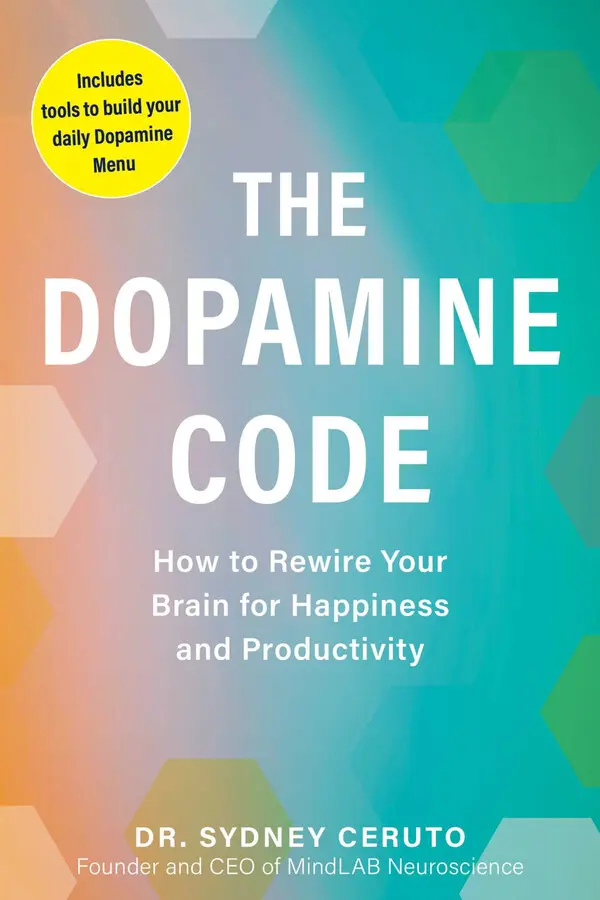
The Dopamine Code

Decode Your Drive

Why Your Brain Rewards the Wrong Things

Your brain's reward system runs every decision, every craving, every crash — and it was never designed for the life you're living. The Dopamine Code is Dr. Ceruto's framework for understanding the architecture behind what drives you, drains you, and keeps you locked in patterns that willpower alone will never fix.

Published by Simon & Schuster, The Dopamine Code is Dr. Ceruto's framework for building your own Dopamine Menu — a personalized system for motivation, focus, and enduring life satisfaction.

Order Now

Ships June 9, 2026

The Dopamine Code by Dr. Sydney Ceruto — Decode Your Drive
Locations

The Intelligence Brief

Neuroscience-backed analysis on how your brain drives what you feel, what you choose, and what you can’t seem to change — direct from Dr. Ceruto.